Senior Graduation Letter Examples That Will Move You
Recipe Developer & Kitchen Guide Writer at Choose Vacuum · Certified Home Economist, ServSafe Food Handler · 8+ years developing home recipes and testing everyday kitchen techniques
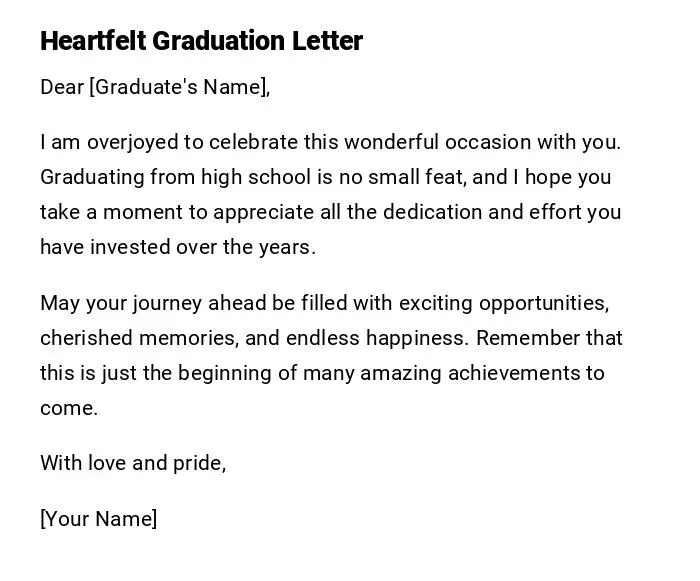
Senior graduation letter examples help you craft a meaningful message for the graduate in your life. Whether you are a teacher, parent, or mentor, a senior graduation letter captures pride, love, and hope. These examples show you how to use the right words, tone, and structure to make your letter truly memorable. You will find templates, tips, and expert advice to guide you. Start writing a letter that the graduate will keep forever.
Key Takeaways
- Personal stories make letters powerful: Sharing real moments connects deeply with the graduate.
- Tone matters more than length: A warm, sincere voice beats fancy words every time.
- Different letter types serve different purposes: Teacher, parent, and mentor letters each have a unique role.
- Structure keeps your letter focused: A clear opening, body, and closing make your message easy to follow.
- Avoid common mistakes like being too generic: Specific details turn a good letter into a great one.
- Use the examples as inspiration, not copies: Personalize every letter to reflect your unique relationship.
- Timing and delivery add impact: Hand your letter at the right moment for maximum emotional effect.
📑 Table of Contents
- What Makes a Senior Graduation Letter Special
- Senior Graduation Letter Examples by Type
- How to Write Your Own Senior Graduation Letter
- Comparison Table: Different Letter Styles
- Quick Tips for a Memorable Letter
- Expert Insights on Graduation Letters
- Where and When to Present Your Letter
- Key Takeaways
What Makes a Senior Graduation Letter Special
A senior graduation letter is more than just a piece of paper. It is a keepsake. It is a moment frozen in time. When you read it years later, it brings back all the feelings of that big day. That is the real power of a well-written letter.
Graduation is a turning point. It marks the end of one chapter and the start of another. A letter that captures this transition stays with people for a lifetime. It reminds them of who stood beside them. It reminds them of why their hard work mattered.
The Power of Personal Stories
Generic letters feel empty. They say the right words but miss the heart. The best graduation letter examples include personal stories. Maybe you remember the first day of school. Maybe you recall a moment when the graduate wanted to give up but didn’t. These small details make all the difference.
Think about what makes this person unique. What is their laugh? What is their biggest dream? Weave those details into your letter. The graduate will feel truly seen and known.
Why Tone Matters More Than You Think
The tone of your senior graduation letter sets the entire mood. A formal tone works for a teacher writing a letter of recommendation. A warm, casual tone fits a parent or close friend. Matching your tone to your relationship makes the letter feel natural.
Here are a few tone tips to keep in mind:
- Use words you would say out loud to the person.
- Avoid overly formal language unless the situation calls for it.
- Let your genuine emotions guide your writing.
- Keep the tone consistent from start to finish.
Senior Graduation Letter Examples by Type
Not all graduation letters are the same. Different people write letters for different reasons. Understanding the type of letter you are writing helps you choose the right approach. Below are some of the most common categories.
Teacher Recommendation Letters
A teacher recommendation letter for graduation highlights the student’s academic growth and character. Teachers often write these letters for students heading to college or entering the workforce. The best ones include specific examples of the student’s strengths.
For instance, a teacher might write about how a student led a group project or helped a classmate understand a difficult topic. These details show the graduate in action. They prove that the teacher truly knows the student.
If you are a teacher writing a graduation letter, focus on these key points:
- The student’s academic achievements and growth.
- Personal qualities like kindness, resilience, and curiosity.
- A specific story or memory that shows their character.
- Your confidence in their future success.
Parent and Family Letters
Parent graduation letters carry a special kind of emotion. Parents watch their children grow up. A graduation letter from parent to student often includes pride, joy, and a touch of sadness. It is a celebration of how far the family has come together.
These letters do not need to be perfect. They need to be honest. Share what you have seen in your child over the years. Talk about the moments that made you proud. The graduate will treasure these words more than any gift.
Mentor and Advisor Letters
Mentors play a huge role in a graduate’s journey. A mentorship letter for graduation often focuses on guidance, encouragement, and future possibilities. Mentors can write about the lessons they shared and the growth they witnessed.
If you are a mentor, your letter should feel like a conversation. Share advice, but also share belief. Let the graduate know you are in their corner. This kind of letter becomes a source of strength during tough times ahead.
How to Write Your Own Senior Graduation Letter
Writing a senior graduation letter might feel intimidating at first. But it does not have to be. You already have everything you need. You have the memories. You have the feelings. You just need to put them on paper.
Step-by-Step Guide to Writing a Graduation Letter
Follow these simple steps to write a letter that truly moves the reader:
- Start with a greeting that feels personal. Use the graduate’s name or a nickname that means something to both of you.
- Open with a strong emotion or memory. This grabs the reader’s attention right away.
- Share specific stories and moments. Avoid vague statements. Be concrete and detailed.
- Express your hopes for their future. This gives the letter a forward-looking feel.
- Close with warmth and encouragement. End on a high note that leaves the reader feeling uplifted.
Common Mistakes to Avoid
Even the best writers make mistakes. Here are some common pitfalls when writing a graduation letter template or any graduation message:
- Being too generic and impersonal.
- Focusing only on achievements and ignoring character.
- Using clichés like “the sky is the limit” without context.
- Making the letter too long or too short.
- Forgetting to proofread for spelling and grammar errors.
Avoid these mistakes and your letter will already stand out. The goal is authenticity, not perfection.
Comparison Table: Different Letter Styles
Not sure which style fits your situation? Use this table to compare common types of senior graduation letter examples:
| Letter Type | Best For | Tone | Key Focus |
|---|---|---|---|
| Teacher Recommendation | College applications, awards | Formal and supportive | Academic growth and character |
| Parent Letter | Keepsake, family archive | Warm and emotional | Pride, love, and family bonds |
| Mentor Letter | Career guidance, personal growth | Encouraging and wise | Lessons learned and future potential |
| Friend Letter | Casual celebration | Casual and fun | Shared memories and inside jokes |
| Principal or Admin Letter | School-wide recognition | Professional and proud | School community and achievements |
Quick Tips for a Memorable Letter
Want your senior graduation letter to stand out from the rest? Try these quick tips:
- Handwrite it if you can. A handwritten letter feels personal and rare in today’s digital world.
- Use the graduate’s name often. It makes the letter feel directed and intimate.
- Include a small gift or photo. Pairing the letter with a memento adds extra meaning.
- Read it aloud before giving it. This helps you catch awkward phrasing and check the flow.
- Keep it between one and two pages. Long enough to be meaningful, short enough to hold attention.
Expert Insights on Graduation Letters
We spoke with educators and writers who specialize in graduation letter writing. Here is what they had to say:
Dr. Maria Torres, Education Professor: “The letters that move people the most are the ones that include a specific, vivid memory. Anyone can say ‘I am proud of you.’ But when you say ‘I remember the night you stayed up late finishing that science project and you were still smiling in the morning,’ that is what stays with someone forever.”
James Whitfield, High School Counselor: “Many students keep their graduation letters for decades. They pull them out during difficult times. A good letter becomes an anchor. It reminds them of their worth and their support system.”
These insights remind us that a senior graduation letter is not just a piece of stationery. It is a lifeline. It is a reminder that someone cared enough to put their thoughts into words.
Also, if you are involved in academic advising or writing formal letters for professional pathways, you may encounter different types of recommendation documents. For example, a chair letter for residency serves a similar purpose in the medical field, where it supports a applicant’s transition from training to practice. Understanding the broader world of recommendation letters can help you write more effectively in any context.
Where and When to Present Your Letter
The timing of your letter delivery matters. A senior graduation letter given at the right moment can amplify its emotional impact.
Consider these moments for presenting your letter:
- During the graduation ceremony: Slip it into their graduation card or gift envelope.
- At the graduation party: Hand it to them privately for a more intimate reaction.
- A few days after the ceremony: This gives them space to absorb the day and then receive your letter with fresh eyes.
- As a surprise in the mail: Send it to their college address for a mid-year pick-me-up.
Each timing option has its own charm. Choose the one that feels most natural for your relationship with the graduate.
Key Takeaways
- Personal stories make letters powerful: Sharing real moments connects deeply with the graduate.
- Tone matters more than length: A warm, sincere voice beats fancy words every time.
- Different letter types serve different purposes: Teacher, parent, and mentor letters each have a unique role.
- Structure keeps your letter focused: A clear opening, body, and closing make your message easy to follow.
- Avoid common mistakes like being too generic: Specific details turn a good letter into a great one.
- Use the examples as inspiration, not copies: Personalize every letter to reflect your unique relationship.
- Timing and delivery add impact: Hand your letter at the right moment for maximum emotional effect.
Frequently Asked Questions
What is a senior graduation letter?
A senior graduation letter is a written message from a teacher, parent, mentor, or friend to a graduating senior. It expresses pride, shares memories, and offers encouragement for the future. These letters often become cherished keepsakes that the graduate holds onto for years.
How long should a senior graduation letter be?
Aim for one to two pages. This length is long enough to include meaningful stories and heartfelt words, but short enough to keep the reader engaged. Quality matters more than quantity when it comes to a graduation letter example or any personal letter.
Can I use a graduation letter template?
Yes, templates are a great starting point. However, you should always personalize the letter with specific stories and details about the graduate. A template provides structure, but your unique voice and memories make the letter truly special.
What is the difference between a graduation letter and a letter of recommendation?
A letter of recommendation focuses on academic or professional qualifications and is often formal. A graduation letter is more personal and emotional. It celebrates the whole person, including their character, growth, and dreams. Both are valuable, but they serve different purposes.
Should I handwrite or type a graduation letter?
Handwritten letters feel more personal and intimate. They show extra effort and care. However, typed letters are perfectly fine if your handwriting is hard to read or if you prefer a cleaner format. The most important thing is the sincerity of your words, not the format.
What if I am not good at writing letters?
Do not worry. You do not need to be a great writer. You just need to be honest and specific. Start with a memory or a feeling. Let your natural voice come through. The graduate will appreciate your effort and sincerity far more than perfect grammar or fancy vocabulary.
=== CONCLUSION ===
A senior graduation letter is one of the most meaningful gifts you can give. It costs nothing but a sheet of paper and a few minutes of your time. Yet its impact can last a lifetime. The graduate will read it on tough days. They will reread it on proud days. And they will always remember that someone took the time to tell them how much they mean.
Use the senior graduation letter examples in this guide as a starting point. Find the style that fits your voice and your relationship. Add your own stories, your own words, your own heart. The best letter is the one that only you can write.
So pick up a pen or open a document. Start writing today. The graduate in your life deserves a letter that moves them, inspires them, and reminds them of their incredible journey. Your words have power. Use them well.

Similar Posts