Best Oil Stop Leak
Recipe Developer & Kitchen Guide Writer at Choose Vacuum · Certified Home Economist, ServSafe Food Handler · 8+ years developing home recipes and testing everyday kitchen techniques
Finding the best oil stop leak product can save you hundreds in mechanic bills. Whether you have a minor oil leak or a stubborn gasket problem, the right stop leak additive seals leaks quickly and safely. This guide covers top-rated products, how they work, and tips for choosing the best oil stop leak solution for your engine.
Dealing with an engine oil leak is frustrating. You spot a puddle under your car, hear the low oil warning, and suddenly worry about expensive repairs. Before you book a trip to the mechanic, consider a simpler solution. The best oil stop leak products can seal those annoying drips and save you serious money. In this guide, we walk you through everything you need to know — from how stop leak additives work to which products actually deliver results.
Whether you are a DIY mechanic or a casual car owner, understanding oil leak repair options puts you in control. You will learn about the science behind stop leak formulas, how to pick the right one, and the common mistakes that waste your time and money. Let us dive in and find the perfect fix for your engine.
Key Takeaways
- Oil stop leak products are affordable fixes that can seal minor to moderate engine leaks without costly repairs.
- Stop leak additives work by conditioning seals and gaskets to swell slightly and close gaps causing oil leaks.
- Choosing the right product depends on leak severity, engine type, and whether you prefer a permanent or temporary fix.
- Applying oil stop leak correctly matters — follow dosage instructions and monitor results over a few hundred miles.
- Not all stop leak products are equal — some use harsh chemicals that can damage older engines.
- Prevention is key — regular oil changes and early leak detection keep your engine running smoothly.
📑 Table of Contents
- What Is an Oil Stop Leak Product?
- How Does an Oil Stop Leak Additive Work?
- Top Benefits of Using Oil Stop Leak
- How to Choose the Best Oil Stop Leak
- How to Apply Oil Stop Leak Correctly
- Common Mistakes to Avoid with Oil Stop Leak Products
- When to See a Mechanic Instead
- Preventing Oil Leaks Before They Start
- Final Thoughts on the Best Oil Stop Leak
What Is an Oil Stop Leak Product?
An oil stop leak product is a liquid additive that you pour directly into your engine oil. Once added, it circulates through the engine and targets the source of the leak. The formula works by conditioning rubber seals, gaskets, and o-rings, causing them to swell slightly and close the gaps where oil escapes.
These products come in small bottles, usually between 4 and 8 ounces. You add them to your existing oil before an oil change or between changes. Most stop leak additives are designed for minor to moderate leaks — think small drips rather than full-blown oil pans falling off.
Types of Oil Stop Leak Products
Not all stop leak products are the same. Here are the main types you will encounter:
- Seal conditioners: These soften and swell aging rubber seals. They work best on older engines with dried-out gaskets.
- Fibrous sealants: These contain tiny fibers that plug small holes and gaps in seals. They are great for pinhole leaks.
- Permanent sealers: These create a long-lasting bond inside the engine. They work well for moderate leaks but are not reversible.
- Temporary sealers: These provide a quick fix to get you to the mechanic. They are ideal for emergency situations.
Choosing the right type depends on your engine age, leak severity, and how long you need the fix to last. Always read the label carefully before purchasing any leak stopper product.
How Does an Oil Stop Leak Additive Work?
Understanding how stop leak technology works helps you set realistic expectations. When you pour the additive into your engine oil, it mixes with the oil and coats all internal surfaces. As the engine runs, the heat activates the formula.
The active ingredients target rubber and cork seals inside the engine. They cause these materials to expand slightly, filling in microscopic gaps where oil escapes. Think of it like a bandage on the inside of your engine. The sealant does not replace a damaged part, but it does restore the flexibility and sealing ability of aging gaskets.
For minor oil leak issues, this process can completely stop the drip within a few hundred miles of driving. However, if the leak is caused by a cracked housing or a severely damaged gasket, a stop leak additive alone may not be enough.
The Science Behind the Formula
Most quality stop leak products use a combination of solvents, seal conditioning agents, and suspended particles. The solvents clean the area around the leak, removing sludge and buildup that might be preventing a proper seal. The conditioning agents restore rubber elasticity. And the suspended particles fill in any remaining gaps.
This three-part approach is what makes engine sealant products so effective for everyday leaks. It is not magic — it is chemistry working in your favor.
Top Benefits of Using Oil Stop Leak
Using a stop leak additive offers several advantages that make it a smart first step before any major repair.
1. Saves Money
Engine repairs can cost hundreds or even thousands of dollars. A bottle of oil leak fix additive costs between $10 and $30. Even if you need to buy a few bottles, you still save dramatically compared to a gasket replacement job.
2. Easy to Use
You do not need special tools or mechanic skills. Simply pour the additive into your oil fill hole, drive your car for a few days, and check for improvement. It is one of the simplest DIY oil repair solutions available.
3. Prevents Further Damage
Even a small oil leak can lead to low oil levels, engine overheating, and serious internal damage over time. Using a stop leak product quickly seals the leak and keeps your engine properly lubricated.
4. Works on Multiple Seal Types
Quality stop leak formulas work on valve seals, oil pan gaskets, rear main seals, and timing cover gaskets. This versatility makes them a valuable tool in any automotive sealant kit.
How to Choose the Best Oil Stop Leak
With so many options on the market, picking the right oil stop leak product can feel overwhelming. Here is what to look for:
Consider Your Leak Severity
If you notice a few drops under your car after parking overnight, a mild seal conditioner should do the job. For heavier leaks with visible drips, you need a stronger fibrous or permanent formula. Be honest about the severity — using a weak product on a serious leak will only waste your time.
Check Compatibility
Not all stop leak products work with every engine type. Some are formulated for gasoline engines, while others suit diesel engines. Check whether the product is safe for high-mileage engines and synthetic oils. Always verify compatibility before adding anything to your engine.
Read Reviews and Ratings
Look for products with strong user reviews and verified purchase feedback. Pay attention to comments about effectiveness, ease of use, and any side effects. A highly rated oil leak repair product with hundreds of positive reviews is a reliable choice.
Look for Money-Back Guarantees
Reputable brands stand behind their products. A money-back guarantee shows confidence in the formula. If a stop leak product does not work as advertised, you should be able to get your money back.
Compare Key Features
| Feature | Why It Matters |
|---|---|
| Seal conditioning agents | Restores rubber flexibility for a lasting seal |
| Fiber content | Plugs small gaps and pinhole leaks |
| Compatibility with synthetic oil | Ensures safe use in modern engines |
| High-mileage formula | Designed for engines with 75,000+ miles |
| Quick results timeframe | Tells you how fast you can expect improvement |
How to Apply Oil Stop Leak Correctly
Getting the best results from your stop leak product comes down to proper application. Follow these steps for the best outcome.
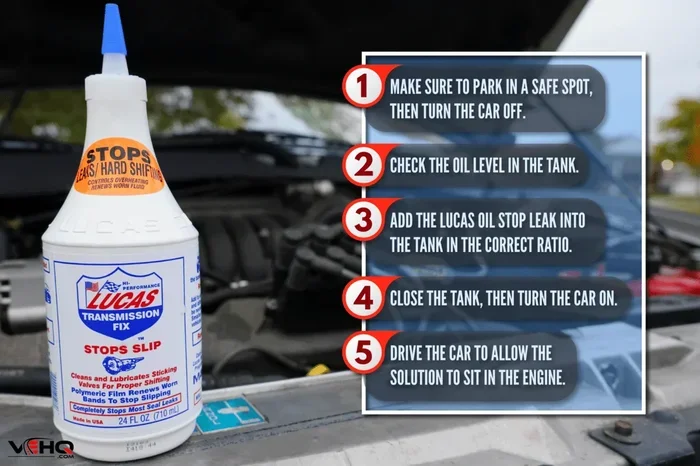
Step 1: Clean the Engine Area
Before adding the stop leak, clean the area around the engine oil fill cap. This prevents dirt from entering the engine when you open it. A clean workspace also helps you spot any new leaks more easily.
Step 2: Check Your Oil Level
Use the dipstick to check your current oil level. If the oil is low, top it off before adding the stop leak additive. The product needs sufficient oil to circulate properly through the engine.
Step 3: Add the Recommended Amount
Follow the dosage instructions on the product label. Adding too much will not speed up the process and could cause issues. Adding too little may not produce results. Measure carefully and pour slowly.
Step 4: Drive and Monitor
After adding the product, drive your car for at least 100 to 200 miles. The additive needs time to circulate and condition the seals. Check under your car periodically for fresh oil spots. You should notice a reduction in dripping within the first few days.
Step 5: Repeat if Necessary
For stubborn leaks, a second application may be needed. Wait at least 500 miles between applications. If the leak persists after two treatments, the problem likely requires a mechanical fix rather than an additive.
While working on your vehicle maintenance, you might also want to check that your workspace is comfortable — just as you would want your office chair to stop sinking during long repair sessions, keeping your workspace in good shape helps you stay focused on the task at hand.
Common Mistakes to Avoid with Oil Stop Leak Products
Even the best oil stop leak product can fail if you make these common mistakes:
- Using too much product: Overdosing does not speed up results. It can clog oil passages and cause more problems.
- Ignoring serious leaks: Stop leak additives work on minor to moderate leaks. A cracked oil pan or broken gasket needs professional repair.
- Skipping oil changes: Stop leak products are not a substitute for regular oil changes. Old, dirty oil reduces the effectiveness of any additive.
- Using the wrong formula: Always match the product to your engine type. A product designed for gasoline engines may not work well in a diesel.
- Expecting instant results: Stop leak additives need time to work. Give them at least 100 miles before judging effectiveness.
- Neglecting the root cause: If your engine burns oil or has worn piston rings, a stop leak additive treats the symptom, not the underlying problem.
Another thing to keep in mind is your overall workspace setup. Just as you would want your chair to stop squeaking so you can focus, keeping your garage organized and your tools in order makes any repair task smoother and safer.
When to See a Mechanic Instead
Stop leak products are excellent for minor leaks, but they are not a cure-all. Here are signs that you need professional help:
- The leak is large and constant, with visible puddles forming quickly.
- Your oil pressure warning light stays on after adding the stop leak.
- You notice metal shavings or debris in your oil.
- The engine makes unusual knocking or grinding sounds.
- You have tried two applications of stop leak with no improvement.
In these cases, the leak likely stems from a mechanical failure that no additive can fix. Continuing to drive with a serious oil leak risks catastrophic engine damage. A qualified mechanic can diagnose the root cause and recommend the right repair.
Preventing Oil Leaks Before They Start
The best way to deal with oil leaks is to prevent them altogether. Here are simple steps to keep your engine sealed and leak-free:
- Change your oil regularly. Fresh oil keeps seals conditioned and prevents sludge buildup that degrades gaskets.
- Use quality oil and filters. Premium oils contain seal conditioning agents that help gaskets stay flexible over time.
- Check oil levels weekly. Catching a slow drop early lets you address small leaks before they become big problems.
- Inspect your engine bay. Look for signs of oil residue around gaskets and seals during routine checks.
- Address small drips immediately. A tiny leak today can become a major repair tomorrow. A quick oil leak prevention measure now saves headaches later.
Think of it this way — just like making sure your workspace chair does not start sinking or rolling away while you work on projects, staying on top of small maintenance issues in your garage keeps everything running smoothly and safely.
Final Thoughts on the Best Oil Stop Leak
The best oil stop leak product is one that matches your specific leak type, engine condition, and budget. For most drivers with minor to moderate leaks, a quality seal conditioner or fibrous stop leak additive delivers excellent results. The key is to act quickly, apply the product correctly, and monitor your engine over the following weeks.
Remember that stop leak products are a tool, not a permanent replacement for proper engine maintenance. Use them wisely, and they can save you significant time and money. Whether you are dealing with a tiny drip or a stubborn gasket leak, the right oil stop leak solution puts you back on the road with confidence.
Start with a trusted product, follow the application steps carefully, and give it a fair chance to work. Your engine — and your wallet — will thank you.
Frequently Asked Questions
Can oil stop leak products damage my engine?
Most quality stop leak products are safe for engines when used as directed. However, using too much or choosing a product incompatible with your engine type can cause issues. Always follow dosage instructions and check compatibility with your oil type and engine.
How long does it take for oil stop leak to work?
Most users notice a reduction in leaking within 100 to 200 miles of driving. For best results, drive normally and check under your car after a few days. Some stubborn leaks may require a second application after 500 miles.
Is oil stop leak a permanent fix?
It depends on the product and the severity of the leak. Fibrous and permanent sealer formulas can provide long-lasting results for minor to moderate leaks. However, if the underlying issue is a cracked component or severely worn gasket, a mechanical repair is still necessary.
Can I use oil stop leak with synthetic oil?
Many modern stop leak products are compatible with synthetic oil. Always check the product label for compatibility information. Using a product designed for synthetic oil ensures safe and effective results in modern engines.
How often can I apply oil stop leak?
You can apply a second dose after 500 miles if the first application did not fully stop the leak. Do not exceed the recommended dosage on the product label. If two applications do not resolve the leak, consult a mechanic for a proper diagnosis.
What causes oil leaks in engines?
Common causes include worn gaskets, aging valve seals, deteriorated oil pan gaskets, and cracked engine components. Regular oil changes and early maintenance help prevent these issues from developing into costly repairs.
=== CONCLUSION ===
The best oil stop leak product can be a game-changer for anyone dealing with minor to moderate engine leaks. These affordable, easy-to-use additives save you money, prevent further damage, and keep your engine running smoothly. By choosing the right formula, applying it correctly, and avoiding common mistakes, you can tackle oil leaks with confidence.
Remember to act quickly when you spot a leak, use products compatible with your engine, and know when to seek professional help. With the right oil leak repair approach, you keep your car safe and your wallet happy. Start exploring the top-rated stop leak products today and give your engine the protection it deserves.

Similar Posts