Is your Shark vacuum making a horrific racket but not picking up dirt? This is almost always a sign of a major airflow blockage or a failing component. The good news is that in most cases, you can diagnose and fix the problem yourself with basic tools and 20 minutes of your time. This guide walks you through every potential cause, from a simple clogged hose to a worn-out brush roll motor, with clear, safe instructions to get your Shark vacuum sucking and quiet again.
You’re in the middle of cleaning, and your trusty Shark vacuum suddenly transforms from a quiet workhorse into a roaring, hair-raising beast. It’s screaming at you, but the dirt and debris are just sitting there, mocking you. That terrifying combination of a Shark vacuum no suction loud noise is one of the most common—and most fixable—problems owners face. It feels catastrophic, but it’s usually the vacuum’s way of sending a very clear, very loud SOS signal. Don’t panic, and definitely don’t rush to buy a new one. In this complete, step-by-step guide, we’ll become detectives together. We’ll follow the sound and the lack of airflow to pinpoint the exact issue, from the simplest clog to a part that needs replacing. Get ready to turn that noisy, powerless monster back into your quiet, efficient cleaning partner.
Key Takeaways
- The loud noise + no suction combo is a classic symptom of an airflow restriction: The vacuum’s motor is working overtime (hence the noise) but air can’t flow through the system, so there’s no suction power at the floor head.
- Always unplug the vacuum before any inspection or repair: This is the #1 safety rule to prevent accidental startup and injury from moving parts like the brush roll.
- Start troubleshooting at the floor head and work your way backward to the machine: Systematically check the brush roll, hose, wand, and filters in order to find the clog or fault.
- A worn or tangled brush roll is a frequent culprit: Hair and fibers wrap around the bearings, creating drag and noise while stopping the roll from spinning freely.
- Discolored or damaged filters will kill suction: Filters are not just for air quality; they are critical to the vacuum’s internal airflow path. A clogged exhaust filter is a top cause of this problem.
- Listen to the noise type: A high-pitched whine often points to a motor issue. A deep, straining roar usually means a severe clog. A rhythmic thumping often means a brush roll obstruction.
- Some issues require a professional: If you’ve checked all common clogs, cleaned all filters, and the brush roll spins freely but the problem persists, the main motor or a internal seal may be faulty.
📑 Table of Contents
- Understanding the Symptom: Why Noise and No Suction Happen Together
- Step 1: The Floor Head & Brush Roll Inspection
- Step 2: The Hose, Wand, and AirPath Clog Hunt
- Step 3: Filter Failure – The Silent Suction Killer
- Step 4: Advanced Checks – Seals, Motors, and Internal Clogs
- Preventative Maintenance: Stopping the Problem Before It Starts
- When to Call It Quits (or Call for Help)
Understanding the Symptom: Why Noise and No Suction Happen Together
To fix the problem, we must first understand what’s happening inside your Shark vacuum. Your vacuum cleaner is a simple machine at its core: a fan (the motor) creates negative pressure (suction) that pulls air (and dirt) through the hose, wand, and cleaning head, then pushes that air out through filters before exhausting it back into your room. The Shark vacuum no suction loud noise symptom tells us this system has broken down at a critical point.
The Airflow Path and Its Weak Points
Think of it like a drinking straw. If you block the top of the straw, you have to suck much harder to get any liquid, and it makes a weird, strained noise. Your vacuum is doing the same thing. The motor is running at full tilt (the loud noise), but somewhere between the floor and the exhaust port, the airflow path is blocked. The motor can’t move air, so it creates no suction at the carpet. The blockage creates immense strain on the motor, causing it to sound louder and work harder, sometimes emitting a high-pitched whine or a deep, guttural roar. The most common weak points in this airflow path are:
- The brush roll housing (clogged with hair/fur)
- The hose and wand (obstructions, collapsed sections)
- The filters (extremely dirty, damaged, or installed backward)
- The exhaust port (blocked by a filter or debris)
Diagnosing by Sound: What Your Vacuum is Telling You
Before you even touch a screwdriver, listen. The *type* of loud noise is your first clue.
- A Deep, Straining Roar: This is the classic “sucking through a blocked straw” sound. It almost sounds like the motor is struggling to breathe. This points with 90% certainty to a severe clog somewhere in the hose, wand, or brush roll housing. Air is being pulled from every possible leak instead of the intended path.
- A High-Pitched Whine or Squeal: This is often a motor issue. Bearings could be failing, or a motor fan blade could be hitting something. It can also indicate a very tight seal on a brush roll that has stopped spinning due to tangled hair, causing massive drag on the motor shaft.
- A Rhythmic Thumping or Banging: This usually means something is physically striking the inside of the vacuum as it spins. The #1 suspect here is a brush roll that has hair wrapped so tightly around one end that it’s become unbalanced and is hitting the housing. It could also be a loose internal component.
Pro Tip: With the vacuum unplugged, manually rotate the brush roll (if accessible). If it doesn’t spin freely or feels gritty, you’ve found your problem.
Step 1: The Floor Head & Brush Roll Inspection
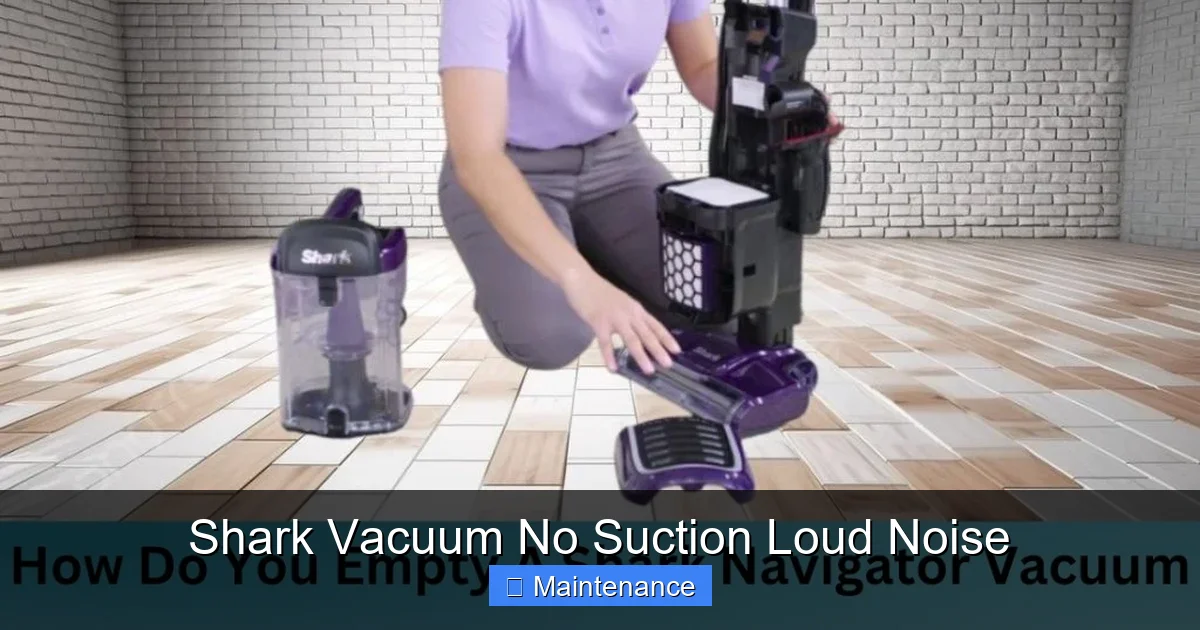
Your investigation starts at the point of contact—the floor head. This is where most clogs and tangles begin. A Shark’s powerful brush roll is fantastic at agitating carpet fibers but is also a magnet for hair, string, and carpet fibers, especially in homes with pets.
Visual guide about Shark Vacuum No Suction Loud Noise
Image source: sharkvacuum.blog
How to Safely Access and Inspect the Brush Roll
SAFETY FIRST: ALWAYS UNPLUG THE VACUUM FROM THE WALL OUTLET BEFORE PERFORMING ANY INSPECTION OR REPAIR. This cannot be stressed enough. The brush roll can start unexpectedly and cause serious injury.
- Lay the vacuum on its back so you have clear access to the underside of the floor head.
- Locate the release latch or screws (usually on the top or side of the floor head housing) that allow you to remove the bottom plate. On many Shark models, you press two tabs and the plastic bottom plate pops off.
- Once the plate is off, you’ll see the brush roll—a cylindrical bar with bristles and rubber fins, running the width of the head.
Identifying and Clearing a Tangled Brush Roll
This is the most common fix for a Shark vacuum no suction loud noise. Look for a dense “pelt” of hair, fur, or string wrapped around the ends of the brush roll, where the bearings are. This material acts like a brake.
- Use scissors or a seam ripper: Carefully cut the hair/fiber wrap lengthwise along the brush roll. Do not cut the bristles. Pull the severed sections away. You may need to do this several times around the circumference.
- Check the bearings: After clearing the bulk, try to spin the brush roll by hand. It should rotate smoothly and freely for several seconds with a slight whir. If it feels gritty, stiff, or stops immediately, the bearings are likely packed with debris or have failed. In this case, the brush roll assembly needs to be replaced. Shark brush rolls are relatively inexpensive and easy to swap.
- Inspect the belt (if applicable): Not all Shark models use a belt (many are direct-drive), but if yours does, check that it’s not broken, stretched, or melted. A slipping or broken belt would cause the brush roll not to spin, but the motor noise would be different—more of a high-pitched squeal from the belt slipping. However, a broken belt can also cause a clog if it jams in the housing.
Example: A customer with two long-haired dogs found their Navigator Lift-Away making a straining roar. After unplugging and removing the floor plate, we discovered a solid cylinder of black hair packed around both ends of the brush roll, effectively welding it in place. After 10 minutes of careful cutting with scissors, the brush roll spun freely again. Suction and quiet operation were restored.
Step 2: The Hose, Wand, and AirPath Clog Hunt
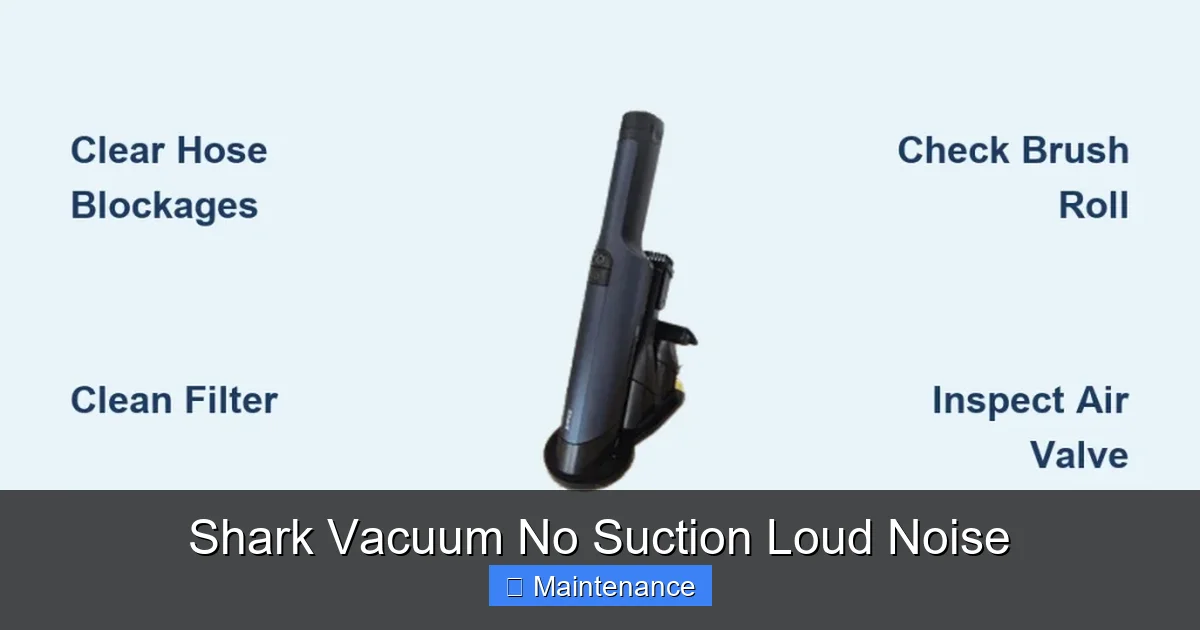
If the brush roll spins freely and looks clean, your next suspect is a clog in the flexible hose or metal wand. This is the second most common cause. A vacuum will often suck up small items like paperclips, socks, or large debris that then get stuck in a bend, creating a complete blockage.
Visual guide about Shark Vacuum No Suction Loud Noise
Image source: sharkvacuum.blog
Visual and Tactile Inspection of the Hose
- Detach the hose from both the vacuum body and the wand/handle. Most Shark hoses have a simple twist-and-pull or clip release at each end.
- Visually inspect the inside of both hose ends. Look for debris.
- Straighten the hose and look down its length. Sometimes you can see a clog. More often, you need to feel for it.
- Insert a long, thin, flexible object like a straightened wire coat hanger (bend the end into a small hook) or a long screwdriver. Gently probe through the hose to feel for an obstruction. Be very gentle to avoid puncturing the hose lining.
- If you feel a clog, work the hook around it and try to pull it out the same end. For stubborn clogs, try using the handle of a long, thin broom or a plumbing snake (use with extreme caution).
Checking the Wand and Handle
The metal telescoping wand and the handle itself can also harbor blockages, especially at the bends where the hose connects.
- Detach the wand from the handle and from the hose. Look and feel through both ends.
- Check the crevice tool and other attachments. A small toy part or pebble stuck inside an attachment will block all airflow when it’s attached.
- Pay special attention to the joint where the wand meets the floor head. Debris can pack in there tightly.
Pro Tip: Use a strong, steady breath to blow air through the disconnected hose and wand from one end. If you can’t blow air through it easily, you have a clog. This is a quick diagnostic test.
Step 3: Filter Failure – The Silent Suction Killer
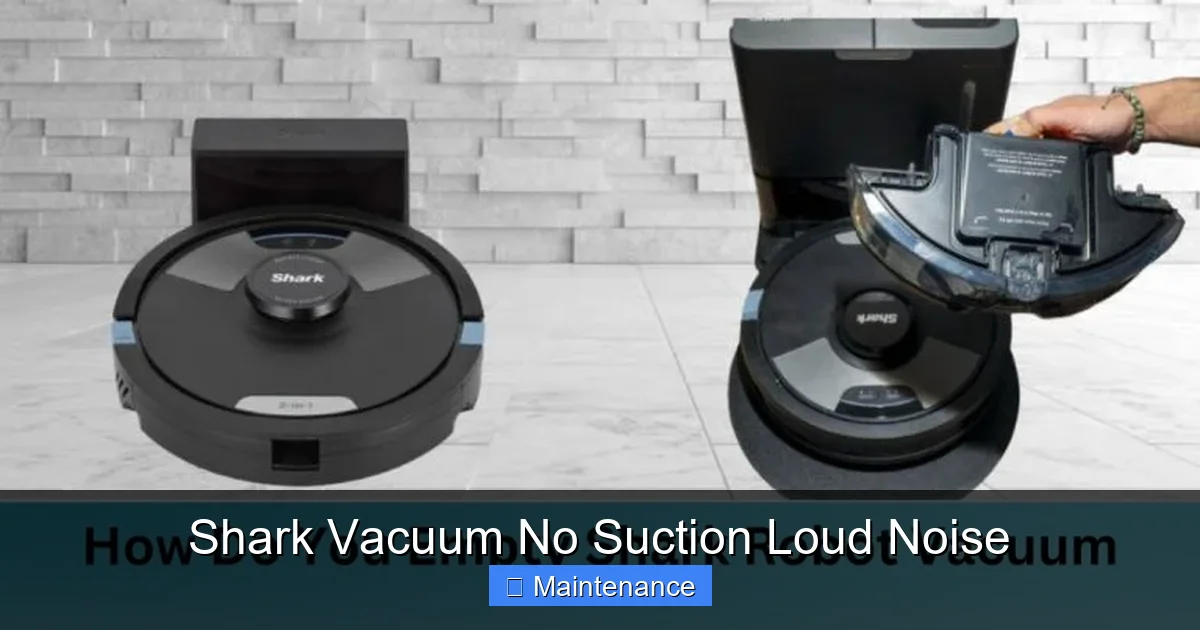
Filters are not optional; they are a mandatory part of the vacuum’s airflow circuit. Shark vacuums typically have at least two filters: a foam pre-motor filter that protects the motor from large debris, and one or more exhaust filters (often HEPA) that clean the air before it’s blown back into your room. If either filter is completely clogged with dirt, dust, and debris, air cannot pass through. The motor strains against this blockage, creating the Shark vacuum no suction loud noise while no air moves at the floor head.
Visual guide about Shark Vacuum No Suction Loud Noise
Image source: sharkvacuum.blog
Locating and Removing Your Shark’s Filters
Filter locations vary by model. Common places:
- Inside the dust cup assembly (a foam filter).
- On the back or side of the vacuum body, behind a plastic access panel (the exhaust HEPA filter).
- Inside the handle or wand on some upright models.
Consult your owner’s manual for exact locations. Filters are usually held in place by a frame, clips, or a simple twist lock.
Cleaning vs. Replacing Filters
This is critical. Shark foam pre-motor filters are washable and reusable. They should be washed regularly (monthly with normal use) with cold water and mild detergent. Squeeze out excess water and let them air-dry completely for at least 24 hours before reinserting. Never put a damp filter back in the vacuum.
The exhaust HEPA filters are often labeled as “non-washable” or “replace only.” Attempting to wash them will destroy their media. Tap them gently over a trash can to dislodge loose debris. If they are discolored (gray, brown, black) or visibly clogged, they must be replaced. A clogged exhaust filter is a primary cause of a Shark vacuum no suction loud noise.
- Rule of Thumb: If washing the foam filter doesn’t restore suction, or if the exhaust filter looks dirty, replace the exhaust filter. They are model-specific. Use only genuine Shark replacement parts for best performance and to avoid damaging the motor.
- Installation Check: Ensure filters are installed in the correct orientation and seated properly. A filter installed backward or slightly askew will block all airflow.
Step 4: Advanced Checks – Seals, Motors, and Internal Clogs
If you’ve meticulously checked and cleared the brush roll, hose, wand, and cleaned/replaced all filters, and your Shark vacuum still makes a loud noise with no suction, the problem is internal. These are less common but possible.
Damaged or Missing Gaskets and Seals
Your vacuum has several rubber or foam gaskets that create airtight seals between components—between the dust cup and the body, around the filter housings, and at the hose connections. If one of these seals is torn, brittle, or missing, air will leak into the system before it reaches the brush head. The motor will roar as it pulls air through this unintended leak path, but no suction will be generated at the floor. Inspect all gaskets for cracks, tears, or pieces that have fallen out. Replacement gasket kits are available for many models.
Internal Clog in the Vacuum Body
Sometimes, a large object or a compacted mass of debris can travel from the hose into the vacuum’s internal air passages, usually near where the hose connects to the motor housing. This is trickier to access.
- Remove the dust cup and clean it thoroughly, checking the intake port where the hose attaches.
- Look into the opening where the hose connects to the body. Use a flashlight. You may see debris packed in the elbow. Use long needle-nose pliers or a bent wire to carefully extract it.
Motor or Fan Failure
This is the last resort. If all airflow paths are clear, filters are perfect, and the brush roll spins freely, the motor itself may be failing.
- Fan Blade Damage: The motor has a small fan that moves air. If a fan blade is broken or bent (from a large object being sucked in), it won’t move air efficiently. This creates a high-pitched whine and no suction. This usually requires motor replacement.
- Worn Motor Bearings: A motor with failing bearings will make a grinding or high-pitched squealing noise and lose power. This is also a motor replacement job.
- Carbon Brushes Worn: Some Shark motors have replaceable carbon brushes. If they are worn down to the nub, the motor will not generate power. This is a more advanced repair but is sometimes possible for a handy user with the correct parts.
Important: Motor repairs are often not cost-effective on older vacuums. Compare the cost of a new motor (plus your time) to the price of a new Shark vacuum. Sometimes, replacement is the better economic choice.
Preventative Maintenance: Stopping the Problem Before It Starts
The best fix is the one you never need. A few minutes of regular maintenance will keep your Shark vacuum performing quietly and powerfully for years.
Create a Cleaning Schedule
- After Every Use: Tap out the dust cup and wipe the exterior. Check the brush roll for immediate tangles and cut them away before they compact.
- Weekly: Check the hose and wand for any developing clogs. Wipe the wheels and underside of the floor head.
- Monthly (or with normal use): Wash the foam pre-motor filter. Visually inspect the exhaust filter.
- Every 3-6 Months: Do a full inspection. Remove the brush roll and clean its bearings/housing. Check all hoses for cracks or collapse. Inspect all gaskets and seals.
Best Practices to Avoid Clogs
- Never vacuum up large, hard objects (coins, marbles, pins, screws). Use a broom and dustpan first.
- Be extra cautious with long hair, string, and carpet fibers. Brush them up before vacuuming if possible, or be prepared to clean the brush roll frequently.
- Don’t vacuum wet debris or large volumes of fine powder (like baby powder or flour) without the appropriate attachment. These can pack into filters and passages.
- Ensure your vacuum’s height adjustment is correct for your floor type. If it’s set too low for thick carpet, the brush roll will jam into the pile, causing excessive drag and noise.
When to Call It Quits (or Call for Help)
We’ve walked through the entire diagnostic tree. You’ve checked the brush roll, cleared every hose, cleaned and replaced all filters, and inspected internal seals. The Shark vacuum no suction loud noise persists. Now what?
Assessing Repair vs. Replacement
Ask yourself these questions:
- How old is the vacuum? If it’s over 7-8 years old and has had other issues, motor failure is likely. Parts and labor may exceed the value of the machine.
- What is the repair cost? A new motor for a Shark can range from $60 to over $150, plus your time. A new Shark Navigator or Vertex model with a full warranty often starts around $150-$200. If the repair quote is more than 50% of a new comparable model, replacement makes sense.
- Do you have the tools and skill? Motor replacement involves disassembling much of the vacuum. If you’re not comfortable with electronics and small parts, you could cause more damage.
Finding Authorized Service and Parts
If you decide to repair:
- Locate your exact model number (on the back or bottom label).
- Use the Shark official website to find an authorized service center. This is often the best route for motor or complex electrical repairs, as they have genuine parts and warranty on the repair.
- For DIY, use only genuine Shark replacement parts (brush rolls, filters, gaskets, motors). Generic parts are often lower quality and can cause more problems or even damage.
- YouTube is an invaluable resource. Search for your exact model number + “repair” or “motor replacement.” You will likely find a detailed video walkthrough from a repair technician.
Final Thought: That Shark vacuum no suction loud noise is almost always a solvable puzzle. By following this systematic approach—starting with the brush roll, moving to the hose, then the filters—you will solve the problem 95% of the time. The key is patience, safety, and using your ears and eyes as your primary diagnostic tools. Save the cost of a new vacuum and the frustration of a weak clean by becoming your vacuum’s best mechanic.
Frequently Asked Questions
My Shark vacuum is loud but has some suction, not none. Is that the same problem?
Yes, it’s the same family of problems. A partial clog or a slightly dirty filter will restrict airflow, causing the motor to work harder (louder) while reducing suction power. The diagnostic steps are identical—start with the brush roll and work through the airflow path. Addressing it early can prevent a total blockage.
Is it safe to run my Shark vacuum with this loud noise to see if it clears itself?
Absolutely not. Running the vacuum in this condition is very risky. The motor is overheating from strain, which can cause it to burn out. A tangled brush roll can overheat and melt the belt or housing. You could also be forcing a clog deeper into the machine, making it harder to fix. Always unplug immediately and diagnose.
How often should I really wash my Shark vacuum’s foam filter?
With normal use in a typical home, wash the foam pre-motor filter every 1-2 months. If you have pets, allergies, or a very dusty environment, clean it monthly. The rule is: if it looks visibly gray or clogged with dust, it needs cleaning. Never reinsert a damp filter—wait a full 24 hours for air drying.
Can a Shark vacuum lose suction without making a loud noise?
Yes. A gradual loss of suction without a noise change usually points to a slowly clogging filter or a dust cup that needs emptying. A leaky gasket or a slight hose crack can also cause quiet suction loss. The loud noise component specifically indicates the motor is straining against a significant, sudden restriction.
My brush roll spins freely, and everything is clean, but the noise and no suction remain. What’s left?
You’ve covered the most common issues. Your next steps are: 1) Double-check that every filter is perfectly clean, undamaged, and installed correctly (especially the exhaust filter). 2) Inspect all internal rubber gaskets/seals for damage. 3) Listen closely—if the noise is a high-pitched whine, the motor or its fan is the likely culprit and needs professional assessment or replacement.
Are Shark vacuum parts and filters really that model-specific?
Yes, extremely. A filter or brush roll from a Shark Navigator will not fit a Shark Vertex or a Shark IZ. Using the wrong part can create air leaks, poor performance, or even damage. Always find your exact model number (on the label on the back/bottom) and order parts specifically for that model from Shark or an authorized dealer.