Is your Shark Vacmop suddenly refusing to spray water? This frustrating issue is almost always fixable and usually stems from a simple clog, an empty tank, or a disrupted seal. Don’t rush to replace it—most problems can be resolved at home with basic troubleshooting. This guide walks you through every potential cause, from the obvious to the obscure, with clear, step-by-step solutions to restore your Vacmop’s cleaning power.
Key Takeaways
- The problem is rarely a mechanical failure: In 95% of cases, a Shark Vacmop not dispensing water is due to a user-fixable issue like a clog, air lock, or empty tank.
- Always start with the basics: Confirm the water tank is properly seated, filled with clean water, and the cap is securely tightened before any complex disassembly.
- Nozzle clogs are the #1 culprit: Mineral deposits from hard water and dried cleaning solution are the most common reason for spray failure and require regular cleaning.
- The air purge valve is critical: This small, often overlooked part must be clear and functional to allow water to flow from the tank to the spray system.
- Prevention is easier than repair: Using distilled water, flushing the system after each use, and proper storage will prevent the vast majority of dispensing issues.
- Check the mop pad connection: A poorly attached or saturated pad can create a backpressure that stops water flow, so ensure it’s clicked in correctly and not overly soaked.
📑 Table of Contents
- Introduction: The Frustration of a Dry Mop
- How Your Shark Vacmop’s Water System Actually Works
- Most Common Reasons Your Shark Vacmop Isn’t Spraying Water
- Step-by-Step Troubleshooting Guide: From Simple to Complex
- Preventive Maintenance: Keeping Your Vacmop Spraying for Years
- When Troubleshooting Fails: Signs of a Bigger Problem
- Conclusion: Don’t Give Up on Your Vacmop
Introduction: The Frustration of a Dry Mop
You’ve filled the tank, you’ve attached the clean pad, and you’re ready to tackle that kitchen floor. You press the spray button, hear the familiar hum of the motor, but… nothing. No fine mist, no satisfying spray of water. Your Shark Vacmop is not dispensing water. That moment of confusion quickly turns to frustration. This all-in-one cleaning marvel, designed to make your life easier, has seemingly given up its most essential function. Before you consider a costly replacement or a frustrating call to customer service, take a deep breath. The issue is overwhelmingly likely to be something simple, something you can diagnose and fix yourself in under ten minutes. This comprehensive guide is your roadmap from frustration to function. We’ll explore the Shark Vacmop’s water delivery system, uncover the most common reasons it fails, and provide detailed, safe troubleshooting steps to get your machine spraying perfectly again.
How Your Shark Vacmop’s Water System Actually Works
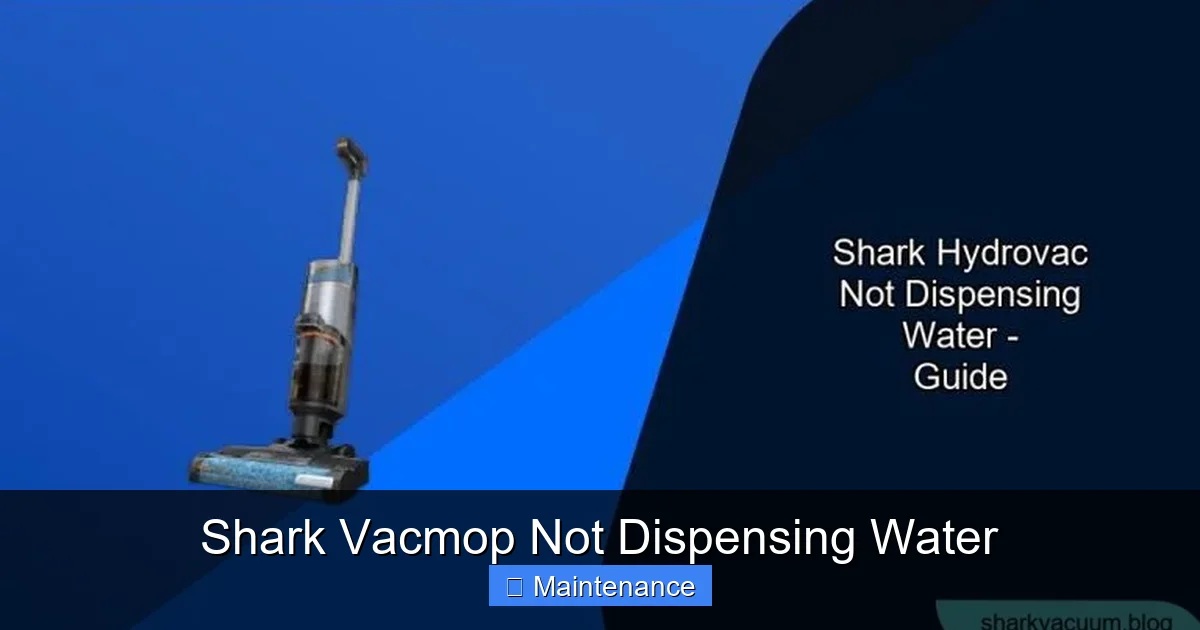
To diagnose a problem, you first need to understand the system. Your Shark Vacmop doesn’t just pour water out; it uses a controlled, pressurized spray mechanism. Knowing the journey of a water droplet from tank to floor is key to finding where the blockage or break occurs.
Visual guide about Shark Vacmop Not Dispensing Water
Image source: sharkvacuum.blog
The Journey: From Tank to Floor
The process starts when you fill the removable water tank. This tank has a cap with a built-in one-way valve and a small rubber seal. When you reinsert the tank into the Vacmop’s body, a probe punctures the cap’s seal, creating a watertight connection. Inside the machine’s main body, a small electric pump (the same one that creates suction) also pressurizes the water line. When you press the spray trigger, this pump pushes water from the tank, through a filter, and out through a tiny nozzle located on the underside of the mop head, right in front of the rotating pad. A second, crucial component is the air purge valve, a tiny vent that allows air to escape from the system as water enters, preventing an air lock that would stop flow.
Key Components: Tank, Seal, Pump, Filter, Nozzle, Air Valve
Think of this as a chain: Tank → Cap Seal → Internal Lines → Filter → Pump → Nozzle. If any single link is compromised—a cracked seal, a clogged filter, a blocked nozzle—the entire chain fails, resulting in a dry floor. The air purge valve is like a safety release on this chain; if it’s clogged, pressure builds incorrectly and water won’t exit the nozzle. Understanding these parts and their locations is your first victory in troubleshooting.
Most Common Reasons Your Shark Vacmop Isn’t Spraying Water
Armed with knowledge of the system, we can now target the usual suspects. These are the issues that account for nearly every “not dispensing water” complaint.
Visual guide about Shark Vacmop Not Dispensing Water
Image source: planetsharkdivers.com
1. The Obvious: An Empty or Improperly Seated Tank
It sounds too simple, but it’s the first thing to check. Did you actually fill the tank? Is the water level above the minimum line? More commonly, the tank isn’t seated correctly. The locking mechanism must click fully into place. If the tank is even slightly askew, the internal probe won’t pierce the cap’s seal, creating an airtight, watertight seal that prevents any flow. Always remove the tank and firmly reinsert it, listening and feeling for a definitive click.
2. The #1 Culprit: A Clogged Spray Nozzle
This is, by far, the most frequent cause. The nozzle is a tiny hole, often less than 1mm in diameter. It’s exposed to mineral deposits from tap water (hard water scale) and dried residues from cleaning solutions. Over time, this builds up until the nozzle is completely obstructed. You might see a faint drip or a very weak stream before it stops entirely. This is a classic sign of a partial clog that has worsened.
3. The Silent Stopper: A Blocked Air Purge Valve
Located on the water tank cap or in the machine’s fill port, this tiny rubber valve or hole lets air escape. If it gets clogged with debris or dried solution, air can’t exit the system as water tries to enter. This creates a vacuum, preventing water from leaving the tank. It’s a small part that has an enormous impact on function and is often missed during routine cleaning.
4. Internal Filter Obstruction
Inside the Vacmop’s body, where the water line connects to the pump, there is a small mesh filter. Its job is to catch particles before they reach the pump and nozzle. If you’ve used tap water with sediment or a gritty cleaning solution, this filter can become clogged, stopping water flow entirely. This is an internal issue that requires a bit more disassembly to address.
5. Faulty or Misaligned Mop Pad Connection
The cleaning pad isn’t just for scrubbing; it’s part of the fluid system. The pad sits in a reservoir that receives the sprayed water. If the pad is not clicked securely into its housing, or if it is completely saturated and dripping, it can create backpressure. This pressure can be enough to counteract the pump’s spray force, making it seem like no water is coming out when, in fact, it’s being held back by the oversaturated pad.
6. Pump Failure or Air Lock in the Lines
Less common, but possible. If the machine has been stored on its side or upside down, water can drain into the pump motor housing, or an air bubble can become trapped in the line. Additionally, the pump itself could fail due to wear or electrical issues. However, if you hear the pump running (a faint whirring/humming when you press the trigger) but get no water, the problem is almost certainly a clog or seal issue, not a dead pump.
Step-by-Step Troubleshooting Guide: From Simple to Complex
Follow this diagnostic and repair sequence. Start with Step 1 and only proceed if the problem persists. In most cases, you’ll be finished by Step 3.
Visual guide about Shark Vacmop Not Dispensing Water
Image source: m.media-amazon.com
Step 1: The Pre-Check – Tank, Cap, and Pad
- Check Water Level: Remove the tank and visually confirm it contains clean water above the minimum fill line.
- Inspect the Cap Seal: Look at the rubber gasket on the inside of the tank cap. Is it cracked, warped, or missing? Any damage here means an imperfect seal. If damaged, you may need a replacement cap.
- Re-seat the Tank: Empty the tank, reinsert it firmly into the machine’s body, and push down until you hear a solid, unmistakable click from all sides. Try spraying into a sink.
- Examine the Mop Pad: Remove the pad. Is it dripping wet and heavy? Wring it out thoroughly or use a fresh, dry pad. Ensure it clicks securely into its housing on the mop head.
Step 2: Cleaning the Spray Nozzle – The Most Likely Fix
This is the critical step. You’ll need a thin, stiff wire (like a paperclip), white vinegar, and a cotton swab.
- Locate the Nozzle: Flip the Vacmop over. The nozzle is a tiny hole on the underside of the mop head, typically near the front, just behind the brush roll area. It might be recessed.
- Mechanical Cleaning: Gently straighten a paperclip. Carefully insert the tip into the nozzle hole and wiggle it very gently. Do NOT force it or enlarge the hole. You are just dislodging loose scale. You may see a tiny particle come out.
- Chemical Cleaning: Dip a cotton swab in white vinegar. Insert it into the nozzle to dissolve mineral deposits. Let the vinegar sit in the nozzle for 5-10 minutes.
- Flush: Fill the tank with a 50/50 mixture of warm water and white vinegar. Reassemble the machine (with a dry pad). Spray the vinegar solution into a sink for 30 seconds. This flushes the lines. Then, fill with clean, distilled water and spray again to rinse the system thoroughly.
Step 3: Clearing the Air Purge Valve
This valve is often on the tank cap itself. Look for a small, circular rubber flap or a tiny hole next to the cap’s fill opening.
- Inspect: Use a magnifying glass if needed. Is the flap stuck shut? Is the hole clogged with dried solution?
- Clean: Dip a cotton swab in vinegar and gently clean around the valve flap and the vent hole. You can also very carefully use a thin pin to gently probe the hole to ensure it’s open.
- Test: With the tank off, blow gently into the valve hole from the outside. You should feel air pass through easily. If not, it’s still clogged.
Step 4: Checking the Internal Filter (Intermediate)
This requires accessing the machine’s internal water line connection. Always unplug the machine first.
- Access: Turn the Vacmop over. You’ll likely need to remove the bottom plate or the mop head assembly to see the internal tubing. Consult your user manual for specific screw locations. Typically, there are 4-6 screws on the underside holding the base plate.
- Locate Filter: Follow the clear plastic tubing from the tank connection to the pump. You’ll find a small, cylindrical mesh filter, often in a plastic housing, in-line.
- Remove & Clean: Carefully disconnect the tubing (have a towel handy for drips). Remove the filter. Soak it in vinegar for 15 minutes, then rinse under strong running water. Use a soft brush to dislodge debris. Reinstall securely, ensuring tubing connections are tight and leak-free.
Step 5: Addressing Potential Air Locks
If you’ve cleaned everything and it still won’t spray, an air bubble may be trapped.
- The Priming Method: Fill the tank completely with warm (not hot) water. Do not attach the mop pad. Hold the Vacmop over a sink with the nozzle pointing down. Press and hold the spray trigger continuously for 30-60 seconds. The continuous pump operation can force the air bubble out through the nozzle. You may see sputtering, then a steady stream.
- The Tilt Method: With the tank full and attached, tilt the machine at a sharp angle (nozzle pointing up) for 10 seconds, then quickly point it down into the sink and spray. The change in gravity can help move the air bubble.
Preventive Maintenance: Keeping Your Vacmop Spraying for Years
An ounce of prevention is worth a pound of cure. Following these habits will make the “not dispensing water” problem a rare event.
Use the Right Water: Distilled is Best
Tap water contains minerals (calcium, magnesium) that inevitably build up in the tiny nozzle and filter. This is the root cause of most clogs. Always use distilled or demineralized water in your Shark Vacmop. It’s inexpensive and eliminates the hard water scale problem entirely. If you must use tap water, flush the system with a vinegar-water solution after every 3-5 uses.
Flush the System After Every Use
Don’t just empty the tank and let it dry. Fill the tank with clean, plain water. Spray the entire tank’s worth through the nozzle into a sink. This simple 30-second step flushes out any remaining cleaning solution that could dry and leave residues inside the lines and nozzle.
Proper Storage is Non-Negotiable
Never store your Vacmop with the water tank attached if it’s not completely dry. Always:
- Empty and rinse the tank.
- Wipe the cap and seal dry.
- Spray plain water through the nozzle to clear it.
- Store the machine upright, with the mop head not resting on the floor, to prevent moisture wicking into the pad housing.
- Store the tank separately, cap off, in a dry place.
Regular Nozzle & Cap Cleaning Schedule
Make this part of your monthly routine, even if you use distilled water.
- Nozzle: Once a month, perform the vinegar soak and paperclip cleaning described in Step 2.
- Cap & Air Valve: Remove the cap. Soak it in warm vinegar for 10 minutes. Use a cotton swab to clean the valve flap and vent hole meticulously. Rinse thoroughly.
- Filter: If you use tap water occasionally, clean the internal filter monthly. If you use only distilled water, check it every 3 months.
When Troubleshooting Fails: Signs of a Bigger Problem
You’ve followed every step. The tank is perfect, the nozzle is clean as a whistle, the air valve is clear, the filter is new, and you’ve primed it for a full minute. The pump hums, but still, not a drop. At this point, the issue may be beyond DIY repair.
Diagnosing a Failed Pump
If the pump runs (you hear it) but no water moves, the pump’s impeller may be broken or the diaphragm damaged. This is an internal mechanical failure. Listen closely: is the hum consistent, or does it sound strained/grinding? A strained hum with no output strongly suggests a seized or broken pump mechanism.
Cracked Internal Tubing or Seals
Over time, the plastic water lines inside the Vacmop can become brittle and develop tiny cracks, or internal seals can fail. This creates a leak in the system, so the pump pressurizes but the water leaks out internally before reaching the nozzle. You might not see external leaks. This diagnosis requires a professional visual inspection of the internal components.
Warranty and Repair Options
If your Shark Vacmop is still under the limited warranty (typically 1-5 years depending on model and purchase date), contact Shark’s customer support. Have your model number (on the back plate) and proof of purchase ready. They may troubleshoot further and, if the issue is confirmed as a manufacturer defect, offer a repair or replacement. If out of warranty, seek an authorized small appliance repair shop. Given the cost of a new Vacmop versus repair, a pump replacement may or may not be economical. A technician can give you a definitive quote.
Conclusion: Don’t Give Up on Your Vacmop
A Shark Vacmop not dispensing water is one of the most common—and solvable—problems owners face. It’s a testament to the machine’s design that the failure points are so accessible and predictable. By understanding the simple mechanics of its water delivery system, you empower yourself to be the fixer, not the frustrated user. Remember the sequence: Check tank seating, clean the nozzle, clear the air valve. These three steps resolve over 90% of cases. Commit to the preventive maintenance rituals—distilled water, post-use flushing, and monthly deep cleaning—and your Vacmop will reward you with years of sparkling, efficient cleaning. That dry floor is only temporary. With a little patience and this guide, your Shark Vacmop will be spraying clean water again before you know it, ready to tackle the next mess.
Frequently Asked Questions
Why is my Shark Vacmop making a pumping sound but not spraying water?
This usually indicates a clog or air lock, not a dead pump. The pump is running but can’t move water past an obstruction. Focus on cleaning the spray nozzle and air purge valve first, as these are the most common blockages.
Can I use vinegar to unclog my Shark Vacmop nozzle?
Yes, white vinegar is excellent for dissolving mineral deposits. Soak a cotton swab in vinegar and insert it into the nozzle, or run a 50/50 vinegar-water solution through the system by spraying it into a sink. Always follow with a thorough rinse using clean distilled water.
Is it okay to use hot water in my Shark Vacmop tank?
No. Always use cool or lukewarm water. Hot water can warp the plastic tank and, more importantly, damage the internal seals and valves, leading to leaks and dispensing problems. Stick to room temperature or cool water.
My Vacmop tank seems full, but no water comes out. What gives?
>First, ensure the tank is clicked securely into the machine. A poor seal is a very common issue. If seated correctly, the problem is almost certainly a clogged nozzle, a blocked air valve on the tank cap, or a saturated mop pad creating backpressure.
How often should I clean the internal water filter?
If you use only distilled water, inspect and clean the filter every 3 months. If you use tap water, you must clean the filter monthly to prevent sediment buildup that will block water flow.
My Vacmop is new and already not spraying. Is it defective?
It’s possible but unlikely. First, double-check that you’ve removed all protective packaging and films from the tank cap seal and machine connection points. Ensure the tank is filled and locked correctly. New units can sometimes have residual plastic debris from manufacturing in the nozzle; a careful cleaning with a paperclip often resolves it.