If your Shark V2700z vacuum is not picking up dirt, the issue is almost always related to a loss of suction. This is typically caused by a simple clog in the hose or wand, a full dust cup, a dirty or clogged filter, or a tangled brush roll. By systematically checking these common trouble spots—starting with the dust cup and filters and moving to the hose and brush roll—you can diagnose and fix the problem yourself in minutes, restoring your vacuum’s powerful cleaning performance without a service call.
You’re pushing your trusty Shark V2700z across the floor, the familiar hum of the motor in your ears, but you notice something’s off. The debris you just vacuumed is still sitting there. You go over it again, but the carpet feels like it’s not being pulled down. This familiar frustration—your Shark V2700z vacuum not picking up—is one of the most common issues homeowners face. Before you panic and call for service or start shopping for a new vacuum, take a deep breath. In the vast majority of cases, this is not a failed motor or a broken machine. It’s a simple, fixable blockage or maintenance issue. This guide will walk you through every possible reason, from the dead-simple to the slightly more involved, so you can get your Shark back to its powerful, picking-up-everything self.
Key Takeaways
- Suction loss is the core issue: “Not picking up” always points to reduced airflow. Your vacuum’s motor is likely fine; something is blocking the air path.
- Check the dust cup first: A full dust cup is the #1 and easiest-to-fix reason for immediate suction loss. Always empty it before deep troubleshooting.
- Filters are critical: Shark V2700z models have pre-motor and post-motor filters. Both must be clean, dry, and properly seated for maximum suction.
- Clogs are common and easy to find: Blockages often hide in the hose’s curved sections, the wand joints, or the suction inlet where the brush roll connects.
- The brush roll must spin freely: Hair and debris tangled around the brush roll bearings creates drag, slowing it down and reducing surface pickup.
- Attachments must be sealed: A missing gasket on a crevice tool or a crack in a wand connection will break the vacuum’s seal and kill suction.
- Prevention is key: A quick post-vacuuming routine of emptying the cup, checking the brush roll, and wiping filters prevents 90% of “not picking up” problems.
📑 Table of Contents
- Understanding the Problem: It’s All About Airflow
- Step 1: The Quick Wins – Dust Cup & Filters
- Step 2: Hunting Down Clogs in the Air Path
- Step 3: The Brush Roll – Is It Spinning Properly?
- Step 4: Checking Seals, Gaskets, and Damage
- Step 5: Advanced Troubleshooting & When to Worry
- Conclusion: Prevention is the Best Cure
Understanding the Problem: It’s All About Airflow
To fix the problem, you have to think like your vacuum. A vacuum cleaner doesn’t “suck up” dirt with a magical force. It creates a difference in air pressure. The fan inside the motor spins incredibly fast, pushing air out the exhaust. This action creates a vacuum—a low-pressure zone—inside the hose and cleaning head. Higher atmospheric pressure outside then pushes dirt and debris into that low-pressure zone, carrying it to the dust cup. So, if your Shark V2700z is not picking up, it means that low-pressure zone isn’t strong enough. Something is restricting the airflow somewhere between the floor and the exhaust filter. Our job is to find that restriction.
The Most Common Culprits (In Order of Likelihood)
Based on thousands of user reports and repair forums, here is the typical failure chain for a Shark vacuum losing suction:
- 1. Full Dust Cup: Obvious, but often overlooked until it’s completely packed.
- 2. Clogged Filters: The pre-motor foam/felt filter and the post-motor HEPA filter get gunked up.
- 3. Clogged Hose or Wand: A narrow object or a wad of hair gets stuck in a bend.
- 4. Tangled/Blocked Brush Roll: Hair wraps around the roll and its bearings, stopping it from spinning freely.
- 5. Poor Seal at Floor Head: A missing or damaged gasket around the suction inlet where the brush roll housing attaches.
- 6. Damaged Hose or Cracks: A small crack in the hose or a loose connection leaks air, breaking suction.
We will tackle these in this exact order, from the 30-second fix to the more detailed inspection.
Step 1: The Quick Wins – Dust Cup & Filters
Always start here. These are the easiest checks and fixes, and they solve the problem 70% of the time. Grab your Shark V2700z and let’s begin.
Visual guide about Shark V2700z Vacuum Not Picking Up
Image source: sharkvacuum.blog
Emptying the Dust Cup Correctly
The Shark V2700z uses a bagless, cyclonic dust cup. The principle is great, but it fails if the cup is full. Here’s the pro way to check and empty it:
- Detach the Cup: Press the release button on the handle and pull the dust cup straight out.
- Inspect Visually: Look inside. Can you see the cyclonic funnel? If it’s obscured by a gray cloud of dust and debris, it’s full. Even if you think it’s half-full, empty it. Fine dust packs down and reduces internal volume significantly.
- Empty Completely: Take it to a trash bin. Press the bottom release button to open the bottom flap. Tap and shake it vigorously to dislodge all dust from the cyclones and the mesh screen inside. Use a stick or your (gloved) finger to clear the mesh screen holes. Any debris here directly blocks airflow.
- Check the Seal: Look at the rubber gasket on the top rim of the dust cup and the mating surface on the vacuum body. Wipe them clean with a dry cloth. Any dust or damage here will cause an air leak.
- Reinstall Firmly: Snap the dust cup back into the body until you hear a definite click. A misaligned cup breaks the seal.
Pro Tip: Do this after every single use. It takes 15 seconds and prevents 90% of suction problems.
Filter Maintenance: The Silent Suction Killer
Your Shark V2700z has at least two critical filters. If either is clogged, airflow grinds to a halt.
The Pre-Motor Foam/Felt Filter
This filter protects the motor from dust. It’s located right behind the dust cup.
- Location: With the dust cup off, look into the opening. You’ll see a plastic grille. That grille is the cover for the pre-motor filter.
- Removal: Press the tabs and pull the grille out. The foam/felt filter pad sits behind it.
- Cleaning: This filter is washable! Remove it and rinse it under lukewarm water until the water runs clear. Do NOT use soap or detergent. Gently squeeze out excess water—do not wring. Let it air dry completely for 24-48 hours. Never operate the vacuum with a wet filter. It will damage the motor.
The Post-Motor HEPA Filter
This filter cleans the air before it exhausts back into your room. It’s usually located on the back or bottom of the vacuum body.
- Location: Consult your manual, but it’s often behind a small rectangular door on the rear of the main body.
- Removal & Inspection: Open the door and pull the filter cartridge out. This is typically a pleated HEPA media filter. It is not washable.
- Replacement: If it looks dark gray or black, it’s time for a new one. Gently tap it over a trash can to dislodge loose debris. A clogged post-motor filter creates immense back-pressure on the entire system. Shark recommends replacing it every 3-6 months with regular use.
Key Point: After cleaning or replacing any filter, ensure it is seated perfectly in its housing with no gaps. An improperly seated filter leaks air.
Step 2: Hunting Down Clogs in the Air Path
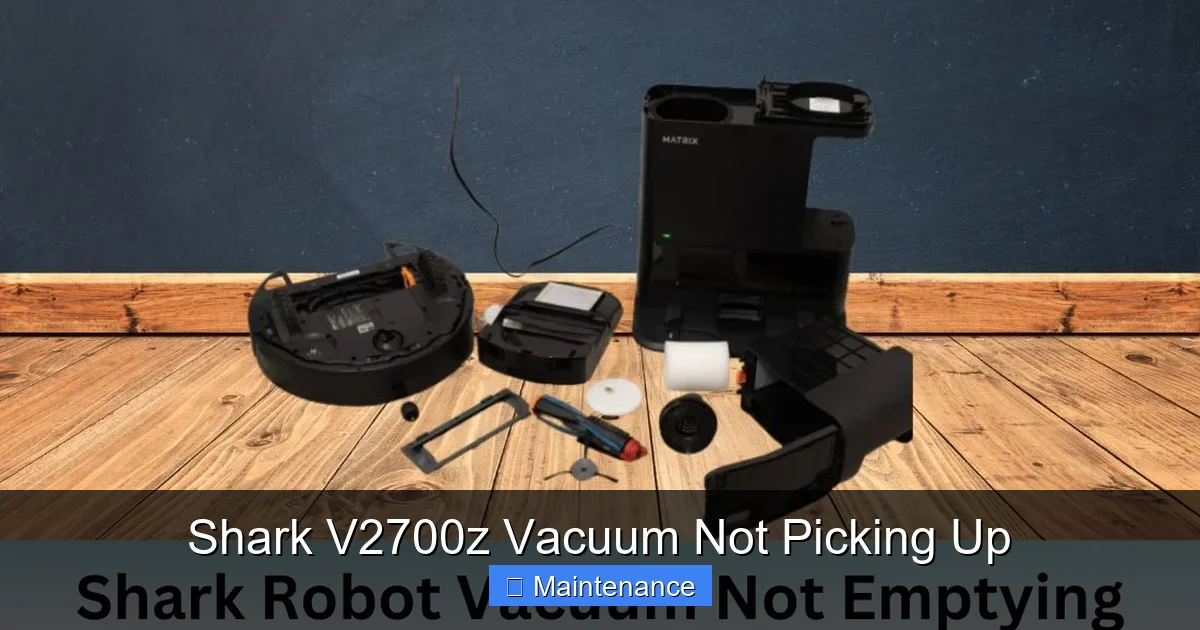
If the dust cup and filters are spotless, the blockage is in the hose, wand, or suction inlet. This requires a bit more detective work.
Visual guide about Shark V2700z Vacuum Not Picking Up
Image source: sharkvacuum.blog
The Hose and Wand Inspection
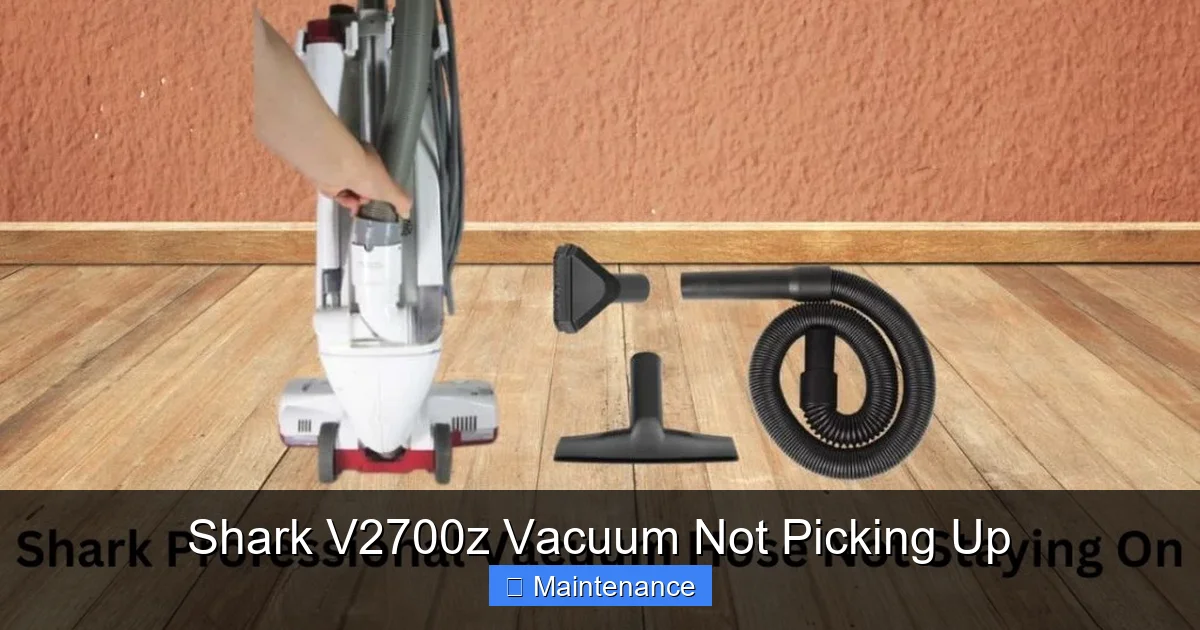
The flexible hose and metal/plastic wands are the most common places for clogs, especially if you’ve vacuumed small items like paperclips, buttons, or large amounts of pet hair.
- Visual & Tactile Check: Disconnect the hose from the vacuum body and from the wand/floor head. Look through it. Shine a flashlight from one end. You should see clear light. Feel along the entire length for soft spots or obstructions.
- The “Marshmallow Test”: A classic trick. Remove the floor head and any wands. Place your hand over the suction inlet on the vacuum body (where the hose plugs in). Turn the vacuum on for a second. You should feel a strong, instant pull. Now, do the same at the other end of the detached hose. If the pull is weak at one end but strong at the other, the clog is in the hose segment between those two points.
- Clearing the Clog:
- For a clog in the flexible hose, try using a long, flexible tool like a straightened wire coat hanger (with the end bent into a small hook) or a specialized clog-removing tool. Gently feed it through to dislodge the debris.
- For a clog in a metal wand, you can often tap it firmly against a trash can or use a broom handle to push the obstruction through.
- Never use a rigid object like a screwdriver that could puncture the hose or damage internal surfaces.
The Floor Head Suction Inlet
This is the opening on the underside of the floor head where the brush roll sits. It’s a prime spot for debris jams.
- Detach the Floor Head: Press the release lever and lay the floor head on its back.
- Inspect the Inlet: Look up into the suction opening from below. You’ll see the brush roll housing. Check for any debris—tissue, string, large carpet fibers—wedged in the opening or around the housing. Remove it with needle-nose pliers.
- Check the Airway: The duct that connects the brush roll housing to the wand should be clear. You can often see through it to the wand connection. If not, it’s clogged.
Step 3: The Brush Roll – Is It Spinning Properly?
Even with perfect suction from the hose, if the brush roll isn’t agitating the carpet, large debris won’t get lifted into the suction stream. A tangled brush roll also creates drag, slowing the motor and reducing overall suction.
Visual guide about Shark V2700z Vacuum Not Picking Up
Image source: i.ytimg.com
Inspecting and Cleaning the Brush Roll
- Access: With the floor head detached, flip it over. You’ll see the brush roll running the width of the head.
- Check for Rotation: Try to spin the brush roll by hand. It should rotate smoothly and freely. If it’s stiff, gritty, or doesn’t spin at all, it’s the problem.
- Cut Away Debris: Use a seam ripper, a dedicated brush roll cleaning tool, or even a sharp utility knife. Carefully slice through any hair, string, or carpet fiber wrapped around the bristles and, more importantly, around the plastic bearings at each end. Always unplug the vacuum first! Work slowly to avoid cutting the bristles themselves.
- Clean the Bearings: Once the debris is off, spin the roll again. If it’s still gritty, remove the brush roll (usually by pulling it out of its end caps) and clean the bearing housings with a cotton swab dipped in a little rubbing alcohol. Let it dry completely.
- Reinstall Correctly: Make sure the brush roll is seated fully in both end caps and that the drive belt (if your model has one) is properly engaged. A misaligned brush roll won’t spin.
The Drive Belt (If Applicable)
Some Shark V2700z models use a rubber drive belt to connect the motor shaft to the brush roll. If this belt is broken, stretched, or slipped off, the brush roll will not spin.
- Check: Remove the floor head’s bottom plate (usually screws or clips). Look for the rubber belt looped around the brush roll and a small pulley on the motor shaft.
- Inspect: The belt should be taut and in one piece. If it’s broken, frayed, or loose, it needs replacement. You can find the exact belt model number in your manual or on Shark’s website.
Step 4: Checking Seals, Gaskets, and Damage
Air leaks anywhere in the system are as bad as a clog. They let the precious low-pressure air escape, reducing the pressure differential that pulls in dirt.
Inspect All Gaskets and Seals
- Feel the rubber gasket on the top of the dust cup. Is it intact, soft, and pliable? If it’s cracked, hardened, or missing pieces, air will leak. Replacement gaskets are available from Shark.
- Check the rubber seal around the suction inlet on the floor head (where it connects to the wand). This is a common failure point. If it’s torn or flattened, suction will leak directly at the floor.
- Ensure every connection—dust cup to body, hose to body, hose to wand, wand to floor head—is clicked together firmly.
Examine the Hose for Damage
Flex the entire length of the hose. Look for any small pinprick holes, especially near the ends where it connects to the plastic fittings. A tiny hole can cause a significant drop in suction. Also, check the plastic connectors for cracks. If you find damage, the hose assembly needs to be replaced.
Step 5: Advanced Troubleshooting & When to Worry
You’ve checked everything above. The dust cup is empty, filters are pristine, the hose is clear as a whistle, the brush roll spins like new, and all seals are good. Yet, the Shark V2700z vacuum not picking up persists. Now it’s time for deeper diagnostics.
The Exhaust Port Test
This test tells you if the problem is before or after the motor.
- Procedure: Detach the hose completely from the vacuum body. Place your hand over the vacuum’s exhaust port (usually on the back or side). Turn the vacuum on for a few seconds.
- Interpretation:
- Strong suction at the exhaust: This means the motor and fan are working perfectly. The blockage is definitely downstream of the motor—in the hose, floor head, or dust cup path you already checked. Go back and re-check those areas meticulously. You missed a clog.
- Weak or no suction at the exhaust: This indicates a problem upstream of the exhaust, most likely a severely clogged post-motor HEPA filter that you didn’t notice (it can look clean but be internally clogged) or, more rarely, a failing motor/fan assembly. Replace the post-motor filter with a brand new one and test again.
Possible Internal Motor/Fan Issues
If the exhaust test shows weak flow even with a brand new post-motor filter, the fan blades themselves may be coated in a thick layer of dust and debris, a condition known as “motor bogging.” This is uncommon in modern Sharks but can happen after years of neglect without filter changes.
- What it is: The fan blades inside the motor housing get caked with fine dust, throwing them out of balance and drastically reducing their efficiency.
- The Fix: This is not a user-serviceable part in most Shark models. The motor housing would need to be professionally disassembled and cleaned, or the entire motor assembly replaced. At this point, compare the cost of repair to the cost of a new vacuum.
Conclusion: Prevention is the Best Cure
Your Shark V2700z is a powerful, engineered machine. When it’s not picking up, it’s almost always sending you a simple message: “Clean me!” By establishing a quick, post-vacuuming ritual—emptying the dust cup, checking the brush roll for tangles, and giving the filters a gentle tap or rinse—you can prevent 95% of these issues. Treat your vacuum with this kind of regular, light maintenance, and it will reward you with years of strong, reliable suction. Remember the golden rule: airflow is everything. If you can’t find the blockage, you haven’t looked in every possible nook along the air path from floor to exhaust. Be methodical, be thorough, and you’ll almost certainly find the culprit and restore your Shark’s formidable cleaning power.
Frequently Asked Questions
Why is my Shark V2700z vacuum running but not picking up anything?
The most common reason is a full dust cup. Empty it completely, ensuring the internal mesh screen is clear. Next, check and clean both the pre-motor foam filter and the post-motor HEPA filter, as clogged filters are the second most frequent cause of total suction loss.
How do I know if my Shark V2700z has a clog?
Perform the “marshmallow test”: detach the hose from the vacuum body and feel the suction at the body’s inlet. Then, feel the suction at the other end of the detached hose. Weak suction at one end but strong at the other pinpoints the clog to that section of hose or wand. Also, visually inspect the hose and floor head suction inlet with a flashlight.
Can a tangled brush roll really cause my Shark to lose suction?
Yes, absolutely. Hair tightly wrapped around the brush roll bearings creates mechanical drag, which slows down the brush roll and also places a load on the motor, reducing overall fan speed and suction power. Always cut away debris from the brush roll and bearings after a few uses, especially if you have pets or long hair.
My filters look clean, but suction is still weak. What else could it be?
Inspect all rubber gaskets and seals. A torn gasket on the dust cup or the floor head suction inlet creates an air leak that kills suction. Also, check for tiny pinholes or cracks in the flexible hose or at the plastic connector points, which are another common source of air leaks.
Is it possible the motor in my Shark V2700z is broken?
It’s very rare. First, perform the exhaust port test: with the hose detached, feel the suction coming directly from the vacuum’s exhaust. If it’s strong there, the motor is fine and the blockage is in the hose/floor head. If exhaust suction is weak even with a brand new post-motor filter, then a motor/fan issue is possible, but it’s the last thing to suspect after checking all other components.
How often should I clean the filters on my Shark V2700z?
The pre-motor foam filter should be rinsed with water after every 2-3 uses and air-dried for 24 hours. The post-motor HEPA filter should be tapped clean weekly and replaced every 3-6 months with regular use. Never operate the vacuum with a wet or missing filter, as this can damage the motor.