If your Shark UV850 vacuum’s brush roll has stopped spinning, it’s usually due to a simple clog, a tripped brush motor shut-off, or a worn drive belt. Before panicking or calling for service, you can perform several quick, safe checks and basic maintenance steps right at home. This guide walks you through the most common reasons for a non-spinning brush roll, provides detailed troubleshooting instructions, and explains when a professional repair might be necessary. Most issues are fixable with common household tools and a little patience.
Key Takeaways
- Clogs are the #1 culprit: Hair, string, and carpet fibers wrapping around the brush roll and in the suction pathway are the most frequent cause of a stopped brush roll. Regular cleaning prevents this.
- Safety switches can cut power: The Shark UV850 has a brush motor thermal fuse and a brush roll obstruction sensor that will automatically shut off the brush motor if it gets too hot or senses a jam.
- The drive belt is a common wear item: The rubber belt connecting the motor shaft to the brush roll can stretch, slip, or break after years of use, requiring replacement.
- Motor failure is rare but possible: The brush roll motor itself can burn out, but this is typically the last thing to check after eliminating clogs, switches, and the belt.
- Maintenance is preventive: Cleaning the brush roll and checking the belt every 2-3 months dramatically extends the life of your vacuum and prevents the “not spinning” problem.
- Always unplug first: For safety, always disconnect the vacuum from the wall outlet before performing any inspection or repair inside the brush roll housing.
- Warranty may cover parts: If your UV850 is still under the limited Shark warranty, certain components like the belt or motor may be covered, so check your proof of purchase.
📑 Table of Contents
- Introduction: Why Your Shark UV850 Brush Has Stopped Spinning
- Section 1: The Usual Suspects – Top 3 Causes of a Non-Spinning Brush Roll
- Section 2: First Responder – Immediate Checks & Simple Fixes
- Section 3: Diagnosing the Drive Belt System
- Section 4: Advanced Troubleshooting – Motors, Sensors, and Switches
- Section 5: Proactive Maintenance – Preventing the “Not Spinning” Problem
- Section 6: When to Call a Professional or Consider Replacement
- Conclusion: Empowerment Through Understanding
Introduction: Why Your Shark UV850 Brush Has Stopped Spinning
You’re in the middle of cleaning your living room. You switch on your trusty Shark UV850, and you hear the powerful suction… but that familiar, aggressive whirring sound from the brush roll is gone. The vacuum moves, but the brush at the front sits dead still. Don’t throw in the towel just yet! A Shark UV850 brush not spinning is one of the most common issues with upright vacuums, and it’s almost always something you can diagnose and often fix yourself. The problem is almost never a mysterious electronic failure. Instead, it’s usually a mechanical issue born from the very job your vacuum was designed to do: agitate and lift tough dirt from carpets.
The brush roll, or agitator, is the workhorse. It’s a simple spinning cylinder with bristles, powered by a small dedicated motor via a rubber drive belt. Its environment is brutal—it’s constantly chewing up hair, string, carpet fibers, and debris. This makes it prone to jams, belt wear, and component stress. This guide will be your complete roadmap. We’ll start with the fastest, easiest checks and move systematically to more involved repairs. By the end, you’ll know exactly why your Shark UV850 brush isn’t spinning and have the confidence to tackle the fix, saving you the cost and hassle of a service call or premature replacement.
Section 1: The Usual Suspects – Top 3 Causes of a Non-Spinning Brush Roll
Before we grab a screwdriver, let’s understand the three primary failure points in the brush roll system of your Shark UV850. Think of it as a chain: power source (brush motor), connection (drive belt), and the tool itself (brush roll). A break anywhere stops the action.
Visual guide about Shark Uv850 Brush Not Spinning
Image source: m.media-amazon.com
1.1 The Overwhelming Clog
This is the heavyweight champion of causes. As the brush roll spins, it acts like a giant hairbrush. Long hair, pet fur, and synthetic carpet fibers don’t get sucked away immediately; they wrap tightly around the rotating bristles and the bearings on each end. Over time, this wraps into a dense, felt-like mat. This mat does two destructive things: it physically jams the brush roll, preventing it from turning, and it creates immense drag on the drive belt and motor. The vacuum’s smart safety systems then kick in. Many Shark models, including the UV850, have a brush motor thermal fuse or an obstruction sensor. When the motor feels excessive resistance (from the jammed brush) or gets too hot, it automatically cuts power to the brush motor to prevent a burnout. The suction motor may keep running, but the brush goes silent. The first and most critical step is always to check for and remove this clog.
1.2 The Worn or Broken Drive Belt
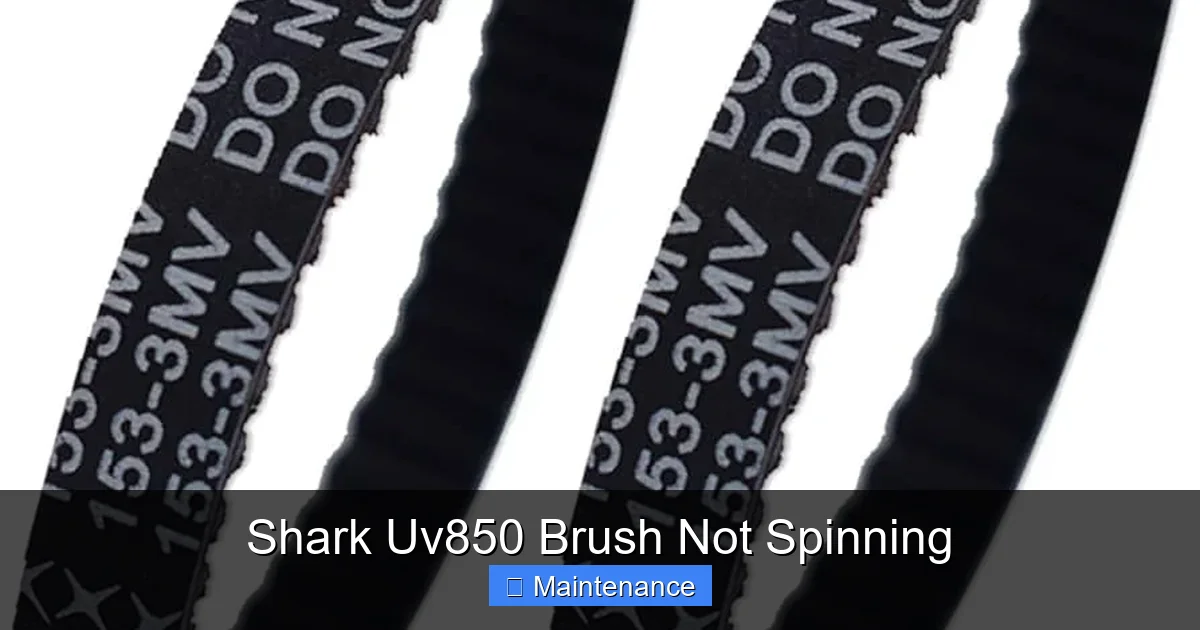
That rubber belt is a consumable part. It’s under constant tension and friction. Over months and years of use, it can stretch, develop a glazed shiny surface (reducing grip), crack, or even snap. A stretched or glazed belt will slip on the motor pulley or the brush roll pulley, causing the brush to spin slowly or not at all, even if it’s not jammed. If the belt has broken completely, the brush roll will be entirely disconnected from the motor’s power. Inspecting and replacing this belt is a very common repair.
1.3 The Failed Brush Motor or Safety Switch
The small motor that spins the brush roll is robust but not indestructible. A severely jammed brush roll that runs for too long can burn out the motor’s windings. Alternatively, the thermal fuse or obstruction sensor mentioned earlier might have tripped and needs to be manually reset (some models) or replaced. While possible, a direct motor failure is statistically less common than a clog or belt issue, so it should be your last diagnosis after the simpler, more likely fixes are ruled out.
Section 2: First Responder – Immediate Checks & Simple Fixes
Let’s put theory into action. These are the first steps you should take. They take five minutes and solve the problem 70% of the time.
Visual guide about Shark Uv850 Brush Not Spinning
Image source: sharkvacuum.blog
2.1 The Unplug and Visual Inspection
Safety First: Always, always unplug the vacuum from the wall outlet before touching any internal parts. This is non-negotiable.
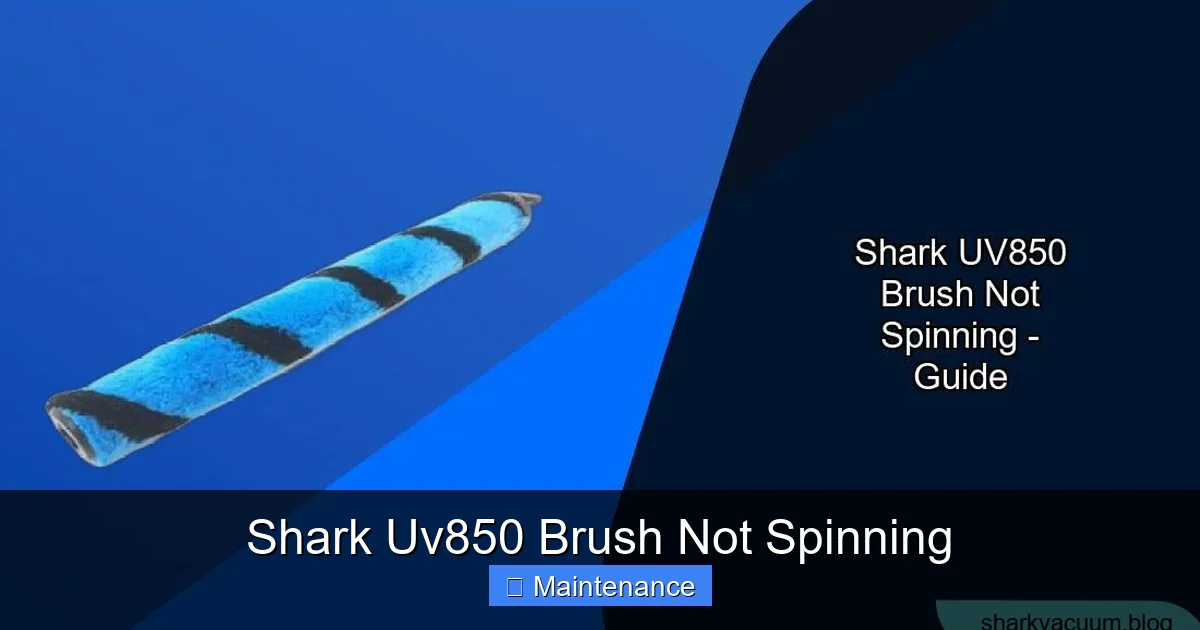
Flip your Shark UV850 over onto its back so you can see the brush roll housing clearly. Look at the brush roll through the opening. Can you see the bristles? Are they matted solid with hair and carpet fibers? Can you even rotate the brush roll by hand? Try to turn it with your fingers. If it doesn’t budge or is incredibly stiff, you have a severe clog. This is your answer. If it spins freely by hand, the clog might be partial, or your problem lies elsewhere, like the belt.
2.2 The Comprehensive Clog Removal Process
For a complete clog removal, you’ll need a pair of scissors and maybe a seam ripper or a dedicated vacuum brush cleaning tool.
- Access the Brush Roll: On the UV850, you typically need to release the brush roll housing. Look for a release lever or a few screws (usually Torx/star bits) on the underside of the housing. Consult your manual if needed, but it’s generally straightforward.
- Remove the Brush Roll: Once the housing is open, the brush roll should lift out. There may be end caps you need to twist or slide off.
- De-hair the Brush Roll: Take the brush roll to a well-lit area. Use the scissors to cut lengthwise through the wrapped hair/fiber mat. Be careful not to cut the bristles themselves. Once cut, you should be able to peel the mass off in sections. A seam riper is excellent for getting stubborn bits wrapped near the bristle bases.
- Clear the Housing: With the brush roll out, inspect the entire housing cavity. Use your hands and a flashlight to remove any debris trapped in the suction inlet, around the wheel wells, and in the corners. Check the rubber seals/gaskets around the housing opening—debris gets trapped there too.
- Check the Suction Path: While you have it open, follow the path from the brush roll housing back to the dust cup. Look for any blockages in the hose connector or internal tubes. A partial clog here can also cause the brush motor to stall due to backpressure.
- Reassemble: Put the brush roll back in, ensuring it seats properly in its bearings/slots. Snap the housing cover back on securely. Reconnect the vacuum.
Test: Lay the vacuum on a clean floor, turn it on, and observe the brush roll. If it’s spinning freely and loudly, you’ve solved it! If it’s still not spinning, move to the next section.
Section 3: Diagnosing the Drive Belt System
If the brush roll spins perfectly by hand but doesn’t move when the vacuum is on, the power isn’t getting from the motor to the brush. The drive belt is the messenger. Let’s check it.
Visual guide about Shark Uv850 Brush Not Spinning
Image source: i.ytimg.com
3.1 Accessing the Belt
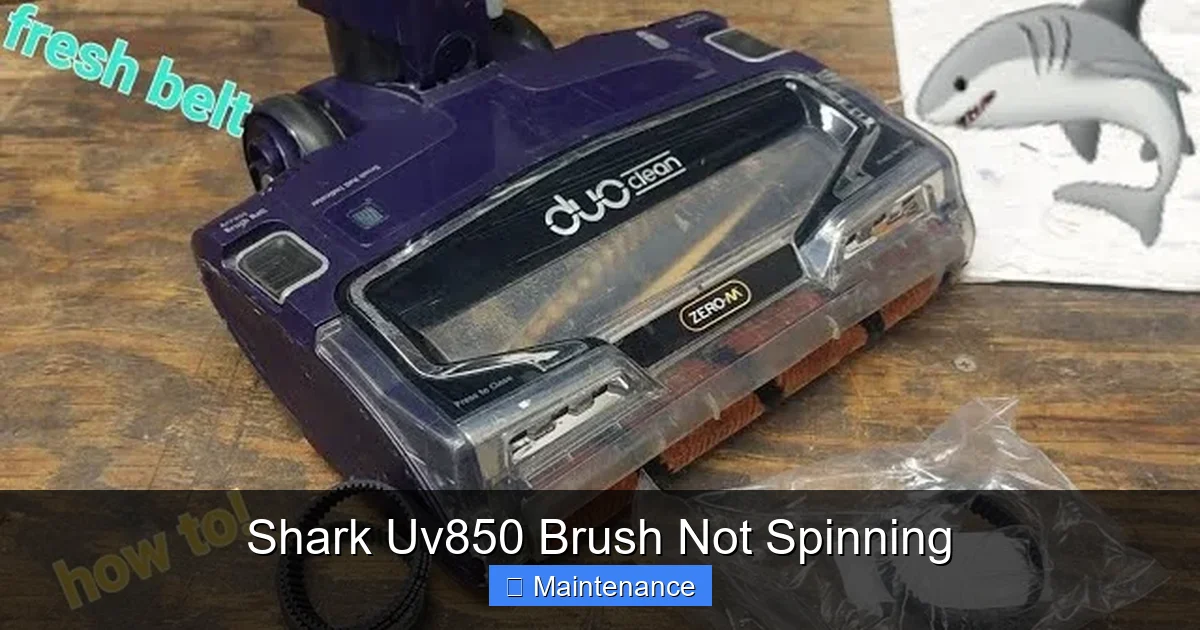
You will likely need to remove the brush roll housing again to see the belt clearly. Once the brush roll is out, you should see a rubber loop running from a small pulley on the brush motor (usually located near the top/rear of the housing) to a larger pulley on the brush roll itself.
3.2 What to Look For: A Belt Checklist
- Is it there? Obvious, but check. A broken belt will be lying in the housing bottom or may have snapped and fallen out.
- Is it tight? A properly tensioned belt should have a firm, definite tension. Press it with your finger; it should deflect only slightly. If it’s very loose, it needs replacement.
- Is it worn? Look for cracks, glazing (a shiny, hardened surface), fraying, or thinning. Any of these means it has lost its grip and elasticity.
- Is it on the pulleys correctly? Ensure it’s seated properly on both pulleys and hasn’t jumped off one.
- Are the pulleys okay? Spin the motor pulley and the brush roll pulley by hand. They should turn smoothly. If the brush roll pulley is stiff, the bearings in the brush roll itself might be seized, which also requires brush roll replacement.
3.3 Replacing the Drive Belt on a Shark UV850
Replacement belts for the UV850 are inexpensive and widely available (search for “Shark UV850 belt” or “Shark NV350/NV356 belt” as they are often compatible). Here’s the general process:
- With the brush roll removed, stretch the old belt off the motor pulley. It will be tight.
- Stretch the new belt over the motor pulley first. It helps to hook it onto the pulley with a screwdriver tip or pliers to get it started.
- Rotate the brush roll pulley by hand while stretching the belt over it. It may take a bit of maneuvering to get it fully seated.
- Reinstall the brush roll, ensuring its bearings sit in the housing slots correctly. The belt should now be in place and under tension.
- Reassemble the housing and test.
Pro Tip: Before reinstalling the brush roll, spin it by hand to ensure it rotates freely in its bearings. A seized brush roll will instantly destroy a new belt.
Section 4: Advanced Troubleshooting – Motors, Sensors, and Switches
You’ve cleared every clog. The new belt is on tight. The brush roll spins freely by hand. You plug it in, turn it on… and still nothing. Now we dig deeper into the electrical and safety systems.
4.1 Understanding the Brush Motor Circuit
The brush roll has its own dedicated small motor. This motor has two critical safety components in its circuit:
- Thermal Fuse: A one-time or resettable fuse that blows/trips if the motor overheats from excessive strain (like a long-term clog).
- Obstruction Sensor (or “Brush Roll Jam Sensor”): Many Shark uprights have a small paddle switch or optical sensor near the brush roll. If something physically blocks the brush roll from turning (like a sock or massive clog), this switch opens and cuts power to the brush motor.
If either of these has activated, the brush motor will get zero power. The main suction motor will still work.
4.2 Locating and Checking the Switches
These components are usually found on or near the brush roll housing.
- The Jam Sensor: Look for a small plastic arm or paddle that the brush roll or belt cover might push. Ensure it moves freely and isn’t broken or stuck in the “off” position. Sometimes, a stray piece of debris can jam it. Clean around it.
- The Thermal Fuse: This is often a small, cylindrical or rectangular component wired into the brush motor’s power line. You’ll need a multimeter to test it for continuity. Set the multimeter to the continuity setting (often a sound symbol). With the vacuum unplugged, disconnect the fuse and touch the meter probes to its terminals. If it’s good, the meter will beep or show near-zero resistance. If it’s open (no beep), it’s blown and needs replacement. You must replace it with an identical fuse of the same amperage and type.
4.3 Testing the Brush Motor Itself
This is the last resort. If the belt is good, the brush roll is free, and the safety switches check out, the motor may be dead. You can try to test it directly, but it requires some skill. You need to provide 12-20V DC (check your model’s specs, often printed on the motor) to the motor’s terminals. This is not recommended for beginners. If you suspect the motor, it’s often more cost-effective to consider the age and value of the vacuum versus the cost of a new motor plus labor. For a Shark UV850, a motor replacement might approach the cost of a new mid-range vacuum.
Section 5: Proactive Maintenance – Preventing the “Not Spinning” Problem
An ounce of prevention is worth a pound of cure. Incorporating these quick habits into your cleaning routine will keep your Shark UV850’s brush roll spinning strong for years.
5.1 The 30-Second Post-Clean Brush Roll Check
Every time you finish vacuuming, take 30 seconds. Flip the vacuum over. Use your fingers or the edge of the hose to gently rotate the brush roll a few times. Listen for any grinding or feel for any tight spots. This immediate feedback tells you if a clog is starting to build before it becomes a solid jam.
5.2 Monthly Deep Cleaning Ritual
Once a month, or more often if you have pets or long hair, perform a full clog removal as described in Section 2. Don’t wait for the brush to stop. Pull out the brush roll, cut away the hair, and clean the housing. This is the single most important maintenance task you can do.
5.3 Belt Inspection Schedule
Every 3-6 months, or whenever you have the housing open for a cleaning, inspect the drive belt. Look for the signs of wear mentioned earlier. Proactively replacing a slightly worn belt is far easier than dealing with a broken one mid-clean. Keep a spare belt on hand—they are cheap and universal for many Shark models.
5.4 Protecting Your Floors
Be mindful of what you vacuum. Small objects like Lego pieces, coins, pins, or even large amounts of long tassels from rugs can instantly jam or damage the brush roll. Do a quick visual sweep of high-traffic areas before vacuuming.
Section 6: When to Call a Professional or Consider Replacement
You’ve followed this guide. You’ve cleared clogs, replaced the belt, checked the switches, and the brush roll still doesn’t spin. Now what?
6.1 Signs It’s Time for a Professional Diagnosis
If you’ve confidently ruled out:
- Severe brush roll jam (it spins freely by hand)
- Worn, broken, or missing drive belt (new one installed correctly)
- Tripped thermal fuse or jammed sensor switch (tested with a multimeter or manually reset)
- Seized brush roll bearings (the brush roll itself is hard to turn)
…then the fault almost certainly lies with the brush motor itself or a wiring issue within the vacuum’s body. Diagnosing and replacing an internal motor is a more complex repair involving soldering or connector work. At this stage, calling an authorized Shark service center is the logical next step. Have your model number (UV850) and serial number ready.
6.2 Weighing Repair vs. Replacement Cost
Get an estimate for the brush motor part and labor. For a vacuum like the UV850, which is a mid-life model in Shark’s lineup, the repair cost can sometimes be 50% or more of the price of a brand new, current-model Shark with a full warranty. Consider:
- Age of the Vacuum: Is it 5+ years old? Other components (seals, hoses, main motor) may be nearing end-of-life.
- Overall Condition: Are there cracks in the housing, fading, or other signs of wear?
- New Features: Newer Shark models offer significant improvements in suction power, brush roll design (e.g., anti-hair-wrap technology), and filtration.
Often, for a non-spinning brush on an older unit, investing in a new vacuum is the more economical long-term choice. However, if your UV850 is under its limited warranty (typically 1-5 years depending on component), contact Shark support immediately. A warranty claim could cover a new motor or assembly at no cost.
Conclusion: Empowerment Through Understanding
A Shark UV850 brush not spinning is a frustrating but highly solvable problem. It’s a direct symptom of a simple mechanical system being overwhelmed by its own success. By understanding the chain of power—from the motor, through the belt, to the brush roll—and the safety mechanisms designed to protect it, you move from a frustrated user to an empowered fixer. Start with the most common culprit: the inevitable, relentless clog. A pair of scissors and five minutes of your time is the most powerful diagnostic and repair tool you own. If that fails, the drive belt is your next, inexpensive target. Only after these foundational elements are confirmed perfect should you venture into the realm of switches, fuses, and motors.
Embrace the maintenance. That monthly 30-second brush roll check and quarterly deep clean are not chores; they are investments in the long, powerful life of your vacuum. They prevent the dreaded non-spinning moment altogether. You’ve now got the knowledge. Your Shark UV850 is counting on you. Go give that brush roll the attention it deserves, and feel the satisfaction of restoring that powerful, deep-cleaning whir to your home.
Frequently Asked Questions
Is a Shark UV850 brush not spinning always a sign of a broken motor?
No, it’s rarely the motor. Over 80% of the time, the cause is a clog of hair and fibers jamming the brush roll or a worn drive belt. Always check for clogs and inspect the belt first before assuming motor failure.
How often should I clean the brush roll on my Shark UV850 to prevent problems?
For best results, perform a full hair removal and housing clean every 1-2 months if you have pets or long hair, and at minimum every 3 months. A quick 30-second manual rotation check after each use is also highly recommended.
Can I use a Shark UV850 if the brush roll isn’t spinning?
You can use it in “suction-only” mode for hard floors, but you will severely diminish its cleaning performance on carpets and rugs. The brush roll is essential for agitating and lifting embedded dirt. Continuing to run the vacuum with a severely jammed brush roll can overheat and permanently damage the brush motor.
What tool do I need to remove the brush roll housing on a Shark UV850?
You typically need a Torx T8 or T10 screwdriver (star-bit) to remove the screws securing the brush roll housing cover. Some models may use a simple release lever or Phillips head screws, so checking your manual is always best.
Where can I buy a replacement drive belt for the Shark UV850?
Replacement belts are readily available. You can purchase the official Shark part (part number often found in the manual) from Shark’s website or retailers like Amazon, Walmart, or Target. Universal “Shark upright vacuum belts” that fit the NV350/NV356 series also typically fit the UV850. They are very affordable, usually under $10.
My vacuum is under warranty. Should I try to fix it myself?
If your Shark UV850 is still within its limited warranty period, it’s best to contact Shark Customer Support first. Opening the vacuum and attempting repairs can void the warranty. They will guide you through troubleshooting and, if needed, arrange for an authorized service center to repair it at no cost for covered parts. Always have your proof of purchase and model/serial number ready.