Is your Shark UV795 vacuum’s brush roll suddenly stopped spinning? This is an extremely common issue, and the good news is that it’s almost always fixable without a service call. The problem typically stems from a simple blockage, a tripped thermal fuse, or a worn belt—not a failed motor. In most cases, you can diagnose and resolve the “Shark UV795 brush not spinning” problem yourself in under 30 minutes with basic tools. This guide walks you through every possible cause, from the quickest 60-second reset to a full brush roll and belt replacement, ensuring you get your vacuum back to full cleaning power.
You’re in the middle of cleaning your living room. You switch your Shark UV795 to hard floor mode, then to carpet mode, and you hear that familiar, satisfying whir of the brush roll spinning—only this time, it’s silent. The vacuum still has strong suction, but the brush roll, the very heart of its deep-cleaning power on carpets, has refused to turn. Don’t panic. Before you start searching for replacement parts or a repair shop, take a breath. The “Shark UV795 brush not spinning” issue is one of the most common—and most solvable—problems for this popular vacuum series. It’s almost never a sign of a dead motor. In this complete, step-by-step guide, we’ll diagnose exactly why your brush has stalled and walk you through every single fix, from the 30-second reset to a full component replacement. Get ready to become your vacuum’s best mechanic.
Key Takeaways
- The #1 cause is a blockage: Hair, string, and carpet fibers wrap around the brush roll and its bearings, jamming it completely. This is the most frequent culprit.
- Always check the reset button first: The Shark UV795 has a prominent red reset button on the underside. If the brush motor overheated, this button pops out. Pressing it is the fastest possible fix.
- A broken or slipped belt is a classic failure: The rubber belt that connects the motor shaft to the brush roll can stretch, break, or slip off, especially after a jam.
- Brush roll bearings can seize: Even if the brush roll spins freely by hand, dirty or dry bearings can create enough drag to stall the motor under load.
- Simple cleaning is powerful maintenance: Regularly removing debris from the brush roll, its end caps, and the suction intake channel prevents 90% of spinning issues.
- You likely don’t need a new motor: The brush roll motor is separate from the main suction motor. Brush roll failure almost never indicates a problem with the main vacuum motor.
- Warranty and professional help are options: If all DIY steps fail and your vacuum is still under warranty, Shark support can guide you or arrange service.
📑 Table of Contents
- Understanding Your Shark UV795’s Brush Roll System
- Step 1: The Immediate 60-Second Diagnostics & Reset
- Step 2: The Deep Clean – Removing the #1 Culprit
- Step 3: Inspecting and Replacing the Drive Belt
- Step 4: Advanced Troubleshooting – Bearings and Motors
- Long-Term Prevention: Keeping Your UV795 Healthy
- Conclusion: You’ve Got This!
Understanding Your Shark UV795’s Brush Roll System
Before we start taking things apart, it helps to understand what makes the brush roll spin. Your Shark UV795 uses a separate, smaller motor dedicated solely to powering the brush roll (also called the agitator or roller). This motor spins a small rubber belt, which in turn rotates the brush roll itself. This system is designed to be powerful but also to protect itself. When the brush roll jams—say, on a rug fringe or a cord—the belt can slip or the motor can overheat and trigger a safety cutoff. Knowing this simple sequence is key to diagnosing the problem.
The Core Components: Motor, Belt, and Roller
Think of it as a chain: Motor Pulley → Rubber Belt → Brush Roll Pulley. If any link in this chain is broken, blocked, or disconnected, the brush roll stops. The motor itself is robust. The belt is a wear item that stretches over time. The brush roll is the workhorse that collects debris but also gets tangled. We will inspect each of these components systematically.
The Role of the Thermal Reset Switch
Shark designed this vacuum with a crucial safety feature: a thermal fuse or reset switch. If the brush roll motor gets too hot—usually because it’s struggling against a severe jam—a thermostat inside the motor housing trips and cuts power. This is why your vacuum may run for a minute and then the brush stops, or why it won’t start spinning at all. The reset button is your first and easiest checkpoint.
Step 1: The Immediate 60-Second Diagnostics & Reset
Do not skip this step. It solves a huge percentage of “Shark UV795 brush not spinning” cases and takes less than a minute.
Visual guide about Shark Uv795 Brush Not Spinning
Image source: sharkvacuum.blog
Locating and Pressing the Reset Button
Turn your Shark UV795 over so you’re looking at the underside, where the brush roll is. You’ll see a small, circular, red button, usually near the brush roll housing or on the motor cover. It might be recessed. Using a pen, a screwdriver, or even your finger, press this button firmly until you hear or feel a definitive click. This manually resets the thermal switch. Now, try running the vacuum on a carpet again. If the brush roll spins, your problem was an overheating motor, likely from a temporary jam that has since cleared. However, you should still perform a full cleaning (Step 2) to prevent it from happening again.
Is There a Jam You Can See or Feel?
While the vacuum is off and unplugged, visually inspect the brush roll through the opening on the underside. Can you see a thick mat of hair or a piece of string wrapped around it? Can you see anything obstructing the suction intake port right behind the brush roll? If you see a clear obstruction, try to cut it away with scissors. Never use your fingers, as the brush roll blades can be sharp. Gently try to rotate the brush roll by hand. Does it spin freely, or is it stiff and resistant? A stiff spin indicates a jam inside the brush roll bearings or a belt issue.
Step 2: The Deep Clean – Removing the #1 Culprit
If the reset didn’t work, or even if it did, a thorough cleaning is essential. Hair and fibers are the arch-nemesis of any brush roll.
Visual guide about Shark Uv795 Brush Not Spinning
Image source: i.ebayimg.com
How to Remove the Brush Roll
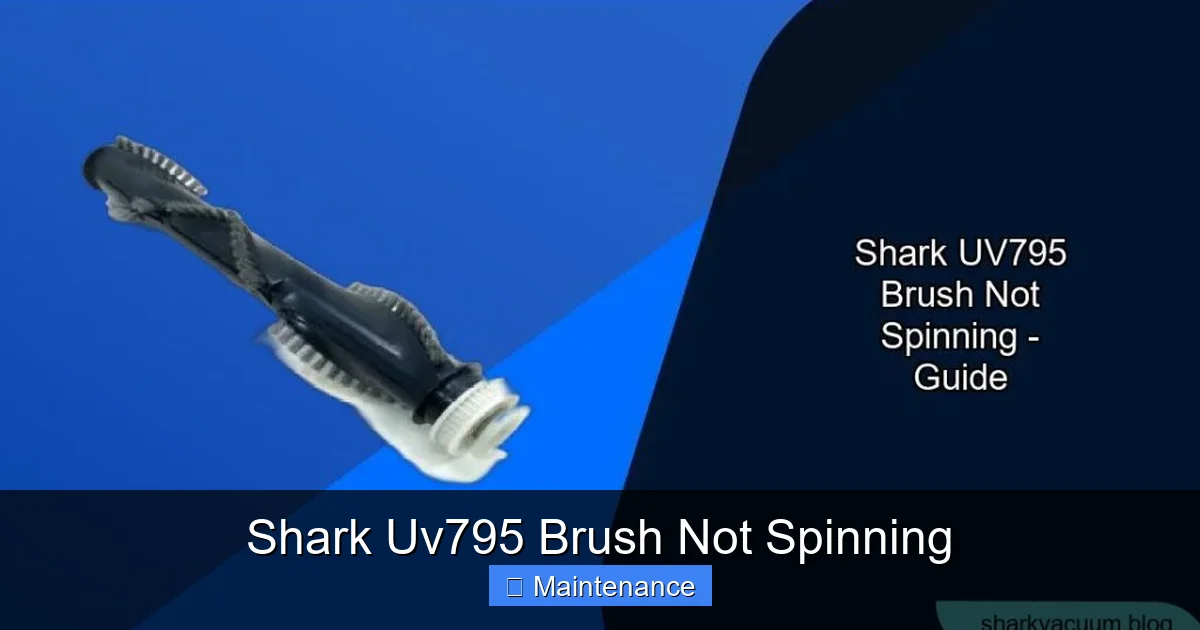
Lay the vacuum on its side. On the Shark UV795, the brush roll assembly typically slides out. Look for two release latches or tabs on either side of the brush roll housing. Press them in and pull the entire brush roll unit straight out. Some models may require you to unscrew a cover plate first. If you’re unsure, your user manual has the exact instructions. Once removed, you’ll have the brush roll in your hands, and you’ll likely see the problem immediately: a thick, felt-like layer of hair, carpet fibers, and dirt packed around the bristles and inside the end caps.
Cleaning the Brush Roll and Housing
Take the brush roll to a well-lit area. Use a seam ripper, a dedicated brush cleaning tool, or a sharp pair of scissors. The goal is to cut and pull away all the debris, not just pull it, which can tighten the knot. Work your way along the entire length of the brush roll, slicing through the hair mats. Pay special attention to the plastic end caps—this is where hair gets inside and binds the bearings. Use a small screwdriver or a bent paperclip to pick out fibers from inside the cap holes. While you’re here, check the rubber belt. Is it still attached to the motor pulley and the brush roll pulley? Is it cracked, shiny, or stretched? Now, look into the empty brush roll housing on the vacuum. Use a flashlight. You’ll often find a hidden pocket of debris right behind the brush roll and in the suction channel. Scoop it all out with a long tool or your hand. A clear channel is critical for proper brush roll function and suction.
Step 3: Inspecting and Replacing the Drive Belt
If the brush roll spins freely by hand and is perfectly clean, but the motor still won’t turn it, the belt is the next suspect.
Identifying Belt Failure
With the brush roll removed, locate the rubber belt. It’s a loop that should be hooked onto two small pulleys: one on the brush roll and one on the motor shaft (which is now exposed). Common belt issues include:
- Slipping: The belt is intact but has stretched so much it won’t stay on the pulleys.
- Broken: The belt is snapped into two pieces.
- Misaligned: It’s twisted or sitting on the edge of a pulley.
- Worn: It’s glazed, shiny, or has chunks missing, causing it to slip under load.
How to Replace the Shark UV795 Belt
Replacing the belt is a simple part swap. You need the correct replacement belt. The Shark part number for many UV795 models is XSTPWDK or a generic “Shark Rotator/UV series belt.” To install: 1. Stretch the new belt over the motor shaft pulley first. 2. Then, hook the other side onto the brush roll pulley. 3. You will need to twist the brush roll slightly to create slack. 4. Once both ends are hooked, rotate the brush roll by hand a few times to seat the belt properly. 5. Reinstall the brush roll assembly into the housing, making sure the belt isn’t pinched. Re-engage the latches. Plug in the vacuum and test. The satisfying sound of the brush roll engaging should return.
Step 4: Advanced Troubleshooting – Bearings and Motors
If you’ve completed Steps 1-3 and the brush roll still doesn’t spin, or if it spins very slowly and struggles, the issue is deeper.
Testing Brush Roll Bearings
Even if the brush roll spins freely in your hands, its internal bearings might be seized with gunk or dried out. This creates so much drag that the motor can’t turn it when it’s installed and under the pressure of contacting carpet. To test: Remove the brush roll (as in Step 2). Hold one end cap firmly and try to spin the brush roll barrel itself. It should spin smoothly and silently for several seconds. If you hear grinding, feel gritty resistance, or it stops almost immediately, the bearings are bad. The only fix is to replace the entire brush roll assembly, as the bearings are not serviceable.
Diagnosing a Faulty Brush Motor
This is rare, but possible. If the brush roll is clean, spins perfectly by hand, has a new good belt, and the reset button is out, but you hear a faint humming or clicking from the motor area when you turn on the vacuum, the motor itself may be burned out. Before concluding this, double-check that the belt is properly tensioned and not slipping off. A slipping belt can mimic a dead motor. If you’re electrically savvy, you can test the motor for continuity with a multimeter, but for most users, a faulty motor means it’s time to contact Shark support under warranty or seek a professional repair, as motor replacement is more involved.
Long-Term Prevention: Keeping Your UV795 Healthy
An ounce of prevention is worth a pound of cure. Integrating a quick maintenance routine into your cleaning schedule will drastically reduce the chance of a brush roll failure.
After-Every-Few-Uses Quick Clean
Once a week, take 60 seconds to flip your UV795 over and use the included cleaning tool or a scissors to cut away any visible hair wrapped around the brush roll bristles. Don’t wait for it to become a solid mat. This tiny habit is the single most effective thing you can do.
Monthly Deep Maintenance
Once a month, perform the full brush roll removal and cleaning procedure described in Step 2. Also, clear out the suction hose and wand connections. Check the pre-motor and post-motor filters (if your model has them) and wash or replace them as per the manual. A clogged filter reduces overall suction and can make the brush motor work harder, increasing heat and wear.
Mind Your Cleaning Environment
Be aware of what you’re vacuuming. Avoid running the brush roll over loose cords, rug tassels, or stringy toys. For very long-pile rugs or shag carpets, consider using the hard floor nozzle (without the brush roll) to prevent extreme tangling. The Shark UV795 is a powerful machine, but it has its limits.
Conclusion: You’ve Got This!
The dreaded “Shark UV795 brush not spinning” error is almost always a straightforward, mechanical issue with a clear solution. By following this structured approach—starting with the reset button, moving to a thorough clean, inspecting the belt, and finally checking bearings—you can diagnose and fix the problem yourself. Remember, the vast majority of these issues are caused by hair and fiber blockages, not failed components. Investing 20 minutes in regular maintenance will keep your Shark UV795 performing at its peak for years, delivering the deep carpet cleaning it was designed for. So flip that vacuum over, locate that red button, and get started. That satisfying whir is just a few steps away.
Frequently Asked Questions
Will pressing the reset button fix the problem permanently?
It might, if the motor just overheated temporarily from a minor jam. However, you must still clean the brush roll and housing thoroughly. If the underlying jam or blockage isn’t removed, the motor will overheat again and the reset button will trip.
My brush roll spins freely by hand, but not when the vacuum is on. What is it?
This almost always points to a problem with the drive belt. It could be broken, severely stretched and slipping, or simply not properly seated on both pulleys after a previous jam. Remove the brush roll and inspect the belt closely.
I hear a loud grinding noise from the brush area when I try to run it. What’s wrong?
A grinding noise is a classic sign of seized brush roll bearings. Hair and debris have worked their way into the internal bearings, causing them to corrode and grind. The only fix is to replace the entire brush roll assembly.
Can a clogged filter cause the brush roll to stop spinning?
Indirectly, yes. A severely clogged pre-motor filter reduces overall airflow and can cause the main suction motor to work harder, increasing heat. While it won’t directly stop the brush motor, excessive system heat can contribute to the thermal reset switch tripping. Always maintain clean filters.
Is it worth replacing the belt and brush roll on an older Shark UV795?
Absolutely. These are wear-and-tear items, like tires on a car. Replacing a $10-$20 belt or a $30-$50 brush roll is far more cost-effective than buying a new vacuum. The motor and main body of the UV795 are built to last many years with this basic maintenance.
What if none of these fixes work? Is the motor burned out?
If you have a perfectly clean brush roll that spins freely, a new correctly installed belt, and a reset button that stays engaged, but the motor only hums or clicks without turning, then yes, the dedicated brush roll motor has likely failed. At this point, contact Shark customer support if under warranty, or seek a qualified small appliance repair shop for a motor replacement estimate.