Is your Shark UV700 vacuum’s brush roll refusing to spin? This is an extremely common issue, and the good news is it’s almost always fixable without a costly service call. The problem typically stems from four main culprits: debris jams, a broken or slipped drive belt, worn-out brush roll bearings, or a tripped thermal fuse. You can diagnose and resolve most of these problems yourself with basic tools and about 30 minutes of time, saving significant money and restoring your vacuum’s deep-cleaning power.
Key Takeaways
- The #1 cause is debris jams: Hair, string, and carpet fibers wrap around the brush roll bearings or shaft, creating so much friction it stops spinning. This is the easiest fix.
- A broken drive belt is the second most common cause: This rubber belt connects the motor shaft to the brush roll. If it snaps, stretches, or slips off, the brush stops instantly.
- Always unplug the vacuum first: This is non-negotiable for safety. The brush roll motor and electrical components are exposed during inspection.
- Check the thermal fuse: If the motor overheated from a jam, a safety fuse may have tripped. Resetting it is a simple step often overlooked.
- Worn bearings are a silent killer: If the brush roll spins freely by hand but not when powered, the internal bearings are likely seized and the brush roll needs replacement.
- Preventative maintenance is key: Cleaning the brush roll and belt area every 2-3 uses prevents 90% of “not spinning” problems.
- Professional repair is for motors or severe damage: If the motor itself is faulty or the gearbox is stripped, a professional assessment is needed, but this is rare.
📑 Table of Contents
- The Frustrating Silence: When Your Shark UV700’s Brush Stops Spinning
- First Things First: Safety and Your Initial Diagnosis
- Cause #1: The Debris Jam – Your Most Likely Culprit
- Cause #2: The Drive Belt – The Rubber Band of Power
- Cause #3: The Brush Roll Itself – Worn Bearings and Broken Bristles
- Cause #4: The Electrical Side – Fuses, Motors, and Switches
- Preventative Maintenance: Stop the Problem Before It Starts
- When to Call a Professional: Knowing Your Limits
- Conclusion: Empowerment Through Understanding
The Frustrating Silence: When Your Shark UV700’s Brush Stops Spinning
You’re mid-clean, the Shark UV700 is humming along, and you notice the carpet isn’t getting that deep-down clean it usually does. You look down, and there it is: that tell-tale sign. The brush roll—that cylindrical bar with bristles spinning vigorously—is just… sitting there. Silent. Stationary. Your heart sinks. That spinning brush is the heart of your vacuum’s ability to agitate carpet fibers and lift embedded dirt. Without it, you’re just pushing debris around with suction alone. The immediate thought is, “Oh no, is it broken for good?”
Take a deep breath. The scenario of a Shark UV700 brush not spinning is one of the most frequently reported issues with this popular upright model, and it is almost never a “throw it away” problem. In over 95% of cases, the cause is a simple mechanical issue that you, yes YOU, can diagnose and fix with a screwdriver, a bit of patience, and some common sense. This guide will walk you through every possible cause, from the quickest 2-minute fix to more involved repairs, empowering you to get your vacuum back to its powerful, spinning self.
First Things First: Safety and Your Initial Diagnosis
Before you even think about touching a screw, there is one absolute, inviolable rule: UNPLUG THE VACUUM FROM THE WALL OUTLET. This is not a suggestion. The Shark UV700 has exposed electrical connections and moving parts. Working on a plugged-in appliance is a severe shock hazard. Once it’s unplugged, we begin the diagnostic process, which is simply asking questions and observing.
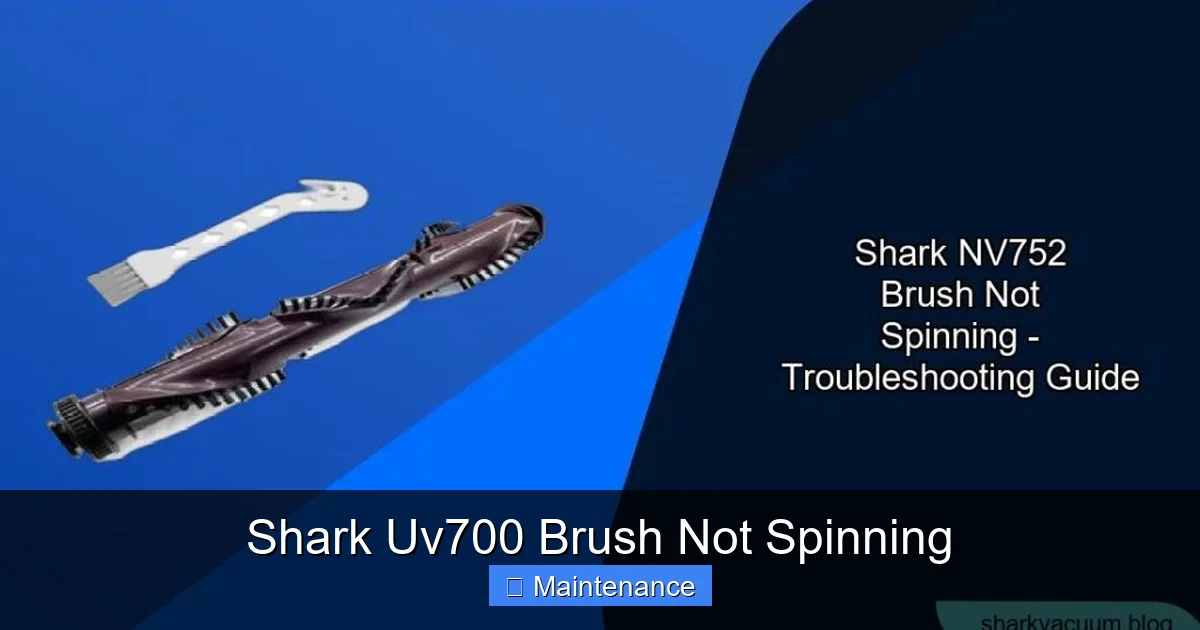
Visual guide about Shark Uv700 Brush Not Spinning
Image source: sharkvacuum.blog
The “Feel & Listen” Test
Lay the vacuum on its side for easy access to the brush roll housing (the large plastic hood on the underside). Manually try to rotate the brush roll with your fingers. Here’s what you’re feeling for:
- It spins freely and smoothly: This is interesting. If it spins easily by hand but doesn’t when powered, the problem is likely not a jam. It points to the power transmission—the belt, motor, or a tripped safety fuse.
- It’s stiff or won’t turn at all: This is the classic sign of a severe debris jam. Hair, string, or a small object has wrapped tightly around the brush roll’s bearings or axle, creating immense friction. This is the most common and easiest fix.
- It spins but with a gritty, grinding sound: This indicates the brush roll’s internal bearings are worn out or damaged. The brush roll itself will need to be replaced.
Next, turn the vacuum on (with it upright, not on the floor) and listen. Do you hear a high-pitched squealing or a “brrrrr” sound from the brush area? A squeal often means a belt is slipping or a bearing is shot. A motor running sound with no brush action confirms the motor is working but the power isn’t reaching the brush roll.
Cause #1: The Debris Jam – Your Most Likely Culprit
This is the heavyweight champion of vacuum problems. Every time you vacuum, you’re sucking up hair, carpet fibers, threads, and small bits of debris. The brush roll, spinning at high speed, acts like a spindle, collecting this material. Over time, it wraps tighter and tighter around the plastic end caps (which house the bearings) and the metal axle. Eventually, it binds the roll so tightly that the motor can no longer turn it. The motor may even overheat and shut off.
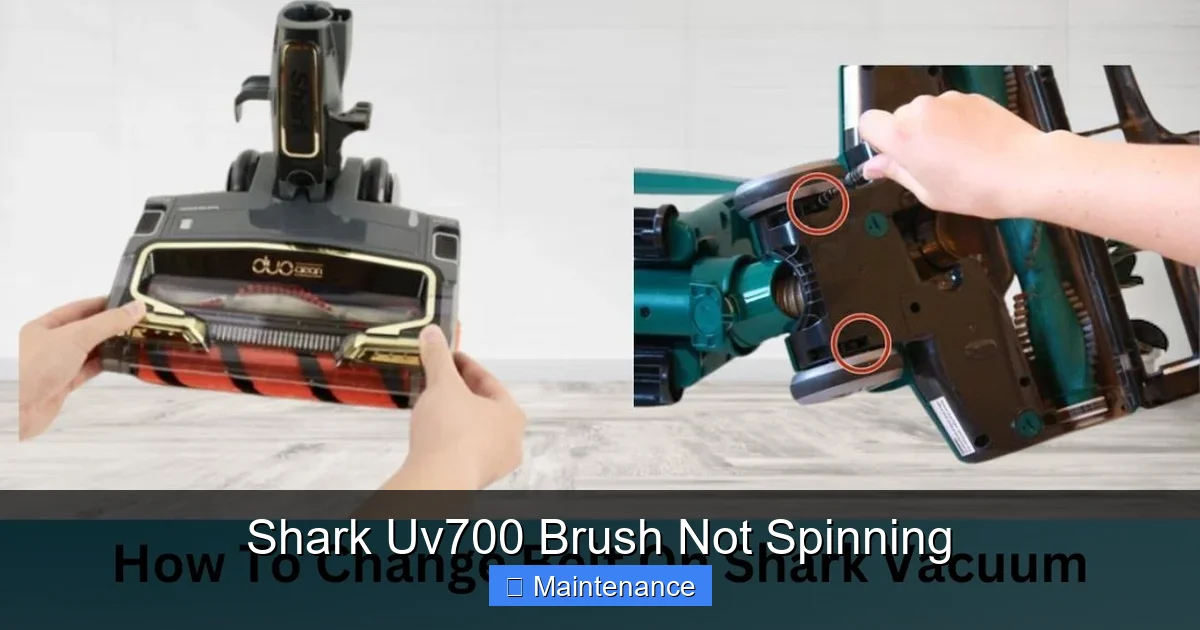
Visual guide about Shark Uv700 Brush Not Spinning
Image source: sharkvacuum.blog
Step-by-Step Un-Jamming Procedure
This fix requires minimal tools: a Phillips screwdriver, a seam ripper or old scissors, and maybe a flashlight.
- Access the Brush Roll: Flip the vacuum over. You’ll see the large brush roll housing. There are typically 4-6 screws holding it in place. Remove them and set the housing aside carefully, as it may have a wiring connector for the brush roll motor.
- Expose the Brush Roll: Gently lift the brush roll out of its cradle. You will almost certainly see a massive amount of hair and gunk wrapped around it, especially near the ends.
- Cut and Pick: Using the seam ripper or scissors, carefully cut through the wrapped hair and debris. Do NOT try to pull it off; you’ll just tighten the knot. Cut it lengthwise along the brush roll, then pull the pieces away. Pay special attention to cleaning out the plastic end caps and the area where the metal axle meets the cap. This is where the jam is most critical.
- Check the Bearings: Once clean, spin the brush roll by hand. It should rotate smoothly for several seconds with no resistance. If it’s still stiff, the debris may have damaged the bearing. The brush roll will need replacing.
- Reassemble: Place the clean brush roll back, ensuring it seats properly in the slots. Reconnect any wiring harness, then screw the housing back on securely. Plug in and test.
Pro Tip: To prevent this, get in the habit of checking and cleaning the brush roll every 2-3 uses. A quick 60-second once-over with scissors can prevent a major jam later.
Cause #2: The Drive Belt – The Rubber Band of Power
The Shark UV700 uses a simple but effective system: a rubber drive belt loops from a small pulley on the main vacuum motor to a larger pulley on the brush roll. When the motor spins, it turns the belt, which in turn spins the brush roll. If this belt is compromised, the chain of power is broken.
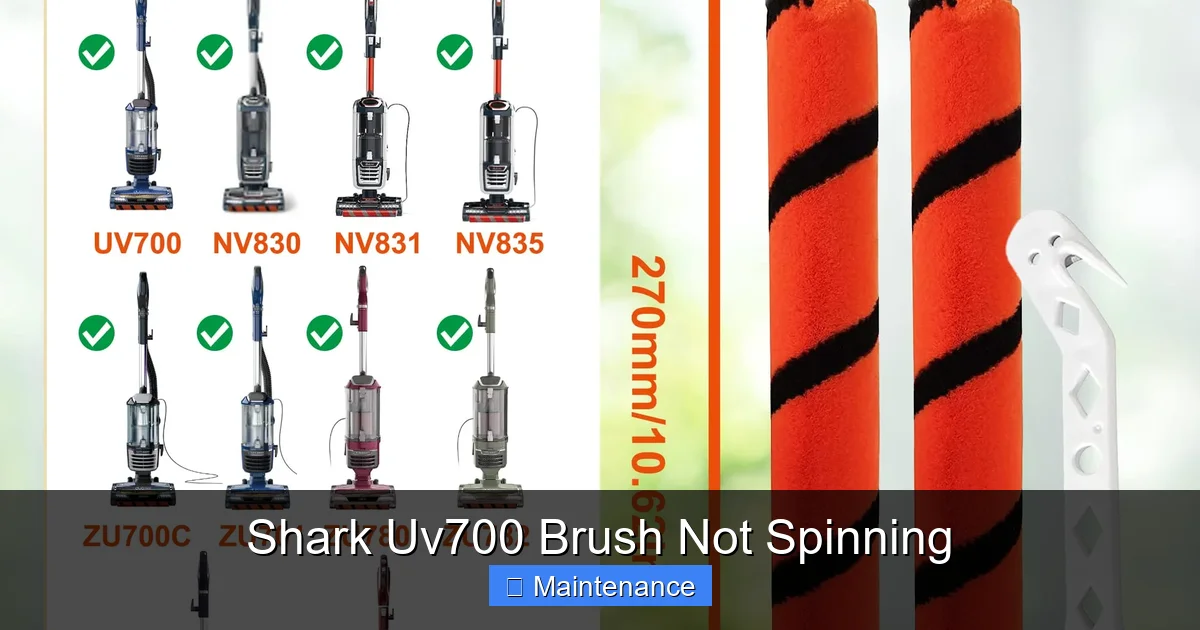
Visual guide about Shark Uv700 Brush Not Spinning
Image source: m.media-amazon.com
Diagnosing a Belt Issue
With the brush roll housing already removed from the previous step, locate the belt. It’s a black rubber loop, usually about the size of a large rubber band. Here’s what to look for:
- Is it there? This sounds silly, but belts can snap and fall into the housing. If it’s missing, it broke and needs replacement.
- Is it stretched or loose? A belt that has lost its elasticity will slip on the pulleys instead of gripping. You should be able to twist it about 90 degrees. If you can twist it more, it’s too loose.
- Is it melted or glazed? Overheating from a jam can melt the belt, leaving it shiny and hard. It will slip immediately.
- Is it on the pulleys correctly? Sometimes, a severe jam can cause the belt to jump off its pulley. Ensure it’s seated properly on both the motor pulley and the brush roll pulley.
Replacing the Drive Belt
Replacing the belt is a simple parts-and-labor job. You’ll need the correct replacement belt. The Shark UV700 typically uses a belt part number like Shark Part # 195-FF or a generic “U” style belt (measure your old one for width/length).
- With the brush roll out, you’ll see the belt stretched between the two pulleys. Stretch it and slide it off one pulley.
- Loop the new belt onto the brush roll pulley first, then stretch it onto the motor pulley. It may take a little muscle to get it over the motor pulley’s ridge.
- Ensure it’s sitting flat in the groove of both pulleys, not twisted.
- Reinstall the brush roll and housing. The brush roll should now be snug against the belt. Test before fully screwing the housing down if possible.
Important: If your old belt is broken but you can’t find the pieces, the belt likely broke due to a jam or a seized bearing. You must fix the underlying jam or replace the brush roll bearings first, or your new belt will break immediately.
Cause #3: The Brush Roll Itself – Worn Bearings and Broken Bristles
The brush roll is a wear item. The bristles wear down, and more critically, the bearings inside the plastic end caps wear out or get clogged with debris that gets past the seals.
When to Replace the Brush Roll
Signs it’s time for a new brush roll:
- It doesn’t spin freely by hand, even after cleaning all visible debris.
- You hear a grinding or rumbling noise from it.
- The bristles are significantly worn down, matted, or broken off.
- It’s visibly cracked or warped.
Replacing the brush roll is straightforward. With the housing off, you’ll see it held in place by a plastic retaining clip or a couple of screws. Release it, pull the brush roll out, and note how the belt is attached. Install the new brush roll, ensuring the belt is on its pulley, and re-secure it. You can find OEM and high-quality aftermarket replacements online using your model number (usually on a sticker on the vacuum’s back or bottom).
A Note on “Wand-Mode” Vacums
Some Shark UV700 models have a feature where the brush roll stops when you detach the wand for above-floor cleaning. Ensure the vacuum is in its full, upright floor-cleaning position. Sometimes the connection between the wand and the main body can be slightly loose, preventing the brush roll circuit from completing. Firmly click the wand back into place.
Cause #4: The Electrical Side – Fuses, Motors, and Switches
If you’ve ruled out jams and belt issues, and the brush roll spins freely, the problem lies in the electrical system that powers the brush roll motor.
The Thermal Fuse: Your Silent Guardian
Shark vacuums have a thermal fuse (a small, often white or black ceramic or plastic component) in the brush roll circuit. If the brush roll motor overheats—usually from a severe jam—this fuse blows to prevent a fire. It’s a safety device. The good news? It’s often resettable. Locate the fuse (consult your manual; it’s usually near the brush roll motor or in the handle/handle base). You’ll see a tiny reset button on it. Press it firmly until it clicks. This resets the fuse. If it trips again immediately, you have a persistent jam or a failing motor.
Brush Roll Motor Failure
This is less common but possible. The small motor that spins the brush roll can burn out. Symptoms: a complete lack of any sound from the brush area when turned on (the main suction motor still runs), and you’ve confirmed the belt is intact and on correctly. Diagnosing this requires a multimeter to test for continuity, which is more advanced. If you suspect this, a professional repair is recommended unless you’re comfortable with electronics.
Switch and Wiring Issues
The brush roll is activated by a switch, often linked to the handle’s “brush on/off” button or the reclining mechanism. Over time, these switches can fail or their wiring connections can loosen. This requires inspecting wiring harnesses for burns or breaks and testing switch continuity.
Preventative Maintenance: Stop the Problem Before It Starts
The best fix is the one you never need. Incorporating these 2-minute habits into your cleaning routine will add years to your Shark UV700’s life and keep the brush spinning.
- The Post-Clean Check: After every few uses, flip the vacuum over and use a flashlight to glance at the brush roll. If you see hair starting to wrap, cut it immediately with scissors before it forms a jam.
- Monthly Deep Clean: Once a month, remove the brush roll housing and give it a thorough cleaning. Remove the brush roll, clean the housing cavity, the belt, and the pulleys with a damp cloth. This removes fine dust that acts as a lubricant for debris to stick to.
- Inspect the Belt: During your monthly clean, check the belt for cracks, glazing, or stretching. Replace it preventatively every 12-18 months as a cheap insurance policy.
- Mind Your Environment: Be extra vigilant when vacuuming rugs with long fringe, areas with lots of hair (pets!), or rooms with loose threads and craft supplies. These are jam magnets.
- Listen to Your Vacuum: Get to know its normal sound. A change in pitch—a higher squeal or a straining hum—is your first warning sign that the brush roll is getting bound. Turn it off immediately and investigate.
When to Call a Professional: Knowing Your Limits
You’ve checked the jam, replaced the belt, cleaned everything, and the brush roll spins freely by hand. You’ve reset the thermal fuse. Yet, when you power it on, nothing. The brush roll motor itself has likely failed, or there is a fault in the main control board that supplies power to the brush circuit. Diagnosing this requires specialized tools and knowledge.
Also, if your vacuum is still under warranty, opening it up may void that warranty. Check your warranty terms first. For older vacuums, weigh the cost of a professional repair (typically $80-$150 for diagnosis/labor plus parts) against the value of the vacuum. Sometimes, investing in a new, more efficient model is the smarter long-term choice.
A reputable small appliance repair shop can give you an accurate diagnosis. Be sure to call and ask if they service Shark vacuums specifically, as some shops specialize in certain brands.
Conclusion: Empowerment Through Understanding
The dreaded Shark UV700 brush not spinning scenario is a rite of passage for owners of this hardworking machine. It’s frustrating, but it’s also an opportunity. By understanding that your vacuum is a series of simple mechanical and electrical systems, you demystify the problem. In the vast majority of cases, you are not dealing with a terminal failure, but with a jammed brush roll, a worn belt, or a tripped fuse—all things within the grasp of a determined DIYer.
The 30 minutes you spend troubleshooting is an investment. It saves you the $100+ service fee, prevents the hassle of being without your vacuum, and gives you a deeper connection to the tools you rely on. You’ve now leveled up from a user to a maintainer. So next time you hear that familiar hum without the spinning brush, don’t panic. Unplug, investigate, and take control. Your Shark UV700, and your clean carpets, will thank you for it.
Frequently Asked Questions
Is it safe to use my Shark UV700 if the brush roll isn’t spinning?
Yes, but only for hard floors. The suction will still work. However, using it on carpet without the brush roll is ineffective, as you’re only removing surface debris. Prolonged use with a seized brush roll can overheat and damage the motor or belt, so stop and fix it immediately.
My brush roll spins freely by hand but not when the vacuum is on. What is it?
This classic symptom points to a power transmission issue. First, check the drive belt for breaks or slippage. If the belt is fine, locate and reset the thermal fuse (a small button near the brush motor). If it trips again, the brush roll motor itself may be faulty.
How often should I clean the brush roll to prevent jams?
For best results, do a quick visual check and cut any visible hair every 2-3 uses. Perform a full removal and deep cleaning of the brush roll, housing, and belt at least once a month, or more frequently if you have pets or long hair.
How much does a replacement brush roll or belt cost?
A genuine Shark drive belt typically costs between $8 and $15. An OEM replacement brush roll assembly usually costs between $25 and $40. High-quality aftermarket options can be slightly cheaper. These are very affordable parts that extend the life of your vacuum significantly.
Will a jammed brush roll always trip the thermal fuse?
Not always. A minor jam might just cause the motor to strain. A severe, sudden jam or one that’s left unaddressed while running will almost certainly cause the motor to overheat and trip the thermal fuse as a safety measure. Resetting the fuse is a standard step after clearing any jam.
My Shark UV700 is under warranty. Should I still try to fix this myself?
Generally, no. Opening the vacuum and performing repairs will likely void the manufacturer’s warranty. If your vacuum is still within its warranty period, contact Shark customer support or an authorized service center. They will diagnose and repair it at no cost, provided the issue is a manufacturing defect and not user damage.