Is your Shark Uv560 vacuum’s brush roll suddenly stopped spinning? This is a common but frustrating issue, usually caused by a blocked brush roll, a snapped or slipped drive belt, or a failed motor. The good news is that you can diagnose and fix most problems yourself with basic tools and our clear, step-by-step instructions. We walk you through immediate checks, deep troubleshooting, and part replacements to get your Shark back to pulling embedded dirt from carpets.
Key Takeaways
- The #1 cause is a clog: Hair, string, and carpet fibers wrap around the brush roll bearings, jamming it. Always check this first.
- The drive belt is a frequent culprit: It can stretch, slip off its pulleys, or snap entirely, breaking the connection from the motor to the brush roll.
- Motor failure is possible but less common: If the motor doesn’t hum and all other parts are fine, the motor itself may have burned out.
- Safety first: Always unplug the vacuum before touching any internal components to avoid electrical shock or injury.
- Regular prevention is key: Cleaning the brush roll monthly and checking for wear can prevent 90% of “not spinning” problems.
- Replacement parts are available: Shark sells official belts (part # 186-02) and brush rolls, making most repairs affordable.
- Know when to call a pro: If you’re uncomfortable with electronics or the motor is faulty, professional repair or replacement may be more cost-effective.
📑 Table of Contents
- Introduction: That Silence is Golden… Until It’s Not
- Understanding the Shark Uv560 Brush Roller System
- Immediate Troubleshooting: The 10-Minute Diagnosis
- Deep Dive: The Most Common Causes & Fixes
- Advanced Repairs and Part Replacement Guide
- Preventive Maintenance: Keeping the Spin Alive
- Conclusion: You’ve Got This!
Introduction: That Silence is Golden… Until It’s Not
You’re in the zone, vacuuming your living room. The familiar whir of the motor, the satisfying crunch of debris being sucked up, the vibrating brush roll agitating your carpet pile—it’s a symphony of cleanliness. Then, you notice it. The sound changes. The deep, aggressive scrubbing noise is gone. The vacuum still sucks air, but it’s just… gliding. Your heart sinks. The brush roll on your trusty Shark Uv560 has stopped spinning. Don’t panic. This is one of the most common—and most fixable—problems with upright vacuums. Before you resign yourself to an expensive service call or the landfill, take a deep breath. In this guide, we’re going to become detectives together. We’ll systematically investigate every possible reason your Shark Uv560 brush not spinning, from the simple 30-second fix to more involved repairs. By the end, you’ll have the knowledge and confidence to bring that powerful brush roll back to life.
The Shark Uv560 is a workhorse. Its brush roll, that cylindrical bar with bristles and rubber fins, is the heart of its deep-cleaning ability on carpets. When it stops, your vacuum essentially becomes a glorified dust blower, only picking up surface debris. The causes are almost always mechanical and accessible. We’ll talk about clogs (the #1 villain), the humble but critical drive belt, the brush roll bearings themselves, and the motor that powers it all. Grab a screwdriver, some old towels, and let’s get started.
Understanding the Shark Uv560 Brush Roller System
To diagnose the problem, you first need to understand how the brush roll is supposed to work. It’s a simple but elegant system of power transfer. The vacuum’s main motor has two jobs: it creates suction through the hose and wand, and it also spins a small drive pulley on its shaft. A rubber drive belt loops around this motor pulley and around a larger pulley attached to one end of the brush roll. When the motor runs, it turns its pulley, which grabs the belt and spins it, which in turn spins the brush roll. It’s a direct, belt-driven connection.
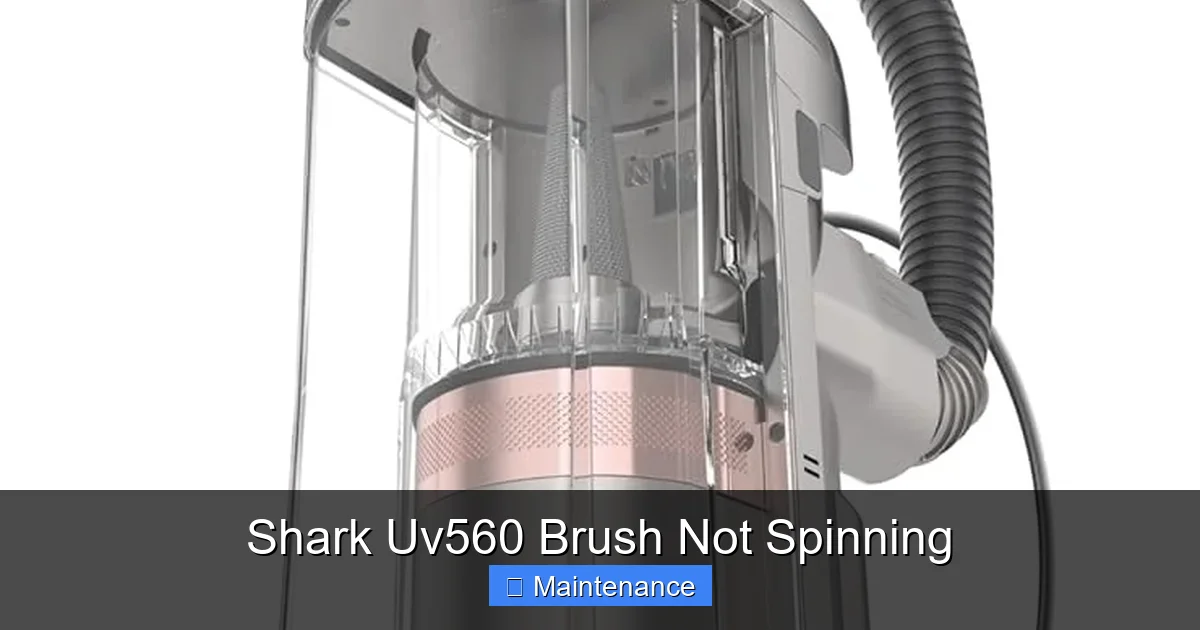
Visual guide about Shark Uv560 Brush Not Spinning
Image source: m.media-amazon.com
The Key Components Involved
There are four main players in this drama:
- The Brush Roll: This is the long, brush-lined roller you see from the bottom of the vacuum. It has bearings (small wheels) on each end that sit in plastic housings on the vacuum’s soleplate. If these bearings get gunked up or frozen with packed-in hair and carpet fibers, the brush roll can’t spin freely.
- The Drive Belt: This is a thin, black, rubber band. Its job is to transmit rotational force. It must be tight enough to grip both pulleys but not so tight it stresses the motor. Over time, it can stretch, crack, or slip off.
- The Motor & Pulley: The motor provides the torque. If the motor itself is dead or its drive pulley is broken or detached, nothing will spin.
- The Idler Pulley & Tensioner: Many Shark models use a spring-loaded idler pulley to keep the belt tight. If this mechanism breaks or the spring loses tension, the belt will slip.
Any failure in this chain—blockage, broken part, disconnection—results in a brush roll that doesn’t spin. Our job is to find the weak link.
Immediate Troubleshooting: The 10-Minute Diagnosis
Before you lay the vacuum on its back and start unscrewing things, perform these quick, non-invasive checks. You might solve the problem in under five minutes.
Visual guide about Shark Uv560 Brush Not Spinning
Image source: m.media-amazon.com
Step 1: The Visual Inspection
Flip your Shark Uv560 onto its back so you can see the underside. The brush roll is right there. What do you see?
- Is it visibly jammed? Look for a thick mat of hair, string, or carpet fibers wrapped tightly around the bristles and especially in the bearing housings at each end. This is the most common cause. You’ll often see a grayish-brown felt-like mass.
- Can you spin it by hand? Reach in (make sure the vacuum is UNPLUGGED!) and try to rotate the brush roll with your fingers. Does it spin freely? Or is it stiff, gritty, or completely locked? If it’s stiff, the bearings are seized with debris. If it spins freely, the problem is likely the belt or motor.
- Is the belt there? Look at the area behind the brush roll. Do you see a black rubber belt? If it’s missing, it has either snapped or jumped off its pulleys. If it’s there, is it loose and sagging, or tight? A loose belt won’t engage properly.
Step 2: The Suction Test
This helps isolate the problem. Turn the vacuum on in the upright position (so the brush roll is disengaged by the pedal) and place your hand over the hose inlet. Do you feel strong suction? If suction is weak or absent, the problem is a clog or failure in the main suction path (hose, wand, or internal hose), not the brush roll system. However, strong suction with a non-spinning brush roll confirms the issue is isolated to the brush roll drive mechanism.
Step 3: Listen and Feel
With the vacuum upright and on, listen closely. Do you hear the motor running normally? Now, carefully lower the handle to the floor to engage the brush roll. Do you hear a change in motor sound—a slight strain or a higher pitch? If the motor sound changes but the brush doesn’t spin, the motor is trying to turn a jammed brush roll or a broken belt. If the motor sound stays exactly the same, the motor might be disconnected from the brush roll (broken belt, broken pulley) or the brush roll is so jammed the motor can’t budge it.
Deep Dive: The Most Common Causes & Fixes
Based on your initial inspection, let’s target the specific failure. We’ll start with the most likely and work our way down.
Visual guide about Shark Uv560 Brush Not Spinning
Image source: m.media-amazon.com
The Overwhelming #1 Culprit: The Hair & Fiber Clog
This isn’t just a surface wrap. Over time, tiny fibers work their way into the narrow spaces between the brush roll’s plastic end caps and the vacuum’s plastic housing. This packs the bearings solid. The brush roll can no longer rotate. The fix is messy but straightforward.
How to Fix a Jammed Brush Roll:
- Unplug the vacuum. This is non-negotiable.
- Lay the vacuum on its back. Place a towel underneath to catch debris.
- Remove the brush roll cover. On the Uv560, this is usually a gray plastic plate on the underside, secured by 4-6 screws. Remove them and set the cover aside.
- Extract the brush roll. Lift it straight up. It may be stuck. Gently wiggle it. Don’t force it if it’s frozen in its housings; you may need to cut debris free first.
- Decapitate the brush roll. You need to get to the bearings. On most Shark brushes, the two yellow or blue bearing caps at each end simply pull off. Use needle-nose pliers if they’re tight. Important: Note which side faces up and which way the bristles are angled. They must go back in the same orientation for proper cleaning.
- The Great De-hairing. This is the core task. Use scissors to cut all the way around the brush roll, slicing through the hair/fiber mat. Then, pull the chunks off. Now, use a seam ripper, a dedicated vacuum brush tool, or the edge of your scissors to scrape and pick out every last bit of packed fiber from the bearing housings on the vacuum’s soleplate. This is where the problem lives. Be thorough. Spin the bearings by hand; they should rotate smoothly and silently.
- Reassemble. Snap the bearing caps back on (ensure they’re seated), place the brush roll back in its housings (it should spin freely), and screw the cover back on. Test on the floor.
Pro Tip: After cleaning, apply a tiny dab of white lithium grease or even vegetable oil to the metal axles of the bearings (not the plastic housings) to lubricate them and help future debris slide off.
The Slipping or Broken Drive Belt
If your brush roll spins freely by hand but doesn’t spin when the vacuum is on, the belt is the prime suspect. A belt can slip off its pulleys due to a broken tensioner or simply from wear. It can also stretch, lose grip, or snap.
How to Inspect and Replace the Belt:
- Access. With the vacuum on its back and the brush roll cover removed (as above), you’ll see the belt. It’s a loop around the motor pulley (small, near the back) and the brush roll pulley (the larger one on the brush roll itself).
- Inspection. Is the belt on both pulleys? Is it frayed, cracked, glazed (shiny), or stretched? A good belt has a firm, rubbery feel. Spin the motor pulley by hand (you may need to remove a plastic cover over it). Does it turn the belt and brush roll? If the pulley spins but the belt doesn’t move, it’s slipping.
- Replacement. To remove the old belt, you usually have to tilt or slide the brush roll out of the way to get slack. Stretch the belt off the motor pulley first, then off the brush roll pulley. To install the new Shark belt (part # 186-02 is the standard), hook it onto the brush roll pulley, then stretch it over the motor pulley. It should fit snugly. Ensure it’s sitting straight and not twisted.
- Tension Check. The belt should have slight resistance when you try to roll it by hand. If it’s floppy, the tensioner spring may be broken or the belt is the wrong size.
Why Belts Break: They wear out from friction and heat. A constantly jammed brush roll (from hair) puts extreme sideways stress on the belt, accelerating wear. This is why cleaning the brush roll is the best belt preservation strategy.
Faulty Brush Roll Bearings or Pulley
Sometimes the brush roll itself is the problem. The plastic bearings can crack, or the pulley that the belt rides on can break or become detached from the brush roll shaft.
Diagnosis: Remove the brush roll completely. Inspect the plastic end caps. Are they cracked? Does the metal axle spin independently of the plastic bearing cap? If so, the bearing is shot. Look at the pulley on the brush roll. Is it cracked, wobbly, or separated? Spin the brush roll by its metal axles. Does it feel gritty or have play? If yes, the bearings are worn.
Fix: Shark typically sells the entire brush roll assembly as a replacement part (e.g., part # 186-01). While you can sometimes replace just the bearings, it’s often not cost-effective or easy. A new brush roll is the cleanest solution. Ensure you get the correct model for the Uv560.
Motor or Motor Pulley Failure
This is the least common but most serious cause. If you have strong suction, a clean brush roll that spins freely by hand, a new and properly tensioned belt, and it still doesn’t spin, the motor or its drive pulley may be at fault.
Diagnosis: With the brush roll and belt removed, locate the motor drive pulley (the small one the belt would attach to). Can you turn it by hand? It should turn with some resistance. If it’s frozen solid or wobbly, the motor bearings are shot or the pulley is broken off the motor shaft.
Test: With the belt off, turn the vacuum on. Can you hear the motor running? You should hear a distinct change in sound when you lower the handle to engage the brush roll circuit. If you hear no change, the motor for the brush roll may not be engaging. On some Sharks, there’s a separate motor for the brush roll; on others, it’s the same motor with a clutch. If the motor hums but the pulley doesn’t turn, the motor is likely dead.
Fix: Motor replacement is a significant repair. It involves accessing the motor inside the vacuum’s body, disconnecting wires, and unscrewing mounts. Unless you are very handy with appliances, this is the point to call a professional or strongly consider vacuum replacement, especially if the vacuum is older.
Advanced Repairs and Part Replacement Guide
Let’s say you’ve identified the broken part. Here’s how to approach the swap.
Replacing the Drive Belt (Part # 186-02)
This is the most common repair. The belt is inexpensive (often under $10). When buying, ensure it’s for the Shark Vertex, Rotator, or Navigator uprights—the Uv560 uses the same belt across many models. Installation is as described above: loop it around the brush roll pulley, stretch it, and hook it onto the motor pulley. The trick is getting the tension right. The built-in spring-loaded idler pulley should automatically tension the belt. Ensure the belt is seated in the groove of both pulleys and isn’t twisted.
Replacing the Brush Roll Assembly (Part # 186-01)
If the bearings or pulley are damaged, replace the whole unit. It’s a simple plug-and-play part.
- Remove the old brush roll as described (unplug, lay back, remove cover, lift out).
- Note the orientation. The bristles on most Shark brushes are angled. There is usually a small tab or arrow on the plastic end cap that must face a certain direction (often toward the rear of the vacuum). Look for this.
- Place the new brush roll in the housings. It should drop in easily and spin freely.
- Reattach the cover. No tools are needed for the brush roll itself; the screws only secure the cover.
When to Seek Professional Help
If you’ve verified a clean, free-spinning brush roll, a new correctly installed belt, and the motor pulley is intact but the brush still won’t spin, the fault likely lies within the motor assembly or the electrical switch that controls it. Diagnosing and repairing internal wiring, motor windings, or the switch mechanism requires technical skill and carries a risk of electric shock if done incorrectly. At this stage, get a quote from an authorized Shark repair center or a reputable small appliance repair shop. Compare the cost (parts + labor) to the price of a new, comparable Shark model. Often, for vacuums over 5-7 years old, replacement is the smarter financial choice.
Preventive Maintenance: Keeping the Spin Alive
An ounce of prevention is worth a pound of cure. A few minutes of monthly maintenance will drastically reduce the chance of a non-spinning brush.
The Monthly Brush Roll Clean-Out
Make it a habit. Once a month, or more often if you have pets or long hair:
- Unplug the vacuum.
- Lay it on its back.
- Remove the brush roll cover.
- Pull out the brush roll.
- Use scissors to cut any hair wrapped around it.
- Use a damp cloth or a vacuum crevice tool to suck out debris from the bearing housings on the soleplate.
- Spin the brush roll by hand to ensure it’s free.
- Reassemble.
Check the Belt Regularly
During your monthly clean-out, inspect the belt. Look for cracks, glazing, or thinning. A belt that looks tired should be replaced preemptively. A $10 belt is cheaper than a service call.
Mind What You Vacuum
Your Shark Uv560 is powerful, but it’s not invincible. Avoid vacuuming:
- Hard, sharp objects (tacks, pins, small toys).
- Large, bulky items that can jam the brush roll.
- Wet anything. Water can damage bearings and motors.
- Fine powders like flour or plaster of Paris in large quantities, as they can clog the system and get into bearings.
Storage Matters
Store your vacuum in a dry place. Don’t leave heavy items on top of it that could warp the soleplate or brush roll. If storing long-term, consider removing the belt to prevent it from stretching under constant tension.
Conclusion: You’ve Got This!
A Shark Uv560 brush not spinning is a disappointing moment, but it’s almost never a death sentence for your vacuum. In the vast majority of cases, the problem is a stubborn hair clog or a worn-out drive belt—two issues that are cheap, quick, and satisfying to fix yourself. By following the systematic diagnostic approach in this guide—starting with the simple visual and hand-spin tests—you can pinpoint the exact failure point. Remember the golden rules: always unplug first, be meticulous with cleaning the bearing housings, and don’t ignore a worn belt. Performing that quick monthly brush roll clean-out is the single best habit you can form to keep your Shark performing like new for years. You’ve now unlocked the knowledge to maintain one of the most critical parts of your vacuum. So next time that brush roll goes silent, don’t reach for the phone to call for help. Reach for your screwdriver, put on some gloves, and get ready to restore that powerful, deep-cleaning agitation to your home.
Frequently Asked Questions
My Shark Uv560 brush spins but the vacuum has no suction. Is that related?
No, that’s a separate issue. A non-spinning brush is a drive problem. No suction indicates a clog in the hose, wand, or a full/damaged dust cup, or a failed suction motor. They are two different systems on your vacuum.
How much does a replacement Shark Uv560 drive belt cost?
An official Shark replacement drive belt (part # 186-02) typically costs between $8 and $15 online or at major retailers. It’s one of the most affordable vacuum repairs you can make.
Will a clogged brush roll damage my Shark’s motor?
Yes, eventually. If the brush roll is completely jammed and you run the vacuum, the motor has to work much harder to try and turn it. This can cause the motor to overheat, burn out its windings, or blow a fuse. That’s why it’s crucial to stop using the vacuum and fix a jammed brush immediately.
My brush roll spins freely by hand, the belt is new and tight, but it still doesn’t spin when on. What now?
This points to a failure in the power transfer between the motor and the brush roll. First, double-check that the belt is perfectly aligned on both pulleys and not slipping off the side. Then, with the belt off, try to turn the motor’s small drive pulley by hand. If it’s frozen, the motor or its pulley is faulty and likely needs professional service.
Is it worth repairing a 7-year-old Shark Uv560 with a motor problem?
Probably not. The cost of a new motor plus labor can approach or exceed the price of a new entry-to-mid-level Shark model. Given the age, other parts may also be wearing out. For a motor failure on an older unit, replacement is often the more economical choice.
Can I use a generic belt instead of the official Shark part?
While generic belts are cheaper, we strongly recommend using the official Shark part # 186-02. It’s engineered for the exact length, width, and grip required by your Uv560’s pulleys. A generic belt may be the wrong size (too long/short), too wide/narrow, or made of inferior rubber that slips or breaks prematurely, potentially causing more damage.