Is your Shark S7001 vacuum cleaner’s brush roll stubbornly refusing to spin? This is a very common issue, usually caused by clogs, tangled debris, a worn belt, or a tripped thermal fuse. The good news is that you can diagnose and fix most of these problems yourself with basic tools and a little patience, without needing a professional service call. Always start by unplugging the vacuum and checking for obvious blockages and hair wraps around the brush roll. Systematic troubleshooting from the simplest solution to more complex ones is the key to restoring your vacuum’s performance.
You’re in the middle of cleaning, and you notice it: that familiar, reassuring whir of your Shark S7001’s brush roll has gone silent. You look down, and the bristles are just sitting there, not rotating. Panic sets in for a second. Is it broken for good? Is it expensive to fix? Before you resign yourself to a costly repair bill or the sad task of shopping for a new vacuum, take a deep breath. The “Shark S7001 not spinning” problem is one of the most frequently reported issues for this and many similar upright/ stick vacuums, and the vast majority of the time, the cause is something you can identify and fix yourself in under 30 minutes with a few simple tools. This guide will walk you through every possible cause, from the embarrassingly simple to the more complex, with clear, safe, step-by-step instructions. We’ll turn you into your vacuum’s own personal mechanic.
Key Takeaways
- Safety First: Always unplug your Shark S7001 before performing any inspection or repair to avoid electrical shock or injury.
- Most Common Culprit: A tangled hair and fiber wrap around the brush roll is the #1 reason for a non-spinning brush bar and is easily fixed with scissors or a seam ripper.
- Check the Belt: A broken, stretched, or disconnected drive belt is a frequent mechanical failure. Inspect it for cracks and ensure it’s properly seated on the motor shaft and brush roll pulley.
- Clear All Clogs: A severe blockage in the hose, wand, or air path can create so much suction resistance that the brush roll motor stalls or a thermal fuse trips.
- Inspect the Motor & Fuse: If the brush roll spins freely by hand but not with power, the brush roll motor itself or the dedicated thermal fuse protecting it may have failed.
- Regular Prevention: Consistent post-use cleaning of the brush roll, emptying the dust cup, and checking for clogs will prevent 90% of “not spinning” issues.
- Know When to Call: If you’re uncomfortable with electrical components or have confirmed a failed motor, contacting Shark Support or a qualified appliance repair technician is the safest, most cost-effective choice.
📑 Table of Contents
- Understanding the Shark S7001’s Brush Roll System
- Step 1: The Immediate Inspection & Safety Protocol
- Step 2: Diagnosing the Drive Belt
- Step 3: Hunting Down Clogs and Airflow Restrictions
- Step 4: Testing the Brush Roll Motor and Electrical Components
- Step 5: When to Consider Professional Repair or Replacement
- Essential Preventive Maintenance to Avoid Future Spins
- Conclusion: You’ve Got This!
Understanding the Shark S7001’s Brush Roll System
Before we start pulling things apart, it helps to understand what makes the brush roll spin. Your Shark S7001 uses a belt-driven system. The main suction motor powers the vacuum’s airflow, but a separate, smaller motor—often called the brush roll motor or agitator motor—is dedicated to spinning the brush roll. A rubber belt loops from a pulley on this motor shaft to a pulley on the brush roll itself. When the vacuum is on and the brush roll switch is engaged, this motor turns, the belt moves, and the brush roll agitates carpet fibers to loosen dirt. A problem anywhere in this chain—power to the motor, the motor itself, the belt, or the brush roll bearings—can stop the spin. Additionally, the system has safety features like thermal fuses that can trip if the motor overheats from excessive resistance (like a major clog). Knowing this flow helps you diagnose logically.
The Two Critical Safety Switches
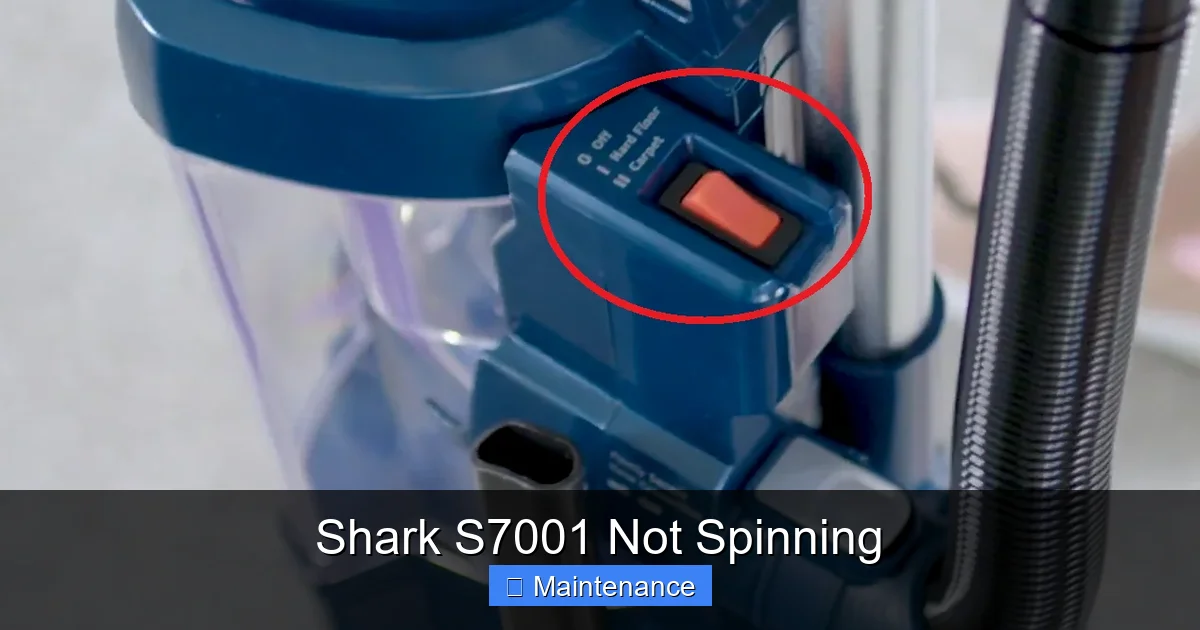
Your Shark S7001 has two crucial safety interlocks you must check first. First, the brush roll on/off switch. It’s usually a button or dial on the vacuum’s body or handle. It’s easy to accidentally hit it and turn the brush roll off while leaving suction on. Second, the floor type sensor/release pedal. On many Shark models, pressing the pedal to lift the front of the vacuum for hard floors can also physically disengage the brush roll drive. Ensure the vacuum is set to “carpet” mode and the pedal is released so the brush roll housing is in contact with the floor. These are the simplest “fixes” possible!
Step 1: The Immediate Inspection & Safety Protocol
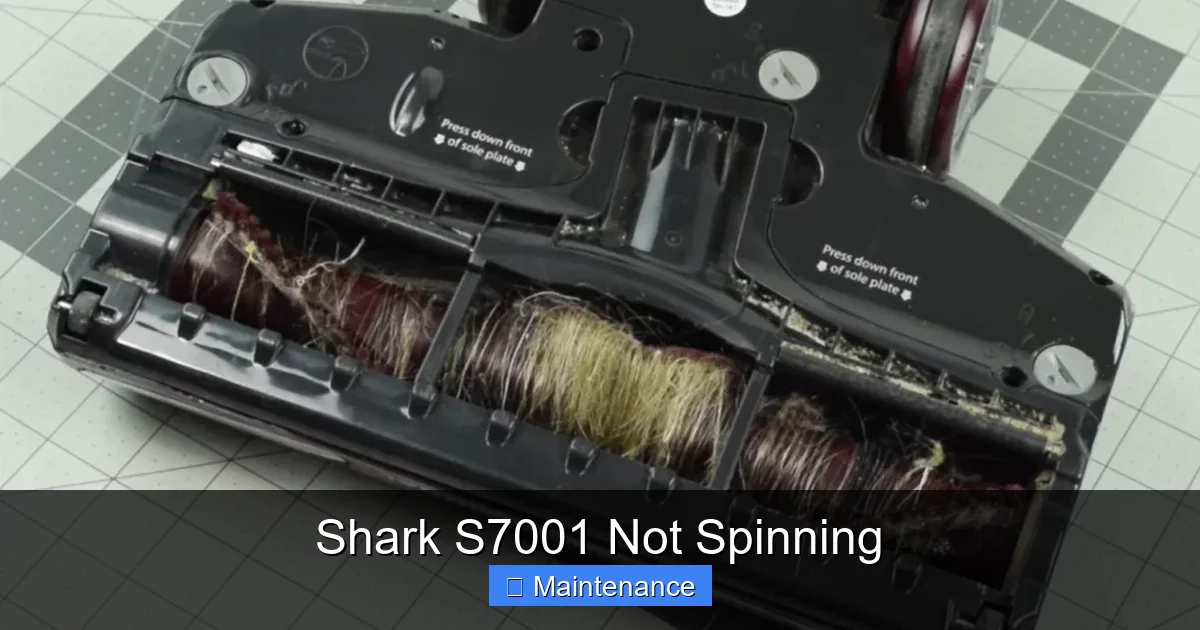
No matter what you suspect, your first actions are always the same. 1. Unplug the vacuum. This is non-negotiable. Working on a plugged-in appliance is dangerous. 2. Lay the vacuum on its side. This gives you clear access to the brush roll housing on the underside. 3. Visually inspect the brush roll. Use a flashlight. Do you see a thick mat of hair, string, or carpet fibers wrapped around the bristles and the axles on each end? This is the most common problem, especially in homes with pets or long hair. The wrap acts like a brake, stopping the brush roll from turning and putting immense strain on the belt and motor.
Visual guide about Shark S7001 Not Spinning
Image source: vacuupedia.net
How to Safely Remove a Hair Wrap
Grab a pair of scissors, a seam ripper, or even a sturdy utility knife. Carefully, meticulously, cut through the tangled mass. Do not just pull; you might damage the bristles or, worse, cut the belt underneath. Work the cutting tool under the wrap, section by section, and lift it away. You’ll be amazed at how much material can accumulate without you noticing. Once the bulk is removed, use your fingers or a long, thin tool to pick out any remaining bits from between the bristles and especially from around the two plastic end caps. The brush roll should now spin freely by hand when you rotate it. If it’s still stiff, the bearings inside the end caps may be jammed with gunk or have failed.
Step 2: Diagnosing the Drive Belt
If the brush roll spins freely by hand after clearing debris, the next most likely suspect is the drive belt. Over time, this rubber belt can stretch, crack, dry out, or even snap. It can also jump off its pulleys.
Visual guide about Shark S7001 Not Spinning
Image source: vacuupedia.net
Accessing and Inspecting the Belt
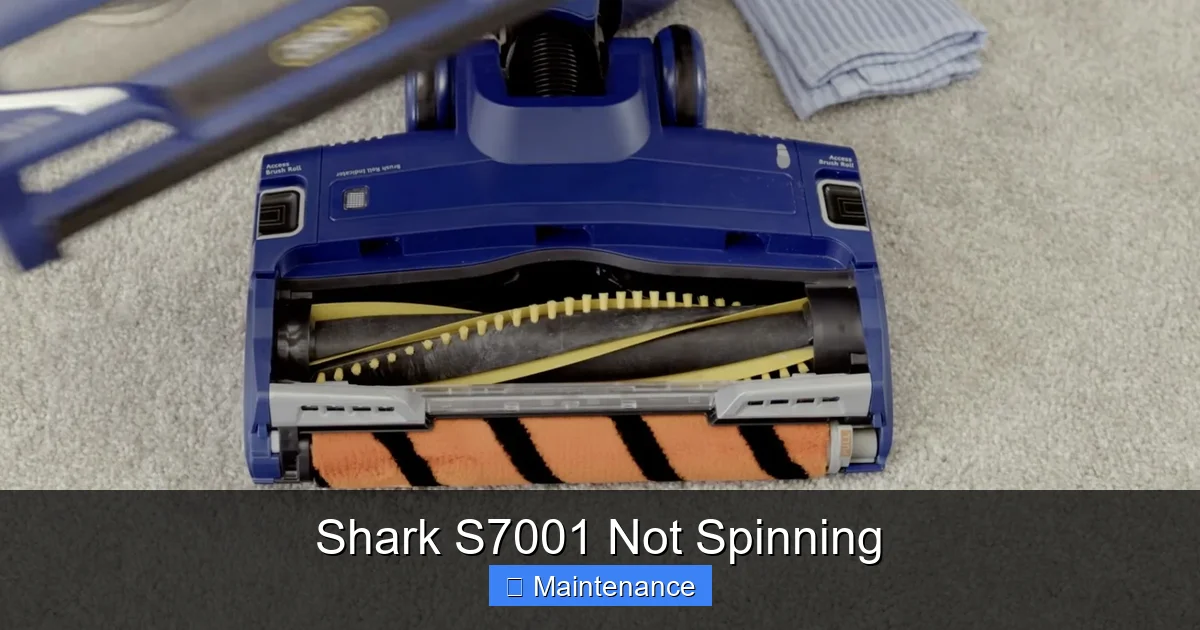
To see the belt, you typically need to remove the bottom plate of the brush roll housing. On the Shark S7001, this is usually held on by 4-6 screws. Turn the vacuum over, locate the rectangular plate covering the brush roll, and remove the screws. Gently pry the plate off. Once it’s off, you’ll see the brush roll and the belt. What to look for: Is the belt there? Is it a continuous loop? If it’s broken, you’ll find two pieces. If it’s stretched, it may be loose and slipping off the pulleys. Run your fingers along it—do you feel cracks, glazing, or thin spots? A belt in poor condition needs replacement. Also, check that it’s properly seated: one end should be on the small motor pulley, the other on the larger brush roll pulley. If it’s jumped off, simply reposition it. However, a belt that repeatedly jumps off is usually stretched and needs replacing.
Replacing the Drive Belt
Replacement belts for the Shark S7001 are readily available online (search for “Shark S7001 drive belt” or part number, often found on the old belt or in the manual). Replacing it is straightforward: stretch the new belt over the motor pulley first (you may need to rotate the brush roll to create slack), then loop it onto the brush roll pulley, ensuring it sits in the groove. Rotate the brush roll by hand a few times to seat the belt before reattaching the bottom plate. This is a very common and inexpensive fix.
Step 3: Hunting Down Clogs and Airflow Restrictions
Remember the chain of operation? Suction power comes from the main motor. The brush roll motor is separate but can be affected by overall system strain. A severe clog anywhere from the brush roll housing back to the dust cup can create immense backpressure. This makes it incredibly hard for the brush roll motor to turn the brush roll against that resistance, causing it to stall. Many vacuums, including Sharks, have a thermal fuse on the brush roll motor circuit that will permanently blow if the motor overheats from this condition, rendering the brush roll dead until the fuse is replaced.
Visual guide about Shark S7001 Not Spinning
Image source: livingpristine.com
Systematic Clog Clearance
You must clear the entire airflow path. 1. Brush Roll Housing: With the bottom plate off, look into the opening where suction enters. Use a long, flexible tool (like a closet rod or a specialized vacuum clog tool) to dislodge any debris packed in the curved channel. 2. The Hose/Wand: Detach the hose from the vacuum body and the wand. Look through it. Use a broom handle or a long wire (be gentle to avoid puncturing) to push out any obstruction. 3. The Air Path & Dust Cup: Check the connection between the hose and the dust cup. Empty the dust cup completely and inspect the mesh filter inside it for a thick layer of dust and debris. A clogged filter restricts airflow. Wash this filter with cold water (if your model has a washable one) and let it dry completely for 24 hours before using. 4. The Exhaust Filter: Locate the exhaust filter (usually on the back or top of the vacuum). A clogged exhaust filter is a prime suspect for overall loss of suction and motor strain. Remove it and clean or replace it as per your manual. Clearing all these points removes the resistance that could have tripped a fuse or stalled the motor.
Step 4: Testing the Brush Roll Motor and Electrical Components
If you’ve confirmed the brush roll spins freely by hand, the belt is new and correctly installed, and all clogs are cleared, but the brush roll still doesn’t spin when powered, the fault lies with the motor or its dedicated electrical circuit.
Checking for a Tripped Thermal Fuse
The thermal fuse is a small, often white or black, plastic component on the brush roll motor’s wiring harness. It’s designed to melt and break the circuit if the motor gets too hot. If it blows, the brush roll gets zero power. You need to locate it. Its position varies—sometimes under the top cover, sometimes near the motor. Consult your Shark S7001 manual or a reliable online parts diagram for its exact location. Visual Test: A blown fuse often has a visible break in the metal strip inside or may show signs of burning. Multimeter Test: For a definitive check, set a multimeter to continuity mode. With the vacuum unplugged, disconnect the fuse from the wiring harness and touch the probes to its two terminals. If the meter beeps (shows continuity), the fuse is good. If it’s silent, the fuse is dead and must be replaced. This is a common fix after a major clog has been cleared.
Direct Motor Testing (Advanced)
If the fuse is good, the brush roll motor itself may have failed. Motors can burn out. To test it, you need to access its two wire connectors. With the vacuum unplugged and the fuse removed from the circuit, disconnect the motor’s wire harness. Set your multimeter to the lowest ohms (Ω) setting. Touch the probes to the two motor terminals. You should get a low resistance reading (typically between 1-20 ohms). If the reading is infinite (no beep, “OL” on the display), the motor windings are open and the motor is dead—it needs replacement. If you get a very low reading (near zero), the motor may be shorted. Motor replacement is more involved and may not be cost-effective for an older machine, but parts are often available.
Step 5: When to Consider Professional Repair or Replacement
You’ve followed all the steps: cleared the hair wrap, replaced the belt, unclogged every inch, and tested/replaced the thermal fuse, but the brush roll remains stubbornly still. The multimeter test points to a failed brush roll motor. Now what? Consider the age and overall condition of your Shark S7001. If it’s a newer model under warranty, contact Shark Support immediately—do not attempt further disassembly, as it may void the warranty. For out-of-warranty machines, get a quote for a professional repair. The cost of a new motor plus labor can sometimes approach the price of a new mid-range vacuum. Factor in the vacuum’s age and your satisfaction with its performance. Sometimes, investing in a new model with updated technology is a smarter long-term choice. However, if you’re comfortable with tools and the part cost is reasonable (often $30-$60 for a motor), a DIY motor swap is possible for the ambitious, following detailed online tutorials specific to the S7001 model.
Essential Preventive Maintenance to Avoid Future Spins
An ounce of prevention is worth a pound of cure. Integrating these quick habits into your cleaning routine will drastically reduce the chance of your Shark S7001’s brush roll ever stopping again.
The Post-Cleaning 60-Second Routine
After every few uses (or after every use if you have pets), take one minute to: 1. Check and clean the brush roll. Use the seam ripper or the built-in blade (if your model has one on the bottom plate) to cut away any hair that’s started to wrap. 2. Empty the dust cup. Don’t wait for the “full” indicator. Overfilling restricts airflow. 3. Tap out the fine dust filter. Give the washable filter a few good taps over a trash can to dislodge embedded dust. 4. Visually inspect the hose and wand for any visible obstructions. This habit catches problems when they’re tiny and easy to manage.
Monthly Deep Cleaning
Once a month, give your vacuum a spa day. Turn it over, remove the bottom plate, and thoroughly clean the brush roll housing channel with a damp cloth and a wooden skewer to dislodge any packed debris. Wash the dust cup filter and the exhaust filter (if washable) with cold water. Let all filters air-dry completely for 24 hours before reinstalling—never use a wet filter. This maintains maximum suction and reduces motor strain. Also, while you have the bottom plate off, check the belt for wear and the brush roll bearings for smooth spinning. This proactive approach extends the life of every component.
Conclusion: You’ve Got This!
The “Shark S7001 not spinning” issue is rarely a death sentence for your vacuum. It’s usually a symptom of a preventable or easily repairable condition—most often a hair wrap or a worn belt. By following this structured diagnostic approach, starting with the simplest, safest checks and moving methodically to the more complex electrical tests, you empower yourself to solve the problem. You save money, reduce waste, and gain a deeper understanding of your appliance. Remember the golden rules: always unplug first, clear all clogs, and inspect the belt and brush roll. With regular preventive maintenance, your Shark S7001 should provide years of reliable, brush-roll-spinning service. Now, go grab your screwdriver and get that vacuum rolling again!
Frequently Asked Questions
My Shark S7001 brush roll spins when I push it manually but not when turned on. What is it?
This indicates the brush roll itself is free, so the problem is with the power or drive system. First, ensure the brush roll switch is on. Then, check for a broken or disconnected drive belt. If the belt is intact, the dedicated brush roll motor or its thermal fuse may have failed and needs testing/replacement.
How do I know if my drive belt needs replacing?
Inspect the belt for cracks, glazing (shiny surface), fraying, or stretching. A belt that is loose enough to slip off pulleys or that has lost its elasticity must be replaced. Even if it looks okay but your vacuum is several years old, preventative belt replacement is a good idea.
Can a clog really blow a thermal fuse?
Yes. A severe clog creates massive resistance, forcing the brush roll motor to work overtime and overheat. The thermal fuse is a safety device that melts to cut power and prevent a fire. After clearing the clog, you must replace the blown fuse for the brush roll to work again.
Is it worth repairing an old Shark S7001?
Consider the vacuum’s age, your attachment to it, and repair costs. A belt ($10) or filter ($15) is always worth it. A brush roll motor ($40-$70 + labor) on a 5+ year old vacuum may not be. Compare the total repair estimate to the price of a new, comparable Shark model.
My vacuum has suction but the brush roll doesn’t spin. Is it always the belt?
Not always. While a broken belt is very common, you must also check for a hair wrap jamming the brush roll, a tripped thermal fuse, or a failed brush roll motor. Always rule out the simple, free fixes (hair wrap, switch, clog) before buying a new belt or part.
How often should I clean the brush roll to prevent this?
If you have pets or long hair, check and clean the brush roll after every 2-3 uses. For all users, a thorough brush roll inspection and cleaning should be part of your monthly maintenance routine. This prevents hair from compacting and jamming the bearings or belt.