A Shark Rotator vacuum not spinning is almost always caused by a clogged brush roll, a broken or slipped belt, or a tripped motor overload. The good news is that most of these issues are simple to diagnose and fix yourself with basic tools in under 30 minutes. Start by turning the vacuum over and checking for tangled hair or debris in the brush roll housing—this is the #1 culprit. If that’s clear, the next step is to inspect the drive belt. Always unplug the vacuum before any inspection or repair.
Key Takeaways
- Clogs are the prime suspect: Hair, string, and carpet fibers wrapping around the brush roll are the most frequent reason a Shark Rotator stops spinning. A thorough cleaning often resolves the issue instantly.
- The belt is the next likely culprit: A snapped, stretched, or slipped rubber belt connecting the motor to the brush roll will stop rotation. Replacing it is a common and inexpensive repair.
- Check the reset button: Shark vacuums have a thermal reset button on the motor housing. If the motor overheated (from a clog or long run), it may have tripped. Pressing it can restore function.
- Motor failure is rare but possible: If the vacuum runs but the brush roll never turns after confirming the belt and reset, the motor’s drive shaft or brushes may be worn out, requiring professional repair or replacement.
- Preventative maintenance is key: Regularly cleaning the brush roll, checking the belt for wear, and emptying the canister prevents 90% of spinning problems and extends your vacuum’s life significantly.
- Always unplug first: Never attempt to inspect or repair the brush roll or belt area with the vacuum plugged in. This is a critical safety step to avoid injury or damage.
- Use genuine Shark parts: When replacing belts or other components, using OEM (Original Equipment Manufacturer) Shark parts ensures proper fit, performance, and avoids voiding any remaining warranty.
📑 Table of Contents
- The Frustration of a Silent Floor: Why Your Shark Rotator Stopped Spinning
- First Steps: Safety and Initial Diagnosis
- The #1 Culprit: Clogs and Tangles in the Brush Roll Housing
- Inspecting and Replacing the Drive Belt
- Electrical and Motor Issues: When the Power Stops
- Other Potential Causes and Model-Specific Quirks
- Preventative Maintenance: Keeping Your Brush Roll Spinning
- When to Say Uncle: Recognizing a Terminal Problem
- Conclusion: Empowerment Over Appliances
The Frustration of a Silent Floor: Why Your Shark Rotator Stopped Spinning
You plug in your trusty Shark Rotator, flip the switch, and hear the familiar whir of the motor. But something’s wrong. The vacuum is moving, the suction feels strong, but the iconic rotating brush roll at the front has gone completely still. That critical bar of bristles, designed to agitate carpet fibers and lift deep-down dirt, is dead weight. Your Shark Rotator vacuum not spinning means you’re now pushing a heavy machine that only provides surface-level suction, leaving your carpets looking and feeling less clean. This common problem can feel like a sudden death sentence for your appliance, but in reality, it’s usually a straightforward mechanical issue with a clear solution. The vast majority of the time, you don’t need a new vacuum—you just need to know where to look and what to fix.
This guide is your complete roadmap to diagnosing and solving the “Shark Rotator vacuum not spinning” dilemma. We’ll walk through every potential cause, from the simplest hair clog to a more complex motor failure, with clear, step-by-step instructions you can follow safely at home. We’ll talk about the specific parts inside your Rotator model—whether it’s an early NV series, the popular NV356 or NV352, or a newer Vertex model—and how their design can lead to these issues. By the end, you’ll have the confidence and knowledge to get that brush roll spinning again and restore full cleaning power to your Shark.
First Steps: Safety and Initial Diagnosis
Before you dive in with a screwdriver, a proper diagnostic approach saves time and prevents mistakes. The feeling of a Shark Rotator vacuum not spinning is unmistakable, but confirming the exact nature of the problem is key. Is the brush roll completely stationary, or is it moving very slowly? Does the motor sound strained or normal? These initial observations are your first clues.
Visual guide about Shark Rotator Vacuum Not Spinning
Image source: sharkvacuum.blog
The Golden Rule: Unplug It
This cannot be stressed enough. The very first action you must take is to unplug the vacuum from the wall outlet. The brush roll area contains moving parts and electrical connections. Working on a plugged-in appliance is a serious safety hazard. Make it a non-negotiable first step every single time.
Feel and Listen: Quick Sensory Checks
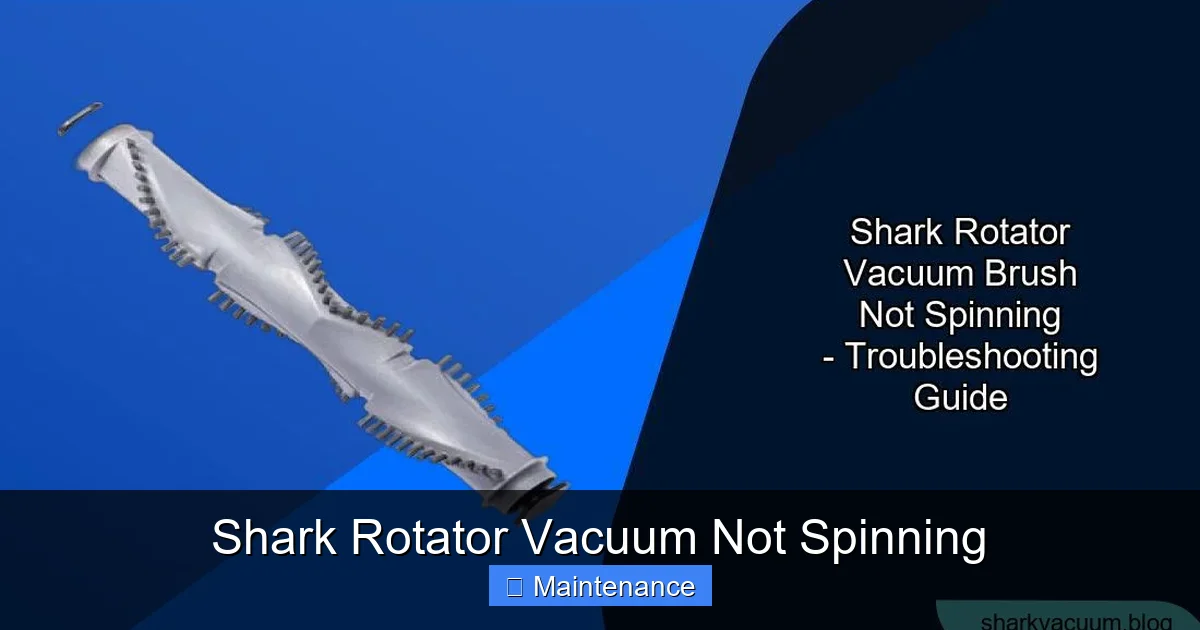
With the vacuum unplugged, flip it over. Look at the brush roll. Can you see it clearly, or is it buried under a mat of hair? Try to rotate the brush roll by hand. Does it spin freely, or is it stiff, jammed, or completely locked? A stiff or locked roll points strongly to a severe clog or a mechanical jam. If it spins freely by hand, the problem likely lies in the power transmission—the belt or motor. Next, plug the vacuum back in briefly (keeping hands clear) and listen. Does the motor sound normal and high-pitched, or does it sound laborious, low, and strained? A straining motor often means the brush roll is physically jammed, causing resistance the motor is fighting against.
Accessing the Brush Roll
To properly inspect, you’ll need to remove the bottom plate of the vacuum. On most Shark Rotator models, this is held on by four to six screws. Use a Phillips-head screwdriver to remove them and gently pry the plastic bottom plate off. Set the screws aside in a safe place. You will now have a clear view of the brush roll, the belt, and the channel it sits in. This is your workspace.
The #1 Culprit: Clogs and Tangles in the Brush Roll Housing
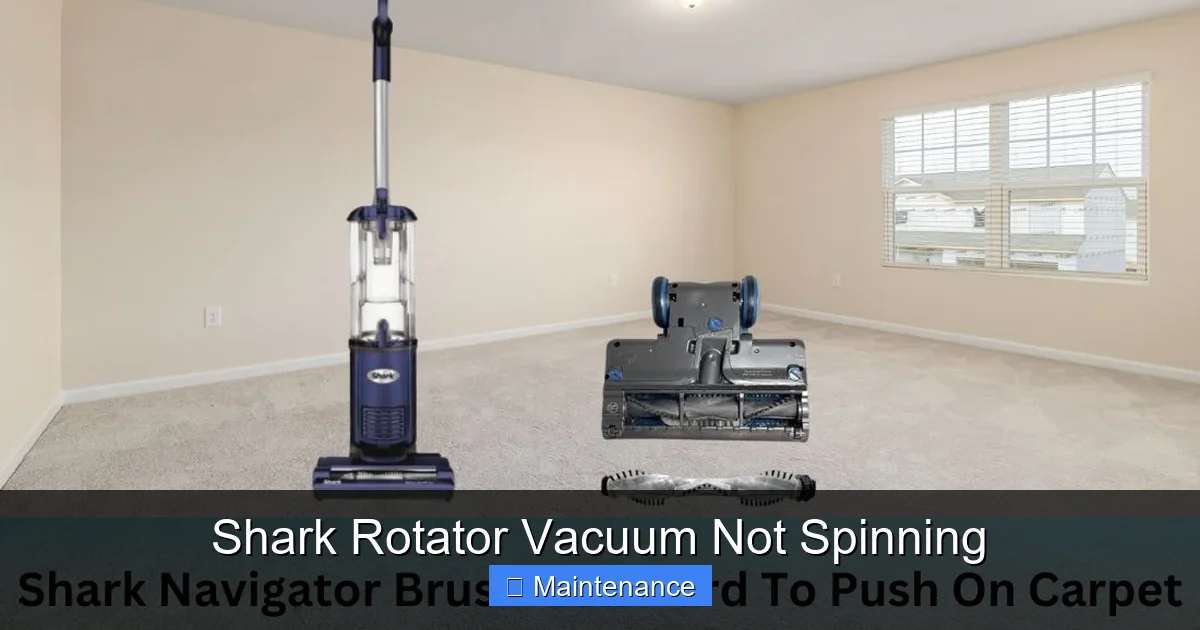
If you have pets, long hair, or vacuum mainly carpets, this is your most likely problem. The rotating bristles are fantastic at grabbing dirt, but they’re also fantastic at grabbing hair, string, thread, and carpet fibers. Over time, these materials wrap tightly around the brush roll’s axle and between the bristles, creating a thick, dense mat. This mat does two destructive things: it prevents the brush roll from spinning freely, and it can pull the drive belt off its track or even break it. A Shark Rotator vacuum not spinning due to a clog often presents with a visible, thick layer of material wrapped around the brush roll.
Visual guide about Shark Rotator Vacuum Not Spinning
Image source: sharkvacuum.blog
How to Perform a Deep Clean
With the bottom plate off, you’ll see the brush roll. Use a seam ripper, a sharp pair of scissors, or even a dedicated brush roll cleaning tool to carefully cut and remove all the wrapped hair and fibers. Work your way along the entire length of the roll, cutting the material lengthwise so you can peel it off in strips. Be meticulous—even a small amount of remaining wrap can cause drag. Next, use a damp cloth or an old toothbrush to clean out the entire brush roll housing channel. This is the plastic tunnel the roll sits in. Debris collects here too, and if it builds up, it can physically block the roll from turning. Pay special attention to the ends where the brush roll axles spin in their bearings. Clear any lint or hair from these bearing pockets. Once everything is clean, manually spin the brush roll. It should rotate smoothly and silently for several full turns with no resistance.
The Hidden Clog: Suction Path Blockage
Sometimes, the problem isn’t directly at the brush roll but further back in the air path. A severe clog in the wand, hose, or the main air exhaust can create such back-pressure that it physically stalls the brush roll mechanism. If you’ve cleaned the brush roll and it spins freely by hand but the vacuum still won’t turn it on, check the entire suction path. Detach the hose and wand and look through them for obstructions. Check the exhaust filter and the area where the hose connects to the canister. A complete blockage here can mimic a brush roll failure.
Inspecting and Replacing the Drive Belt
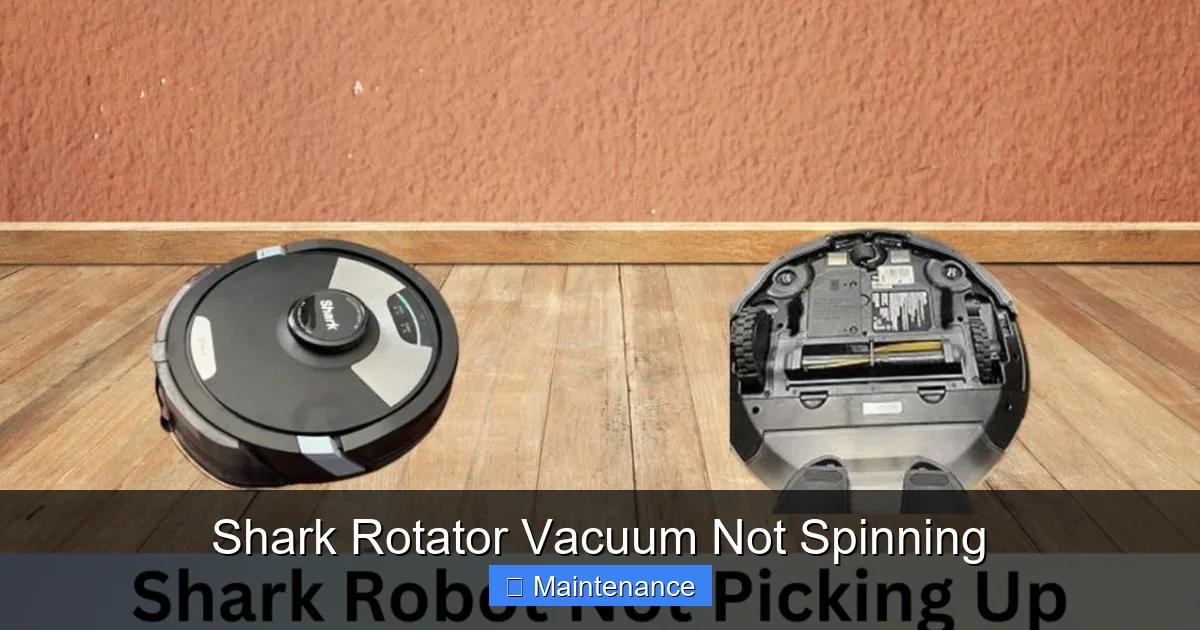
The drive belt is the crucial rubber band that transfers the rotational power from the vacuum’s motor shaft to the brush roll. If this belt is broken, stretched too thin, slipped off its track, or has become glazed and smooth from heat and wear, the brush roll will receive no power. A Shark Rotator vacuum not spinning with a clean brush roll that turns freely by hand almost always points to a belt issue.
Visual guide about Shark Rotator Vacuum Not Spinning
Image source: sharkvacuum.blog
Locating and Examining the Belt
With the bottom plate off, you should see the belt. It’s a long, thin, black rubber loop. One end is looped around the brush roll’s axle; the other end is looped around a small pulley on the motor shaft (you’ll see this pulley inside a plastic housing). Gently pull the belt away from the brush roll to inspect it. Look for these signs of failure:
- A Complete Break: The belt is in two pieces. This is obvious and requires replacement.
- Extreme Stretching: The belt is so elongated it sags significantly or slips off when you try to reinstall it.
- Cracks, Fraying, or Glazing: The rubber surface is shiny, cracked, or has thin, worn spots. These indicate age and heat damage.
- It’s Not There: Sometimes a belt snaps and falls into the housing, so it may be missing entirely.
Replacing the Belt: A Simple but Critical Fix
Replacing the belt is one of the most common repairs for a Shark Rotator vacuum not spinning. You will need the correct replacement belt. Shark part numbers like RFB-100 (for many NV series) or VX-B100 (for Vertex models) are widely available. To install:
- With the brush roll removed from its housing (you may need to slide it out), loop the new belt around the brush roll’s axle, positioning it in the groove.
- Stretch the other end of the belt over the motor pulley. This is the trickiest part. You may need to rotate the brush roll assembly while stretching the belt to get it seated properly on the motor pulley. Ensure it’s sitting fully on the pulley, not half-on.
- Reinstall the brush roll into its housing, making sure the belt isn’t pinched. The axles should fit snugly into their bearing slots.
- Spin the brush roll by hand a few times to ensure the belt is tracking correctly and not rubbing against the plastic housing.
- Reattach the bottom plate and screws.
Once reassembled, plug in and test. The brush roll should now spin vigorously. If it doesn’t, double-check that the belt is properly seated on both the brush roll axle and the motor pulley.
Electrical and Motor Issues: When the Power Stops
If you’ve conquered clogs and confirmed a new, properly installed belt, but your Shark Rotator vacuum is still not spinning, the problem may lie deeper in the electrical system or the motor itself. These are less common but possible, especially in older vacuums or those that have experienced significant stress from repeated clogs.
The Thermal Reset Button
Shark vacuums are equipped with a thermal safety fuse or reset button. This is a small button, often red or black, located on the motor housing (the main body of the vacuum, usually near the handle or cord wrap). Its job is to trip and cut power to the motor if it overheats—which can happen if you ran the vacuum with a severe clog for an extended period. A tripped reset is a protective measure, not a failure. Locate this button (consult your manual if needed). Press it firmly until you hear or feel a click. Then try the vacuum again. This simple reset solves a surprising number of “dead motor” scenarios.
Motor Brush Wear and Failure
The Shark Rotator uses a universal motor with carbon brushes inside. These brushes wear down over time (typically after several years of heavy use) and need replacement. If the brushes are worn past their limit, the motor will still run (you’ll hear it) but it won’t have the torque to spin the brush roll under load. Diagnosing this requires some disassembly of the motor housing, which is more advanced. If you’re comfortable, you can access the motor brushes (they’re usually held by a spring-loaded cap). If they are shorter than about 1/4 inch, they need replacing. You can find Shark motor brush kits (like part number MB-100) online. If the brushes look fine, the motor itself may have failed internally, which often means it’s more economical to consider a new vacuum unless it’s under warranty.
Other Potential Causes and Model-Specific Quirks
While the belt, clog, and motor are the big three, a few other things can cause a Shark Rotator vacuum not spinning.
Switches and Wiring
The brush roll is activated by a separate switch from the main suction. On most Rotator models, there’s a brush roll on/off button on the handle or the main body. Ensure this switch is in the “on” position (a light may illuminate). A faulty switch or a damaged wire in the hose (which flexes constantly) that connects the handle to the body can interrupt the circuit to the brush roll motor. Visually inspect the wire connecting the handle to the vacuum body for any cuts, frays, or kinks.
Model-Specific Design Features
Some Shark Rotator variants have unique features. For example, the Shark Rotator Powered Lift-Away (NV350, NV352, etc.) has a detachable canister pod. The brush roll power connection runs through the pod’s lift-away mechanism. If the pod isn’t seated correctly in the base, the electrical connection for the brush roll may not be made. Ensure the pod clicks firmly and fully into its base. Similarly, the Shark Vertex series has a different belt system (often a serpentine-style belt) and a more complex brush roll housing. Always consult your specific model’s parts diagram online (Shark’s website is excellent for this) to understand the exact configuration before disassembly.
Preventative Maintenance: Keeping Your Brush Roll Spinning
An ounce of prevention is worth a pound of cure. Once you’ve fixed your Shark Rotator vacuum not spinning, implement these habits to avoid the problem in the future.
After Every Few Uses: The Quick Clean
Get in the habit of, after vacuuming, turning the machine over and using a seam ripper or your fingers (carefully) to remove any visible hair or fibers from the ends of the brush roll. This 30-second habit prevents the slow, insidious buildup that leads to major clogs. Also, tap out the dust cup and check the pre-motor filters—a clogged filter reduces overall suction and can strain the motor.
Monthly Deep Maintenance
Once a month, or more often if you have pets, perform the full bottom-plate removal and brush roll cleaning described earlier. Clean the brush roll housing channel thoroughly. While you have it open, inspect the drive belt. Look for cracks, glazing, or thinning. A belt typically lasts 6-12 months with regular use. Proactively replacing it before it breaks is cheap insurance. Wash the foam pre-motor filter with cold water and let it dry completely for 24 hours before reinstalling.
Vacuuming Technique Matters
Pushing the vacuum too quickly over thick carpet prevents the brush roll from effectively agitating fibers and can allow more debris to wrap. Use a steady, moderate pace. Also, be extra vigilant when vacuuming area rugs with long fringe or shag-style carpets—these are notorious for tangling brush rolls. Consider using the suction-only mode (if your model has it) on such rugs.
When to Say Uncle: Recognizing a Terminal Problem
Despite your best efforts, some vacuums reach the end of their usable life. How do you know if your Shark Rotator vacuum not spinning is the final symptom? If you have replaced the belt, thoroughly cleaned every possible clog, pressed the reset button, and the motor still doesn’t engage the brush roll, the fault likely lies within the motor itself. The cost of a new motor, plus labor if you’re not doing it yourself, can approach or exceed the cost of a new mid-range vacuum. Shark’s customer service is good, and they may offer a discounted replacement if your unit is out of warranty but recently failed. Ultimately, if the repair cost is more than 50% of a new comparable model’s price, replacement is the pragmatic choice. The good news is that Shark vacuums are modular; you might be able to salvage the good parts (wand, hose, tools, canister) for a future model.
Conclusion: Empowerment Over Appliances
That sinking feeling when your Shark Rotator vacuum not spinning is one of helplessness. But as you now know, that feeling is misplaced. This machine is a collection of simple, accessible parts. The problem is almost always a clogged brush roll or a worn belt—two issues that cost little in time and even less in money to fix. By following the diagnostic path laid out here—starting with the unplug rule, moving to manual brush roll inspection, then belt check, then reset button—you can systematically eliminate possibilities. You’ve gone from a frustrated user to an empowered troubleshooter. You’ve saved the expense and waste of discarding a perfectly good vacuum. And you’ve gained a deeper understanding of the machine that keeps your home clean. So next time the brush roll falls silent, don’t panic. Flip it over, grab your screwdriver, and get spinning again.
Frequently Asked Questions
Why is my Shark Rotator vacuum making noise but the brush roll isn’t spinning?
This usually means the motor is running but power isn’t reaching the brush roll. The most common causes are a broken/slipped drive belt or a severely clogged brush roll that has jammed and triggered the thermal reset. First, unplug and check the brush roll for tangles. If it spins freely by hand, inspect and likely replace the drive belt.
How do I know if my Shark vacuum belt is broken?
Remove the bottom plate and look for the rubber belt looped around the brush roll and motor pulley. A broken belt will be in two pieces or missing entirely. Even if intact, if it’s stretched, cracked, glazed, or slips off when you reinstall the brush roll, it needs replacement. A new belt should fit snugly without stretching excessively.
Can I use my Shark Rotator without the brush roll spinning?
You can use it on hard floors in suction-only mode (if your model has a switch to turn the brush roll off), but it will be much less effective on carpets. The brush roll’s agitation is key for lifting embedded dirt from carpet fibers. Using it without spinning on carpet will leave dirt behind and is not recommended for full cleaning.
Is it worth repairing an old Shark Rotator?
Often, yes. Since the most common failures (clog, belt) cost under $20 to fix, repairing is almost always worth it for a well-built machine. Even a motor replacement can be economical if you do it yourself. Consider the age, your attachment to the machine, and the cost of a new comparable model. For vacuums under 5-7 years old, repair is typically the better value.
Where is the reset button on my Shark Rotator?
The thermal reset button is a small, usually red or black, circular button located on the main vacuum body (the canister or motor housing). On most models, it’s near the power cord on the back or side of the canister. It may be recessed; press it firmly with a pen tip until you feel a click.
How often should I replace the belt on my Shark Rotator?
As a preventative measure, inspect your belt every 3-6 months. Replace it at the first sign of cracks, glazing, or stretching. With typical use (3-4 times per week on mixed surfaces), a belt will last 6-12 months. If you have pets, long hair, or vacuum mainly thick carpet, plan on replacing it twice a year as a precaution.