Is your Shark Rotator Lift NV600 hose suddenly losing suction, detaching, or appearing cracked? This is a common but frustrating issue. Before you panic or buy a new vacuum, the problem is often a simple fix you can do yourself. Most hose failures stem from worn seals, internal clogs, or damaged hose cuffs. This guide walks you through diagnosing the exact cause and provides clear, safe repair instructions to get your Shark back to full power.
Key Takeaways
- Most hose “failures” are repairable: Issues like lost suction or leaks are usually caused by worn seals, clogs, or loose connections—not a dead hose.
- Diagnosis is a 3-step process: Isolate the problem by testing suction at the wand, then the hose, then the vacuum body to pinpoint the failure point.
- The #1 culprit is the hose cuff seal: The rubber seal where the hose meets the wand or vacuum body wears out, cracks, or falls out, causing major air leaks.
- Internal clogs are sneaky: A clog deep inside the hose wall will kill suction without any visible external blockage.
- Hose damage is often external: Look for cracks, kinks, or abrasions from being run over or pulled around sharp corners.
- Replacement parts are available: Shark sells official replacement hoses (Part # 1930) and cuff seals separately, which is cheaper than a whole new vacuum.
- Preventative maintenance is key: Regularly checking seals, avoiding sharp pulls, and storing the hose properly can add years to its life.
📑 Table of Contents
Introduction: That Dreaded Moment of Lost Power
You’re in the middle of cleaning, the Shark Rotator Lift NV600 is humming along, and you go to use the hose attachment. Instead of the satisfying roar of strong suction, you get a weak whoosh. Or maybe the hose just pops off the wand with every use. The panic sets in. “Is my vacuum broken? Did I ruin it? Do I have to buy a new one?” Take a deep breath. A Shark Rotator Lift NV600 hose not working is one of the most common—and most fixable—issues with this otherwise fantastic machine. The hose is a wear-and-tear component, not a permanent one. Before you spend hundreds on a new vacuum or even a new hose, let’s become detectives. This comprehensive guide will turn you from a frustrated user into a confident DIY repairperson. We’ll cover the anatomy of the problem, how to diagnose it like a pro, and provide detailed, safe repair steps for every possible failure point.
Understanding Your NV600 Hose System: It’s Not Just a Tube
To fix the problem, you first need to understand what you’re looking at. The hose on your Rotator Lift isn’t a simple, single piece of plastic. It’s a critical part of the vacuum’s sealed airflow system. Air must travel in a perfect, leak-free path from the floor, through the brush roll, up the main body, through the hose, and into the dust cup. Any break in this seal kills suction power at the tool you’re using.
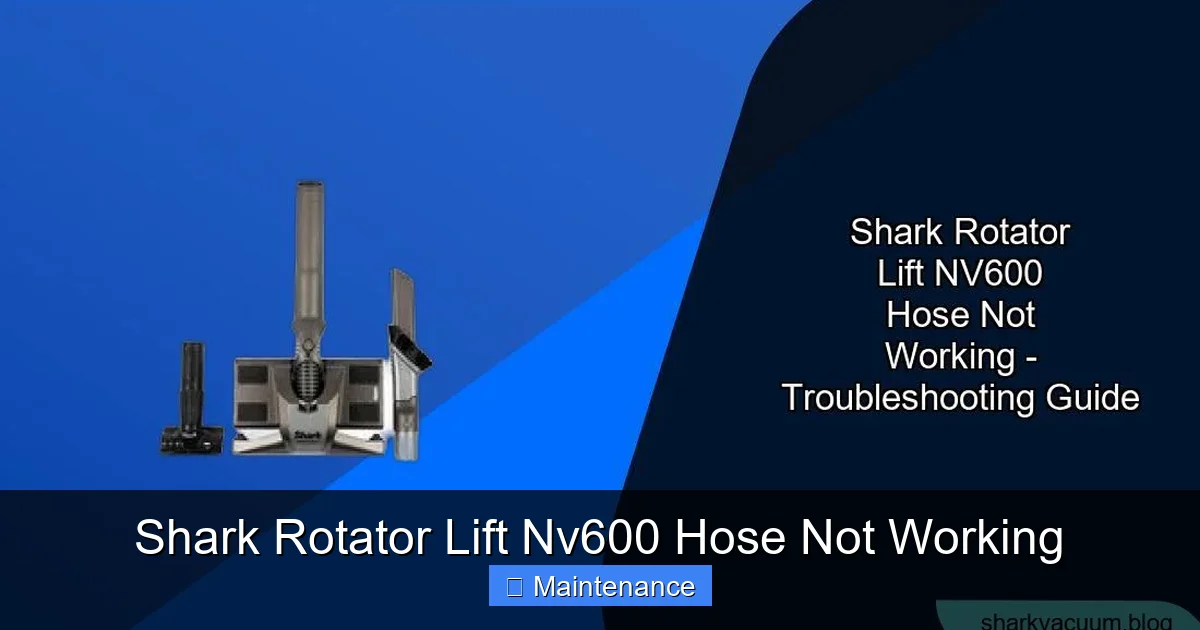
Visual guide about Shark Rotator Lift Nv600 Hose Not Working
Image source: sharkvacuum.blog
The Key Components of the Hose Assembly
The hose assembly consists of three main parts that work together:
- The Flexible Hose: This is the corrugated, extendable tube. Its flexibility is great for maneuverability but makes it prone to kinks, internal damage from sharp objects, and wear at the bend points.
- The Two Hose Cuffs (Connectors): These are the hard plastic ends—one attaches to the vacuum’s main body (the “upper cuff”), and the other attaches to the wand/hand tool (the “lower cuff”). They are not glued on; they are mechanically locked.
- The Cuff Seals (The Secret Heroes): Inside each cuff is a soft, rubber O-ring or gasket seal. This is the actual gasket that creates the airtight connection. This tiny piece of rubber is the most common point of failure. It can dry out, crack, flatten, or even fall out completely without you noticing.
When you experience a Shark Rotator Lift NV600 hose not working scenario, the failure is almost always at one of these three junctions: the seal inside a cuff, the connection between cuff and hose, or the hose wall itself.
Diagnosis: Pinpointing the Exact Failure Point
Guessing leads to wasted time and money. You must methodically isolate where the air leak or blockage is. Follow this exact sequence. All you need is your vacuum and your hands.
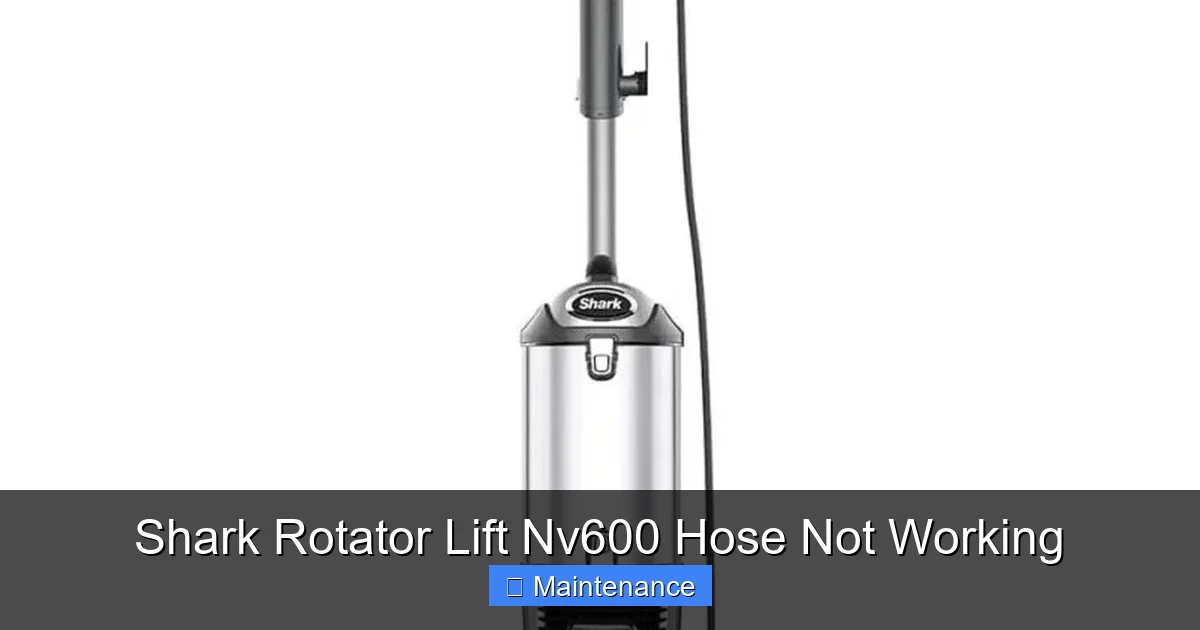
Visual guide about Shark Rotator Lift Nv600 Hose Not Working
Image source: manua.ls
Step 1: The “Bare Suction” Test
This is the most critical test. It tells you if the problem is in the hose system or the main vacuum unit.
- Detach the hose completely. Press the release buttons on both ends and pull the hose off the vacuum body and the wand.
- Turn the vacuum ON. Place your hand over the hole on the vacuum’s main body where the hose was attached (the intake port).
- Feel the suction. Is it strong and steady? If YES, your vacuum’s motor, fan, and dust cup are fine. The problem is 100% in the hose assembly or its connections. If the suction is weak here, your problem is inside the main vacuum (clogged filters, full dust cup, blocked brush roll) and the hose is innocent. Since you’re reading this article, we’ll assume your bare suction test was strong, and the issue is with the hose.
Step 2: Isolate the Hose
Now we test the hose by itself.
- Reattach only the upper cuff (the one that goes to the vacuum body) to the vacuum. Leave the lower cuff disconnected.
- Take your wand or any handheld tool and cover its intake opening (the hole that would connect to the hose) completely with your palm or a flat object.
- Turn the vacuum ON. You should feel strong suction pulling your hand/palm against the wand opening.
- Now, carefully run your fingers along the entire length of the flexible hose. Do you feel any air escaping? Listen for a hissing sound. Feel for soft spots where the hose wall may be collapsed. If you feel/hiss/see weak suction at the wand while the vacuum body suction is strong, you have a leak or severe clog inside the hose itself.
Step 3: Test the Connections and Seals
If the hose feels solid, the leak is at the cuffs.
- With the hose fully attached to both vacuum and wand, lift the hose off the floor so it’s not touching anything.
- Turn the vacuum on. Now, one by one, lightly cover the small gap where each cuff meets the hose with your finger. If covering a specific spot dramatically increases suction at the wand, you’ve found your leak. That cuff’s seal is bad or that connection is loose.
- Finally, inspect the plastic cuffs themselves. Do they look cracked? Is the locking mechanism (the little plastic tabs) broken? Does the cuff spin freely on the hose without locking? A damaged cuff must be replaced.
The Fixes: From Easiest to Most Involved
Based on your diagnosis, here is the specific solution. Always unplug the vacuum before any repair.
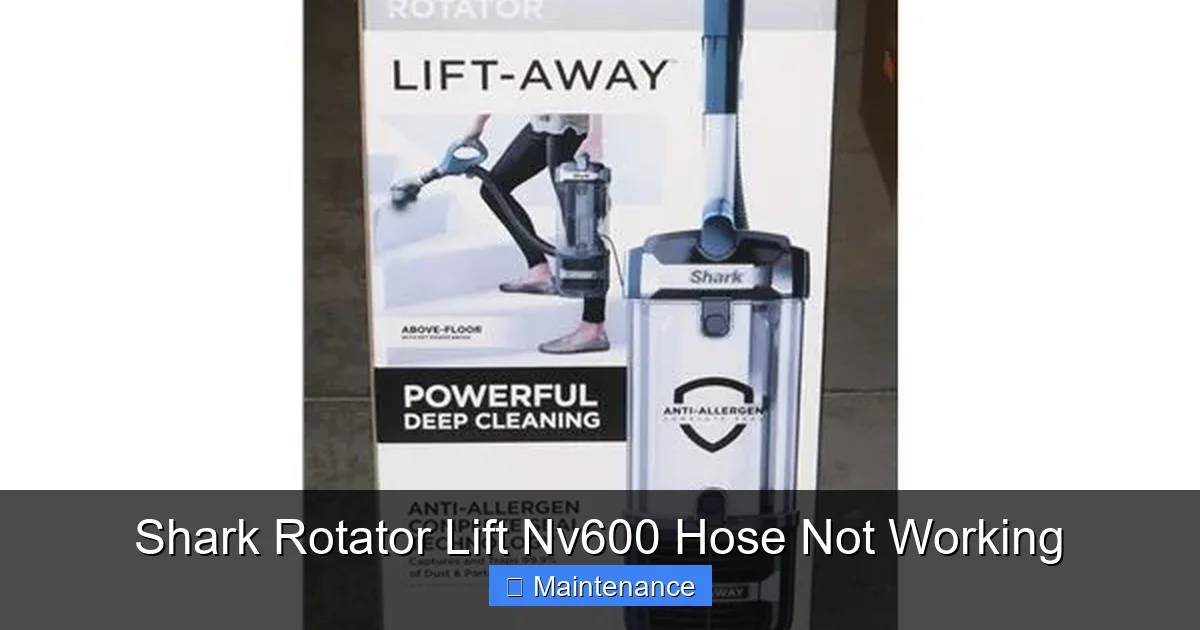
Visual guide about Shark Rotator Lift Nv600 Hose Not Working
Image source: dygtyjqp7pi0m.cloudfront.net
Fix 1: Replacing or Reseating a Cuff Seal (The #1 Fix)
This solves 70% of Shark Rotator Lift NV600 hose not working complaints. The seal is a small, black, squishy ring.
- How to access it: Pull the cuff straight off the hose. You may need to wiggle it. Inside the cuff’s opening, you’ll see a groove. The seal sits in this groove.
- What to look for: Is the seal missing? Is it cracked, brittle, flattened, or covered in hair/debris? Is it simply sitting loosely in the groove?
- The Repair:
- Remove the old seal completely. Use a small flat-head screwdriver or your fingernail to pry it out if it’s stuck.
- Thoroughly clean the groove in the cuff. Remove all dust, hair, and old seal adhesive.
- Buy the correct replacement seal. Shark part number for the NV600 hose cuff seal is typically 1930-SEAL or similar. These are sold in multi-packs on Amazon and Shark’s site. Do not try to use a generic O-ring; get the official part for a perfect fit.
- Press the new seal firmly and evenly into the groove all the way around. Ensure it’s seated properly with no twists.
- Reattach the cuff to the hose. You should hear/feel a firm click as it locks into the hose’s plastic collar.
Pro Tip: Apply a tiny dab of silicone grease (food-grade is fine) to the new seal before installing. This helps it seat, prevents drying, and makes future removal easier. Wipe off excess.
Fix 2: Unclogging a Hidden Internal Blockage
If your hose feels rigid and you suspect a clog deep inside, here’s how to clear it.
- The “Push-Through” Method: Disconnect the hose from both ends. From one end, use a long, flexible tool like a plumber’s snake (drain auger) or a straightened wire coat hanger (with a small hook on the end). Gently feed it through the hose. You’ll feel resistance at the clog. Gently prod and twist to break it up, then pull the debris out. Be careful not to puncture the hose wall.
- The “Pressure Flush” Method: Take the hose outside or to a bathtub. Use a strong stream of water from a garden hose or showerhead to blast through it from one end to the other. The water pressure will often dislodge compacted hair and dirt. Shake it out vigorously and let it dry COMPLETELY for 24 hours before using it on your vacuum. Never use water if your vacuum is a non-wet/dry model and you’re worried about moisture getting into the motor, but the hose itself is safe to wash.
- Prevention: Always use the vacuum’s main floor head for large debris. The hose is designed for above-floor, smaller messes.
Fix 3: Repairing or Replacing a Damaged Hose
If the hose wall is cracked, kinked permanently, or the connection points are torn, repair is temporary; replacement is best.
- Temporary Patch: For a small crack, you can use high-temperature duct tape (like Gorilla Tape) or a hose repair kit. Wrap the tape tightly and smoothly over the crack, covering an inch on either side. This is a short-term fix.
- Permanent Fix: Order a genuine Shark replacement hose. Part number is usually 1930 or 1930-HOSE. It comes with both cuffs pre-installed. Replacing it is simple:
- Press the release buttons on the vacuum body and wand and pull the old hose off.
- Align the new hose’s upper cuff with the vacuum’s intake port and push firmly until it clicks.
- Align the lower cuff with the wand/hand tool and push firmly until it clicks.
The new hose will restore full, factory suction.
Maintenance: Preventing Future Hose Heartache
A little care goes a long way. Adopt these habits to keep your hose working for years.
Gentle Coiling and Storage
Never just yank the hose off and throw it in a pile. The kinks you create today become cracks tomorrow.
- After each use, unplug the vacuum.
- Detach the hose from both ends.
- Coil it in large, loose loops, like you would a garden hose. Do not twist it.
- Secure it with a Velcro strap or a simple over-and-under tuck. Store it hanging or lying flat, not under heavy objects.
Connection Discipline
Always use the release buttons. Never pull the hose off by yanking on the hose tube itself—this stresses the connection between the cuff and the hose, leading to separation. Always pull by the hard plastic cuff.
Regular Seal Inspection
Every 2-3 months, do a quick visual and tactile check of both cuff seals. Feel if they’re soft and rubbery. Look for cracks. A proactive seal replacement (they cost less than $5 for a 2-pack) is the cheapest insurance policy against a sudden loss of suction.
Mind Your Environment
Do not use the hose to pick up:
- Large, sharp objects (nails, broken glass).
- Wet liquids (unless you have a specific wet/dry model).
- Long strings, hair, or cords. These wrap inside the hose and create massive clogs.
Be mindful of furniture legs, bed frames, and baseboards. Dragging the hose across sharp corners or running it over with a rolling chair will abrade and weaken the outer wall.
When to Consider a Full Replacement vs. Part Replacement
We’ve focused on fixing the hose. But when is the hose the symptom, not the cause?
Signs the Vacuum Itself is the Problem
If after thoroughly diagnosing and fixing the hose, you still have weak suction at the wand, the issue is upstream. Check these in order:
- Filters: Are both the pre-motor foam filter and the post-motor HEPA filter clean? Wash the foam filter monthly; replace the HEPA filter every 6-12 months. Clogged filters restrict airflow massively.
- Dust Cup: Is it completely full? Empty it. Is the gasket around the dust cup door damaged or missing? A leak here will kill suction.
- Brush Roll: Is it jammed with hair? Is the belt (if your model has one) broken or slipping? A stalled brush roll can reduce suction. Manually spin the brush roll; it should turn freely.
- Main Airflow Path: Check the intake plate on the floor head for blockages. A sock or thick carpet fiber can block the entire opening.
The Cost-Benefit Analysis
A genuine Shark hose (Part #1930) costs between $40-$60. A two-pack of seals costs $8-$12. A new Shark Rotator Lift NV600 vacuum costs $300-$400. If your vacuum is otherwise in great shape—no strange noises, motor feels strong, dust cup seals well—spending $50 on a new hose and seals is a no-brainer. If your vacuum is 5+ years old, has multiple issues, or the motor sounds weak, it might be time to start shopping for a new model, and you can still use your attachments with it.
Frequently Asked Questions
My Shark hose is cracked. Can I still use it?
No. A crack in the hose wall creates a major air leak that cannot be sealed. Using it will result in very poor suction and can also draw dust and debris into the motor. Replace the hose immediately.
How much does a Shark Rotator Lift NV600 hose cost to replace?
A genuine Shark replacement hose (Part #1930) typically costs between $40 and $60 from authorized retailers, Shark’s website, or Amazon. This is significantly less than the cost of a new vacuum cleaner.
Are the hose seals for the NV600 the same as other Shark models?
They are often similar but not always identical. It is crucial to use the correct seal for your specific model. The official Shark part number for NV600 cuff seals is usually listed as 1930-SEAL. Using an incorrect seal may not fit properly and will not fix the leak.
Can I use a universal hose from a third party?
While universal hoses exist, they often have different cuff sizes, weaker construction, and inferior seals. For a Shark Rotator, the official part ensures perfect fit, optimal airflow, and durability. A cheap universal hose may cause more problems and damage your vacuum’s intake port over time.
My hose connection keeps popping off. Is it broken?
Not necessarily. The most common cause is a missing, damaged, or dirty cuff seal. The seal provides the friction and airtight grip. First, inspect and replace the seal. If the plastic locking tabs on the cuff itself are broken or worn smooth, then the cuff needs to be replaced (which means buying a new hose assembly).
Is the Shark Rotator Lift NV600 hose under warranty?
The standard Shark warranty typically covers defects in materials and workmanship for a limited time (often 5 years for the motor, 1-2 years for other parts). Normal wear and tear on a hose, including cracked seals, is usually not covered. Check your specific warranty documentation, but be prepared that a hose is considered a consumable part.