Is your Shark Rotator Lift Away NV501 suddenly not working? Don’t panic—most common issues like power failures, suction loss, or brush roll jams are fixable at home with simple troubleshooting. This guide walks you through each problem step-by-step, so you can get back to cleaning without a service call.
You’re halfway through vacuuming the living room when it happens. Your trusty Shark Rotator Lift Away NV501, the workhorse that’s tackled countless spills and pet hair tumbleweeds, suddenly sputters and dies. Or maybe it turns on but feels like it’s not picking up anything. That sinking feeling is real. Your immediate thought might be, “My Shark Rotator Lift Away NV501 is not working!” Before you resign yourself to an expensive service call or the dreaded search for a replacement, take a deep breath. The vast majority of issues with this popular model are not only common but are also surprisingly fixable by you, at home, with a few simple tools and a bit of patience. This guide is your definitive troubleshooting companion. We’ll systematically diagnose why your Shark NV501 has given up the ghost, from the simplest oversight to more complex internal problems. Think of it as a friendly chat with a repair expert who wants to help you get your vacuum back in action.
The Shark Rotator Lift Away NV501 is engineered for power and versatility. Its signature Lift-Away canister detaches for portable cleaning, and its powerful suction is famous. But like any hardworking machine, it has its weak points. Clogs are the number one enemy. Hair, string, and large debris are relentless. Filters get clogged. Belts can stretch or break. And sometimes, it’s just an electrical gremlin. We will break down every possible reason your Shark Rotator Lift Away NV501 is not working, categorize them by symptom, and provide clear, actionable solutions. No technical jargon, just straightforward steps. Let’s roll up our sleeves and bring your vacuum back to life.
Key Takeaways
- Always check the basics first: Ensure the vacuum is plugged in, the outlet works, and the circuit breaker hasn’t tripped before assuming a major failure.
- Suction loss is usually due to clogs or full filters: A blocked hose, overfilled dust cup, or dirty post-motor filter are the top culprits for weak suction.
- Brush roll issues often stem from hair and debris: Regularly inspect and clean the brush roll housing to prevent jams that stop it from spinning.
- Strange noises can signal blockages or worn parts: A high-pitched whine often means a clog, while grinding may indicate a damaged brush roll bearing or belt.
- Persistent odors mean it’s time for a deep clean: Smells come from a dirty dust cup, filters, or brush roll. A thorough wash with mild soap solves this.
- Preventive maintenance is non-negotiable: A monthly routine of filter cleaning, dust cup emptying, and brush roll inspection prevents 90% of common failures.
- Know when to seek professional help: If you’ve addressed all common issues and the Shark Rotator Lift Away NV501 is still not working, a internal motor or electrical fault may require Shark Support.
📑 Table of Contents
- 1. Power and Startup Failures: The “It Won’t Turn On” Problem
- 2. Suction Power Loss: The “It’s Not Picking Up Anything” Dilemma
- 3. Brush Roll Not Rotating: The “It’s Just Gliding” Issue
- 4. Unusual Noises and Vibrations: Decoding the Soundtrack
- 5. Persistent Odors: When Cleaning Smells Worse Than Dirt
- 6. Essential Maintenance: Preventing the “Not Working” Scenario
- 7. When to Contact Shark Support: The Last Resort
1. Power and Startup Failures: The “It Won’t Turn On” Problem
This is the most alarming symptom. You press the power button and… nothing. No lights, no sound. The instinct is to think the motor is fried. But often, the issue is far simpler and lies outside the vacuum’s core mechanics. Let’s eliminate the obvious first.
Check Your Electrical Source Thoroughly
Before you even look at the vacuum, confirm power is reaching it. This is the step everyone skips, and it solves a surprising number of “not working” claims.
- The Outlet Test: Plug a lamp or your phone charger into the same outlet. Does it work? If not, the outlet is dead. Check for a tripped GFCI outlet (those with reset buttons, often in kitchens/bathrooms) or a tripped breaker in your electrical panel. Reset them.
- Cord and Plug Inspection: Examine the entire length of the power cord for cuts, frays, or burn marks. Pay special attention to where it enters the vacuum body and the plug itself. A damaged cord is a fire hazard and must be replaced. Also, wiggle the plug slightly in the outlet. A loose connection can prevent power from flowing.
- Breaker and Fuse Check: If multiple appliances are on the same circuit, a tripped breaker is likely. Locate your home’s breaker box and look for a switch that’s flipped to the “off” position or is between “on” and “off.” Flip it fully to “off” and then back to “on.” For homes with fuses, locate the blown fuse (often has a broken filament or cloudy glass) and replace it with one of the same amperage.
Internal Safety Switches and Reset Procedures
Your Shark NV501 has safety mechanisms. The most important is the recline switch. This switch cuts power if the vacuum is tilted too far back, preventing it from rolling away or tipping over. If you accidentally knocked the vacuum over forcefully, this switch may have activated.
- The Reset Button: On most NV501 models, there is a small, red reset button located on the back or underside of the vacuum, near the brush roll housing. It’s often recessed. Use a pen or paperclip to press it firmly until you feel a click. Wait 30 seconds and try powering on again. This simple reset fixes a huge percentage of sudden shutdowns.
- Recline Properly: Ensure the vacuum is standing fully upright on its rear wheels before attempting to turn it on. The safety switch requires the correct angle to engage.
2. Suction Power Loss: The “It’s Not Picking Up Anything” Dilemma
The vacuum turns on, the brush roll spins, but dirt just sits on the carpet. This is incredibly frustrating but usually straightforward to diagnose. Suction is a closed system. A problem anywhere in that system—from the floor to the motor—reduces power. We follow the air path.
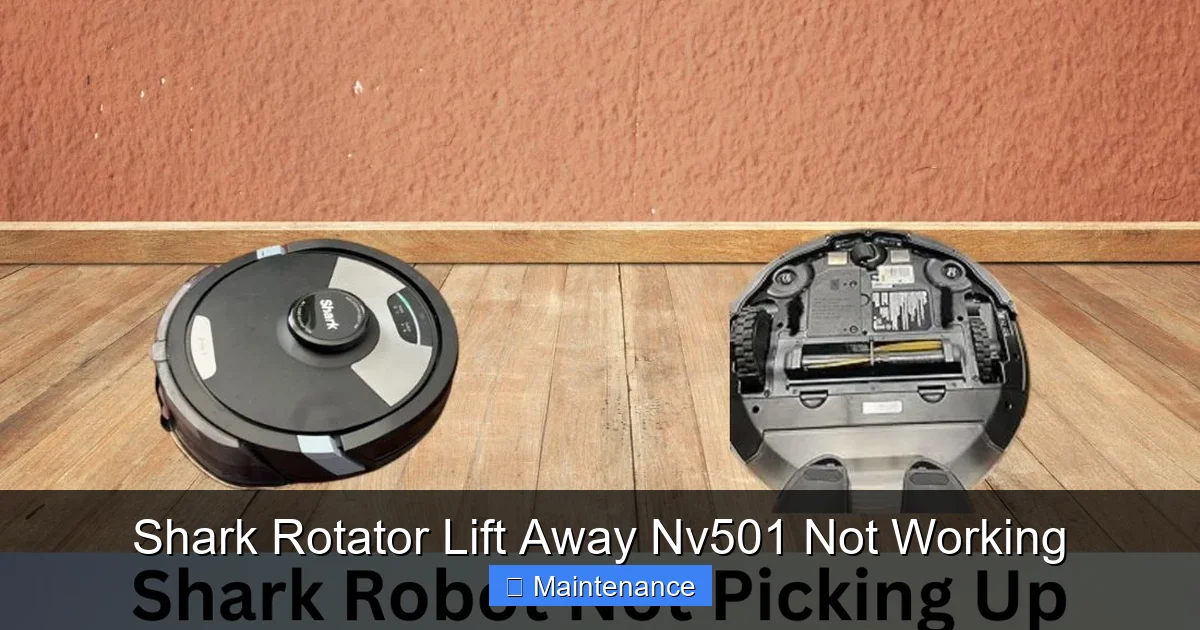
Visual guide about Shark Rotator Lift Away Nv501 Not Working
Image source: sharkvacuum.blog
Step 1: The Dust Cup and Filters (Most Common Cause)
Start here. This is the culprit 80% of the time.
- Dust Cup is Full: The NV501 has a translucent dust cup. If it’s more than half full, empty it immediately. A full cup creates a massive barrier to airflow. For best results, tap it against a trash can to dislodge compacted debris, then open the bottom lid and bottom-release mechanism to fully empty it. Wipe the interior with a dry cloth.
- Pre-Motor Foam and Felt Filters: These are located behind the dust cup. Remove the dust cup, and you’ll see a plastic filter housing. Open it. You’ll find a foam filter and often a felt filter underneath or behind it. If they are coated in gray dust, they are clogged. Do not wash the felt filter. Tap it firmly against a hard surface to dislodge debris. The foam filter can be rinsed under cold water, squeezed dry, and must air-dry completely for at least 24 hours before reinserting. Never operate the vacuum with wet filters.
- Post-Motor Filter: This is the exhaust filter, usually located on the back or top of the vacuum canister. It’s often a pleated paper or HEPA filter. If it’s visibly dirty or discolored, it needs replacing. You can sometimes gently tap it to clean it, but it has a limited lifespan. A clogged post-motor filter restricts air exiting the vacuum, killing suction.
Step 2: Check for Clogs in the Air Pathway
If filters and dust cup are clean, air can’t get through. The blockage is in the hose or wand.
- The Hose: Detach the hose from both the vacuum body and the wand/hand tool. Look through it. Use a long, flexible brush (a coat hanger works carefully) to dislodge any lodged debris, especially at the bends. A common clog spot is where the hose connects to the Lift-Away canister.
- The Wand and Brush Roll Housing: Look down into the wand and the opening where the brush roll is. Use a flashlight. A coin, sock, or large hair clump can block this area completely. Remove the brush roll (we’ll cover this next) to access the airway directly to the motor.
- The Brush Roll Housing Airway: With the brush roll removed (see Section 3), you can see the direct tunnel to the motor. Shine a light through from the hose side. If you can’t see light, there’s a clog deep inside. Use needle-nose pliers or a flexible grabber tool to remove it.
Step 3: The Brush Roll and Belt
While you’re checking for clogs, inspect the brush roll. A brush roll that won’t spin or spins poorly will drastically reduce suction on carpets because the bristles aren’t agitating the carpet fibers to lift dirt. A broken or stretched belt (the rubber band that connects the motor shaft to the brush roll) will cause the same symptom. If the brush roll spins freely by hand when the vacuum is off, the belt is likely intact. If it doesn’t spin or is stiff, it’s jammed with hair. If it spins easily but doesn’t spin when the vacuum is on, the belt is probably broken or slipped off. You’ll need to access the brush roll housing (usually by removing a few screws on the bottom) to inspect and replace the belt (Part # 112-0072 for many NV501 models).
3. Brush Roll Not Rotating: The “It’s Just Gliding” Issue
The vacuum seems to have suction, but on carpet, it’s not doing its job. The brush roll is stationary. This is a distinct problem from general suction loss. The cause is almost always mechanical, related to the brush roll assembly itself.
Visual guide about Shark Rotator Lift Away Nv501 Not Working
Image source: sharkvacuum.blog
Hair and Debris Jams: The Prime Suspect
This is the #1 cause. The rotating bristles are a magnet for human hair, pet fur, string, and carpet fibers. They wrap tightly around the axles and bearings, eventually seizing the brush roll.
- How to Clear It: You must remove the brush roll. Flip the vacuum over. On the bottom of the brush roll housing, you’ll see either a series of screws or a removable cover plate. Remove them. Pull the brush roll straight out. You’ll likely see a thick mat of hair wound around it. Use scissors to carefully cut it away, starting at the ends and working toward the center. Be careful not to cut the bristles. Clean the axles and the bearings (the plastic caps on each end) thoroughly. Also, clean out the housing itself— debris often accumulates in the corners. Once clean, spin the brush roll by hand. It should rotate smoothly and freely. Reinstall it, ensuring it’s seated correctly and the belt (if your model has one) is properly looped over it and the motor pulley.
Broken or Stretched Belt
If the brush roll is clean and spins freely by hand but doesn’t turn when the vacuum is on, the belt is the problem. Belts wear out, stretch, and can break. Access the brush roll housing as described above. The belt is the rubber loop connecting the brush roll to a small metal or plastic pulley driven by the motor. If it’s broken, missing, or loose and slipping off, replace it. Always replace the belt with the exact Shark part number for your NV501 to ensure proper tension and fit.
Faulty Brush Roll Motor (Less Common)
In some Shark Rotator models, the brush roll is driven by a separate, small motor (a “powered brush roll” feature). If your NV501 has this and the brush roll doesn’t spin even with a new belt and no jam, that dedicated motor may have failed. This is a more complex repair often requiring professional service or a motor replacement part.
4. Unusual Noises and Vibrations: Decoding the Soundtrack
Your Shark NV501 is talking to you. A change in its normal hum is a critical diagnostic tool. Pay attention.
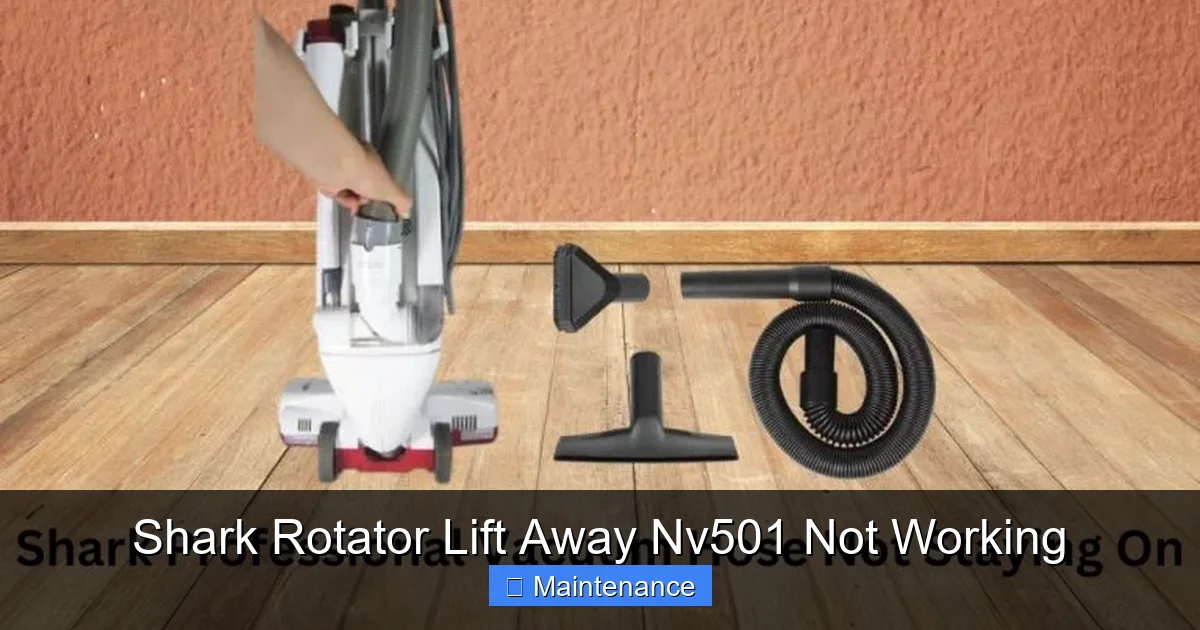
Visual guide about Shark Rotator Lift Away Nv501 Not Working
Image source: sharkvacuum.blog
The High-Pitched Whine or Scream
This is almost always an airflow problem. It’s the sound of air being violently pulled through a tiny opening.
- Diagnosis: A severe clog in the hose, wand, or brush roll housing. A dust cup that is not properly seated or sealed. A filter that is completely blocked.
- Fix: Follow the clog-checking steps in Section 2, Step 2. Remove the hose and check for obstruction. Ensure the dust cup clicks securely into place. Clean or replace filters.
Grinding, Rattling, or Banging Noises
This indicates something is loose, broken, or striking something else.
- Loud Grinding: A brush roll bearing is shot. The plastic cap on the end of the brush roll has a bearing inside. When it fails, the metal shaft grinds against the housing. You must replace the entire brush roll assembly (Part # 112-0071 for many NV501s).
- Rattling in the Canister: A loose object in the dust cup (a small toy, coin, or hard piece of debris). Empty the cup completely and inspect the interior. Also, check that the exhaust filter cover is securely fastened.
- Banging/Thumping on Carpets: The brush roll is severely out of balance, usually from missing or damaged bristles. Inspect the brush roll. If a section of bristles is gone or melted, the brush roll must be replaced. An imbalanced brush roll puts stress on the bearings and belt.
Excessive Vibration
If the whole unit is shaking violently, it’s often a brush roll issue (see above). It can also be a sign that the motor mounts inside the handle or canister have come loose, which is a serious internal fault requiring professional assessment.
5. Persistent Odors: When Cleaning Smells Worse Than Dirt
A vacuum should smell like… well, clean. If your NV501 emits a musty, burnt, or “old sock” odor, it’s a sign of organic material decomposing inside the system. This is a health hazard and must be addressed immediately.
Source #1: The Dust Cup and Seals
Organic debris (food crumbs, pet dander, spilled liquids) sits in the dust cup. If you don’t empty it after every use and especially after wet/damp messes, it will rot. The rubber seals around the dust cup lid can also trap gunk.
- Deep Clean Procedure: Take the dust cup to a sink. Disassemble it completely if possible (some models have a separate cup and lid). Wash all plastic parts with warm water and a mild dish soap. Use an old toothbrush to scrub the crevices and the rubber seals. Rinse thoroughly. It is critical that every part is 100% dry before reassembly. Reassemble and let it air out for a few hours with the lid open.
Source #2: The Filters
Filters trap fine particles, including organic matter. A dirty filter is a biology experiment.
- Cleaning: Remove both the pre-motor foam filter and the post-motor HEPA filter. The foam filter gets a thorough wash as described in Section 2. The HEPA filter cannot be washed. Tap it gently over a trash can to dislodge debris. If it’s heavily soiled or has an odor, it must be replaced. Do not attempt to wash a HEPA filter.
Source #3: The Brush Roll and Housing
Wet debris, mud, and sticky spills get wrapped in the brush roll bristles and sit in the housing. This is a prime odor source.
- Deep Clean Procedure: Remove the brush roll. Scrub it with a brush and soapy water. Pay attention to the plastic bristles and the metal axles. Clean the entire housing cavity with a damp cloth and soap. Rinse the brush roll (if it’s a nylon bristle type—some have rubber squeegees that are easier) and let it dry completely overnight. A hair dryer on cool setting can speed up drying. Ensure the housing is bone dry before reinstalling the brush roll.
6. Essential Maintenance: Preventing the “Not Working” Scenario
An ounce of prevention is worth a pound of cure. Adopting a simple, regular maintenance routine will keep your Shark Rotator Lift Away NV501 performing at its peak and drastically reduce the chances of a sudden failure.
The Monthly Maintenance Checklist (15 Minutes)
- 1. Empty the Dust Cup: Do this after every single use, but give it a quick tap and check. Once a month, do a full wash as described in Section 5.
- 2. Clean the Filters: Every month, remove the pre-motor foam filter. Rinse it under cold water until the water runs clear. Squeeze out excess water. Let it air-dry for 24 hours. Never reinsert a damp filter. Tap the post-motor HEPA filter. If it’s visibly gray or you notice a drop in suction, replace it (typically every 3-6 months with regular use).
- 3. Inspect and Clean the Brush Roll: Flip the vacuum over. Use scissors to cut away any hair or string wound around the bristles. Check the brush roll for damage. Spin it. It should be smooth. Clean the housing opening.
- 4. Check for Clogs: Detach the hose and wand. Visually inspect both ends. Shine a light through. If you see debris, clear it.
- 5. Wipe Down the Exterior: Use a slightly damp microfiber cloth to wipe down the body, handle, and Lift-Away pod. Avoid getting moisture in any openings.
The Quarterly Deep Clean
Every 3 months, or after a major mess (like baking flour or a big pet hair spill), do a more thorough job. This includes:
- Completely disassembling and washing the dust cup and all its seals.
- Removing the brush roll and giving it and its housing a deep soapy scrub.
- Checking the belt for cracks, glazing, or stretching. Replace it proactively if it shows any wear (Part # 112-0072).
- Using a thin, flexible vacuum attachment brush (often sold separately) to scrub inside the hose and wand connections.
7. When to Contact Shark Support: The Last Resort
You’ve followed every step. You’ve checked the outlet, reset the breaker, pressed the reset button, cleaned every filter to a pristine state, unclogged every hose, replaced the belt, and cleared the brush roll of all hair. Your Shark Rotator Lift Away NV501 is still not working. Now what?
At this point, the failure is likely internal and electrical. Possibilities include:
- A failed motor (the most expensive repair).
- A broken wire inside the handle or cord (common at the pivot points).
- A faulty power switch or internal circuit board.
Before you call: Have your model number (NV501) and serial number ready. They are on a label on the back or underside of the vacuum. Check your warranty status on Shark’s website. Many Shark vacuums come with a 5-year limited warranty. If your vacuum is within the warranty period and the issue is covered, Shark will repair it for free (you may pay shipping). If it’s out of warranty, request an estimate for repair. Sometimes, the cost of a new comparable Shark model is less than a motor replacement, so weigh your options carefully. Shark Customer Support can be reached via phone or their website’s support portal.
Frequently Asked Questions
Why does my Shark Rotator Lift Away NV501 have no suction even though it turns on?
The most common causes are a full dust cup, clogged pre-motor filters, or a blockage in the hose or wand. Always check and empty the dust cup first, then clean the foam and felt filters, and finally inspect the entire air pathway for clogs.
How do I reset my Shark Rotator Lift Away NV501?
Locate the small red reset button on the back or bottom of the vacuum, near the brush roll housing. Press it firmly with a pen or paperclip until you feel a click. Also, ensure the vacuum is standing fully upright on its rear wheels, as the recline safety switch can cut power if it’s tilted too far back.
Why is the brush roll on my NV501 not spinning?
It’s almost always due to a jam from hair and debris or a broken/stretched belt. Remove the brush roll and cut away all wrapped hair. Check if it spins freely by hand. If it does, inspect the rubber belt connecting it to the motor; replace it if it’s broken or loose.
What does a loud screeching noise from my Shark NV501 mean?
A high-pitched whine or screech indicates a severe airflow restriction. This is typically caused by a completely clogged hose, a dust cup that isn’t sealed properly, or filters that are packed with dirt. Immediately turn off the vacuum and check for blockages to prevent motor damage.
How often should I clean the filters on my Shark Rotator Lift Away NV501?
The pre-motor foam filter should be rinsed with cold water and dried completely every month. The post-motor HEPA filter should be tapped clean monthly and replaced every 3-6 months, or when it becomes visibly dirty or you notice a drop in suction performance.
My Shark NV501 smells bad even after I empty it. What do I do?
The odor is from decomposing organic matter trapped in the dust cup, filters, or brush roll. You need a deep clean: completely disassemble and wash the dust cup and its rubber seals with soapy water, thoroughly clean the brush roll and its housing, and wash or replace the pre-motor filter. Ensure all parts are 100% dry before reassembling.