Is your Shark Rotator NV22LN 26’s brush roll suddenly stopped spinning? This is a very common issue, often caused by hair and debris jamming the brush roll, a worn or broken belt, or a tripped brush roll motor safety switch. The good news is that most fixes are simple, inexpensive, and can be done at home in under 15 minutes with basic tools. Start by checking for visible clogs, removing the brush roll to clean it thoroughly, and inspecting the drive belt. In 90% of cases, a good clean or a new $5 belt solves the problem.
You’re in the middle of cleaning your living room, and you notice something’s wrong. The suction on your trusty Shark Rotator NV22LN 26 feels strong, but the agitation on your carpet is gone. You flip it over, and there it is: the iconic red brush roll is sitting perfectly still. That satisfying whirring sound is silent. Frustration sets in. This is one of the most common—and thankfully, most fixable—problems with Shark Rotator models like the NV22LN 26. Before you panic and start shopping for a new vacuum, take a deep breath. In this complete guide, we will walk through every single possible reason your Shark Rotator brush roll is not working on the NV22LN 26 model. We’ll provide clear, step-by-step troubleshooting, from the 30-second reset to a full brush roll removal and cleaning. By the end, you’ll have the knowledge and confidence to diagnose and fix this issue yourself, saving you money and getting your vacuum back to its powerful, deep-cleaning self.
The Shark Rotator NV22LN 26 is a workhorse. Its lift-away design and powerful suction are fantastic, but its cleaning power on carpets relies heavily on that brush roll spinning. When it stops, your vacuum essentially becomes a high-powered blower with a static nozzle—good for hard floors, terrible for embedded pet hair and dirt in carpets. The system is actually quite simple: a motor spins a belt, which turns the brush roll. Something in that chain has broken or jammed. Our job is to find the weak link. We’ll start with the most likely culprits and move to the less common ones. Always remember: unplug your vacuum before performing any inspection or repair. Safety first.
Key Takeaways
- The #1 Cause is Hair & Debris: The most frequent reason for a non-spinning brush roll is hair, string, and carpet fibers tightly wrapped around the brush roll bearings or axles, creating a jam that stops rotation.
- The Drive Belt is a Prime Suspect: A worn, stretched, broken, or dislodged rubber belt connecting the motor to the brush roll is a classic failure point. It’s cheap and easy to replace.
- Always Check the Safety Switch: Shark vacuums have a brush roll motor safety switch that can trip if the brush roll jams. Resetting it is often the first and simplest step.
- Cleaning is Preventive Maintenance: Regularly removing the brush roll and cleaning out debris from the brush roll housing, bearings, and belt area prevents most issues and extends your vacuum’s life.
- Motor Failure is Rare: A failed brush roll motor is the least common cause. Before assuming the motor is dead, you must rule out all jams, belt issues, and electrical connections.
- Diagnosis is a Simple Process: Systematically check from the brush roll outward—clean the brush, inspect the belt, reset the switch, then check motor power—to pinpoint the exact problem.
- Parts are Inexpensive & Available: Official Shark replacement belts (part # 195-110) and brush rolls are readily available online for a fraction of the cost of a new vacuum.
📑 Table of Contents
Understanding the Brush Roll System in Your Shark NV22LN 26
Before we start taking things apart, it helps to understand the basic anatomy of the brush roll drive system in your Shark Rotator. This isn’t a complex mechanism, but knowing the parts will make troubleshooting much clearer.
The Key Components
The brush roll assembly on the NV22LN 26 consists of several parts working together:
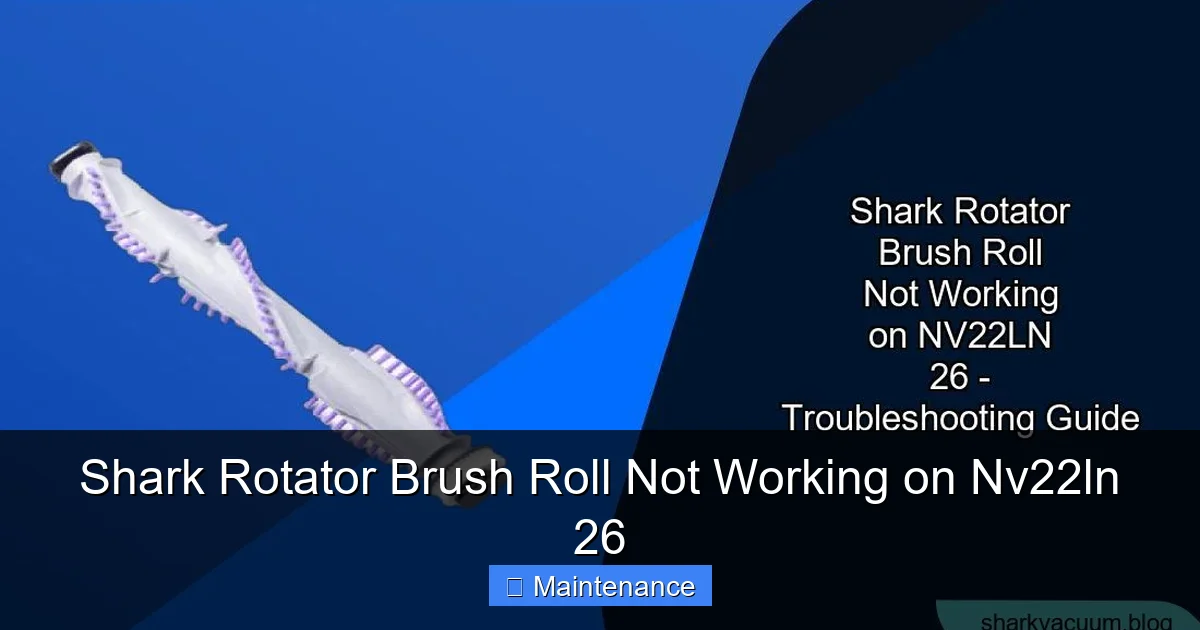
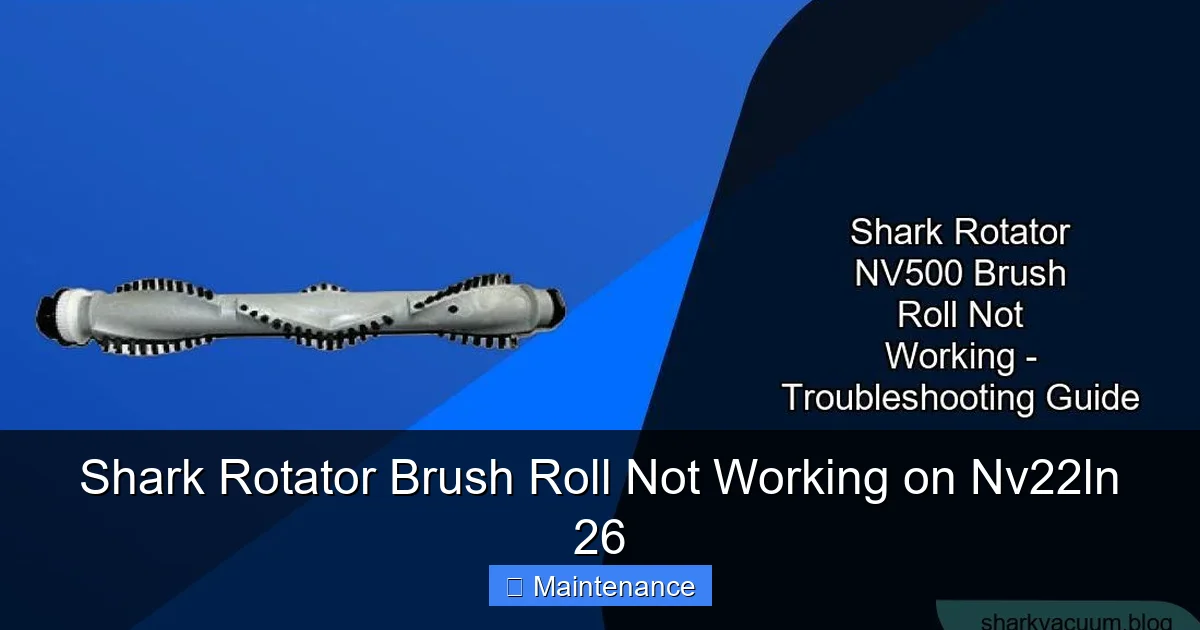
- The Brush Roll: The long cylinder with bristles (usually red or black) that physically agitates carpet fibers. It has plastic end caps with bearings that allow it to spin freely.
- The Drive Belt: A thin, rubber, continuous loop. One end is attached to the brush roll pulley (a small wheel on the brush roll end cap), and the other end is attached to the motor pulley. When the motor spins, this belt turns the brush roll.
- The Brush Roll Motor: A separate, smaller motor dedicated solely to spinning the brush roll. It has a safety switch built into its circuit.
- The Safety Switch (Thermal Fuse): This is a critical, often overlooked part. If the brush roll jams hard, this switch can trip to protect the motor from burning out. It’s a simple reset button, usually located near the motor or on the powerhead housing.
- The Housing/Channel: The plastic chamber that holds the brush roll and belt. Debris collects here, and the belt rides in a groove along the housing’s base.
The failure point is almost always at the interface between these components: hair jamming the brush roll bearings, a belt that’s slipped off or broken, or a tripped safety switch. Let’s start diagnosing.
Step-by-Step Diagnostic & Repair Guide
Follow this sequence. It’s designed to go from the fastest, easiest fix to more involved procedures. You’ll likely solve the problem in the first few steps.
Visual guide about Shark Rotator Brush Roll Not Working on Nv22ln 26
Image source: sharkvacuum.blog
Step 1: The 30-Second Reset (Check the Safety Switch)
This is your absolute first move. Shark engineered a thermal reset switch into the brush roll motor circuit. If your vacuum feels hot, or if the brush roll suddenly stopped after hitting a thick rug or a big mess, this switch has almost certainly tripped. It’s a simple, user-resettable fuse.
- How to Find It: On the NV22LN 26, the reset button is typically located on the underside of the powerhead (the part that attaches to the wand), near where the brush roll housing is. It’s a small, circular, red or black button, often recessed. You may need a flashlight. Consult your owner’s manual for the exact location, but it’s usually on the plastic housing behind the brush roll.
- How to Reset: With the vacuum unplugged, press the button firmly until you feel (and sometimes hear) a click. That’s it. Plug the vacuum back in and test it on a carpet. If the brush roll starts, you’ve solved it! The switch tripped because of a temporary jam. However, this is a warning sign. You should still check for the underlying cause (usually a partial clog) to prevent it from happening again.
Pro Tip: If the reset button pops out again immediately or won’t stay in, there is a severe, persistent jam or a deeper electrical fault. Move to Step 2.
Step 2: The Visual & Physical Inspection
Now, let’s look at the brush roll itself. Flip the vacuum over onto its side or lay it flat. You should see the brush roll through the clear plastic housing window.
- Look: Do you see a thick mat of hair, string, or carpet fibers wrapped around the ends of the brush roll, near the bearings? This is the #1 killer of brush rolls. It looks like a fuzzy donut.
- Listen & Feel: Turn the vacuum on (on a hard floor is fine) and place your hand near the brush roll. Do you feel any suction or air movement? If suction is strong but the brush is dead, the problem is definitely isolated to the brush roll system. If suction is weak too, you may have a clog elsewhere.
- Manual Spin Test: With the vacuum unplugged, try to spin the brush roll by hand. Does it spin freely? Or does it feel stiff, gritty, or completely locked? A stiff spin indicates jammed bearings. A completely locked spin means something is physically blocking it from turning inside the housing.
Step 3: The Essential Deep Clean – Removing the Brush Roll
Even if it spins okay, a hidden jam inside the housing or on the axles can stop it under power. The only way to be sure is to remove it. This is the most important maintenance task for your Shark Rotator.
- Removal: On the NV22LN 26, there is usually a release lever or button on the brush roll housing. Press it, and the brush roll will pop up and out. If it’s stuck, check for a small screw or clip holding it. Sometimes, you just need to pull firmly. The brush roll will come out as one piece.
- Cleaning Process:
- Take the brush roll to a well-lit area. Use a seam ripper, a pair of scissors, or a dedicated brush cleaning tool to carefully cut and peel away all hair and fibers wrapped around the bristles and, most importantly, the plastic end caps and metal axles. Get it completely clean. Hair compacts and acts like a clamp.
- Check the bearings inside the plastic end caps. They should spin freely. If they are gritty or don’t spin, the bearing is shot. You can sometimes clean them with compressed air, but a new brush roll is often the best fix.
- While you have it out, look into the empty housing channel. You’ll likely find a ton of debris, hair, and small objects (pennies, LEGO pieces, etc.) that have been collecting. Scoop it all out with your fingers or a long tool. This is critical. Even a small object can jam the brush roll against the housing wall.
- Inspect the rubber drive belt that runs along the base of the housing. Is it there? Is it loose, cracked, frayed, or missing a piece? Is it covered in gunk that might cause it to slip?
- Reinstallation: Slide the clean brush roll back into the housing, ensuring the end caps sit properly in their slots. The belt should already be looped around the brush roll’s small pulley. Snap the housing cover back into place. Ensure the belt is not twisted.
After this thorough cleaning and inspection, plug in and test. In a huge percentage of cases, this solves the problem. If not, the belt is the next suspect.
The Drive Belt: The Silent Saboteur
The humble rubber belt is the link between the motor’s power and the brush roll’s action. It wears out, stretches, breaks, and can slip off its pulleys. Diagnosing belt issues is straightforward.
Visual guide about Shark Rotator Brush Roll Not Working on Nv22ln 26
Image source: i.ytimg.com
How to Inspect and Replace the Belt
- Location: With the brush roll removed (as in Step 3), you can see the entire belt path. It’s a loop running from the motor pulley (usually at the back of the housing) around the brush roll pulley and back.
- What to Look For:
- Missing Belt: Obvious. It’s not there. It may have broken and fallen into the housing.
- Broken Belt: Look for a clean break or a significant crack.
- Stretched Belt: The belt will be loose, sagging, and may not maintain tension. It might slip off the pulleys when the motor runs.
- Slipping: If the belt is oily, covered in carpet dust paste, or glazed, it will slip on the pulleys. The motor will hum, but the brush roll won’t turn.
- Off-Track: The belt may have jumped off one of the pulleys, often the smaller motor pulley.
- Replacement:
- To remove the old belt, simply stretch it off the pulleys. It requires no tools.
- Purchase the correct replacement. For most Shark Rotator models including the NV22LN 26, the official part number is 195-110. It’s a universal Shark belt. You can find it on Amazon, Shark’s website, or appliance part stores for about $5-$8.
- To install the new belt, stretch it over the motor pulley first, then rotate the brush roll to guide it onto the brush roll pulley. Ensure it’s seated properly in the groove on both pulleys and is not twisted.
- Reinstall the brush roll. The belt should be snug but not overly tight.
- Test: Before fully reassembling the housing, you can sometimes plug the vacuum in briefly (be careful!) with the housing open to see if the belt turns and the brush roll spins. If it does, reassemble and you’re done.
When the Problem Isn’t the Brush Roll or Belt
If you’ve completed Steps 1-3—reset the switch, thoroughly cleaned the brush roll and housing, and installed a brand new, correct belt—and the brush roll still won’t spin, we move to less common, more advanced diagnostics.
Visual guide about Shark Rotator Brush Roll Not Working on Nv22ln 26
Image source: sharkvacuum.blog
Checking the Motor and Electrical Connections
- Motor Sound: When you turn the vacuum on, do you hear a high-pitched whirring or humming sound from the powerhead area, even though the brush roll isn’t spinning? That sound is likely the brush roll motor trying to turn but being mechanically blocked (go back and re-check for jams!) or the motor itself is seized.
- No Sound: If you hear *nothing* from the brush roll area—no hum, no whir—and suction is normal, the power to the brush roll motor may be cut. This could be a wiring issue in the wand or handle where the electrical connections are (common in lift-away models), or a failed motor.
- Motor Access: The brush roll motor is usually mounted on the side or rear of the powerhead housing. You’ll need to remove several screws to access it. Once exposed, check that the motor’s two electrical wires are securely connected to its terminals. A loose connection here will cause failure.
- Motor Test (Advanced): If you have a multimeter and know how to use it, you can test the motor for continuity. With the vacuum unplugged, disconnect the motor’s wires and set your multimeter to the continuity setting (beep mode). Touch the probes to the two motor terminals. You should get a beep, indicating a complete circuit. No beep means the motor windings are fried and the motor needs replacement.
Warning: Motor replacement is more involved and requires comfort with basic electronics and tool use. If you are not confident, this is the stage to call a professional.
When to Seek Professional Repair or Consider Replacement
You’ve reset the switch, cleaned every fiber, replaced the belt, checked connections, and the motor is dead. Now what?
- Cost-Benefit Analysis: A new official Shark brush roll motor for the NV22LN 26 can cost anywhere from $30 to $60, plus your time. A brand new Shark Rotator NV22LN 26 vacuum is typically in the $150-$250 range (on sale). If your vacuum is older, has other wear and tear, or the motor is the only issue, a motor replacement makes sense. If it’s 5+ years old and showing other signs of age (cracked hoses, weak suction), putting that money towards a new model might be wiser.
- Finding a Repair Shop: Look for local small appliance repair shops. Call and ask if they service Shark vacuums and if they can source/install a brush roll motor. National chains like “Mr. Appliance” often do this work.
- Official Support: Shark’s customer support can be helpful for confirming part numbers and troubleshooting, but out-of-warranty repairs are typically at your expense.
- Environmental Note: Before consigning an old vacuum to a landfill, check if your local municipality or a retailer like Best Buy has an electronics/appliance recycling program. Vacuums contain plastics and small motors that can be recycled.
Preventive Maintenance: Keeping Your Brush Roll Spinning
An ounce of prevention is worth a pound of cure. Incorporate these quick habits into your cleaning routine to avoid the “brush roll not working” headache entirely.
- Clean the Brush Roll Every 3-5 Uses: Especially if you have pets or long hair. Flip the vacuum over, remove the brush roll (it takes 10 seconds), and cut away any hair wrapped around it. Don’t wait until it’s a solid mat.
- Check the Housing Monthly: While the brush roll is out, use a flashlight to look into the housing channel. Scoop out any accumulated debris. This prevents jams and keeps the belt clean.
- Inspect the Belt Regularly: Every 6 months, remove the brush roll and look at the belt. Check for cracks, glazing, or stretching. A $5 belt replaced yearly is cheap insurance.
- Mind What You Vacuum: Avoid sucking up large, hard objects (coins, paperclips, small toys), long curtain cords, or excessive amounts of string. These are prime causes of immediate jams and belt derailments.
- Listen to Your Vacuum: Get familiar with its normal sound. If you hear a new grinding, squealing, or straining noise, turn it off immediately and investigate. Catching a jam early can save a belt and motor.
Your Shark Rotator NV22LN 26 is a fantastic machine built to last. The brush roll not working is a symptom, not a death sentence. By methodically working through the most common issues—the safety switch, hair jams, and the drive belt—you will almost certainly restore its powerful carpet-cleaning ability. Start with the reset button and a good, thorough cleaning. That simple act solves the problem for the vast majority of users. Only then should you move on to part replacement. With this guide, you’re equipped to be your vacuum’s best mechanic. Now go grab that seam riper, get that brush roll sparkling clean, and get back to enjoying a truly clean home.
Frequently Asked Questions
Why did my Shark NV22LN 26 brush roll suddenly stop working?
The most common reason is a jam caused by hair, string, or carpet fibers tightly wrapped around the brush roll bearings. This jams the brush roll, which trips the safety switch or prevents the belt from turning it. A worn or broken drive belt is the second most frequent cause.
How do I reset the brush roll motor on my Shark Rotator?
Locate the small red or black reset button on the underside of the powerhead (the part that attaches to the wand). With the vacuum unplugged, press the button firmly until you feel a click. Plug the vacuum back in and test. This resets the thermal safety switch that tripped due to a jam.
How often should I clean the brush roll on my Shark vacuum?
For best performance and to prevent jams, you should remove the brush roll and clean out all hair and debris every 3-5 uses, especially if you have pets or long hair in your home. A quick monthly deep clean of the entire housing is also highly recommended.
What is the Shark Rotator NV22LN 26 brush roll belt part number?
The official replacement drive belt for the Shark Rotator NV22LN 26 and most similar models is part number 195-110. It is a universal Shark belt readily available from Shark, Amazon, and appliance part retailers for approximately $5-$8.
My brush roll spins freely by hand but not when the vacuum is on. What’s wrong?
This typically points to one of two issues: 1) The drive belt is broken, severely stretched, or has slipped off the motor pulley. 2) The brush roll motor’s safety switch has tripped and needs to be reset (see the reset button question above). Check the belt first.
Is it worth repairing the brush roll motor on my old Shark vacuum?
It depends on the vacuum’s overall condition and age. A replacement motor costs $30-$60 plus your time. If the vacuum is otherwise in good shape and you like it, repairing is cost-effective. If the machine is very old, has multiple issues, or you’ve been considering an upgrade, investing in a new vacuum may be the better long-term choice.