A non-spinning brush roll on your Shark Rocket Duo Clean HV380 is a common, usually fixable issue. It’s most often caused by hair, string, or debris jamming the brush or a broken drive belt. Start by unplugging the vacuum, flipping it over, and removing any visible obstructions. If that doesn’t work, inspect the belt and motor. With basic tools and patience, you can diagnose and solve this problem in under 30 minutes, saving you a costly service call.
Key Takeaways
- Unplug First: Always disconnect the vacuum from power before inspecting or attempting any repairs to prevent injury or damage.
- Debris is the #1 Culprit: Over 70% of “brush not turning” issues are caused by hair, string, carpet fibers, or small objects wrapping around the brush roll and its bearings, jamming it completely.
- The Belt is a Prime Suspect: The rubber drive belt that connects the motor shaft to the brush roll can stretch, break, or slip off, especially after a major jam or with wear.
- Simple Tools Suffice: Most fixes require only a Phillips screwdriver, scissors or a seam ripper, and a clean cloth. No special tools are needed for basic disassembly.
- Preventative Maintenance is Key: Regularly cleaning the brush roll and checking the belt every 1-2 months will dramatically reduce the chance of a sudden failure and extend your vacuum’s life.
- Motor Failure is Rare: A burnt-out motor is the least common cause. Troubleshoot all simpler possibilities (jams, belt, bearings) before assuming the motor is faulty.
- Warranty May Cover It: If your HV380 is still under Shark’s limited warranty, a manufacturing defect (like a broken belt or motor) could be covered. Check your proof of purchase first.
📑 Table of Contents
- Introduction: The Frustration of a Silent Brush
- Understanding Your HV380’s Brush Roll System
- Immediate Troubleshooting: The First 10-Minute Check
- Deep Dive: The Most Common Causes & Fixes
- Advanced Diagnostics: When the Basics Aren’t Enough
- Preventative Maintenance: Your Best Defense
- Conclusion: You’ve Got This
Introduction: The Frustration of a Silent Brush
You’re mid-clean, the Shark Rocket Duo Clean HV380 is humming along, and you press the brush roll button. The indicator light comes on, but the crucial brush head at the bottom of your vacuum… stays stubbornly still. That powerful rotating brush, designed to agitate carpet fibers and lift embedded dirt, has gone silent. Your heart sinks. The main cleaning function of your “Duo Clean” system is gone, leaving you with just suction that can’t tackle ground-in grime on carpets. Before you panic and start searching for a repair shop or a new vacuum, take a deep breath. The issue of a Shark Rocket Duo Clean HV380 brush not turning is incredibly common, and in the vast majority of cases, it’s a problem you can solve yourself in your own home, often in less time than it takes to book a service appointment.
This vacuum’s brush roll system is a marvel of engineering but also a magnet for hair, string, and carpet fibers. It’s a mechanical assembly with a few key parts: the brush roll itself, a rubber drive belt, bearings, and the motor that powers it all. When one of these parts fails or gets obstructed, the rotation stops. This guide will walk you through every possible cause, from the simplest jam to more complex internal failures. We’ll use clear, step-by-step instructions, practical tips, and warn you about common pitfalls. Our goal is to turn you from a frustrated user into a confident at-home troubleshooter for your Shark HV380.
Understanding Your HV380’s Brush Roll System
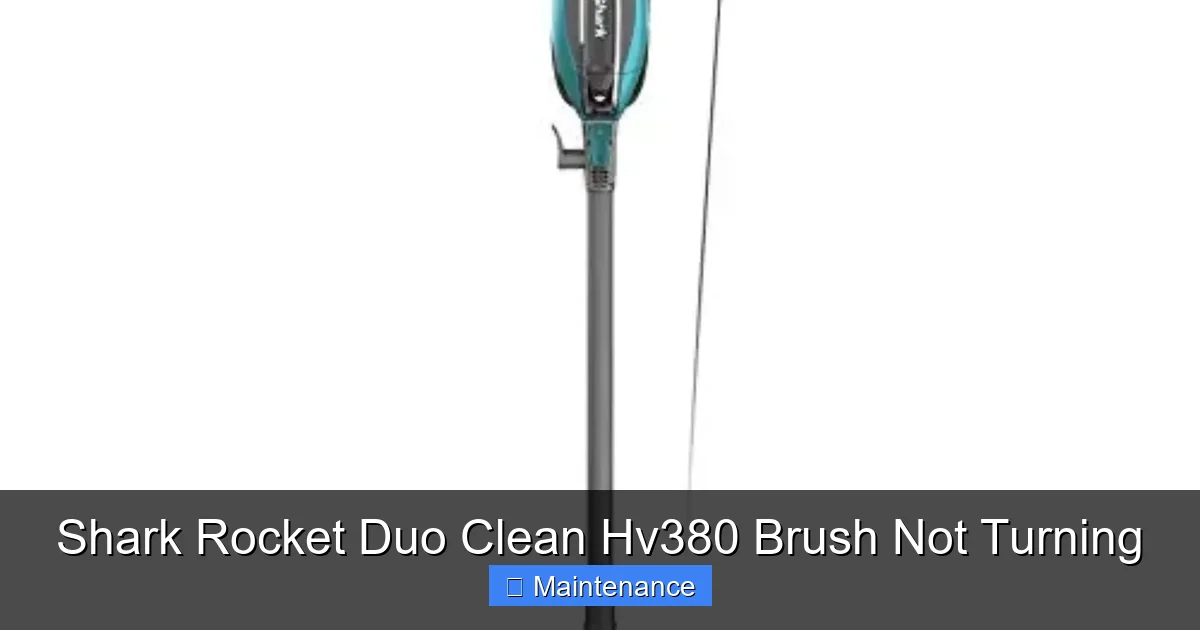
To diagnose the problem, you need to know what makes the brush spin. Think of it as a tiny, high-torque传动 system (power train) tucked inside your vacuum’s floor head. When you engage the brush roll (usually via a button on the handle or a switch on the body), an electrical signal tells the main motor to divert some of its power through a secondary system. A small drive shaft from the motor connects to a rubber drive belt. This belt loops around a spindle on the motor and around a corresponding pulley on one end of the brush roll (the long cylinder with bristles). As the motor spins, it turns the belt, which in turn spins the brush roll.
Visual guide about Shark Rocket Duo Clean Hv380 Brush Not Turning
Image source: savealoonie.com
The Critical Components
There are four key components in this system that can fail:
- The Brush Roll: This is the long, bristled roller. Its bearings (small plastic or metal wheels at each end) allow it to spin freely within its housing. If these bearings are jammed with debris or are worn out, the roll won’t turn.
- The Drive Belt: This is a continuous, usually black, rubber loop. It’s under tension. Over time, it can stretch, crack, or, most commonly, slip off its pulleys—especially after a major jam that put sudden stress on it.
- The Brush Roll Housing/Bearing Housing: This is the plastic casing that holds the brush roll and its bearings. It must be clean and free of cracks. Debris can also accumulate in the small crevices around it.
- The Motor & Clutch Assembly: The main suction motor has a secondary shaft or a clutch mechanism that engages the brush roll belt. If the clutch is worn out or the motor’s secondary drive shaft is broken, power won’t transfer. This is less common.
Understanding that power flows from Motor -> Belt -> Brush Roll helps you systematically check each link in the chain.
Immediate Troubleshooting: The First 10-Minute Check
Before you grab any tools, perform this fast, non-invasive check. It solves most problems.
Visual guide about Shark Rocket Duo Clean Hv380 Brush Not Turning
Image source: bullocksbuzz.com
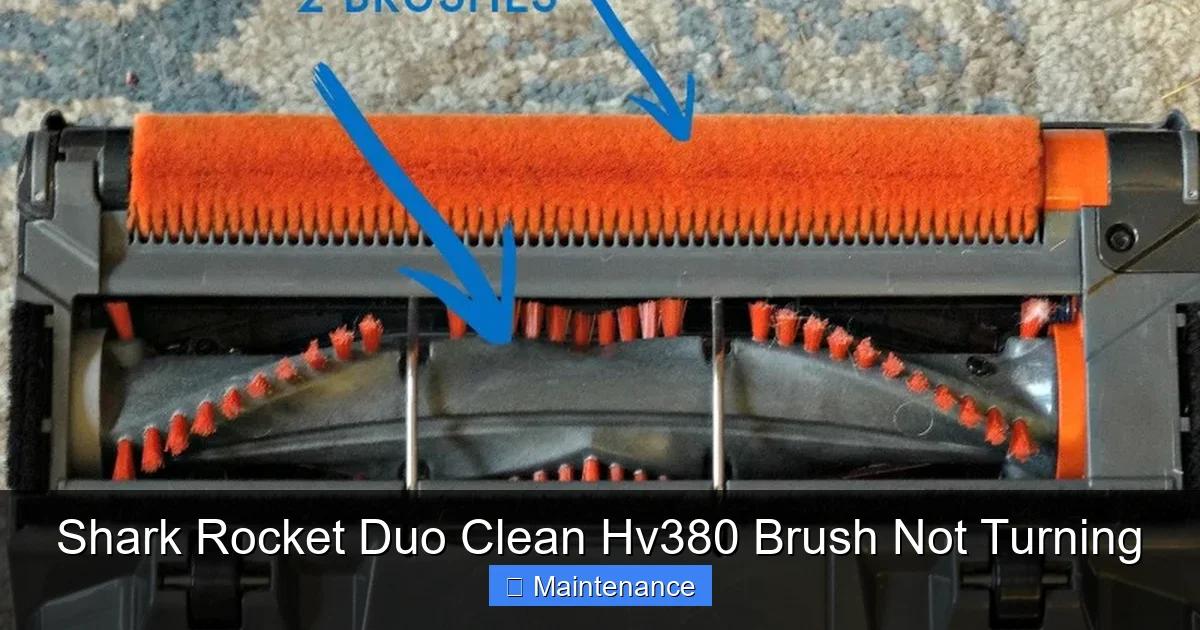
Step 1: Visual Inspection of the Brush Head
Flip your Shark Rocket Duo Clean HV380 over so you’re looking at the underside of the floor head. Use a bright light. Do you see any obvious debris? Large chunks of carpet, a sock, a piece of plastic bag, or a massive hairball? If yes, use a pair of scissors to carefully cut away any long strings or hair wrapped around the brush. Never use your bare hands—the bristles can be sharp, and you might get a nasty cut. Also, pull any debris out of the intake ports on either side of the brush housing.
Step 2: The Manual Spin Test
With the vacuum still unplugged, try to rotate the brush roll by hand. You should feel some resistance from the belt and bearings, but it should turn relatively smoothly. Ask yourself:
- Does it not budge at all? This indicates a severe jam, likely at the bearings or a completely locked belt.
- Does it turn but with a gritty, grinding feeling? The bearings are probably packed with dirt and hair, or they are worn out.
- Does it turn freely in one direction but not the other? This is a classic sign of a broken or jammed clutch mechanism inside the motor housing.
Step 3: Check the Brush Roll Button & Indicator
Make sure the brush roll is actually turned on. The HV380 has a dedicated button, often on the handle near the trigger. Press it firmly. You should hear/feel a distinct click and see a small light (usually green or blue) illuminate on the vacuum body or floor head. If the light doesn’t come on, the issue might be electrical—a faulty switch or wiring. If the light comes on but the brush doesn’t spin, the problem is mechanical (belt, jam, motor).
Deep Dive: The Most Common Causes & Fixes
If the quick check didn’t solve it, it’s time for a more thorough investigation. This involves removing the brush roll housing to access the belt and brush roll itself.
Visual guide about Shark Rocket Duo Clean Hv380 Brush Not Turning
Image source: livingpristine.com
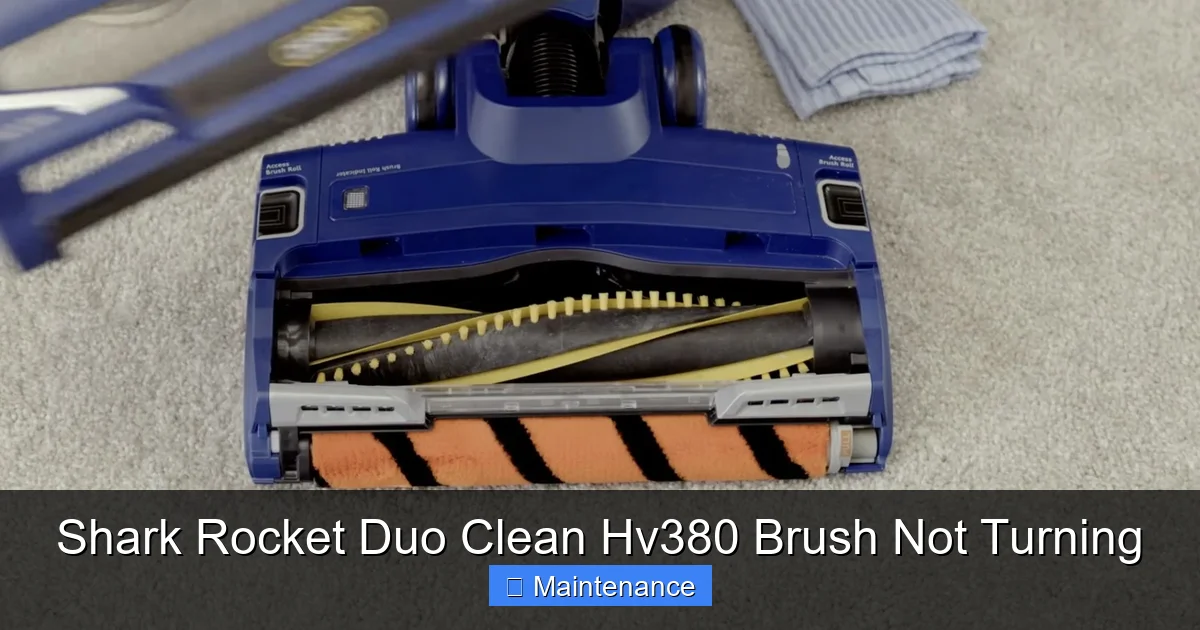
How to Access the Brush Roll and Belt
You’ll need a Phillips head screwdriver. Place the vacuum upside down on a soft towel or blanket to protect the finish.
- Locate the Release Tabs: On the underside of the HV380 floor head, you’ll see the brush roll. At either end of the brush roll housing (the plastic part that holds the roller), there are typically two small plastic tabs or levers. These are the release latches.
- Release the Housing: Push these tabs inward (toward the center of the vacuum) and simultaneously pull the entire brush roll housing downward. It should detach from the main vacuum body. On some models, you may need to first remove a few screws from the bottom of the housing. Consult your manual if the tabs aren’t obvious.
- Remove the Brush Roll: Once the housing is off, you’ll see the brush roll sitting in it. It’s usually held by a small clip or simply by the belt tension. Gently lift the brush roll out. If it’s stuck, don’t force it—check for debris jamming it against the housing.
Now you have full access to the drive belt, which should be visible as a rubber loop connecting a small pulley on the motor shaft to a larger pulley on one end of the brush roll.
Cause 1: The Hair & Fiber Jam (The Usual Suspect)
This is the culprit 90% of the time. Hair, string, and carpet fibers don’t just wrap around the bristles; they work their way into the narrow spaces between the brush roll axle and its plastic bearing housings. Once there, they act like a tourniquet, tightening as the brush tries to spin until it seizes completely.
The Fix: With the brush roll removed, use a seam ripper, a dedicated “vacuum brush cleaning tool,” or even the pointed tip of your scissors to meticulously pick and scrape away every last bit of fiber from inside the bearing housings (the holes at each end of the brush roll) and from the axle itself. You must clear the entire circumference. Also, check the small circular openings on the sides of the housing where the brush roll axles sit. Clear those thoroughly. Once clean, spin each bearing by hand—it should rotate silently and freely. Reassemble and test.
Cause 2: The Faulty or Slipped Drive Belt
Inspect the belt you just exposed. Is it:
- Missing entirely? It has snapped or completely jumped off. This happens after a major jam or with extreme age.
- Loose and sagging? It has stretched and lost tension. It will slip on the pulleys instead of turning the brush.
- Frayed, cracked, or glazed (shiny)? It’s worn out and needs replacement.
- Is it on the pulleys correctly? Ensure it’s seated properly on both the motor shaft pulley and the brush roll pulley. It should not be twisted.
The Fix: A broken or severely worn belt must be replaced. Shark belts are specific to the HV380 model. You can find the exact replacement part number (often something like “Shark Part # 119-FF”) on Shark’s website, Amazon, or an appliance parts store. Replacing it is simple: hook the new belt onto the motor pulley first, then stretch it over the brush roll pulley. It requires a firm tug to get it on. Ensure it’s seated fully in the groove of the brush roll pulley. If it’s just loose, you might have a stretched belt that needs replacement, or the tension spring in the housing (if your model has one) may be broken—a more complex fix.
Cause 3: Worn or Seized Bearings
Even after cleaning, the brush roll might not spin smoothly. If you feel grinding or resistance when spinning the bare brush roll by hand (with the belt off), the internal bearings are shot. The plastic bushings can melt or wear down from heat and friction over years of use.
The Fix: Unfortunately, the bearings on the Shark brush roll are not typically serviceable as a separate part. The entire brush roll assembly must be replaced. You can order a new brush roll (Part # 119-FF2 or similar). It’s a simple swap—remove the old one from the housing, clip or slide the new one in. It’s a good practice to replace the belt at the same time if your vacuum is a few years old.
Advanced Diagnostics: When the Basics Aren’t Enough
You’ve cleared every fiber, installed a new belt, and put in a fresh brush roll. The brush still doesn’t turn. Now we look deeper.
Diagnosing the Motor & Clutch
The Shark HV380 uses a motor with an internal clutch or a separate drive shaft for the brush roll. If this mechanism fails, the motor will still suck powerfully (you feel strong suction from the hose), but no power reaches the belt.
- Symptom: Strong suction, brush button light on, but belt doesn’t move even when you try to turn the brush roll by hand (with the belt off, the brush roll should spin freely if bearings are good). If the brush roll spins freely but the belt pulley on the motor shaft does not turn when the vacuum is on, the motor’s brush roll drive is dead.
- The Fix: This is not a DIY repair for most people. The motor assembly is complex and requires soldering and specific knowledge. At this stage, you must weigh the cost of a new motor/part against the value of the vacuum. If your HV380 is older, it might be time for a new vacuum. If it’s under warranty, contact Shark.
Checking for Electrical Switch Failure
The brush roll on/off button can fail. A faulty switch won’t send the signal to engage the clutch or motor circuit.
- Test: You’ll need a multimeter and some skill to test for continuity on the switch. Alternatively, if you’re comfortable, you can carefully open the handle housing (after unplugging!) to visually inspect the switch for burn marks or broken contacts.
- The Fix: Replace the switch. This is a more advanced repair involving disassembling the handle and dealing with wiring. Part numbers for switches are available online.
Preventative Maintenance: Your Best Defense
An ounce of prevention is worth a pound of cure. A little regular care will keep your HV380’s brush spinning for years.
Make Cleaning the Brush Roll a Habit
Every 1-2 months, or if you have pets, every time you empty the dust cup:
- Flip the vacuum over and use the provided cleaning tool (or scissors) to cut and remove all hair and fibers wrapped around the bristles.
- Remove the brush roll housing (as described earlier) and clear out the debris from the bearing housings and axles. This is the most important step.
- Wipe the belt with a dry cloth to remove dust and grit that can degrade it.
Mind What You Vacuum
Your Shark is powerful, but it’s not invincible. Avoid vacuuming:
- Small objects like pins, paperclips, or kids’ toys (they can jam the brush or damage bearings).
- Long, loose cords or strings (they instantly wrap and bind).
- Very wet spills or large amounts of fine powder (can clog bearings and motors).
Inspect the Belt Annually
Once a year, during a deep clean, remove the brush roll and inspect the belt. Look for cracks, glazing, or stretching. Replacing a $10 belt proactively is cheaper than dealing with the aftermath of a broken one that may have damaged other parts.
Conclusion: You’ve Got This
A Shark Rocket Duo Clean HV380 brush not turning feels like a major failure, but it’s almost always a simple, mechanical issue rooted in the vacuum’s contact with the very dirt it’s designed to remove. By systematically checking for obstructions, inspecting and replacing the drive belt, and ensuring the brush roll bearings are clean and functional, you can resolve the problem in under 30 minutes with basic tools. Remember the power law of this machine: Motor powers Belt, Belt powers Brush Roll. Test each link in that chain. Start with the free, easy fix of cleaning, then move to the inexpensive part replacement (belt, then brush roll). Only suspect the expensive motor or switch after all else is ruled out. This approach saves you money, reduces waste, and gives you a satisfying sense of ownership over your appliance. Your Shark is built to last; with this knowledge, you can help it do just that. Now, go flip that vacuum over, grab your screwdriver, and get that brush spinning again!
Frequently Asked Questions
Is it worth fixing my Shark HV380, or should I just buy a new one?
For most common issues like a jammed brush or broken belt, the fix costs under $20 in parts and takes 20 minutes. Given the HV380’s retail price, repairing is almost always more economical than replacing, unless the motor itself is faulty and the vacuum is very old.
How often should I clean the brush roll on my Shark Rocket Duo Clean?
For pet owners or homes with long hair, clean the brush roll and check for debris in the bearings every time you empty the dust cup (about once a week). For typical use, a thorough cleaning every 1-2 months is essential preventative maintenance.
What specific part number is the replacement belt for the HV380?
The primary drive belt for the Shark Rocket Duo Clean HV380 is typically part number 119-FF (sometimes listed as 119-FF2 for the brush roll assembly). Always double-check by searching “Shark HV380 replacement belt” on the official Shark website or a reputable parts retailer using your exact model number.
My brush roll spins freely by hand, but not when the vacuum is on. What is it?
This is a classic sign of a failed drive belt (it’s broken or slipped off) or a failed motor clutch/drive shaft. With the vacuum unplugged and the housing off, look to see if the belt is present and connected to both the motor pulley and the brush roll pulley. If the belt is fine and on correctly, the motor’s brush drive mechanism has likely failed.
Can I use lubricant on the brush roll bearings to make it spin easier?
No. Never use oil or grease. The bearings are designed to run dry. Lubricant will attract and hold dust and hair, creating a paste that will jam the bearings even faster. The only solution for gritty bearings is to clean them out meticulously or replace the entire brush roll assembly.
My vacuum is under warranty. Should I still try to fix it myself?
Check your warranty terms. Many warranties become void if an unauthorized person opens the vacuum. If you suspect a manufacturing defect (e.g., a belt that broke immediately, a motor that burned out), it’s better to contact Shark customer service first. They may provide a replacement part or authorize a repair. For simple jams, cleaning is not a warranty issue and is safe to do yourself.