A Shark Nv801 brush not spinning is one of the most common issues owners face, and it’s rarely a sign of a dead vacuum. The problem is almost always a simple blockage, a worn belt, or a tripped safety switch. This guide walks you through the exact, safe steps to diagnose and fix the issue yourself, starting with the quickest checks. In most cases, you can have your brush roll spinning again in under 10 minutes with no tools needed, saving you a costly service call.
You’re halfway through vacuuming your living room, and you notice it. That familiar, satisfying whirring sound from your Shark Nv801 is missing. You look down, and the brush roll—the spinning barrel of bristles that does the deep carpet cleaning—is just sitting there, motionless. Panic sets in for a second. Is it broken? Is it expensive to fix? Before you resign yourself to a service call or a new vacuum, take a deep breath. A Shark Nv801 brush not spinning is an incredibly common problem, and it’s almost always something you can fix yourself, quickly and cheaply. This isn’t a complicated HVAC system; it’s a vacuum cleaner, and its mechanics are straightforward. This guide will be your friendly, step-by-step manual. We’ll start with the simplest, most likely fixes and work our way through every possible cause, empowering you to get that brush roll spinning again with confidence.
Key Takeaways
- Safety First: Always unplug your Shark Nv801 from the wall outlet before inspecting or attempting any repair to prevent injury or damage.
- Most Common Culprit: Hair, string, carpet fibers, and small objects wrapping around the brush roll and its bearings are the #1 cause of a non-spinning brush.
- Check the Belt: A broken, stretched, or slipped drive belt is the second most frequent reason. It’s a simple, inexpensive part to replace.
- Reset the Motor: The Shark Nv801 has a thermal overload switch. If the motor overheats, it shuts off. Let the vacuum cool completely (1-2 hours), then try again.
- Inspect the Brush Roll: Remove it and spin it by hand. If it doesn’t spin freely or feels gritty, it needs cleaning or replacement.
- No Tools Needed First: The initial diagnosis and most clogs are fixed by hand. Only a screwdriver is typically needed for belt or brush roll removal.
- Warranty Consideration: Opening the vacuum’s main body may void your warranty. Most fixes (cleaning, belt change) can be done through the soleplate access panel.
[FEATURED_IMAGE_PLACEHOLDER]
📑 Table of Contents
Understanding Your Shark Nv801’s Brush Roll System
To fix something, it helps to know what you’re looking at. The spinning brush roll on your Shark Nv801 isn’t just a brush. It’s a critical part of a small, integrated drive system. Think of it like this: the vacuum’s motor creates suction, but for carpet, you need agitation. That agitation comes from the brush roll.
The Key Components: Motor, Belt, and Brush Roll
The system has three main parts. First, there’s the powerhead motor. This is a small, separate motor housed in the cleaning head (the part that touches the floor). Its only job is to spin the brush roll. Second, there’s the drive belt. This is a rubber belt, similar to an engine serpentine belt but much smaller. It connects the motor’s drive shaft to the brush roll’s axle, transferring rotational force. Third, you have the brush roll itself. This is a cylinder with bristles and, crucially, bearings (small plastic or metal wheels) on each end that allow it to spin smoothly inside a housing. If any link in this chain fails—motor, belt, or brush roll bearings—the brush stops spinning.
The Role of the Soleplate and Safety Switches
The brush roll and belt are hidden behind the soleplate—the flat plastic bottom of the vacuum head that slides on your floor. Shark designs this to be easily removable for cleaning. Inside, there’s also a safety microswitch. This is a tiny button that is depressed when the soleplate is correctly and fully attached. Its job is to prevent the brush roll motor from turning on if the soleplate is off, protecting you from injury and the vacuum from damage. A misaligned or broken soleplate can sometimes keep this switch from activating, which will stop the brush roll even if everything else is fine.
Most Common Causes of a Non-Spinning Brush
Let’s get straight to the point. Here, in order of likelihood, are the reasons your Shark Nv801 brush has called it quits. We’re focusing on the 95% of cases here.
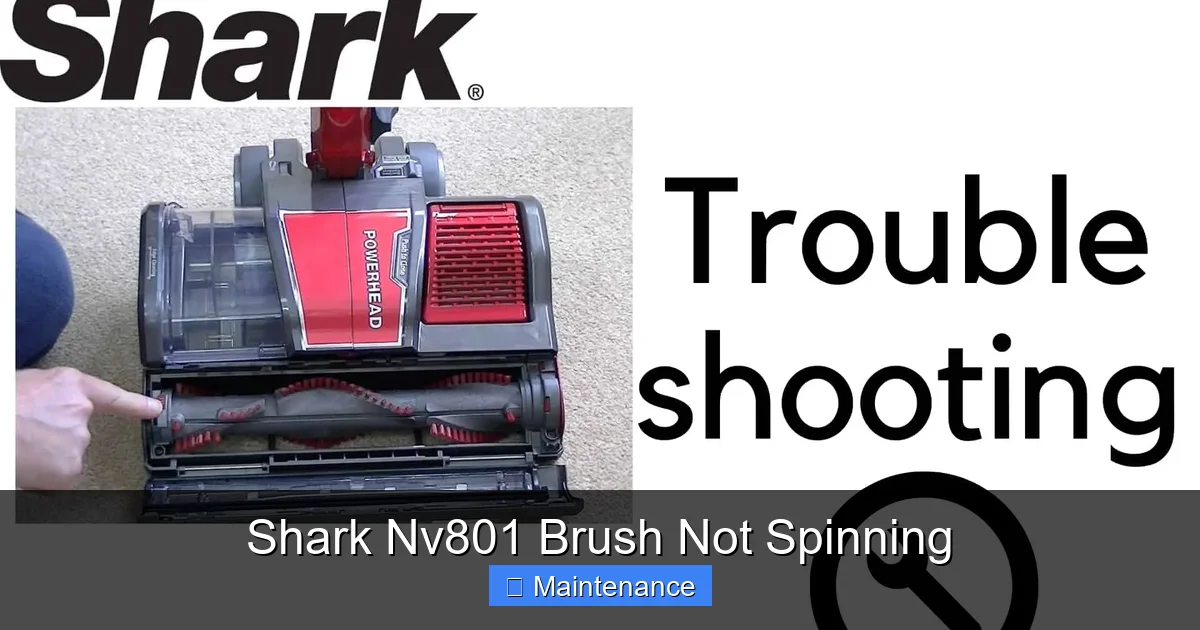
Visual guide about Shark Nv801 Brush Not Spinning
Image source: howtofixit.net
1. Overwhelming Clog: The Hair & Fiber Wrap
This is the undisputed champion of brush roll failures. Long hair, pet fur, carpet fibers, and even the stray thread from a toy or a piece of string will wrap around the brush roll bristles and, more critically, around the bearing caps on each end. These caps are small, plastic pieces that the brush roll spins against. When hair winds tightly around them, it creates immense friction, binding the brush roll solid. The motor might hum or strain, but the brush won’t turn. You often won’t see the full extent of the wrap just by looking at the top of the bristles; you must remove the brush roll to see the ends.
2. A Broken or Slipped Drive Belt
Rubber belts wear out. They can stretch, crack, or even snap completely. A stretched belt might slip off the motor pulley or the brush roll pulley. A broken belt is obvious—it’s in two pieces. A slipped belt might just be lying in the bottom of the housing. Sometimes, a belt can jump off its track if a major clog suddenly stopped the brush roll dead while the motor was still trying to turn it.
3. Brush Roll Bearings are Seized or Worn
The brush roll spins on two small bearings. Over time, with dirt and grime, these bearings can wear out, get gritty, or simply freeze up. If you remove the brush roll and try to spin it by hand, it should rotate smoothly and freely for several seconds with a slight whir. If it feels gritty, stiff, or stops almost immediately, the bearings are bad. The brush roll itself is a replaceable part.
4. Tripped Thermal Overload or Faulty Motor
The brush roll motor has a thermal safety switch. If the motor gets too hot—often because it was struggling against a major clog—it will shut itself down. It needs time to cool, usually 1-2 hours. This is a protective feature, not a failure. However, if it never comes back on after a cool-down period, the motor itself may have burned out. This is less common but possible.
5. Soleplate or Safety Switch Issue
If the soleplate isn’t clicked into place perfectly, the safety switch stays open. The main suction motor might run (you feel suction), but the brush roll motor will not. Check that the soleplate is seated correctly and that the plastic tabs that press the switch are intact and not broken.
Step-by-Step Diagnostic & Fix Guide
Alright, toolbox time. Well, maybe not a toolbox yet. Let’s start with the diagnostic process that requires zero tools. We’ll work from the outside in.
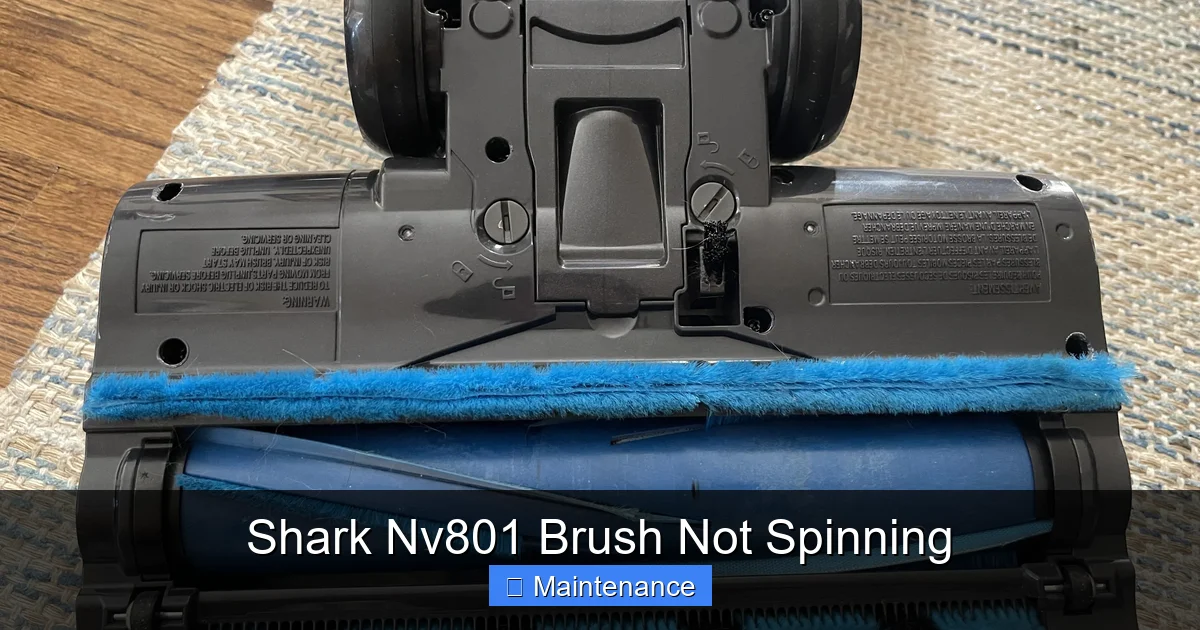
Visual guide about Shark Nv801 Brush Not Spinning
Image source: i.redd.it
Step 1: The Initial Reset and Listen
Before you touch a screw, do this. Unplug the vacuum. Flip it over. Look at the brush roll through the soleplate holes. Can you see hair wrapped around it? If yes, that’s your problem. Now, plug it back in and turn it on (with the vacuum upright on a hard floor). Listen. Do you hear a high-pitched whining or straining sound from the head, but no spinning? That’s a classic sign of a jammed brush roll or a slipping belt. If you hear nothing from the head at all—just the main suction motor—it could be a belt issue or a motor/switch issue.
Step 2: Remove the Soleplate and Visual Inspection
This is the most important step. Lay the vacuum flat on its side or upside down. Locate the soleplate release lever or screws. On the Nv801, it’s typically a large, red lever on the back of the head. Push it in and pull the soleplate straight off. You’ll now see the entire brush roll and belt mechanism. This is your workspace.
- Look for Obvious Clogs: Use a flashlight. Shine it into the housing. Look for masses of hair, carpet chunks, or small objects (socks, hair ties, Lego pieces) blocking the path of the brush roll or wedged in the air passages.
- Check the Belt: Locate the black rubber belt. Is it there? Is it broken? Is it loose and hanging off the pulleys? Is it covered in debris? A belt that’s glazed, shiny, or cracked is failing.
- Manually Spin the Brush Roll: Reach in and grab the brush roll ends (the plastic caps). Try to spin it. Does it move freely? If it’s stiff or won’t move, you have a severe wrap or bad bearings. If it spins easily, the bearings are likely okay.
Step 3: The Hair Wrap Removal Procedure
If the brush roll is bound, this is your fix. You need to be thorough.
- Remove the Brush Roll: On the Nv801, the brush roll is usually held by two clips or simply slides out. Push the clips inward and lift the brush roll out. If it’s stuck due to the wrap, gently work it back and forth to free it.
- Sever the Wrap: Take a pair of scissors or a sharp knife. Carefully cut all the hair and fibers wrapped around the bristles and, most importantly, around the bearing caps at each end. Do not cut the bristles themselves. You’re cutting the entanglement, not the vacuum.
- Clean the Ends: After cutting, pull all the debris away. You should see clean, smooth plastic bearing caps. Pick off any remaining bits.
- Clean the Housing: Use your hands or a tool to scoop out all the lint and hair from the inside of the brush roll housing. Pay attention to the area where the belt sits and the air intake ports. A clog here can also cause overheating.
- Reassemble: Slide the clean brush roll back into its housing, ensuring the ends sit in their bearing slots correctly. Click the soleplate back on firmly, making sure it latches on all sides.
Now, test it. Plug in, turn on, and flip it over. The brush should be spinning. If it is, you just saved yourself a service call. Celebrate, but also schedule a quick cleaning for next time.
Step 4: Addressing a Belt Problem
If your inspection revealed a broken, missing, or obviously worn belt, you need a new one. Shark Nv801 belts are specific. You can find the exact part number (often “Shark NV800 Belt” or similar) on Shark’s website, Amazon, or at a vacuum parts store. They are cheap, usually $5-$10 for a 2-pack.
- Remove the Old Belt: With the brush roll out, simply stretch and lift the old belt off the motor pulley (the small wheel on the motor) and the brush roll pulley (the wider wheel on the brush roll axle).
- Install the New Belt: Stretch the new belt over the brush roll pulley first. Then, while holding tension, stretch it over the motor pulley. It should sit snugly in the groove of both pulleys. Do not twist the belt.
- Reinstall Brush Roll: Put the brush roll back in its housing. The belt should be inside the housing, not pinched.
- Manual Test: Before clicking the soleplate on, plug the vacuum in briefly (hold it upright) and turn it on. You should see and hear the brush roll spin. If it doesn’t, the belt may have jumped off. Unplug, remove the brush roll, and reseat the belt.
Advanced Issues: When the Basics Don’t Work
You’ve cleared every hair, installed a new belt, and the brush roll spins freely by hand. But when you turn the vacuum on… still nothing. Now we move to less common, more advanced possibilities.
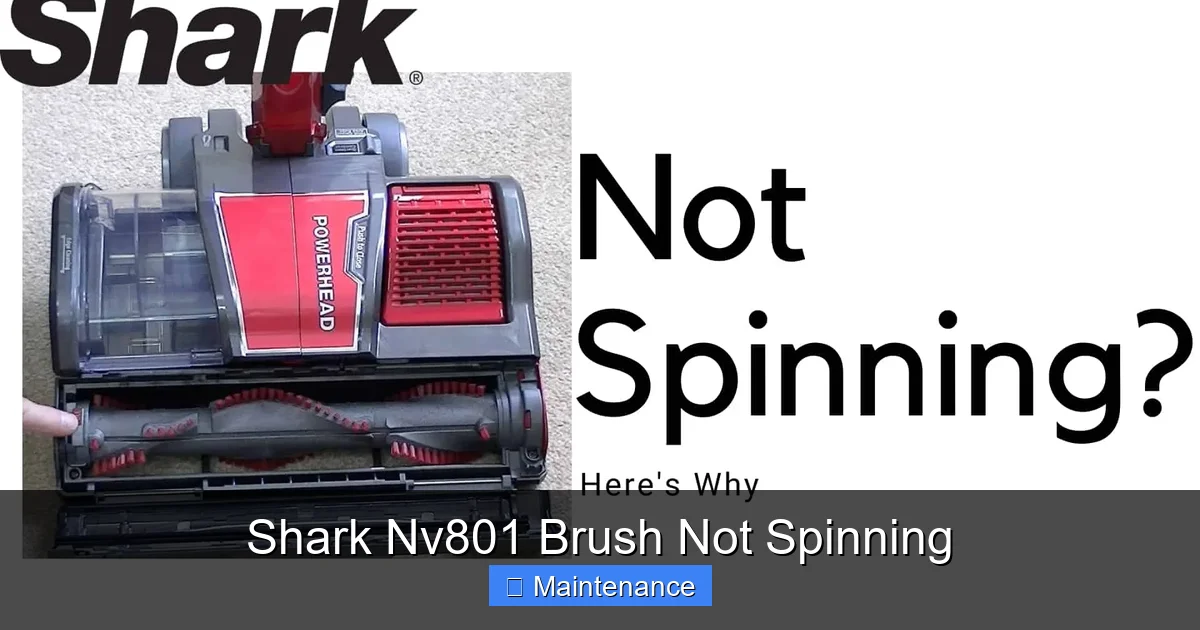
Visual guide about Shark Nv801 Brush Not Spinning
Image source: howtofixit.net
The Motor Itself: Diagnosis and Reality Check
The powerhead motor is a sealed unit. If it’s getting power (you can sometimes hear a faint hum or click from it) but the brush roll doesn’t move, the motor may be dead. This is rare. Before concluding this:
- Double-Check the Safety Switch: Re-seat the soleplate. Look at the plastic tab that presses the switch. Is it broken? Can you see the switch button? Sometimes, a broken tab is the issue.
- Listen Carefully: With the vacuum on and the brush roll area exposed (soleplate off), listen. Is there a faint whirring sound from the motor area? If yes, the motor is trying to turn but is locked (by a seized brush roll bearing you missed) or the motor is weak. If you hear absolutely nothing from the head, it could be a wiring issue to the motor or a failed motor.
Testing the motor usually requires a multimeter and comfort with electronics. For most users, a failed motor means it’s time to consider a replacement powerhead assembly from Shark or a professional repair. Given the cost of a new Nv801, weigh the repair cost against replacement.
Seized Brush Roll Bearings: The Final Mechanical Check
You thought you cleaned the brush roll, but maybe the internal bearings are shot. Here’s the definitive test: Remove the brush roll entirely from the vacuum. Take it to a sink or workbench. Hold the plastic end caps and try to spin the metal axle/bristle cylinder. It should spin smoothly. Now, try to wiggle the axle side-to-side. There should be minimal play. If there’s noticeable wobble or grinding, the bearings inside the end caps are destroyed. The only fix is a new brush roll. Shark sells these as part #NV801BR or similar. Replacing it is as simple as removing the old one and sliding the new one in.
Preventative Maintenance: Keeping Your Brush Spinning
An ounce of prevention is worth a pound of cure (and a lot of frustration). Integrate this into your cleaning routine.
The Monthly Deep Clean
Once a month, or more often if you have pets or long hair, perform this 5-minute ritual:
- Remove the soleplate and pull out the brush roll.
- Cut and peel all hair and fibers from the bristles and bearing caps. Use a seam ripper or dedicated brush cleaning tool for stubborn wraps.
- Wipe down the inside of the housing and the belt with a dry cloth.
- Check the belt for cracks or glazing. Replace if it looks worn.
- Spin the brush roll by hand. If it’s not silky smooth, consider replacing it.
- Reassemble.
Pro-Tips for High-Wear Situations
If you have a shag rug, a pet that sheds, or long hair, you’re in the high-risk category.
- Consider a“Hard Floor” Setting: If your Nv801 has a brush roll on/off switch (many Sharks do), turn it OFF when vacuuming hard floors. This prevents unnecessary wear and hair wrap from dust bunnies.
- Pre-Snip Large Items: If you drop a piece of string, ribbon, or a long hair tie on the floor, pick it up before vacuuming. These are brush roll killers.
- Inspect After Rugs: After vacuuming a particularly thick or shaggy rug, take an extra minute to check the brush roll for buildup.
Conclusion: You’ve Got This
A Shark Nv801 brush not spinning is a nuisance, but it is almost never a death sentence for your vacuum. The vast majority of these issues are caused by simple, visible blockages or a worn $5 belt. By arming yourself with the knowledge of how the system works and following the systematic, safe troubleshooting steps outlined here, you can diagnose and fix the problem in minutes. Start with the no-tool inspection, move to the soleplate removal and hair wrap clearance, and then check the belt. Only after those steps should you consider motor or brush roll replacement. Regular, quick maintenance is the ultimate key to avoiding this frustrating pause in your cleaning routine. You’re not just a vacuum owner; you’re now a vacuum expert. So flip that vacuum over, remove that soleplate, and take back control of your clean.
Frequently Asked Questions
Is it safe to run my Shark Nv801 with the brush roll not spinning?
No. Running the vacuum with a jammed brush roll puts excessive strain on the motor and belt, which can cause them to fail. The vacuum is designed for carpet cleaning with the brush roll engaged; without it, you’re only getting suction, which is ineffective on carpets and can overheat the motor.
How often should I clean my Shark Nv801 brush roll to prevent this issue?
For most homes, a thorough inspection and cleaning of the brush roll and housing every 1-2 months is sufficient. If you have pets, long hair, or shag rugs, you should check and clean it after every 2-3 uses to prevent severe wraps.
My brush roll spins freely when I remove it, but stops when installed. What’s wrong?
This points to a drive belt issue. The belt is likely broken, slipped off a pulley, or so worn that it slips under load. Reinstall or replace the belt. Also, ensure the brush roll is seated correctly in its bearings and that the soleplate is fully latched, activating the safety switch.
Can a clogged hose or wand cause the brush roll to stop spinning?
Indirectly, yes. A severe clog in the main suction pathway (hose, wand, or hose connector) can cause the main vacuum motor to overheat and shut down. Some Shark models link the main motor’s thermal switch to the brush roll motor, so a main motor overheat can also kill the brush roll. Always check for clogs throughout the entire air path if the main suction feels weak.
Will opening the vacuum to fix the brush roll void my Shark warranty?
It depends on your warranty terms. Removing the soleplate and brush roll for maintenance is expected and does not void the warranty. However, if you need to remove screws from the main vacuum body or the powerhead housing to access internal wiring or the motor, this may be considered unauthorized repair and could void the warranty. For belt and brush roll changes, you should only need to remove the soleplate.
How much does a replacement brush roll or belt cost for the Shark Nv801?
A replacement drive belt is very inexpensive, typically $5-$12 for a two-pack. An official Shark replacement brush roll assembly (part #NV801BR or similar) usually costs between $25 and $40. Aftermarket versions are often cheaper. Given the cost of a new Nv801 (often $200-$300), these repairs are almost always worth doing.