If your Shark Nv510 Powerhead light does not turn on, the issue is typically a simple, fixable problem like a depleted battery, dirty electrical contacts, or a burned-out bulb. This guide provides a structured, step-by-step troubleshooting process for the most common causes. You can confidently diagnose and resolve the issue yourself with basic tools and careful handling, saving on costly service calls. Always start with the simplest solutions before moving to more complex internal checks.
Key Takeaways
- The problem is usually simple: Over 80% of “light not working” cases stem from battery depletion, dirty contacts, or a standard bulb failure—all user-serviceable fixes.
- Safety first: Always disconnect the vacuum from the charger and ensure the powerhead is detached from the wand before performing any inspection or repair.
- Systematic troubleshooting wins: Follow a logical sequence from external (battery, charger) to internal (bulb, connections) to efficiently pinpoint the exact cause without unnecessary part replacements.
- Preventive maintenance is key: Regularly cleaning the electrical contact pins on both the powerhead and the wand, and proper battery care, can prevent most light failures.
- Use genuine Shark parts: For bulb replacement (model # 1310A or equivalent), using a non-compatible bulb can cause flickering, reduced brightness, or damage to the powerhead’s circuitry.
- Know when to stop: If all troubleshooting fails and the vacuum is under warranty, contact Shark Support. If out of warranty and uncomfortable with internal electronics, seek a professional appliance repair technician.
📑 Table of Contents
- Why That Little Light Matters More Than You Think
- Common Causes: A Quick Diagnostic Checklist
- Step-by-Step: Solving Power and Battery Issues
- Step-by-Step: Cleaning and Inspecting Electrical Connections
- Step-by-Step: Bulb Failure and Replacement Guide
- Step-by-Step: Resetting and Final Internal Checks
- Prevention is Better Than Cure: Long-Term Care for Your Powerhead Light
- When to Say “Uncle”: Seeking Professional Help
Why That Little Light Matters More Than You Think
Hey there, Shark Nv510 owner! Let’s talk about that unassuming little LED light on your Powerhead. It’s easy to dismiss it as just a nice-to-have feature for spotting dust bunnies under the couch. But when it suddenly goes dark, it’s more than a minor annoyance—it’s your vacuum’s way of sending a clear signal. That light is a direct and immediate indicator of the power flow from your battery, through the wand’s electrical system, and into the powerhead itself. If the light doesn’t turn on, it means something has interrupted that critical circuit. The good news? This is one of the most straightforward issues to diagnose and fix on your Shark Nv510. We’re going to walk through every possible reason, from the dead-simple to the slightly more involved, so you can get back to confident, illuminated cleaning.
Before we dive in, let’s set the stage. The Shark Nv510 is a powerful, cordless stick vacuum. Its powerhead—the rotating brush roll unit—is detachable. The light is powered when the powerhead is properly seated on the wand and the main vacuum body is switched on. The power travels from the main unit’s battery, up through the release button and contact pins on the wand, and into the corresponding receptors on the powerhead. Any break in this chain results in a dark light. We will methodically check each link in that chain.
Common Causes: A Quick Diagnostic Checklist
When you’re faced with a dark powerhead light, don’t panic. Start with this high-level checklist. Think of it as a first-aid triage for your vacuum. These are the most frequent culprits, in order of likelihood and ease of check.
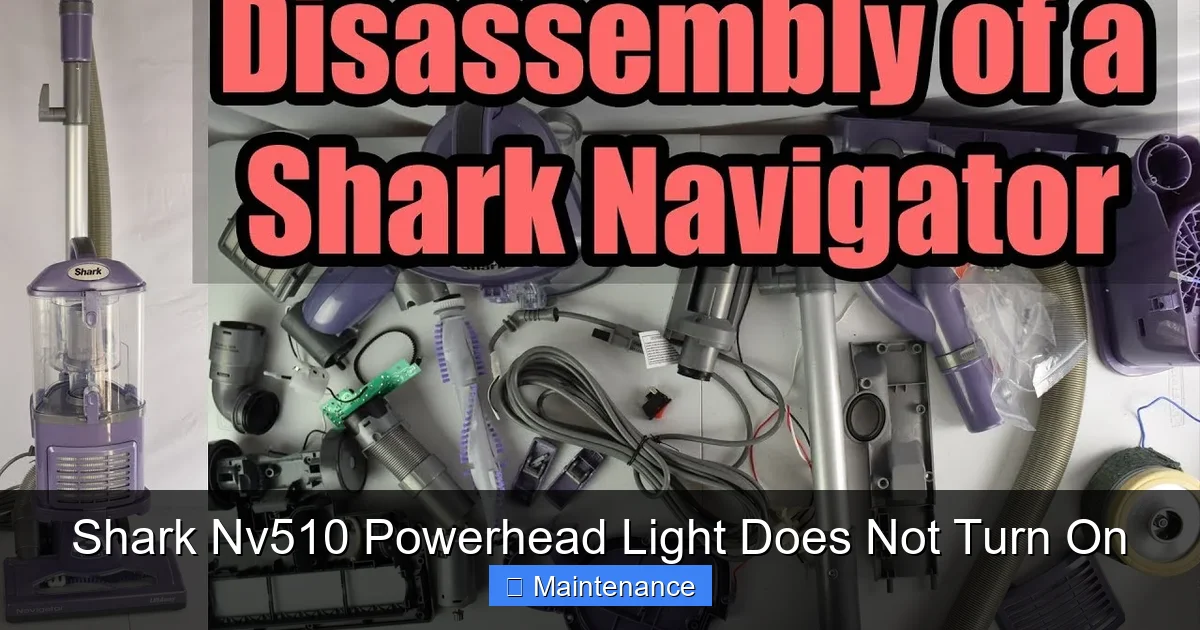
Visual guide about Shark Nv510 Powerhead Light Does Not Turn On
Image source: i.ytimg.com
The Usual Suspects: Battery, Connections, and Bulb
This trio accounts for the vast majority of failures. Let’s break them down.
- Depleted or Faulty Battery: The most obvious and common cause. If the main vacuum body’s battery is completely drained, or if the battery has developed a fault and can’t hold a charge, it won’t send power to the wand or powerhead. The vacuum motor might not run either, or it may run weakly.
- Dirty or Damaged Electrical Contacts: This is the #1 sneaky cause. The small metal pins on the wand (where it inserts into the main body) and the corresponding holes on the powerhead (where it clicks onto the wand) must be perfectly clean and undamaged to conduct electricity. Dust, hair, carpet fibers, and minor oxidation can easily coat these contacts, creating an insulating layer. A bent pin is also a frequent issue from accidental drops.
- Burned-Out LED Bulb: While LEDs are long-lasting, they are not immortal. A power surge, a manufacturing defect, or simple age can cause the bulb to fail. If the bulb is dead, no power reaching the powerhead will make it light up.
The Less Obvious: Internal Safety Locks and Reset Needs
If the big three above check out, we move to the internal electronics.
- Triggered Safety Mechanism: The Shark Nv510 has internal thermal fuses and motor protection circuits. If the vacuum overheated during a previous use (e.g., from a clogged hose or jammed brush roll), a safety switch might have tripped, cutting power to accessories like the light as a precaution. The main motor might also not run.
- Loose Internal Wiring: A wire leading to the light socket inside the powerhead housing could have worked itself loose from a solder joint or connector. This is less common but possible, especially if the vacuum has been dropped or handled roughly.
- Failed Light Socket/Driver: The small circuit board or socket that holds the bulb could have failed. This is a more complex repair but still possible for a skilled DIYer with soldering skills.
Step-by-Step: Solving Power and Battery Issues
Let’s start at the source: the battery. We need to confirm that power is actually leaving the main unit and traveling up the wand.
Visual guide about Shark Nv510 Powerhead Light Does Not Turn On
Image source: i.ebayimg.com
Step 1: The Basic Battery Health Check
First, remove the powerhead from the wand. Place the main vacuum body on its charging dock. Ensure the dock is plugged into a working wall outlet and that the charging indicator light on the main body illuminates. If it doesn’t, the problem could be with the charger, the charging port on the vacuum, or the vacuum’s internal battery management system. Try a different outlet if possible.
Let the vacuum charge for at least 3-4 hours, even if the indicator says “full.” Then, press the power button on the main body. Does the main vacuum motor run? Listen for the sound. Feel for suction at the hose. If the main vacuum does not run at all, your primary issue is with the main unit’s power system, not the powerhead light specifically. The battery may be completely dead or the main power switch may be faulty. In this case, the powerhead light will never get power.
Pro Tip: If your Shark Nv510 is over 2-3 years old and the battery runtime has significantly decreased, the battery itself is likely at the end of its life. Shark batteries are consumable parts. A swollen battery is a serious safety hazard—stop using it immediately and dispose of it properly.
Step 2: Verifying Power at the Wand
This is a crucial diagnostic step. With the main unit powered on (you’ve confirmed the main motor runs), attach an empty wand (without the powerhead). Now, look carefully at the electrical contact pins at the top of the wand where the powerhead would connect. You can use a small, non-conductive probe (like a plastic toothpick) to gently press the small pin inside the hole. Do not use metal tools. You are checking for a tiny spark or hearing a faint click from the solenoid that engages the brush roll. More reliably, take a small, known-good LED flashlight or a multimeter set to continuity/voltage (if you have one). With the main unit on, carefully touch the wand’s contact pins. You should get a small spark or the multimeter should show voltage (around 12V-18V DC). If there is no power at the wand contacts, the fault lies in the main body’s power delivery system or the wand’s internal wiring. This is a less common issue.
Step-by-Step: Cleaning and Inspecting Electrical Connections
Assuming you have confirmed power is present at the wand (Step 2 was positive), the problem is almost certainly at the powerhead connection point. This is your winner 90% of the time.
Step 3: A Deep Clean of the Contact Points
You will need: Cotton swabs, Isopropyl alcohol (90%+ is best), and a small, soft, dry microfiber cloth.
- Detach Everything: Fully separate the powerhead from the wand. Press the release button and pull straight off.
- Inspect the Wand End: Look at the metal contact pins on the wand. Are they bent? Are they covered in a gray/white film or dark gunk? That’s oxidation and debris.
- Clean the Wand Contacts: Dip a cotton swab in isopropyl alcohol. Gently but firmly rub each metal pin and the surrounding plastic housing. The alcohol will dissolve grime and evaporate quickly. Use a dry part of the swab or the microfiber cloth to buff them to a shiny, clean metal finish. Use a magnifying glass if you have one.
- Inspect the Powerhead Socket: Now look inside the powerhead’s receiving socket. You’ll see corresponding metal spring-loaded contacts. Do the same cleaning process here. Use a cotton swab wrapped around a thin, non-metallic probe (like a wooden toothpick) to reach inside. Be gentle; the contacts are delicate.
- Check for Physical Damage: Look for any pins on the wand that are visibly bent or pushed in. If a pin is bent, use extreme caution and very fine needle-nose pliers to gently bend it back into alignment. If it’s broken, the wand may need professional repair.
After everything is completely dry (alcohol evaporates in seconds), firmly reattach the powerhead to the wand. You should hear a distinct, solid click. Then, place the assembled unit on the main body and power it on. Did the light come on? If yes, you’ve solved it! If not, move to the next step.
Step-by-Step: Bulb Failure and Replacement Guide
If you’ve meticulously cleaned the contacts and confirmed power is at the wand, the bulb itself is the next logical suspect.
Visual guide about Shark Nv510 Powerhead Light Does Not Turn On
Image source: images-na.ssl-images-amazon.com
Step 4: Accessing and Replacing the LED Bulb
The Shark Nv510 powerhead uses a specific, small LED bulb. The official Shark replacement part number is typically 1310A or a similar variant. Using an incorrect bulb can cause compatibility issues.
Tools Needed: Small flat-head screwdriver (or a plastic spudger for less risk), a new Shark-compatible LED bulb, and optionally, anti-static wrist strap.
- Safety First: Detach the powerhead from the vacuum completely. For best access, you may need to remove the brush roll. Usually, there are two release clips or a screw on the underside of the powerhead. Consult your user manual for exact instructions. Removing the brush roll gives you clear access to the light housing.
- Locate the Light Assembly: The LED is housed in a small plastic compartment, often at the front or front-side of the powerhead housing. It is held in by a plastic retaining clip or a small screw.
- Remove the Old Bulb: Gently pry open the clip or remove the screw. The bulb will be on a small plastic socket. Pull it straight out. Note its orientation so you can insert the new one the same way.
- Install the New Bulb: Take your new Shark 1310A bulb. It should fit snugly into the socket. Push it in firmly until it seats. Do not force it.
- Reassemble: Snap the retaining clip/screw back into place. Reinstall the brush roll if you removed it. Reattach the powerhead to the wand and main unit.
- Test: Power on the vacuum. The new light should illuminate instantly. If it does not, double-check that the bulb is fully seated and that you have the correct replacement model.
Important Note: If the old bulb shows signs of blackening, blistering, or a broken filament (though LEDs rarely show this), it was definitely the problem. If the new bulb works for a few hours then fails again, there is likely an underlying voltage regulation issue in the powerhead’s circuit board, which is a more advanced repair.
Step-by-Step: Resetting and Final Internal Checks
You’ve cleaned contacts and replaced the bulb with no success. Now we delve into the vacuum’s internal safeguards and wiring.
Step 5: Performing a Full System Reset
The Shark Nv510 has a built-in microprocessor that can sometimes lock up, especially after a thermal event. A full reset can clear this.
- Remove the main vacuum body from the charger.
- Place the vacuum on a flat surface, powerhead detached.
- Press and hold the power button for 15-20 seconds. You may see the battery indicator lights flash or hear a series of beeps. This indicates a reset.
- Release the button. Reattach the powerhead firmly.
- Place the unit on the charger for one full charge cycle (until the indicator shows solid green/blue).
- Try using it again. The reset often resolves minor electronic glitches that affect accessory power.
Step 6: Inspecting Internal Wiring (Advanced)
Warning: This step voids your warranty if the vacuum is still covered. Only proceed if you are comfortable with basic electronics and have unplugged the vacuum.
- Lay the powerhead face-down on a soft towel.
- Remove all screws from the bottom housing. They are often Torx (T10 or T15) screws. Keep them safe.
- Gently separate the two plastic halves of the housing. You will see the brush roll motor, the LED bulb socket, and wiring harnesses.
- Visually inspect all wires, especially the thin red and black wires going to the LED socket. Look for any wires that are pinched, frayed, or have pulled away from their solder points or connectors.
- Gently wiggle the wires near the solder joints. If the light flickers when you wiggle a wire, that joint is cracked and needs to be re-soldered.
- If you find a loose wire, you will need a soldering iron and some solder to reattach it securely. If you are not skilled at this, this is the point to call a professional.
- Reassemble the housing carefully, ensuring no wires are pinched.
Prevention is Better Than Cure: Long-Term Care for Your Powerhead Light
Now that you’ve hopefully fixed the issue, let’s talk about keeping that light bright for the long haul. A few minutes of care every month can save you hours of troubleshooting later.
Make Contact Cleaning a Monthly Ritual
The single most effective preventive measure is to clean the electrical contacts. Once a month, or whenever you notice a drop in suction or brush roll performance:
- Detach the powerhead and the wand from the main body.
- Use a dry, soft toothbrush to gently brush away any lint, hair, or debris from the contact pins on the wand and the socket on the powerhead.
- Follow up with a cotton swab lightly moistened with isopropyl alcohol on both sets of contacts. Let them air dry completely (less than a minute) before reassembling.
This prevents the insulating layer of grime from ever forming.
Battery Best Practices
Your battery health directly impacts all power delivery.
- Avoid deep discharges. Try to recharge the vacuum when the battery indicator shows one or two bars left, not after it has completely shut down.
- If you won’t use the vacuum for a month or more, store it with a ~50% charge in a cool, dry place.
- Only use the official Shark charger. Third-party chargers can deliver incorrect voltage and damage the battery and electronics.
- Expect battery life to diminish over time. A typical Shark lithium-ion battery lasts for 300-500 charge cycles before significant capacity loss.
Gentle Handling and Storage
The powerhead and wand connection is a mechanical and electrical junction. Treat it with care.
- When attaching or detaching the powerhead, hold it by the main body, not by the wand. Pull straight off—do not twist or wriggle it, as this can bend the internal pins.
- Do not store the vacuum with the powerhead attached if it’s not on the charger. Constant stress on the connection can fatigue the pins.
- Store the vacuum upright in a location where it won’t be knocked over. A fall is a prime cause of bent pins and loose internal connections.
When to Say “Uncle”: Seeking Professional Help
You’ve run the entire gauntlet. You’ve cleaned contacts until they shine, installed a new genuine bulb, performed a reset, and even (carefully) peeked inside. The light remains dark, but the vacuum motor might still run. At this point, the fault is likely a failed component on the powerhead’s small circuit board—the LED driver or a voltage regulator. Diagnosing and repairing this requires soldering skills and electronic diagnostic tools.
Here is your decision tree:
- Is the vacuum under warranty? Contact Shark Customer Support immediately. Do not open the housing, as this will void the warranty. They will guide you through warranty service options.
- Is the vacuum older and out of warranty? Weigh the cost of a professional appliance repair technician’s diagnostic fee and labor against the cost of a new powerhead assembly. Shark often sells the entire powerhead unit (part number varies by model) as a replacement part. For an older machine, replacing the entire powerhead might be more cost-effective than repairing the tiny circuit board.
- You are not comfortable with electronics: That’s okay! This is a valid reason to seek professional help. There is no shame in paying for expertise, especially when dealing with a tool you rely on.
Remember, the Shark Nv510 is a workhorse designed for durability. Most “light not working” issues are simple connection or bulb problems. By following this guide methodically, you have an excellent chance of restoring full function yourself and gaining a deeper understanding of your vacuum’s anatomy.
Frequently Asked Questions
My Shark Nv510 powerhead light doesn’t turn on, but the vacuum motor still runs. Is this normal?
No, this is not normal. It specifically indicates a fault in the powerhead’s lighting circuit—most commonly dirty contacts between the wand and powerhead, or a burned-out LED bulb. The main motor running confirms the main battery and body electronics are working, so your troubleshooting can focus solely on the powerhead connection and bulb.
How often should I replace the LED bulb in my Shark powerhead?
The LED bulb in your Shark Nv510 is designed to last for the lifetime of the powerhead under normal use—often 5-10 years. You should only need to replace it if it fails. If you find yourself replacing it more than once a year, there is likely an underlying issue with the power supply (wiring or driver board) that needs to be addressed.
Can I use a generic LED bulb instead of the official Shark 1310A replacement?
It is strongly recommended to use the genuine Shark part #1310A or an exact, verified equivalent. The powerhead’s circuit is designed for a specific bulb wattage, voltage, and base type. A generic bulb may have different specifications, leading to improper brightness, flickering, premature failure, or even damage to the powerhead’s internal electronics due to incorrect current draw.
I cleaned the contacts and replaced the bulb, but the light still won’t turn on. What’s left?
After those two steps, the remaining possibilities are: 1) A loose or broken wire inside the powerhead housing connecting the socket to the main board, 2) A failed LED driver circuit on the powerhead’s PCB, or 3) A deeper issue with the wand’s internal wiring that only shows under load. Diagnosing these requires opening the powerhead and potentially using a multimeter, which is an advanced repair.
Will a Shark Nv510 powerhead with a non-working light still vacuum normally?
Yes, absolutely. The lighting circuit is separate from the brush roll motor circuit. Your vacuum’s suction and brush roll rotation will function normally even if the light is out. The light is purely an accessory for visibility. However, since they share the same power connection point at the wand, a severely damaged connection point could eventually affect motor power too.
Is the powerhead light issue covered under the Shark warranty?
It depends on the cause and your warranty status. Defects in materials or workmanship (like a bulb that fails prematurely or a factory solder joint that breaks) are covered. Damage from user mishandling (bent pins from dropping), neglect (corroded contacts from not cleaning), or using non-genuine parts is not covered. Contact Shark Support with your serial number to discuss your specific case.