If your Shark Nv370’s brush roll has stopped spinning, don’t panic—it’s often a simple fix. The most common culprits are power switch issues, a jammed brush roll from hair and debris, a tripped thermal fuse, or a discharged battery. This guide walks you through systematic troubleshooting, from quick resets to deeper inspections, to diagnose and solve the “Shark Nv370 brushes not turning on” problem yourself before considering a repair.
Key Takeaways
- Power First: Always verify the vacuum is on, the battery is charged (for cordless models), and the wall outlet is functional before assuming a mechanical failure.
- Clear the Path: A brush roll jammed with hair, string, or carpet fibers is the #1 reason brushes stop. Regular cleaning is essential maintenance.
- Check the Switches: The brush roll on/off switch and the main power switch can wear out or get dirty, breaking the electrical circuit.
- Thermal Fuse is a Safety Feature: Overheating from a jam or clogged filters can trip a thermal fuse, cutting power to the brush motor. A reset might be needed.
- Battery Health Matters: For cordless Nv370 models, a weak or old battery can’t deliver enough power to spin the brush roll, even if the vacuum runs.
- Motor & Wiring Failures are Rare: Internal motor burnout or severed wires are less common but possible, usually after prolonged jamming or physical damage.
- Professional Help is Available: If all DIY steps fail, Shark customer support or an authorized appliance repair shop can diagnose internal faults.
📑 Table of Contents
- Introduction: The Frustration of a Silent Brush Roll
- 1. Power and Connectivity: The Obvious Starting Points
- 2. The Usual Suspect: Brush Roll Obstructions
- 3. Battery and Charging Problems (Cordless Models)
- 4. Internal Component Failures: Fuses, Motors, and Switches
- 5. Wiring Harness and Connection Issues
- 6. Making the Decision: Repair or Replace?
- Conclusion: Patience and Prevention Are Key
Introduction: The Frustration of a Silent Brush Roll
You’re mid-clean, your Shark Nv370 vacuum humming along, and you notice it’s not picking up debris from the hard floor or carpet as it should. You look down, and there it is: the iconic rotating brush roll is completely still. That tell-tale whirring sound is absent. The frustration is real. The brush roll, or agitator, is the heart of your vacuum’s cleaning power on carpets, beating dirt out of fibers so the suction can capture it. When it stops, your vacuum’s effectiveness drops by 80% or more on textured surfaces.
The phrase “Shark Nv370 brushes not turning on” is one of the most common search queries for this popular model, and for good reason. It’s a frequent issue with a range of potential causes, from a 30-second fix to a sign of a larger problem. The good news? You don’t need to be an engineer to diagnose it. With a systematic, step-by-step approach, you can identify the issue, perform the necessary maintenance, and often get your vacuum back to full power without spending a dime on repairs. This guide will be your comprehensive manual, walking you through every possible reason, from the simplest to the most complex.
1. Power and Connectivity: The Obvious Starting Points
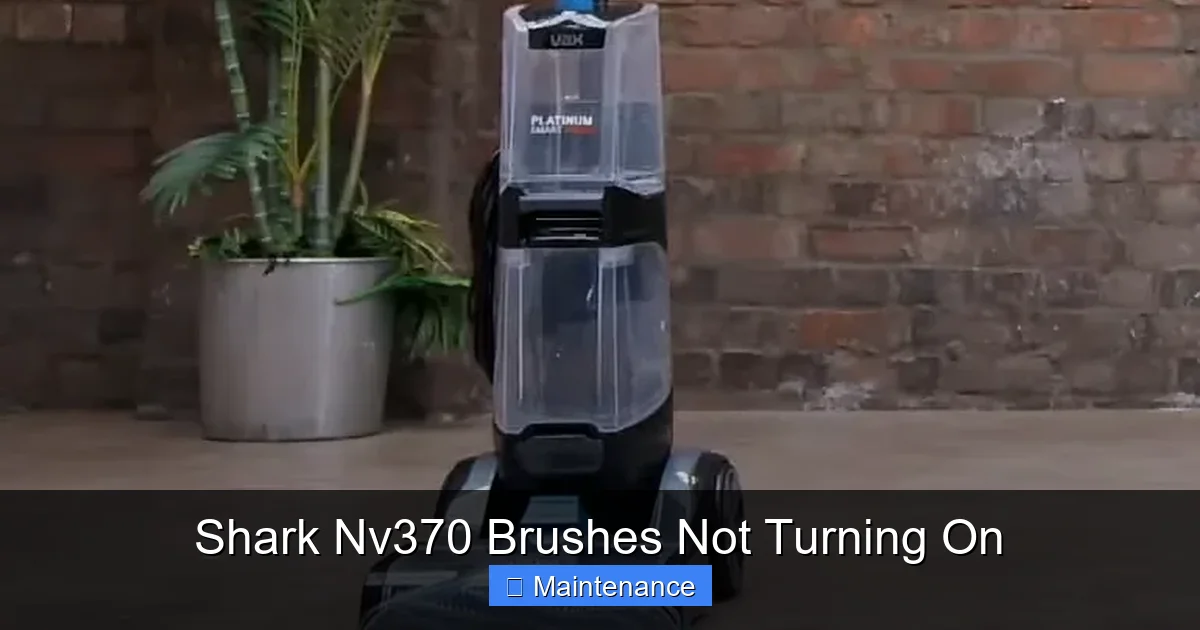
Before you take anything apart, the very first step in troubleshooting “Shark Nv370 brushes not turning on” is to confirm the vacuum is actually receiving and delivering power to the brush roll circuit. It’s easy to overlook the basics when you’re in a hurry.
Visual guide about Shark Nv370 Brushes Not Turning On
Image source: appliancehunter.co.uk
Is the Brush Roll Switch On?
The Shark Nv370, like many uprights, has a dedicated switch to engage or disengage the brush roll. This is usually a button or rocker switch located near the power button on the handle or the main body. Its purpose is to turn off the brush for cleaning hard floors or delicate rugs to prevent scattering debris. This is the most common user error.
- Action: Locate the brush roll on/off switch. It often has a brush icon. Press it firmly to ensure it’s in the “on” position. You should hear or feel a click.
- Tip: Sometimes, debris or liquid spillage can gunk up this switch, preventing it from making proper contact. Turn the vacuum off, unplug it, and gently clean around the switch with a cotton swab dipped in a little isopropyl alcohol.
Corded vs. Cordless: Different Power Sources
The troubleshooting path diverges slightly based on your Nv370 model.
- For Corded Models (Nv370, Nv370A, etc.): Ensure the power cord is fully plugged into a working wall outlet. Test the outlet with another device like a lamp. Check the entire cord for cuts, frays, or damage. A broken wire inside the cord’s sheath can interrupt power flow.
- For Cordless Models (Nv370W, Nv370B, etc.): The battery is key. A deeply discharged battery might power the vacuum motor but lack the surge amperage needed to start the brush roll motor. Fully charge the battery for at least 3-4 hours, even if the indicator says it’s full. If the battery is more than 2-3 years old, its capacity may be degraded, and it may need replacement.
Main Power Switch and Safety Interlock
The main power switch activates the entire vacuum. It’s a wear item. If it feels loose or unresponsive, it may not be completing the circuit. Additionally, many Shark uprights have a safety interlock switch that must be depressed when the handle is in the upright (parked) position. If this switch is jammed or broken, it can prevent the vacuum—or just the brush roll—from operating when you recline the handle to clean.
- Action: While the vacuum is unplugged or the battery removed, press the main power button several times to see if it feels sticky. Listen for a distinct click. Recline and upright the handle several times to hear/feel the interlock switch engage.
2. The Usual Suspect: Brush Roll Obstructions
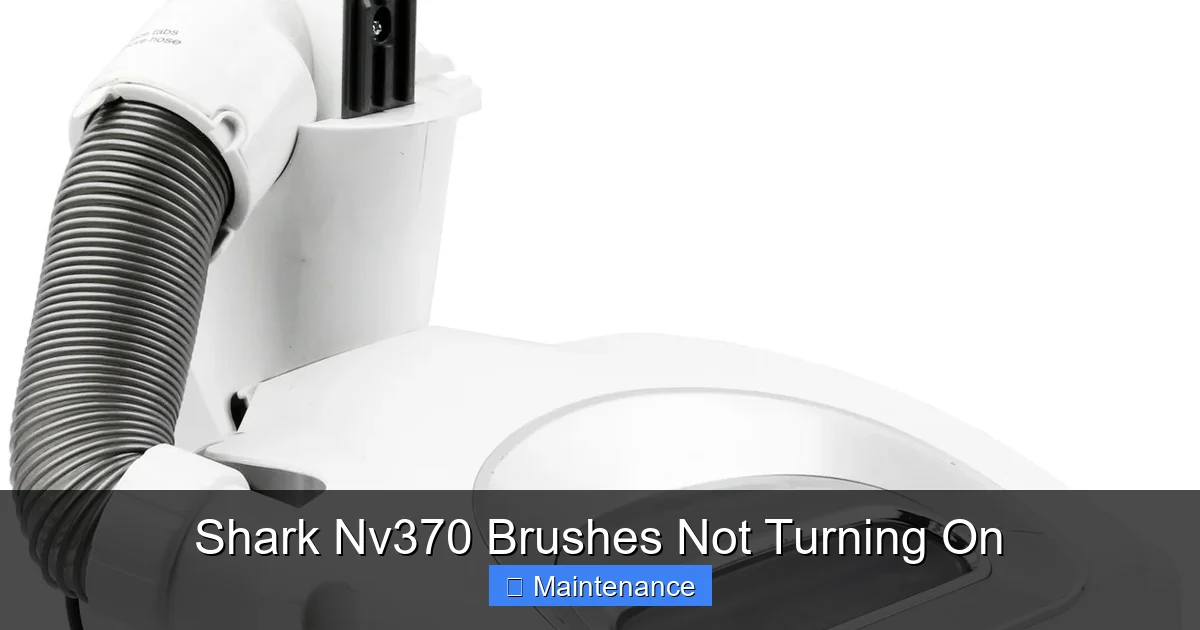
If power checks out, the next most frequent cause of “Shark Nv370 brushes not turning on” is a physically jammed brush roll. Long hair, carpet fibers, string, or even a small piece of clothing can wrap tightly around the brush roll bearings or get caught in the end caps, creating so much resistance that the motor can’t turn it. The motor may even have a built-in safety clutch that disengages to prevent burnout.
Visual guide about Shark Nv370 Brushes Not Turning On
Image source: cdn11.bigcommerce.com
How to Safely Inspect and Clean the Brush Roll
This is the most critical maintenance task for any vacuum with a rotating brush.
- Unplug & Invert: For corded models, unplug the vacuum. Lay the vacuum flat on its back so you can see the brush roll housing from below.
- Remove the Bottom Plate: The brush roll housing is covered by a plastic bottom plate. It’s usually held by 4-6 screws (often Torx/star bits) or a few clips. Have your screwdriver ready. Lay the screws aside carefully.
- Extract the Brush Roll: Once the plate is off, you’ll see the brush roll. It’s typically held in place by two plastic end caps. Gently pull the brush roll straight out. Note its orientation so you can reinstall it correctly.
- The Cleaning Process: This is where you do the work. Use a seam ripper, a pair of scissors, or a dedicated brush cleaning tool. Never use a razor blade directly on the brush bristles. Carefully cut and pull away all wrapped hair and debris from the bristles and the metal axle. Pay special attention to the area where the bristles meet the end caps—this is a common jam spot. Clean out the housing itself; a lot of debris collects there.
- Lubricate Bearings (Optional but Helpful): Once clean, place a drop of light machine oil (like 3-in-One oil) on each bearing (the plastic piece at each end of the brush roll that spins inside the housing). Wipe away excess.
Reassembly: Slide the clean brush roll back into the housing, ensuring the notches on the end caps align with the motor drive shaft and the idler wheel/pulley. Replace the bottom plate and screws securely. Test the vacuum.
Inspect the Drive Belt (If Applicable)
Some Shark Nv370 models use a small rubber belt to transfer power from the motor to the brush roll. While many newer models have a direct-drive system (the motor shaft connects directly to the brush roll), it’s worth checking your specific model’s manual.
- What to Look For: If there’s a belt, it may have snapped, stretched too much, or jumped off its pulleys. A broken, glazed, or missing belt means no power transfer.
- Action: With the bottom plate off, locate the belt. If it’s broken, you’ll need a replacement part (search for “Shark [Your Model] drive belt”). If it’s just slipped, you can stretch it back over the motor shaft and brush roll pulleys. Check belt tension; it should have a slight give but not be loose.
3. Battery and Charging Problems (Cordless Models)
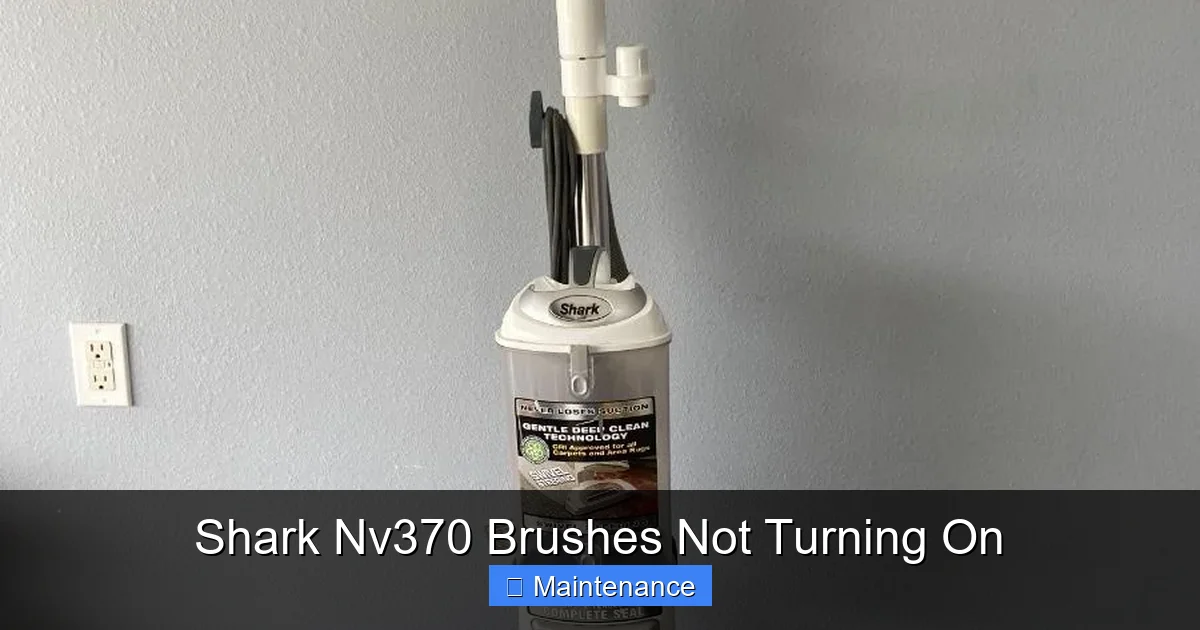
For cordless Shark Nv370 variants (like the Nv370W), the “Shark Nv370 brushes not turning on” issue is disproportionately linked to the battery. The brush roll motor requires a significant burst of power (high torque) to start spinning against carpet resistance. A weak or failing battery might run the suction fan (which has a lower startup current) but fail to spin the brush.
Visual guide about Shark Nv370 Brushes Not Turning On
Image source: d3au0sjxgpdyfv.cloudfront.net
Diagnosing Battery Health
- Charge Cycle: Completely drain the battery by running the vacuum until it shuts off. Then, charge it uninterrupted for a full 4+ hours using the original charger. Test again. This can recalibrate the battery management system.
- Age and Cycle Count: Lithium-ion batteries degrade. If your vacuum is over 3 years old and used frequently, the battery cells have likely lost significant capacity. A battery that only lasts 10 minutes on a charge is a strong indicator.
- Physical Inspection: Remove the battery (usually a button or latch on the back). Look for any swelling, deformation, or discoloration on the battery pack. If you see swelling, stop using it immediately and dispose of it properly at a battery recycling center. Do not charge it.
- Try a Known-Good Battery: If possible, borrow or purchase a compatible, fully-charged Shark battery to test. If the brush roll works with the new battery, your original is faulty.
Charger and Port Issues
- Charger Test: Use your charger on another compatible Shark cordless tool (if you have one) to see if it charges that battery. Conversely, try charging your Nv370 battery with a known-good charger.
- Clean the Contacts: Dirty or oxidised charging contacts on both the battery and the vacuum’s charging port can prevent a full charge. Power off the vacuum, remove the battery, and clean the metal contacts on both the battery and the vacuum with a dry pencil eraser or a cotton swab with a tiny bit of isopropyl alcohol. Let dry completely.
4. Internal Component Failures: Fuses, Motors, and Switches
When you’ve ruled out power source issues, obstructions, and battery problems, the fault likely lies within the vacuum’s internal components. These require more hands-on investigation.
The Thermal Fuse Reset
This is a crucial safety feature. If the brush roll motor overheats—often due to a prolonged jam or severely clogged filters restricting airflow—a thermal fuse will blow (or a thermal switch will trip) to cut power and prevent a fire. On many Shark models, this fuse is resettable.
- Location: Consult your user manual. On many Nv370 models, the thermal fuse is located inside the handle, near the brush roll switch, or on the motor housing inside the main body. You’ll need to remove several screws to access the handle or motor cover.
- What it Looks Like: It’s a small, usually white or black, rectangular or cylindrical component with two wires attached. It may have a tiny reset button on top.
- Action: Once located, press the reset button firmly until it clicks. If there’s no button, the fuse is likely one-time use and must be replaced (you’ll need the part number from the manual or Shark parts website). Important: You must fix the underlying cause of the overheating (the jam or clog) before resetting, or the fuse will blow again immediately.
Worn or Faulty Brush Roll Switch
The switch you press to turn the brush on/off is a mechanical component with moving contacts. Over time, these contacts can wear out, get pitted, or become coated with grime, preventing a complete circuit.
- Diagnosis: This requires opening the handle or switch housing. With the vacuum unplugged/battery removed, you can use a multimeter set to continuity to test the switch. With the switch in the “on” position, the meter should beep, indicating a closed circuit. No beep means a bad switch.
- Replacement: If faulty, you’ll need to source the exact switch part for your Nv370 model. Replacing it involves desoldering or unclipping the old switch and installing the new one. If you’re not comfortable with electronics soldering, this is a job for a professional.
Motor Failure
The brush roll motor itself can burn out. This is less common but possible, especially if the vacuum was used with a severely jammed brush roll for an extended period, causing the motor to overheat and fail.
- Symptoms: A burnt smell from the vacuum, a motor that hums but doesn’t turn (indicating a seized rotor or broken brushes), or complete silence when the brush switch is on (with power verified elsewhere).
- Diagnosis: You can test the motor for continuity with a multimeter by disconnecting its wires and probing the terminals. No continuity means an open circuit (dead motor).
- Replacement: Replacing the brush roll motor is a significant repair. You must source the correct motor assembly for your specific Nv370 model number (found on the back plate). It involves disassembling the main body, removing the old motor, and installing the new one. This is typically the point where comparing the repair cost to the price of a new vacuum becomes necessary.
5. Wiring Harness and Connection Issues
Vibrations, bumps, and general wear can cause wires to fray, connectors to loosen, or solder joints to crack. This is particularly common in the hinge area of the handle where the electrical harness flexes every time you recline the vacuum.
Inspecting the Flexible Harness
- Location: The wiring runs from the main body, through the hollow metal handle, and into the brush roll housing. The most vulnerable spot is the loop of wire inside the handle where it bends.
- Action: Carefully remove the handle covers (usually screws at the top and bottom). Gently straighten the handle to open the access panel. Visually and physically inspect the wire bundle. Look for any places where the outer insulation is cracked, the copper wires are exposed, or the wires are pinched. Gently wiggle each wire connection to see if it’s loose.
- Repair: Small nicks in insulation can be repaired with heat shrink tubing or electrical tape. A broken wire must be carefully soldered back together and insulated. Loose connectors need to be re-seated. If the damage is extensive, a full harness replacement may be required.
6. Making the Decision: Repair or Replace?
After a thorough diagnosis, you’ll have a clear idea of the fault. Now comes the practical decision.
- Cost-Benefit Analysis: A new Shark Nv370 typically costs between $150-$250. If the repair involves a simple part like a switch, thermal fuse, or drive belt (<$30), DIY repair is highly cost-effective. If it requires a new brush roll motor ($70-$120+), you must weigh the part cost, your time, and the age of the entire vacuum. A 5-year-old vacuum with a dead motor might be at the end of its life.
- Warranty Check: Is your vacuum still under the limited Shark warranty (usually 1-5 years depending on model and registration)? If so, contact Shark first. Opening the vacuum yourself may void the warranty.
- Professional Repair: For complex issues like motor replacement or harness repair, or if you’re not comfortable with electronics, an appliance repair shop is the best route. Get an estimate. For older vacuums, the labor cost often exceeds the value.
- Recycling: If you decide to replace, please recycle your old vacuum responsibly. Many municipalities have e-waste drop-off points, and some retailers offer recycling programs.
Conclusion: Patience and Prevention Are Key
Dealing with a “Shark Nv370 brushes not turning on” situation is a rite of passage for owners of this hardworking machine. The vast majority of the time, the solution lies not in a failed motor, but in a simple oversight—a switched-off button—or a preventable maintenance issue—a jammed brush roll. By following this structured troubleshooting guide, you empower yourself to diagnose and fix the problem methodically, saving money and the frustration of a prematurely retired vacuum.
Remember, the best treatment is preventative. Make it a habit to check and clean the brush roll after every few uses, especially if you have pets or long hair. Clear out the dust cup and rinse the filters monthly. Keep an ear on your vacuum’s sound; a change in pitch often precedes a problem. With a little care, your Shark Nv370 can provide years of reliable, powerful cleaning, with a brush roll that spins strong and true.
Frequently Asked Questions
Why is my Shark Nv370 vacuum running but the brush roll isn’t spinning?
This is the classic symptom of a dedicated issue. The most common cause is that the separate brush roll on/off switch (often with a brush icon) is turned off. If the switch is on, the next most likely cause is a jammed brush roll wrapped with hair or debris.
How do I manually turn my Shark Nv370 brush roll to check for jams?
After unplugging the vacuum and laying it on its back, remove the bottom plate. You should be able to spin the brush roll freely by hand. If it’s stiff or won’t turn at all, it’s severely jammed. You must remove the brush roll and thoroughly cut away all entangled fibers and debris from the axle and bristles.
Can a clogged filter cause the brush roll to stop?
Yes, indirectly. Extremely clogged filters (pre-motor and post-motor) restrict airflow, causing the main vacuum motor to work harder and generate more heat. This can trigger the thermal fuse, which cuts power to both the suction motor and the brush roll motor as a safety measure. Always clean or replace filters as per the maintenance schedule.
Is there a reset button for the Shark Nv370 brush roll?
There isn’t a single “brush reset” button. However, the thermal fuse, which protects both the main motor and brush motor from overheating, often has a resettable button. It’s typically located inside the handle or near the motor. You must first fix the overheating cause (like a jam) before pressing this reset button.
My cordless Nv370 brush works for 2 minutes then stops. Why?
This strongly points to a battery issue. The brush roll motor requires more power to start than to maintain speed. A weak or aging battery may provide enough power for a short burst but then voltage drops too low to keep the brush motor running. Fully charge the battery, and if the problem persists, the battery likely needs replacement.
How much does it cost to fix a Shark Nv370 brush roll?
The cost varies wildly. A DIY fix for a jammed brush roll is free (just your time). Replacing a drive belt or brush roll switch might cost $15-$40 in parts. A new brush roll assembly is $30-$60. A new brush roll motor is $70-$120, plus labor if you hire someone. For an older vacuum, a motor replacement may not be cost-effective.