That whistling or squealing noise from your Shark Navigator isn’t just annoying—it’s a cry for help from your vacuum’s suction system. It almost always points to an air leak, typically from a clogged filter, a damaged hose or wand, or a poorly seated dust cup. The good news is that 90% of these issues are simple, user-fixable problems that require just a few minutes of inspection and cleaning. Addressing it immediately prevents motor strain and extends your vacuum’s life.
You’re in the middle of cleaning your living room, the Shark Navigator is humming along, and suddenly—whoosh—a sharp, whistling, or squealing noise cuts through the calm. It’s a sound that immediately puts you on edge. Your first thought might be, “Oh no, did I break it?” but take a breath. That distinctive whistle is one of the most common—and usually most fixable—issues with bagless vacuums like the Shark Navigator series. It’s your vacuum’s way of telling you there’s an air leak in its suction system. This comprehensive guide will walk you through exactly why your Shark Navigator is making whistling sounds, how to diagnose the problem like a pro, and step-by-step solutions to get your vacuum back to its quiet, powerful self.
We’ll break down the entire air pathway, from the floor to the motor, and highlight the weak points where air escapes. Whether you own a Navigator Lift-Away, a Swivel, or an earlier model, the principles are the same. This isn’t about complex repairs; it’s about methodical checking and simple maintenance that anyone can do. By the end, you’ll not only silence that whistle but also understand how to keep your Shark running optimally for years to come.
Key Takeaways
- The noise is an air leak: A whistling Shark Navigator indicates air is escaping where it shouldn’t, causing the motor to work harder and produce a high-pitched sound.
- Check the filter first: A clogged post-motor filter is the #1 culprit. A dirty filter restricts airflow, creating pressure and noise.
- Inspect the entire air path: Examine the hose, wand, connectors, and dust cup for cracks, disconnections, or blockages.
- Ensure all parts are seated correctly: A dust cup or hose that isn’t clicked into place is a common and easily fixed source of leaks.
- Clean or replace filters regularly: Proactive maintenance (cleaning pre-motor foam/felt filters monthly, replacing post-motor filter every 3-6 months) prevents this issue.
- A damaged hose or seal needs replacement: Small cracks in the hose or worn seals around connectors will require part replacement to fully resolve the whistle.
📑 Table of Contents
- Understanding the Science: Why Your Vacuum Whistles
- Diagnosis: Systematic Troubleshooting of the Air Path
- The Most Common Fixes: From 5-Minute Solutions to Part Replacements
- Preventative Maintenance: Keeping the Whistle Away for Good
- When DIY Isn’t Enough: Recognizing When to Seek Professional Help
- Building a Routine: Your Shark Navigator’s Maintenance Checklist
Understanding the Science: Why Your Vacuum Whistles
Before we start taking things apart, it helps to understand the basic physics at play. Your Shark Navigator is a suction machine. The motor fan spins rapidly, creating a low-pressure zone (negative pressure) inside the vacuum’s internal chamber. Atmospheric air then rushes in through the hose and nozzle to fill that void, carrying dirt and debris with it. This entire system is designed to be airtight. The whistle you hear is the sound of air being forced through a small, unintended opening—a tiny gap, a crack, or a severely restricted point. It’s the same principle as blowing across the top of a bottle to make a tone; the air vibrates as it passes through a narrow passage.
The Pressure Drop Point
The whistle typically occurs at the “pressure drop point”—the place in the airflow path where resistance is highest. This is most often a clogged filter, which is the primary barrier the air must pass through before reaching the motor. However, it can also be a kinked hose, a dust cup that isn’t sealed, or a hairline crack in the plastic housing. The key is to follow the air path backward from the motor (where the noise seems to originate) to the nozzle to find the restriction or leak.
Why It’s More Than Just Annoying
Ignoring the whistle is a bad idea. That high-pitched noise is a symptom of your vacuum’s motor struggling against abnormal resistance or air loss. This causes the motor to draw more current, run hotter, and wear out prematurely. Furthermore, a significant air leak means you’re losing suction power at the floor. You might notice it’s not picking up debris as well, even on a clean floor. Fixing the whistle restores both the quiet operation and the cleaning efficacy you paid for.
Diagnosis: Systematic Troubleshooting of the Air Path
Don’t just guess! A systematic, step-by-step approach will help you locate the problem in under five minutes. You’ll need a well-lit area and possibly a flashlight. The golden rule: always disconnect the vacuum from the wall outlet before inspecting or removing any parts.
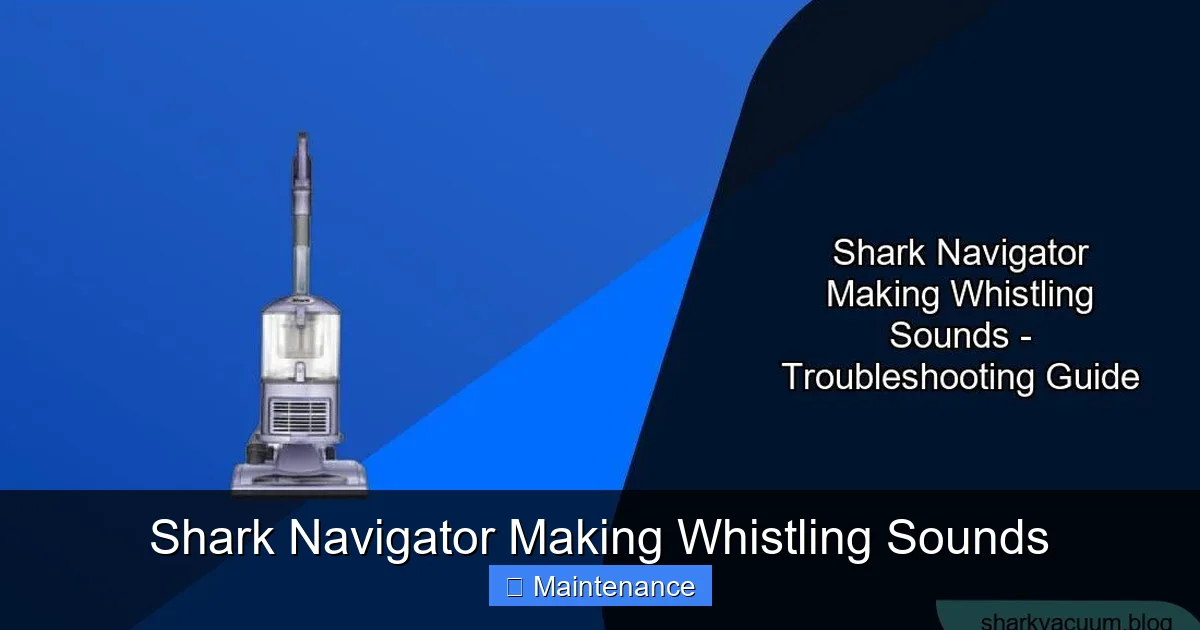
Visual guide about Shark Navigator Making Whistling Sounds
Image source: sharkvacuum.blog
Step 1: The Pre-Motor Filter (Your Prime Suspect)
This is the most frequent cause. The Shark Navigator typically has two filters: a foam or felt pre-motor filter (washable) and a pleated post-motor filter (often non-washable, replacement type). The pre-motor filter protects the motor from fine dust. If it’s clogged with a thick layer of dirt, it creates massive resistance.
- Action: Remove the dust cup. Locate the filter housing—it’s usually a rectangular or circular compartment accessible from the top or rear of the vacuum body.
- Check: Pull out the foam/felt filter. If it’s dark gray, stiff, and caked with dust, it’s the problem. Hold it up to the light; if little light passes through, it’s blocked.
- Fix: Rinse it under lukewarm water until the water runs clear. Gently squeeze out excess water—do not wring. Allow it to air-dry completely for at least 24 hours before reinserting. Never operate the vacuum with a wet or missing pre-motor filter.
Step 2: The Post-Motor Filter
This filter cleans the air exhausted back into your room. A clogged post-motor filter also creates a serious bottleneck. It’s less common than the pre-motor filter being dirty, but it’s a strong #2 suspect.
- Action: This filter is usually located behind a grille or access panel on the back or bottom of the vacuum body. Consult your manual for exact location.
- Check: Remove it. If it’s a pleated paper or fabric filter and it’s visibly gray and dense, it needs replacement. These are not washable.
- Fix: Replace it with a new Shark-approved filter (part number is in your manual). Using a non-OEM filter of poor quality can also cause airflow issues.
Step 3: The Dust Cup and Seals
If the filters are clean, the leak is likely in the collection system. The dust cup must be perfectly sealed to the vacuum body.
- Action: Empty the dust cup completely. Remove it from the vacuum by pressing the release button.
- Inspect: Look at the rubber seals or gaskets on both the dust cup and the vacuum body where they connect. Are they cracked, brittle, torn, or missing? Are they covered in a layer of fine dust that might break the seal? Check the hinge mechanism if it’s a lift-away model; is it bent?
- Fix: Clean the seals thoroughly with a damp cloth. Ensure they are pliable and intact. If a seal is damaged, you must order a replacement seal kit (often sold as “dust cup seal” or “lid gasket”). Re-seat the dust cup firmly until you hear/feel a distinct click, ensuring it’s locked on all sides.
Step 4: The Hose, Wand, and Connectors
Now, follow the air path out. A crack in the flexible hose or a disconnected wand is a classic source of whistling.
- Action: Detach the hose from both the vacuum body and the wand/wand attachment. Visually inspect the entire length of the hose. Flex it while looking for small splits, especially near the ends where it connects to plastic fittings. These cracks can be tiny and hard to see.
- Inspect Connectors: Check the plastic tabs on the hose ends and the corresponding sockets on the vacuum and wand. Are any tabs broken? This prevents a tight seal. Also, check the internal seals (O-rings) inside the connector sockets; are they present and in good shape?
- Fix: A cracked hose must be replaced. Shark hoses are often model-specific. For broken connector tabs or missing O-rings, replacement connector kits are available. Ensure every connection is pushed in firmly until it clicks or is fully seated.
Step 5: The Brush Roll Housing and Nozzle
The final section in the airflow path is the cleaning head itself. A blockage here can also cause stress and noise.
- Action: Flip the vacuum over. Remove any floor tool (hard floor head, carpet head). Look into the opening where the brush roll is.
- Check: Is there a mass of hair, string, or carpet fiber wrapped around the brush roll bearings or jammed in the housing? This restricts airflow. Also, check the small suction port that leads into the hose—is it blocked by debris?
- Fix: Use scissors or a seam ripper to carefully cut away any wrapped debris from the brush roll. Clear any obstructions from the housing and the suction port. Ensure the brush roll spins freely by hand.
The Most Common Fixes: From 5-Minute Solutions to Part Replacements
Based on the diagnosis, here’s how to execute the fix for each identified problem. We’ll start with the simplest, most likely solutions first.
Visual guide about Shark Navigator Making Whistling Sounds
Image source: allamericanroofpros.com
Deep Cleaning the Filters (The 10-Minute Miracle)
This solves 60% of whistling issues. Even if your filter doesn’t look dirty, a deep clean can help.
- Remove the pre-motor foam filter. Submerge it in a sink with cool water and a drop of mild dish soap.
- Gently agitate and squeeze the filter. You’ll see dirty water. Rinse, squeeze, rinse again until water is clear.
- For the post-motor filter, you can often gently tap it over a trash can to dislodge loose dust. Do not wash unless the manual explicitly states it’s washable.
- Pro Tip: While you have it out, use a vacuum’s crevice tool or a can of compressed air to blow out the filter housing itself. Dust accumulates there, too, and can re-contaminate a clean filter.
Reseating the Dust Cup and Checking Seals
Sometimes the fix is literally a firm push.
- Remove the dust cup. Look for the locking mechanism—usually two clips or a central latch. Release it fully.
- Inspect the sealing surfaces on both the cup and the vacuum body. Wipe them with a dry microfiber cloth to remove any film of dust that might prevent a seal.
- Align the dust cup and press it on firmly. You should feel and hear a solid “clunk” or click as the latches engage. Rock the cup gently; there should be no movement.
- If the whistle persists, the rubber seal is likely compromised. Order a replacement. Replacing it usually involves peeling off the old seal and pressing the new one into the groove.
Repairing or Replacing a Leaky Hose
A cracked hose is a definitive fix.
- If the crack is very small (<1/4 inch) and in a non-flexing area, a temporary fix is a small piece of high-quality duct tape applied smoothly both inside and out. This is a stopgap, not a permanent solution.
- The permanent fix is a new hose. To replace:
- Locate the release tabs on each end of the hose where it connects to the vacuum and wand.
- Press the tabs and pull the hose straight off.
- Take the old hose to a Shark dealer or use the model number (on the vacuum’s rating plate) to order the exact replacement online.
- Push the new hose ends firmly onto the connectors until they click.
Addressing Blockages in the Brush Roll Housing
A jammed brush roll can mimic an air leak by creating backpressure.
- Lay the vacuum on its side. Use a coin or screwdriver to release the brush roll cover (usually clips or a screw).
- Remove the brush roll. Cut away all hair and debris wrapped around it and its end caps.
- Look into the housing cavity. Use a long, thin tool (like a straightened wire coat hanger with a hook) to dislodge any debris stuck in the corners or in the suction port that leads to the hose.
- Reassemble, ensuring the brush roll spins freely and the cover is securely fastened.
Preventative Maintenance: Keeping the Whistle Away for Good
An ounce of prevention is worth a pound of cure. A regular maintenance routine is the absolute best way to avoid the whistling problem and keep your Shark Navigator performing like new.
Visual guide about Shark Navigator Making Whistling Sounds
Image source: airmechanicservices.com
Create a Maintenance Calendar
Mark these tasks on your calendar or phone reminders:
- After Every 2-3 Uses: Empty the dust cup. Tap out the pre-motor foam filter (if accessible) over a trash can to dislodge loose dust.
- Monthly: Remove the pre-motor filter and give it a full rinse and air-dry. Visually inspect the hose for any new signs of wear or kinking. Wipe down the exterior and check the brush roll for wrapped hair.
- Every 3-6 Months: Replace the post-motor filter. This is non-negotiable for sustained suction and motor health. Do a full inspection of all seals and connectors.
- Yearly: Do a deep clean of the entire vacuum. Disassemble the wand and hose, wash with mild soapy water (check manual first), and let dry completely. Check the brush roll bearings for wear; if it’s noisy or doesn’t spin smoothly, replace the brush roll.
Smart Usage Habits to Prevent Damage
- Avoid Large, Sharp Objects: Picking up staples, pins, or small toys can damage internal components or the hose liner.
- Don’t Vacuum Wet Debris: Unless you have a specific wet/dry model, moisture will clog filters, damage the motor, and cause mildew.
- Store Properly: Don’t kink the hose when storing. Use the onboard storage clips if available. Store the vacuum in a cool, dry place.
- Use the Correct Tools: For above-floor cleaning, use the crevice tool or dusting brush, not the main floor nozzle, which is designed for optimal airflow on carpets/hard floors.
When DIY Isn’t Enough: Recognizing When to Seek Professional Help
You’ve checked and cleaned everything: filters are pristine, the dust cup seats perfectly, the hose is new, and the brush roll is clear… but the whistle persists. Now what? This indicates a more internal issue.
Internal Air Leaks or Motor Issues
The leak could be from a cracked internal plastic housing, a failed internal hose connecting to the motor fan, or a gasket inside the motor chamber. These parts are not designed for user service. Similarly, if the motor fan itself is chipped, unbalanced, or failing, it can create unusual noises that might sound like a whistle or squeal. Diagnosing and repairing these requires disassembly beyond the user-accessible panels, which is not recommended and may void your warranty.
Warranty and Authorized Service
If your Shark Navigator is still under the limited warranty (typically 5-7 years for the motor, 1 year for parts), this is your best path.
- Step 1: Locate your purchase receipt and the serial number on your vacuum (usually on the back or bottom rating plate).
- Step 2: Visit the official Shark-Ninja website and navigate to the “Customer Support” or “Warranty” section.
- Step 3: Enter your model and serial number to check warranty status. They will provide instructions, which usually involve calling a toll-free number or filling out an online claim form.
- Step 4: They may ship you a replacement part (like a motor) or, more commonly for complex issues, provide a prepaid shipping label to send the entire vacuum to an authorized service center. Do not attempt to open the main motor housing yourself if under warranty.
Building a Routine: Your Shark Navigator’s Maintenance Checklist
Let’s synthesize everything into a simple, actionable checklist you can print or save. The goal is to make maintenance automatic, so the whistling never happens.
- Weekly: Empty dust cup after each use. Tap out pre-motor filter.
- Monthly:
- Rinse and fully dry pre-motor foam filter.
- Inspect hose for cracks, kinks, and clogs. Check wand connections.
- Check brush roll for hair wrap; clean if needed.
- Wipe exterior and nozzle with a damp cloth.
- Every 3 Months:
- Replace post-motor filter with a genuine Shark part.
- Thoroughly inspect dust cup seals for cracks or wear.
- Check all connector tabs and internal O-rings.
- Twice a Year:
- Wash hose and wand (if manual approves) and air-dry completely.
- Deep clean brush roll housing and suction port.
- Annually:
- Review your entire vacuum for any developing wear points.
- Consider a professional cleaning if you have severe allergy concerns or heavy use.
Following this routine transforms your Shark Navigator from a machine that occasionally needs fixing into a reliable tool that quietly delivers powerful suction every single time. The whistling sound is a valuable feedback mechanism—listen to it, diagnose it, and fix it, and your vacuum will reward you with years of faithful service.
Frequently Asked Questions
Is it safe to use my Shark Navigator while it’s making a whistling sound?
No, it’s not recommended. The whistle indicates an air leak or severe clog, which causes the motor to strain and overheat. Continuing to use it can lead to premature motor failure or even a fire hazard. Turn it off and diagnose the issue immediately.
Can I just ignore the whistle if my vacuum still seems to pick up dirt?
You shouldn’t. Even if pickup seems okay, the motor is working harder than designed, shortening its lifespan. The reduced suction at the nozzle is likely already happening, you just may not notice it on a lightly soiled floor. The problem will worsen over time.
How often should I really be cleaning or replacing my Shark Navigator filters?
The washable pre-motor foam filter should be rinsed monthly with heavy use. The post-motor pleated filter must be replaced every 3-6 months, regardless of appearance, as its fibers degrade and lose efficiency. Never wash a non-washable filter.
My filters are clean and the hose looks fine, but the whistle is still there. What’s left?
You must meticulously check every seal: the dust cup gasket, the seals inside the hose connectors, and the seal where the hose meets the vacuum body. A tiny, torn piece of rubber is all it takes. Also, ensure the dust cup is locked with an audible click.
Can a clogged brush roll cause a whistling sound?
Indirectly, yes. A brush roll completely jammed with hair and debris creates a massive blockage in the nozzle, which increases resistance in the entire airflow path and can manifest as a whistle from the motor/filter area. Always clear the brush roll housing.
Will Shark cover this under warranty if I need a new part?
Warranty coverage depends on the cause. If the whistle is due to normal wear and tear on seals or filters (consumables), it’s typically not covered after the first year. If it’s due to a defective internal component or housing crack, it may be covered during the warranty period. Contact Shark-Ninja support with your serial number to confirm.