Keeping your Shark handheld steamer working like new means knowing which replacement parts to use and when. Genuine Shark replacement parts—from cleaning brushes to hose seals—are engineered for a perfect fit and safe operation. Using the correct part ensures your steamer maintains its powerful steam output and efficiency, protecting your investment and your home’s surfaces. Always source parts from authorized Shark dealers to avoid damage and voided warranties.
That trusty Shark handheld steamer in your cleaning closet is a powerhouse. It blasts away grime from kitchen counters, refreshes upholstery, and sanitizes bathroom tiles with ease. But like any hardworking tool, it experiences wear and tear. The soft-bristled brush gets frayed, the hose might develop a tiny leak, and mineral deposits can clog the nozzle. When this happens, your first instinct might be to search for Shark handheld steamer replacement parts. But where do you start? What part do you actually need? And is it safe to use a generic version? This guide will walk you through everything you need to know about maintaining and repairing your Shark steamer with the correct parts, ensuring it serves you faithfully for years to come.
Key Takeaways
- Genuine Parts Are Critical: Always choose Shark-branded replacement parts. Generic parts can fit poorly, damage internal components, and void your warranty.
- Common Wear Items: The most frequently replaced parts are the cleaning brush head, hose and hose seals, water tank cap, and the steam nozzle/face plate.
- Know Your Model Number: Your steamer’s exact model number (e.g., S100, S200 series) is the key to finding 100% compatible parts. It’s on the rating label.
- Easy DIY Replacements: Most common part swaps, like a brush or hose, are simple screw or clip-on tasks requiring no tools or just a basic screwdriver.
- Preventative Maintenance: Regularly descaling your steamer and inspecting seals/hoses for cracks prevents clogs and extends time between part replacements.
- Buy from Authorized Sources: Purchase directly from Shark’s website, their official Amazon store, or certified retailers like Bed Bath & Beyond to guarantee authenticity.
📑 Table of Contents
- Understanding Your Shark Handheld Steamer: A Primer
- The Most Common Shark Handheld Steamer Replacement Parts
- How to Identify the Correct Replacement Part for Your Model
- Where to Buy Genuine Shark Handheld Steamer Replacement Parts
- Installation and Maintenance: Doing It Right
- Maximizing Your Steamer’s Lifespan: Beyond Replacement Parts
- Conclusion: A Smart Investment in Clean
Understanding Your Shark Handheld Steamer: A Primer
Before we dive into specific parts, it helps to understand how your Shark steamer works. These devices heat water to over 200°F to produce dry steam. This steam loosens dirt and kills bacteria without chemicals. The system is relatively simple: a water tank, a heating element, a hose, and a cleaning head with a nozzle. Each component is designed for precise pressure and steam flow. When one part fails—a seal cracks, a brush wears out—it can compromise the entire system’s performance and safety. That’s why using the exact Shark handheld steamer replacement parts designed for your specific model is non-negotiable. Shark engineers these parts to match the original tolerances and materials.
Why Genuine Shark Parts Are Your Only Safe Bet
You might see cheaper, “universal” handheld steamer parts online. Resist the urge. Here’s why genuine Shark parts are worth the small premium:
- Perfect Fit & Function: Shark parts are molded to the exact specifications of your model. A brush head that isn’t an exact match can wobble, reducing cleaning efficacy and potentially scratching surfaces. A non-OEM hose seal will likely leak, causing water damage and loss of steam pressure.
- Material Safety: Shark uses heat-resistant, food-safe plastics and durable rubber seals. Generic parts may use inferior materials that melt, warp, or degrade when exposed to constant high-temperature steam, releasing odors or chemicals.
- Warranty Protection: Using non-genuine parts almost always voids your Shark warranty. If your steamer fails and an technician finds a generic part, you’ll be on the hook for the full repair cost.
- Long-Term Value: A genuine part costs a little more upfront but protects your entire $50-$100 appliance from premature failure, saving you money in the long run.
The Most Common Shark Handheld Steamer Replacement Parts
Not all parts wear out at the same rate. Some are consumables, while others are designed to last the life of the appliance. Here’s a breakdown of the Shark handheld steamer replacement parts you’re most likely to need.

Visual guide about Shark Handheld Steamer Replacement Parts
Image source: images-na.ssl-images-amazon.com
1. Cleaning Brush Heads
The brush head is the workhorse. It’s in constant contact with dirty surfaces. Over time, the bristles—whether nylon for delicate surfaces or brass for tougher grime—become frayed, splayed, or fall out. A worn brush is ineffective and can even scratch if the plastic base is exposed.
How to Know It Needs Replacing: Look for bent or missing bristles. If the brush feels less “grippy” on surfaces or you notice it’s not lifting dirt as before, it’s time. Shark sells different brush types (microfiber pad, scrub pad, brass bristle) for different tasks. Identify yours by shape and attachment method (usually a simple push-and-twist or clip).
2. Hoses and Hose Seals
The hose carries steam from the tank to the brush head. It’s flexible but can kink, crack, or develop pinhole leaks from repeated heating/cooling cycles and storage bends. The small rubber seals inside the hose connectors are also common failure points, leading to steam escaping at the joints instead of the nozzle.
How to Know It Needs Replacing: You’ll feel a significant drop in steam pressure and output. You may see steam hissing from the middle of the hose or at the connection points. Visually inspect for cracks, splits, or hardening of the rubber. A kinked hose that won’t straighten also restricts flow.
3. Water Tank Cap and Gasket
The tank cap has a built-in gasket that creates a seal. This gasket can dry out, crack, or get misaligned, causing the tank to not hold pressure properly. You’ll notice water leaking from the cap when filling or the steamer failing to build steam.
How to Know It Needs Replacing: Difficulty screwing the cap on evenly, water dripping during filling, or steam leaking from the cap during use are all signs. The cap itself can also crack.
4. Steam Nozzle / Face Plate
The final nozzle face can get clogged with mineral deposits (especially if you don’t use distilled water) or become physically damaged from impacts. A clogged nozzle reduces steam output to a dribble. A cracked face plate is unsafe and ineffective.
How to Know It Needs Replacing: If descaling (using vinegar/water solution) doesn’t restore full steam flow, the nozzle holes may be permanently blocked. Cracks or warping from heat are obvious visual signs.
5. Internal Components (Less Common)
Parts like the heating element, pressure valve, or internal hose are less likely to fail but can. These are more complex repairs. Often, if an internal component fails on an older unit, replacement cost may approach the price of a new steamer. Always check your warranty first.
How to Identify the Correct Replacement Part for Your Model
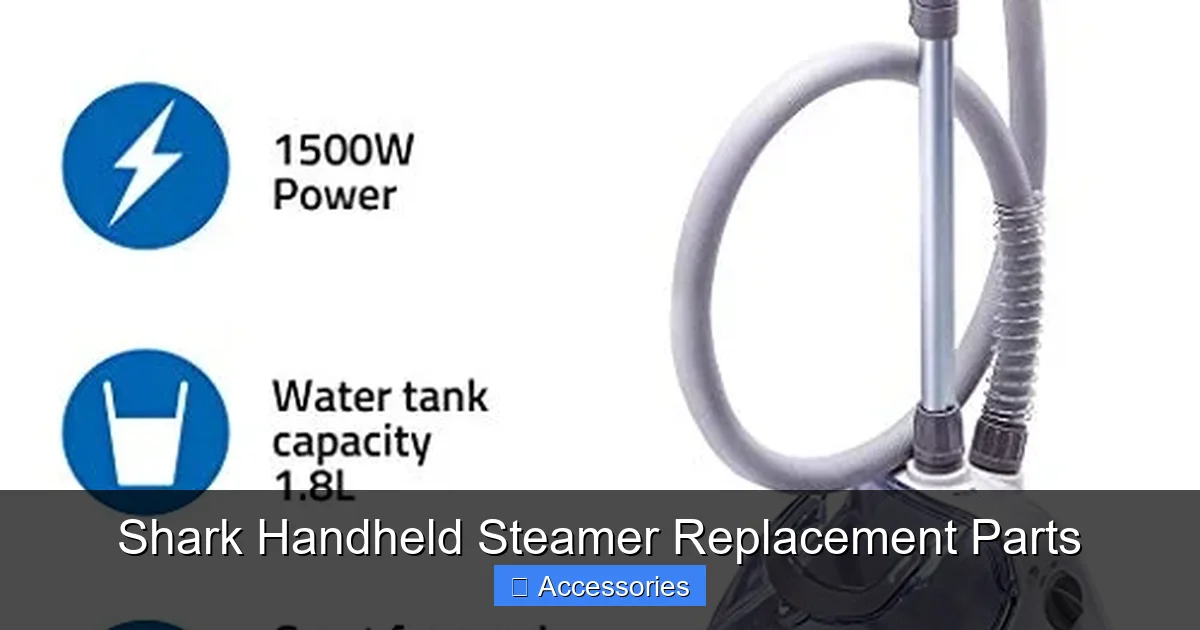
This is the most crucial step. Shark has made many handheld steamer models over the years (S100, S200, S300 series, Pro models, etc.). Parts are not universal across the lineup.
Visual guide about Shark Handheld Steamer Replacement Parts
Image source: images-na.ssl-images-amazon.com
Step 1: Locate Your Model Number
Find the rating label. It’s usually on the bottom of the water tank, on the back of the motor housing, or on a sticker near the power cord. The model number is a combination of letters and numbers (e.g., “S100,” “S200UK,” “S3501”). Write it down exactly.
Step 2: Use Shark’s Official Resources
The best method is to go directly to the source:
- Shark Official Website: Navigate to the “Customer Support” or “Replacement Parts” section. There is often a parts lookup tool where you enter your model number. It will display an exploded diagram of your steamer with all available Shark handheld steamer replacement parts and their part numbers.
- Shark’s Official Amazon Store: If you search for your model number on Amazon and filter for “Shark” as the seller, you’ll often find genuine accessory kits and individual parts listed specifically for your model.
Step 3: Deciphering Part Numbers
Once you have the official part number from Shark’s diagram (e.g., “BRUSH-ASSY-S100” or “HOSE-S200”), use that exact number to search. This avoids confusion with similar-looking parts for other models. If a third-party seller lists a part, cross-reference this number. If they only describe it as “for Shark S series,” be cautious—it may not be an exact fit.
Where to Buy Genuine Shark Handheld Steamer Replacement Parts
You’ve identified the part number. Now, where do you buy it? Not all retailers carry the full range of small replacement parts.
Visual guide about Shark Handheld Steamer Replacement Parts
Image source: sharkvacuum.blog
1. Shark’s Official Website
This is the gold standard. You get 100% genuine parts, full customer support, and easy returns. The downside can be price and shipping time. They often sell individual parts and sometimes “maintenance kits” that bundle common wear items.
2. Authorized Major Retailers
Stores like Bed Bath & Beyond (online), Target, and Walmart sometimes carry Shark accessories in-store or online. Use their website search with your exact model number. Availability varies.
3. Authorized Online Marketplaces
Shark’s official storefronts on Amazon and eBay are reliable. These are operated by Shark or their authorized distributors. You’ll see “Ships from and Sold by SharkNinja” or similar on Amazon. This is a safe and often fast option.
Red Flags to Avoid
Be extremely wary of:
- Sellers on random websites or eBay with no clear affiliation.
- Listings that say “Fits Shark S100, S200, S300” without a specific Shark part number. This is a major red flag for generic parts.
- Prices that seem too good to be true. A genuine Shark brush head costs $8-$15. A $3 “compatible” brush is almost certainly generic.
- Listings with poor grammar, no brand logo, or stock photos that don’t match Shark’s official product images.
Installation and Maintenance: Doing It Right
Replacing a part is usually straightforward, but proper technique ensures it lasts.
General Installation Tips
Always unplug and cool your steamer completely before any maintenance. For brush heads and nozzles, they typically just pull or twist off. For hoses, you may need to press a release tab. Consult your user manual’s parts diagram for the exact attachment method. Don’t force parts. If it doesn’t slide or click easily, you might have the wrong part or be misaligned.
Essential Preventative Maintenance
You can reduce the frequency of needing Shark handheld steamer replacement parts with good habits:
- Always Use Distilled or Demineralized Water: This is the #1 rule. Tap water causes rapid mineral buildup (scale) inside the tank, hose, and nozzle, leading to clogs and corrosion. It’s the fastest way to kill your steamer.
- Flush After Every Use: After each cleaning session, empty any remaining water from the tank. Leave the cap off and the steamer upright to air dry completely. This prevents mold and mineral settling.
- Regular Descaling: Even with distilled water, do a monthly descaling cycle. Fill the tank with a 1:1 solution of white vinegar and water. Run the steamer until half the solution is steamed out, then let it sit for 30 minutes. Finish steaming the rest, then rinse thoroughly with fresh distilled water 2-3 times.
- Inspect Seals and Hoses: Every few months, check the tank cap gasket and hose ends for cracks or stiffness. A quick visual check can catch a small leak before it ruins a cleaning session.
- Store Properly: Don’t store the steamer with the hose kinked or coiled tightly. Store it loosely coiled or straight. Keep it in a cool, dry place.
Maximizing Your Steamer’s Lifespan: Beyond Replacement Parts
Replacing worn parts is reactive. Proactive care maximizes your return on investment. Think of your Shark steamer as a precision tool.
Use It As Intended
Shark handheld steamers are designed for surface cleaning, not for large-area carpet extraction (that’s for canister steamers) or for use as a pressure washer. Using it on inappropriate surfaces (like unsealed wood, electronics, or delicate silk) can damage both the surface and the steamer if water penetrates. Always test on an inconspicuous area first.
Mind the Water Tank
Never overfill the tank. Fill to the “Max” line only. Overfilling can cause water to spit out the nozzle unsteamed. Never operate the steamer without water—this will destroy the heating element instantly. The unit has an automatic shut-off, but relying on it is risky.
Brush Selection is Key
Using the wrong brush for the job causes premature wear. Use the soft microfiber pad for glass, stainless steel, and sealed stone. Use the scrub pad for baked-on stove top grime. Use the brass bristle brush *only* for tough, non-porous surfaces like grill grates or Weber kettle bowls. Using brass on a delicate countertop will scratch it and wear the bristles down faster.
When to Consider a New Steamer
If your Shark steamer is more than 5-7 years old and requires multiple Shark handheld steamer replacement parts (especially internal ones), it might be more cost-effective to purchase a new model. Newer models often have improved heating elements, better ergonomics, and more efficient steam output. Weigh the cost of 2-3 part replacements against the price of a new entry-level Shark handheld steamer.
Conclusion: A Smart Investment in Clean
Your Shark handheld steamer is a versatile, chemical-free cleaning ally. When it starts to lose its steam or its brush wears thin, don’t toss it. With a little knowledge, you can perform simple repairs using genuine Shark handheld steamer replacement parts. The process is empowering: identify your model, source the exact part from an authorized dealer, and swap it in minutes. This approach saves money, reduces waste, and keeps a reliable tool in your home for another decade. Remember, the key is always to use genuine Shark components and pair part replacement with diligent maintenance—primarily, the religious use of distilled water. By treating your steamer right, you ensure it remains a powerful, efficient, and safe weapon in your battle against dirt and germs for the long haul.
Frequently Asked Questions
Can I use generic replacement parts in my Shark steamer?
We strongly advise against it. Generic parts are not engineered to Shark’s exact specifications. They can fit poorly, leak, overheat, or damage internal components, and their use will void your warranty. Always opt for genuine Shark parts for safety and performance.
How do I find my Shark handheld steamer’s model number?
The model number is on a silver rating label, typically located on the bottom of the water tank, on the back of the motor housing, or near the power cord entry point. It’s a code like “S100,” “S200,” or “S3501.” This number is essential for ordering correct parts.
Is it difficult to replace the hose or brush head myself?
For the most common wear items—brush heads, hoses, and nozzles—replacement is very simple and requires no tools or just a basic screwdriver. Parts usually click or twist off. Your user manual’s parts diagram will show the exact attachment method. Internal repairs are more complex.
Why is my steamer losing pressure even after replacing the brush?
A loss of steam pressure is most often caused by a leak. Check the hose for cracks or kinks, and inspect the seals at both ends where the hose connects to the tank and the brush head. Also, a severely clogged nozzle from mineral buildup can restrict flow. Try descaling first.
Where is the safest place to buy genuine Shark parts?
The safest sources are Shark’s official website, their authorized storefront on Amazon (look for “Ships from and Sold by SharkNinja”), and major authorized retailers like Bed Bath & Beyond. These sources guarantee authenticity and warranty support.
My steamer is sputtering and spitting water. Is a part broken?
Not necessarily. This is often a sign of mineral scale clogging the nozzle or internal passages. First, perform a thorough descaling using a 1:1 white vinegar and water solution. If the problem persists after descaling and rinsing, then inspect and likely replace the steam nozzle/face plate.