A non-spinning brush roll on your Shark Duoclean vacuum is almost always due to a simple blockage or wear issue, not a major failure. The most frequent culprit is hair, string, or carpet fiber wrapped tightly around the brush roll or its bearings, creating enough drag to stop it. Other common causes include a broken or slipping drive belt, a tripped motor overload protector, or a worn-out brush roll bearing. Before panicking or calling for service, a systematic inspection and cleaning of the brush roll assembly, belt, and airway paths will solve the problem 90% of the time.
Key Takeaways
- Hair Wrap is Public Enemy #1: Human and pet hair is the leading cause of a stuck brush roll. It winds around the bearings and axles, creating immense friction that halts rotation.
- Always Check the Belt First: A broken, stretched, or dislodged drive belt is the second most common reason. The motor may run, but no power reaches the brush roll.
- The Reset Button is Your Friend: Shark vacuums have a thermal overload reset button on the motor housing. A jammed brush roll can trip this, cutting power to the brush motor. Resetting it is often step one.
- Debris Clogs are Sneaky: Small objects like paperclips, rubber bands, or large carpet tufts can lodge in the brush roll housing or the intake neck, jamming the brush roll completely.
- Bearings Wear Out: After years of use, the plastic bushings or bearings inside the brush roll end caps can wear down, causing the roll to seize. This requires a brush roll replacement.
- Motor Failure is Rare: It’s uncommon for the dedicated brush roll motor (in Duoclean models with separate motors) to fail independently. Issues are almost always upstream in the drive system.
- Prevention is Easier Than Repair: Regular hair removal and checking for debris after vacuuming high-shed areas can prevent 95% of “brush not spinning” incidents.
📑 Table of Contents
- Understanding Your Shark Duoclean’s Heart: The Brush Roll System
- Diagnosis 101: The Systematic “Why” Behind a Non-Spinning Brush
- The Most Common Culprit: Hair, String, and Fiber Wrap
- Belt, Pulley, and Pathway Problems: The Mechanical Check
- Electrical and Motor Issues: Less Common, But Possible
- Preventative Maintenance: Keep It Spinning for Years
- When to Seek Professional Help or Replace Parts
- Conclusion: Don’t Give Up on Your Duoclean
Understanding Your Shark Duoclean’s Heart: The Brush Roll System
Let’s start with the basics. Your Shark Duoclean vacuum, whether it’s a Navigator, Vertex, or Stratos model, relies on a brilliant two-brush system. The main brush roll (the large one with bristles) agitates carpet fibers to loosen dirt, while the secondary brush (the smaller, often rubber-fin one) helps with polishing and pickup on hard floors. When we say the “brush isn’t spinning,” we’re almost always talking about the primary bristled brush roll. This component is powered by a dedicated motor via a drive belt or, in some newer models, a direct gear drive. It’s a workhorse, and like any workhorse, it can get tired or tangled. The feeling of frustration when you hear the vacuum motor roaring but feel no carpet agitation is universal. But take a deep breath—this is one of the most common and fixable vacuum problems. The system is designed to be accessible for user maintenance, which is a huge plus.
Think of the brush roll as the engine of your vacuum’s carpet cleaning ability. Without its rotating bristles scrubbing deep into the pile, you’re just sucking air across the surface. The Shark Duoclean’s “Duoclean” promise—superior cleaning on both carpet and hard floor—relies entirely on that brush roll’s ability to spin freely and at the correct speed. When it stops, you lose that core functionality. The good news? The path from “not spinning” to “spinning like new” is usually a short, tool-free diagnostic journey. We’re going to walk through that journey together, step-by-step.
The Two-Brush System: Why the Main One Matters Most
It’s helpful to understand that the Duoclean name comes from having two distinct cleaning brushes. The main brush roll handles the heavy lifting on carpets. The secondary brush, often located right behind the main one, has softer rubber fins and is primarily for hard floors, helping to push debris toward the suction inlet. If your main brush isn’t spinning, you might still notice the secondary brush trying to turn if it’s powered separately (some models have one motor for both via a complex belt system, others have two). This distinction can help you diagnose: if *neither* brush spins, the issue is likely with a common power source or a major jam. If *only* the main bristled brush is dead, the problem is isolated to its specific drive belt, motor coupling, or the brush roll itself.
Diagnosis 101: The Systematic “Why” Behind a Non-Spinning Brush
Before you start taking things apart, you need to play detective. A methodical approach saves time and prevents you from disassembling parts that aren’t the problem. The key is to isolate the issue: is it a power problem, a mechanical jam, or a broken part? We’ll start with the simplest, most likely answers and work our way down.
Visual guide about Shark Duoclean Brush Not Spinning
Image source: sharkvacuum.blog
Symptom 1: The Vacuum Motor Runs, But No Agitation
This is the classic sign. You hear the loud whir of the suction motor, but the vacuum glides over the carpet without that telltale vibration and scrubbing sound. This immediately tells us that suction power is fine, but the brush roll system is not engaging. The fault lies between the main motor and the brush roll. The prime suspects here are: 1) A tripped thermal reset (the motor’s safety switch), 2) A broken or slipped drive belt, 3) A brush roll jammed solid with debris, or 4) A broken motor coupling (the plastic piece that connects the motor shaft to the belt).
Symptom 2: The Brush Roll Spins Slowly or Intermittently
If the brush roll turns but struggles, feels sluggish, or stops under slight pressure, the issue is usually friction-based. The motor is trying to turn it, but something is dragging it down. This is almost always caused by hair or debris wrapped around the brush roll’s bearings (the plastic caps on each end where the axle spins). A small amount of hair can act like a brake. Another possibility is a belt that has stretched and is slipping on the motor pulley or brush roll pulley, especially under load.
Symptom 3: A Burning Smell or Strange Noises
If you smell burning plastic or hear a high-pitched squeal/squeak when the brush roll is supposed to be on, stop immediately. This indicates the drive belt is likely slipping violently against a pulley due to extreme friction from a jam. The belt can overheat and melt. Alternatively, a seized bearing in the brush roll can make a grinding or screeching noise as the plastic grinds against metal. This is your sign to power off and investigate the jam before further damage occurs to the belt or motor.
The Most Common Culprit: Hair, String, and Fiber Wrap
I cannot emphasize this enough. If you have pets, long hair, or vacuum a lot of carpet, this is your #1 enemy. Hair doesn’t just sit on the brush roll; it migrates. It wraps around the axle inside the plastic end caps, binding the brush roll to the housing. It packs into the bearings, creating immense resistance. What starts as a few strands eventually becomes a solid, fibrous rope that can stop a spinning brush roll cold. This is the problem I fix for friends and family more than any other.
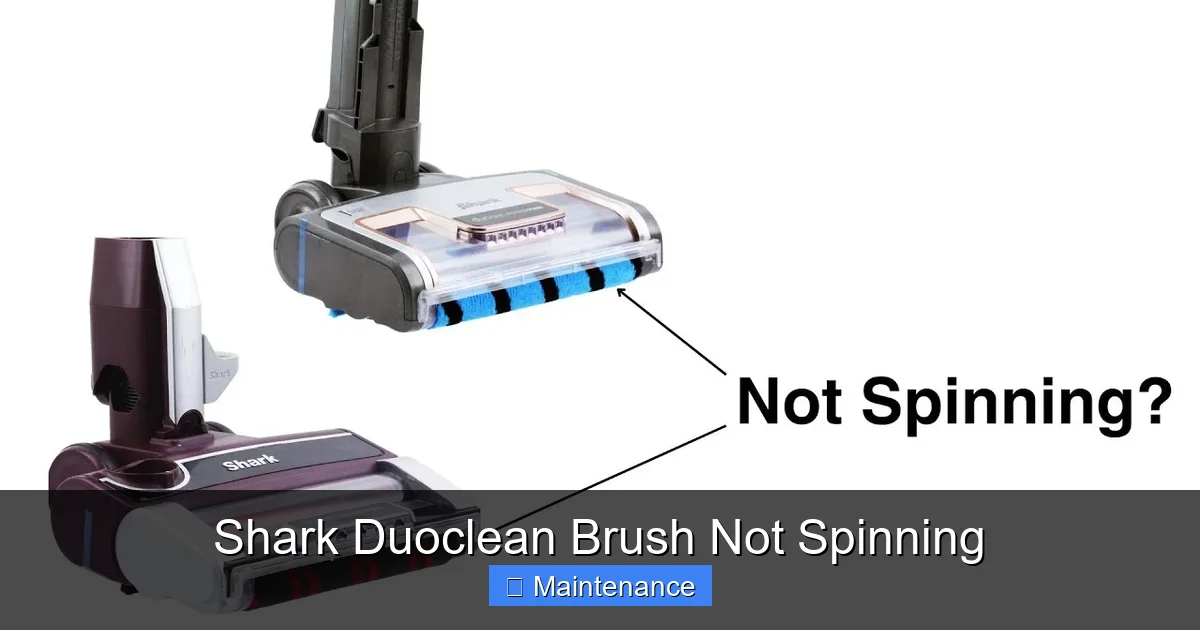
Visual guide about Shark Duoclean Brush Not Spinning
Image source: i.ytimg.com
How to Identify a Hair Wrap Jam
The first step is to flip your Shark Duoclean over and look at the brush roll. Use a flashlight. Do you see a thick mat of hair, carpet fiber, or string clinging to the bristles? That’s the obvious part. The real culprit is often hidden. You need to remove the brush roll to inspect it fully. Most Shark Duoclean models have a release lever or button on the top of the brush roll housing. Press it, and the entire brush roll assembly should drop down or slide out. Gently pull it free. Now, hold the brush roll by the plastic end caps and try to spin it with your fingers. Does it spin freely with a smooth whir? Or does it feel gritty, stiff, or stop after a quarter turn? If it’s stiff, you have a bearing jam.
The Surgical Hair Removal Process
Once you have the brush roll out, you need a small, blunt tool. A seam ripper (from a sewing kit) is perfect. A pair of tweezers or even a old, dull butter knife can work. Never use sharp scissors near the bristles—you’ll cut them. Starting at one end, use the seam ripper’s hook to gently lift and cut through the hair wraps that are binding the bristles to the axle. Work your way along the entire length of the roll. Pay special attention to the very center, where hair loves to compress into a tight knot. Then, look inside each plastic end cap. You’ll often see a hair plug packed into the bearing race. Pick this out meticulously. Once all visible hair is removed, spin the roll again. It should be whisper-smooth. If it’s still stiff, the hair has packed deeper and may require disassembling the brush roll itself (some models allow this by pulling the bristle cylinder off the axle). Reassemble and test.
Belt, Pulley, and Pathway Problems: The Mechanical Check
If your brush roll is clean and spins freely by hand, the problem is in the drive system. Shark Duoclean vacuums typically use a rubber cogged belt. It’s a wear item. Over time, it can stretch, develop cracks, or even snap. It can also jump off its pulleys if a jam suddenly stopped the brush roll with force.
Step 1: Locate and Inspect the Belt
With the brush roll removed (you already did that for the hair check, good!), you’ll see a rubber belt looped around a small motor pulley (near the motor) and a larger brush roll pulley (on the brush roll itself). Pull the belt off the brush roll pulley first. Look for these signs:
- Breaks or Cracks: Any visible break in the rubber means it’s dead. Replace it.
- Stretching: If the belt is loose and sags significantly when placed on the pulleys without tension, it’s stretched and won’t grip properly.
- Cog Wear: The teeth on the inside of the belt should be sharp. If they’re rounded or smooth, the belt slips.
- Glazing: A shiny, hardened surface indicates heat damage from slipping. Replace.
Even if it looks okay, if it’s over 2-3 years old, consider it a suspect. Belts are cheap; a new one costs $10-$15.
Step 2: Check the Pulleys and Motor Coupling
Spin each pulley by hand. The motor pulley should turn smoothly. The brush roll pulley (the one on the brush roll itself) should also turn freely. If either pulley is stuck, the bearing inside it is shot, and you need to replace that component (often sold as a pulley kit). Also, inspect the small plastic coupling on the motor shaft that the belt rides on. This can crack or break, meaning the motor spins but the belt doesn’t. Finally, trace the entire belt pathway. Is there any debris—a penny, a hair tie, a piece of plastic—jammed in the housing that could be blocking the belt’s movement or jamming the brush roll from the other side?
Electrical and Motor Issues: Less Common, But Possible
If the brush roll is clean, the belt is new and properly tensioned, and the pulleys spin freely, we move to the electrical side. Shark Duoclean models with separate brush roll motors have a dedicated circuit. A failure here is rare but not impossible.
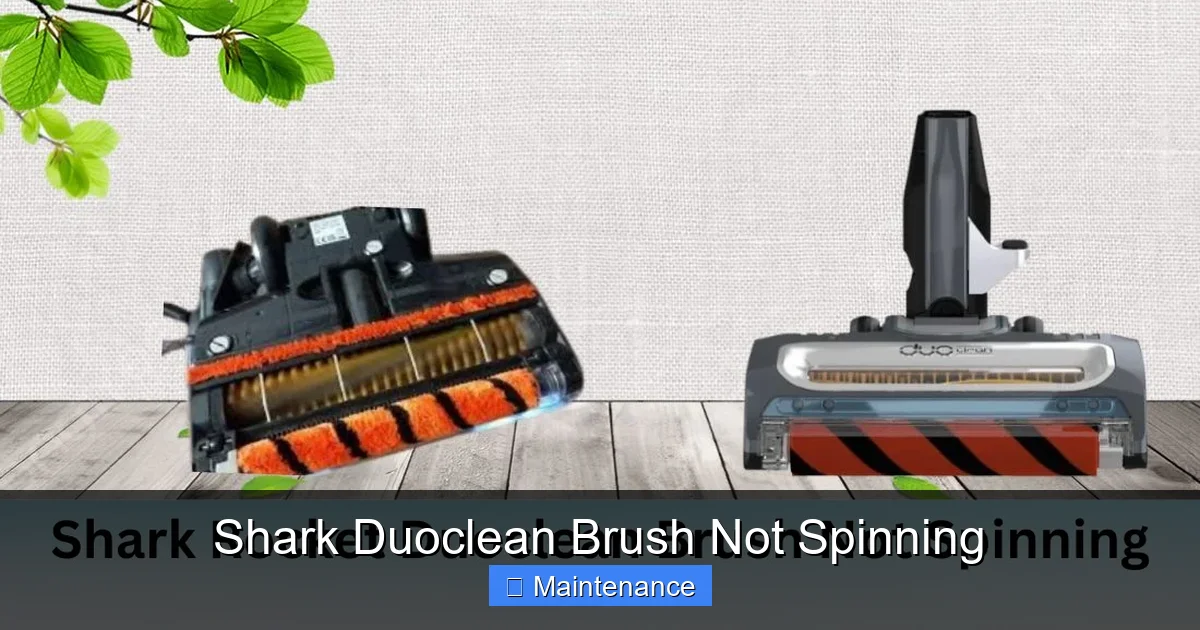
Visual guide about Shark Duoclean Brush Not Spinning
Image source: sharkvacuum.blog
The All-Important Thermal Reset Button
Every Shark vacuum has a safety feature: a thermal overload protector. If the brush roll motor gets too hot—usually because it was struggling against a severe jam for a long time—this switch trips and cuts power to the brush motor. The suction motor may keep running. The reset button is usually a small red or black button on the motor housing, often on the back or bottom of the vacuum body. Unplug the vacuum, locate the button (consult your manual if needed), and press it firmly until it clicks. Plug the vacuum back in and try the brush roll. This fixes a huge percentage of “suddenly stopped” cases where there was a prior jam.
Testing for Motor Power
If resetting doesn’t work, you need to see if the motor is getting power. This requires a multimeter and some comfort with basic electronics. With the vacuum upright and switched on (brush roll mode), you can carefully probe the motor’s electrical contacts. If you get 120V (in the US) at the motor terminals but the motor doesn’t turn, the motor is burnt out. If there’s no voltage, the problem is upstream—a faulty switch, a broken wire, or a failed control board. For most users, if you’ve ruled out jams and belt issues and the reset button does nothing, it’s time to consider professional repair or a motor replacement, which can be costly.
Preventative Maintenance: Keep It Spinning for Years
An ounce of prevention is worth a pound of cure. Incorporating a 2-minute brush check into your weekly routine will save you from this headache. After you finish vacuuming a high-shed area (living room rug, pet bed), turn the vacuum off, unplug it, flip it over, and simply remove any visible hair or debris from the brush roll with your fingers or a tool. Don’t wait for it to wrap around the axle. Once a month, do the full removal and inspection we described. This simple habit prevents 95% of failures.
Lubrication: A Word of Caution
You might be tempted to spray WD-40 or another lubricant into the brush roll bearings if it feels stiff. Do not do this. Most Shark brush roll bearings are sealed plastic bushings, not metal ball bearings that need oil. Lubricant will attract more dust and hair, creating a grinding paste that destroys the bushing faster. If a brush roll is stiff after a thorough hair cleaning, the bushing is worn out. The only fix is a new brush roll.
Environment Matters
Be mindful of what you’re vacuuming. Small, hard objects (tacks, paperclips, Legos) should be picked up first. Rugs with long, looped piles can be more prone to catching and wrapping. If you have a pet that sheds excessively, consider a vacuum specifically designed for pet hair with a tangle-free brush roll (some Shark models have this feature, but the standard Duoclean does not).
When to Seek Professional Help or Replace Parts
You’ve followed all the steps. The brush roll is pristine, the belt is new, the reset button is clicked, and it still won’t spin. Now what? It’s time to assess cost versus benefit.
Diagnosing the Final Failure
At this stage, the failure is likely either: 1) A failed brush roll motor (expensive), 2) A failed motor control board (very expensive), or 3) A severely damaged brush roll assembly (moderately expensive). A professional technician can confirm this with a quick bench test. Get an estimate. For a vacuum that’s 5+ years old, the cost of a motor replacement (often $100-$200 in parts plus labor) may approach or exceed the value of the machine. For a newer vacuum under warranty, contact Shark customer service immediately. Do not attempt to disassemble the motor housing yourself, as it can void the warranty and is complex.
Parts Replacement: The DIY Path
If you’re comfortable, you can order the exact replacement parts using your model number (found on the back plate). Common replaceable parts include:
- Brush Roll Assembly: The entire unit. Often the most cost-effective fix if the bearings are shot.
- Drive Belt: Always have a spare.
- Motor Coupling: The small plastic piece on the motor shaft.
- Pulley Set: Includes both motor and brush roll pulleys.
Shark’s website and major appliance parts retailers have diagrams to help you identify the correct part. Replacing a brush roll or belt is a 10-minute job. Replacing a motor is a 30-45 minute job for a confident DIYer.
Conclusion: Don’t Give Up on Your Duoclean
The Shark Duoclean is a powerful, well-built machine. A non-spinning brush roll is a frustrating but almost always repairable symptom. Remember the hierarchy of fixes: first, unplug, reset, and remove hair. Second, inspect and replace the belt. Third, check for hidden debris and bearing wear. Fourth, consider the motor or control board. By following this logical sequence, you’ll solve the problem yourself 99 times out of 100 without needing a service call. That feeling of hearing that familiar brush roll whir again after you’ve fixed it yourself is incredibly satisfying. You’ve not only saved money but also gained a deeper understanding of your home’s hardest-working cleaning tool. Keep it maintained, and your Shark Duoclean will keep your carpets pristine for years to come.
Frequently Asked Questions
Why is my Shark Duoclean’s brush roll not spinning but the suction motor is running?
This is the most common scenario and indicates a problem isolated to the brush roll drive system. Start by checking for hair wrap around the brush roll bearings, then inspect the drive belt for breaks or slippage. Also, locate and press the red thermal reset button on the motor housing.
How do I completely remove hair from my Shark brush roll?
First, release and remove the brush roll assembly. Use a seam ripper or blunt tool to cut and lift hair wrapped around the bristles and axle. Pay special attention to the center and the inner bearing races inside the plastic end caps. Remove all fibrous material until the roll spins freely by hand.
How often should I replace the drive belt on my Shark Duoclean?
There’s no set mileage, but as a preventative rule, inspect the belt every 6 months. Replace it if you see any cracks, glazing, stretching, or if it slips. A belt typically lasts 1-3 years depending on use. Keeping a spare on hand is a smart idea.
My brush roll spins freely when I take it out, but stops when installed. Why?
This points to a severe jam somewhere in the housing that only occurs when the brush roll is installed. Check for debris lodged in the brush roll housing itself, in the intake neck behind it, or in the belt pathway. Also, ensure the belt is properly seated on both pulleys and isn’t pinched.
Is a non-spinning brush roll covered under the Shark warranty?
It depends on the cause and warranty age. Warranties cover manufacturing defects, not wear items like belts or damage from debris/hair jams. If a component like the motor or brush roll fails prematurely without user-inflicted jam, it may be covered. Always contact Shark support with your model and serial number for a definitive answer.
Should I just buy a new brush roll assembly, or can I fix the bearings?
For the vast majority of Shark Duoclean models, the brush roll bearings are not serviceable separately. The entire brush roll assembly is sold as a single part and is designed for easy replacement. Attempting to disassemble and repack the sealed plastic bushings is not practical and usually not successful. Replacing the whole unit is the standard, correct repair.