If your Shark Duo Clean vacuum’s brush roll has stopped spinning, don’t panic—it’s a common issue with straightforward fixes. This guide covers everything from simple maintenance like clearing hair wrap to deeper checks like motor testing. By following these steps, you can diagnose and resolve the problem yourself, saving time and money on repairs.
You’re mid-clean, zipping across the floor, when you notice something’s off. The Shark Duo Clean vacuum is humming along, but that crucial brush roll—the part that agitates carpet fibers and sweeps debris into the suction path—has gone completely still. It’s a frustrating moment that turns a quick tidy into a puzzling problem. Before you resign yourself to an expensive repair call or the sad thought of replacing your trusted vacuum, take a deep breath. A Shark Duo Clean brush not spinning is one of the most common issues owners face, and the good news is that it’s almost always fixable. In fact, a huge percentage of these problems stem from simple, addressable causes like clogs, hair wrap, or a slipped belt. This guide will walk you through every possible reason, from the dead-simple to the more complex, arming you with the knowledge to diagnose and likely fix the issue yourself. We’ll talk like friends, step-by-step, so you can get your vacuum back to its dual-cleaning best.
Understanding why the brush roll is stationary is the first step. The Shark Duo Clean uses a motor to spin a cylindrical brush roll via a drive belt (in most models) or a direct drive coupling. This spinning action is what lifts embedded dirt from carpets. If that spin stops, the vacuum will still pick up some surface debris on hard floors due to suction alone, but it will be utterly ineffective on carpets. The cause can be a safety mechanism triggering, a physical blockage, a worn part, or an electrical failure. We’ll systematically eliminate each possibility. Remember: always, always unplug your Shark vacuum from the wall outlet before you tip it over, remove the brush head, or touch any internal components. This is non-negotiable for your safety.
Key Takeaways
- Most “brush not spinning” issues are due to clogs or jams, not major component failure. Always check for blockages in the hose, wand, and brush head first.
- The reset button is your first line of defense. Locate and press the reset button on the vacuum’s body to clear thermal or electrical overloads.
- A broken, loose, or misaligned drive belt is a very common culprit. You can often inspect and replace this part yourself with basic tools.
- Severe hair and fiber wrap is the #1 reason brushes stall. Regular cleaning of the brush roll and its bearings is critical maintenance.
- If all else fails, the motor or brush roll motor itself may be faulty. This is less common but may require professional repair or part replacement.
- Preventative maintenance is key. Clean the brush roll after every few uses and check for wear to avoid future problems.
- Always unplug the vacuum before performing any inspection or repair. Safety is the absolute priority when working with electrical appliances.
📑 Table of Contents
Understanding Your Shark Duo Clean: How the Brush Roll Works
Before we dive into fixes, let’s quickly demystify the system. Knowing the components helps you target your troubleshooting. The brush roll is a long cylinder with rows of bristles (or a rubber/squeegee strip on some Duo Clean models for hard floors). It sits in a housing at the front of the vacuum head. A small motor, either located in the main body or within the brush head assembly itself (depending on your specific Shark model), provides the rotational force.
The Drive System: Belt vs. Direct Drive
Most traditional Shark Duo Clean models use a rubber drive belt. This belt loops from a pulley on the motor shaft to a pulley on the brush roll shaft. If this belt breaks, stretches, slips off, or gets jammed, the brush roll won’t turn. Newer or specific Duo Clean variants might use a direct drive system, where the motor’s shaft connects directly to the brush roll via a plastic gear or coupling. In these, a broken gear or stripped coupling is the equivalent of a broken belt. Identifying your system is key. You’ll know it’s a belt system if you see a rubber band inside the brush head housing. If you see a solid plastic connection, it’s direct drive.
The Role of the Reset Button and Safety Features
Your Shark vacuum is smart. It has thermal and electrical overload protections. If the motor gets too hot (from a severe clog or jam) or if there’s an electrical short, a reset button—usually a small red or black button on the back or bottom of the vacuum body—will pop out. This breaks the circuit to the brush roll motor, preventing damage. It’s a safety feature, not a failure. Often, a tripped reset is why a brush suddenly stops. We’ll cover resetting first because it’s the easiest, fastest possible solution.
Immediate Troubleshooting: Your First 10-Minute Check
Don’t jump to the hard stuff. Perform this rapid sequence of checks. You might solve the problem before needing any tools. This is your go-to routine whenever you encounter a non-spinning brush.
Visual guide about Shark Duo Clean Brush Not Spinning
Image source: sharkvacuum.blog
Step 1: The Reset Button Procedure
Turn the vacuum off and unplug it. Locate the reset button. On most Shark Duo Clean models, it’s on the back of the canister body, near the power cord entry, or on the underside. It’s often recessed. Use a pen or a small screwdriver to firmly press the button until you feel and hear a click. You must press it firmly and fully. Plug the vacuum back in and turn it on. Test the brush on a carpeted area. If it spins, you’ve solved it! The reset tripped due to a temporary overload, perhaps from a big clump of debris. However, this is a warning sign. Something caused the overload. You must find and clear that blockage (next steps) to prevent the reset from tripping again immediately.
Step 2: Check for Obvious Clogs and Jams
With the vacuum still unplugged, detach the hose and wand. Look straight down into the suction intake at the back of the brush head housing. Use a flashlight. Can you see any large objects, socks, or compacted lint? Reach in (carefully) with needle-nose pliers or a long, flexible grabber tool. Also, detach the brush head from the wand/hose assembly. Turn the brush head over. Look into the opening where it connects to the vacuum. Clear any debris. Sometimes a small toy, a hair tie, or a large piece of paper can lodge right at this junction, stopping airflow and causing the motor to stall.
Step 3: The Hair Wrap Inspection
This is the most frequent cause. Lay the vacuum on its side for better access. Flip the brush head over. You’ll see the brush roll. Peer into the bristles and around the ends where the bearings are. Look for a thick mat of hair, string, or carpet fibers wound tightly around the brush roll shaft or trapped in the bearings. This creates immense resistance. The motor strains, may overheat, and the reset trips. Or, if it doesn’t trip, the friction is so great the brush simply won’t turn. Use scissors or a seam ripper to carefully cut and remove all wrapped material. Be meticulous. Even a small amount of tight wrap can stop the brush. Also, check the rubber squeegee blades on Duo Clean models; they can get clogged with pet hair and gunk, affecting performance.
Deep Dive: Common Causes & Detailed Solutions
If the quick checks didn’t work, it’s time for a more thorough investigation. We’ll move from the most likely to the least likely causes.
Visual guide about Shark Duo Clean Brush Not Spinning
Image source: sharkvacuum.blog
The Drive Belt: The Usual Suspect
For belt-driven models, this is the prime suspect after clogs/resets.
- How to Access: Lay the vacuum on its side. On the bottom of the brush head housing, you’ll find several screws (usually 4-6). Remove them. Gently separate the two plastic halves of the brush head housing. Be careful, as internal wires (for the brush roll motor, if it’s in the head) may be connected.
- What to Look For: Locate the rubber belt. Is it broken (a clear gap or snapped piece)? Is it stretched and loose, slipping off the pulleys? Is it misaligned, sitting on the edge of a pulley? Is it jammed with debris underneath it?
- The Fix: A broken or severely stretched belt must be replaced. Shark uses specific belt models (like the “Shark Belt NV series”). You can find the exact part number in your manual or by searching your model number online. Replacing it is simple: remove the old belt, stretch the new one over both pulleys (motor and brush roll), ensuring it sits in the groove on each. Reassemble the housing. Pro Tip: While you’re in there, clean out any accumulated dust and debris from the housing. It’s a great maintenance opportunity.
Brush Roll Bearings and Seized Rollers
Even with a perfect belt, the brush roll itself can seize.
- Symptom: You can manually spin the brush roll by hand (with vacuum off) and it feels gritty, stiff, or doesn’t spin freely. It might wobble.
- Cause: Bearings are clogged with old wax, hair, and grime. Or, the bearings are simply worn out.
- Fix: Remove the brush roll from the housing (usually by pulling it out sideways after releasing clips). Clean each end cap and the exposed shaft with a cloth and a cotton swab dipped in isopropyl alcohol. Work the bristles clean. Try spinning it. If it’s still stiff, the bearings are likely shot. You can often replace just the brush roll assembly (a cheaper part than the whole motor) or, on some models, replace the individual bearings—though this is more advanced. A new brush roll is usually the simplest fix.
Direct Drive Coupling or Gear Failure
For models without a belt, the connection between the motor and brush roll is a plastic gear or coupling.
- Symptom: Brush roll doesn’t spin, but you may hear a strange whirring or grinding noise from the brush head. The motor is running, but the power isn’t transferring.
- Cause: The plastic teeth on the coupling or gear have stripped (worn smooth) or broken. This happens with age or after repeated jams.
- Fix: You must disassemble the brush head to access this part. The coupling is typically a small, white or beige plastic piece on the end of the brush roll shaft or inside the motor housing. It will show visible damage. Replace it. Part numbers are model-specific. This is a slightly more involved repair but very doable with a screwdriver and patience.
Motor Failure: The Less Likely, But Possible, Scenario
If you’ve ruled out clogs, reset issues, belts, and the brush roll itself, the motor might be dead.
- Symptom: You hear no sound from the brush roll area at all when turned on (the main suction motor still runs). Or, you hear a faint click or hum but no movement. After verifying the reset isn’t tripped and connections are secure, the motor is suspect.
- Cause: Motor windings have burned out, or there’s an internal electrical fault. This is rare and usually follows a prolonged, severe jam that caused overheating.
- Fix: Motor replacement is possible but requires soldering/desoldering skills or careful connector work. For most users, this is the point to consider the cost of a new motor versus the age and value of your vacuum. A professional repair quote is wise here.
When to Seek Professional Help: Recognizing Your Limits
While Shark vacuums are designed for user serviceability, some issues are best left to experts. Consider professional help if:
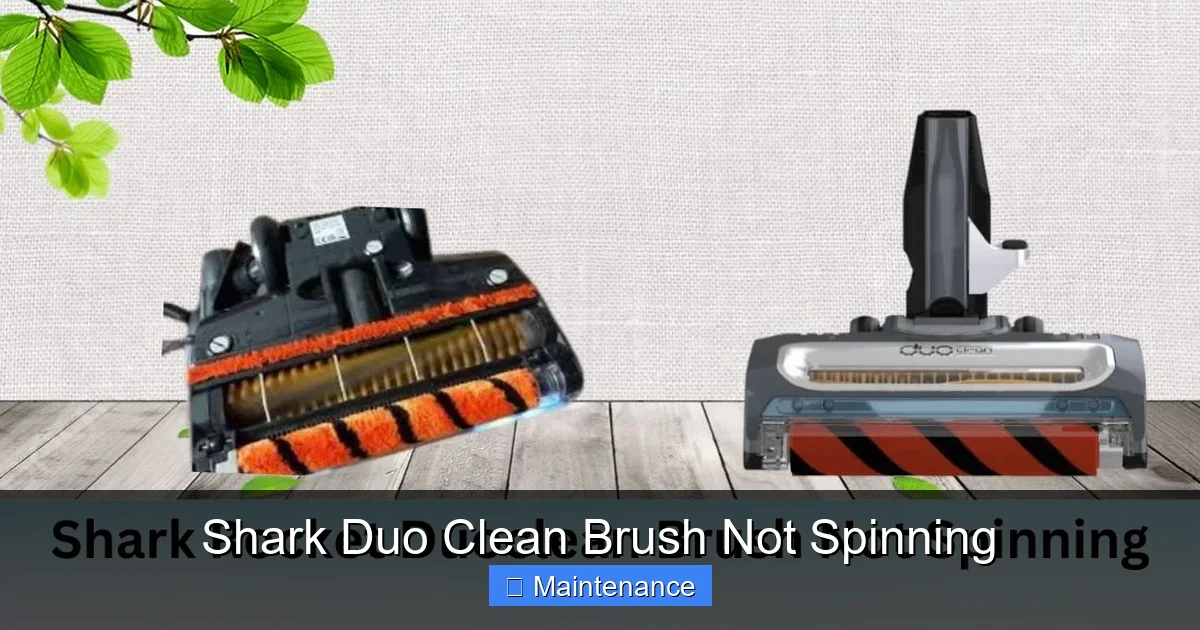
Visual guide about Shark Duo Clean Brush Not Spinning
Image source: sharkvacuum.blog
- You’ve replaced the belt/brush roll and the problem persists. This strongly suggests a deeper issue with the motor or its circuitry.
- You smell burning or see smoke. Immediately unplug and do not use. This indicates a serious electrical fault.
- You are uncomfortable with basic disassembly. If opening the brush head housing seems daunting, it’s okay to stop. A local vacuum repair shop can diagnose it quickly.
- The repair cost approaches 50% of a new comparable Shark model. At that point, a new vacuum might be a better investment, especially if your current one is older.
- Your model has a complex, integrated motor housing. Some newer Shark designs are more monolithic. Disassembly can be tricky and risks breaking plastic clips.
A good independent repair shop will often do a diagnostic for a small fee and give you an honest quote. They have the parts and experience for tricky motor and electrical issues.
Preventative Maintenance: Keeping Your Brush Spinning
An ounce of prevention is worth a pound of cure. Incorporate these habits to avoid the “brush not spinning” dilemma entirely.
After Every 2-3 Uses: Quick Clean
Get in the habit. After unplugging and emptying the dust cup, flip the vacuum over. Use your fingers or the provided cleaning tool to pull any hair or fibers from the brush roll bristles and the area around the bearings. A 30-second habit prevents a 30-minute repair session later.
Monthly Deep Clean
Once a month, remove the brush roll completely. Wash it with mild soap and water to remove oily dirt and wax buildup. Let it dry *completely* (24 hours) before reinstalling. While it’s out, clean the inside of the brush head housing thoroughly with a damp cloth. This keeps bearings running smoothly.
Inspect and Replace Wear Items
The drive belt is a wear item. Even if not broken, it can stretch and slip over time. Consider inspecting it every 6-12 months and replacing it preemptively if you notice it’s loose. Similarly, brush rolls with bristles that are worn down, melted, or missing sections should be replaced to maintain cleaning efficacy.
Mind What You Vacuum
Your Shark Duo Clean is powerful, but it’s not indestructible. Avoid vacuuming large, sharp objects, string, yarn, or anything that can easily wrap around the brush roll. For pet owners, short pet hair is fine, but long, human hair is the primary enemy. Be vigilant.
Conclusion: You’ve Got This
A Shark Duo Clean brush not spinning is a common woe with a often simple solution. By methodically working through this guide—starting with the reset button, hunting for clogs and hair wrap, and then inspecting the belt or drive coupling—you have a 90%+ chance of restoring your vacuum’s full power. The key is patience and safety. Always unplug first. Take your time. A clean, freely spinning brush roll is the heart of your Shark’s performance on carpets. Don’t give up on your vacuum easily. With a little DIY spirit and this roadmap, you can likely get it spinning again and back to tackling your floors with its signature Duo Clean power. Remember, regular, quick maintenance is the secret weapon that keeps this problem from ever happening in the first place.
Frequently Asked Questions
Why did my Shark Duo Clean brush suddenly stop spinning?
The most common cause is a tripped thermal reset due to a jam or severe hair wrap. Less frequently, it’s a broken drive belt or a seized brush roll bearing. Always check the reset button and clear any visible clogs first.
How do I find and press the reset button on my Shark Duo Clean?
The reset button is typically a small red or black button on the back or bottom of the vacuum’s canister body. It may be recessed. With the vacuum unplugged, use a pen or screwdriver to press it firmly until you hear a click. Plug it in and test.
Can I fix a broken drive belt myself?
Yes, absolutely. Replacing the drive belt is one of the most common and user-friendly repairs. You only need a screwdriver to remove the brush head housing screws. Purchase the correct replacement belt for your specific Shark model number and loop it over the motor and brush roll pulleys.
My brush roll spins freely by hand, but not when the vacuum is on. What is wrong?
If the brush roll spins freely manually, the issue is likely not a jam or bad bearings. The problem is probably with the drive system: either the belt is broken/slipping (belt-drive models) or the direct drive coupling/gear is stripped (direct-drive models). The motor may be running, but power isn’t reaching the brush.
Is a seized brush roll the same as a broken motor?
No. A seized brush roll means the cylinder itself is physically stuck, usually due to packed debris or worn-out bearings. The motor might be fine. A broken motor means the component that generates the spinning power has failed electrically or mechanically. Always diagnose the brush roll’s manual spin first before assuming the motor is faulty.
How often should I clean my Shark Duo Clean brush roll to prevent problems?
For best results, do a quick hair and debris removal from the brush roll after every 2-3 uses. Perform a more thorough monthly deep clean, including removing the roll to wash it and clean the housing. This proactive maintenance drastically reduces the chance of a non-spinning brush.