Is your Shark cordless pet stick vacuum suddenly losing suction? This is a common but usually fixable problem. The primary culprits are almost always simple blockages in the airway, a jammed or worn brush roll, a clogged filter, or a depleted/aging battery. By systematically checking these areas—starting with a thorough visual inspection for pet hair clogs—you can diagnose and resolve the issue yourself in minutes, saving you from costly repairs or replacements.
Key Takeaways
- Clogs are the #1 suspect: Pet hair, dander, and debris create blockages in the wand, hose connections, and suction intake. Always check these first.
- The brush roll is critical for pet hair: A jammed, tangled, or worn brush roll will severely reduce pickup on carpets and rugs, making it seem like there’s no suction.
- Filters must be clean and dry: A dirty pre-motor filter or a damp/wet post-motor filter is a leading cause of catastrophic suction loss. Regular cleaning is non-negotiable.
- Battery health dictates power: A weak or failing battery cannot spin the motor at full speed, resulting in noticeably weaker suction. Runtime drops are a key indicator.
- Model-specific quirks exist: Different Shark Pet series (IZ, IZ, Vertex, etc.) have slightly different designs. Know your exact model’s user manual for specific troubleshooting steps.
- Seals and gaskets matter: A torn or dislodged seal around the dustcup or in the filter assembly will break the vacuum’s seal, causing air leaks and suction loss.
📑 Table of Contents
- Understanding Suction: It’s All About Airflow
- Step 1: The Immediate Diagnostic – A Systematic Approach
- Step 2: The Heart of the Problem – The Brush Roll
- Step 3: The Hidden Culprits – Clogs and Seals
- Step 4: The Lungs of the Machine – Filter Maintenance
- Step 5: Advanced Troubleshooting and When to Seek Help
- Conclusion: Prevention is the Best Cure
Understanding Suction: It’s All About Airflow
Before we dive into fixing your Shark cordless pet stick vacuum not suctioning, let’s quickly understand what “suction” really is. It’s not a magical pulling force; it’s airflow. The vacuum’s motor creates a low-pressure zone inside the machine. The higher atmospheric pressure outside then pushes air (and the dirt in it) into the vacuum. Anything that restricts this smooth flow of air—a clog, a leak, a weak fan—will diminish your vacuum’s power. Think of drinking a thick milkshake through a narrow straw versus a wide one. The same principle applies here. Our troubleshooting will focus on finding and removing anything that narrows that “straw.”
The Unique Challenges of “Pet” Vacuums
Shark’s “Pet” branded stick vacuums, like the IZ, IZ, and Vertex series, are engineered for one thing: relentless pet hair. They often feature a self-cleaning brush roll (the “Anti-Hair Wrap” technology) and a powerful motor designed for deep carpet cleaning. This means they encounter and ingest more long, fibrous hair than a standard stick vacuum. This hair is excellent at wrapping around the brush roll bearings, jamming in narrow wand passages, and clogging the intricate pleats of the filters. The very thing they’re designed to handle is also what most frequently disables them. When your Shark cordless pet stick vacuum not suctioning, the first suspect is always the aftermath of this battle with pet hair.
Step 1: The Immediate Diagnostic – A Systematic Approach
Don’t just guess! Follow this logical, step-by-step path. It’s faster and more effective than randomly taking things apart.
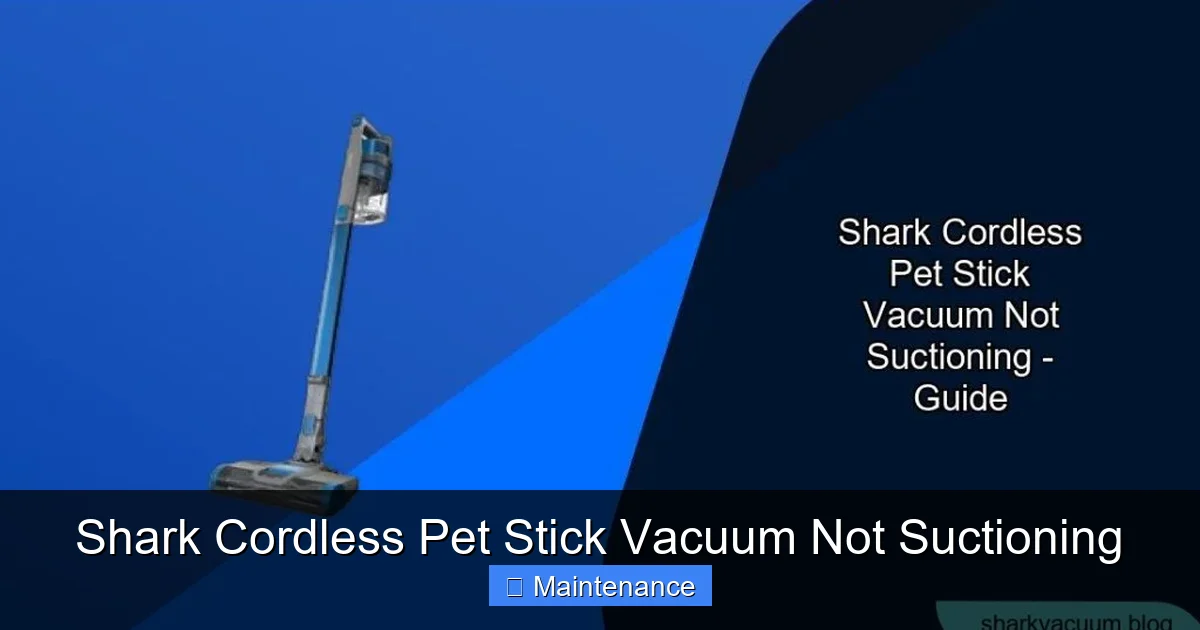
Visual guide about Shark Cordless Pet Stick Vacuum Not Suctioning
Image source: sharkvacuum.blog
1. The Power and Battery Check
The absolute first thing to verify is that the vacuum is actually operating at full power.
- Charge Indicator: Is the battery fully charged? A partially charged battery in “Max” or “Boost” mode may not deliver peak suction. Let it charge completely on the dock.
- Power Setting: Are you on the correct power setting? For deep carpet cleaning with pet hair, you need “Max” or “Boost.” The “I” ( ECO) setting is for hard floors and light debris. Using the wrong setting can feel like a loss of suction.
- Battery Age: If your vacuum is 2+ years old and you’re getting significantly less runtime than when new (e.g., from 40 minutes to 15), the battery cells are likely degrading. A weak battery cannot sustain the motor’s power demand, leading to a Shark cordless pet stick vacuum not suctioning properly even on a full charge.
2. The Visual Inspection: Look for Obvious Clogs
With the vacuum off and detached from the charger, do a full walk-around.
- Dustcup: Is it completely full? An overfilled dustcup, especially with packed-down hair, restricts airflow. Empty it completely, tapping the sides to dislodge hidden clumps.
- Wand and Hose: Detach the wand from the main body and look straight through it. Shine a flashlight. Can you see light through the entire length? Check the connection points where the wand meets the motorized floor head and the main body. These are common jam sites for long pet hair.
- Floor Head Intake: Flip the vacuum over. Look at the wide opening where the brush roll sits. Is it packed with hair, carpet fibers, or litter? Use scissors or the provided cleaning tool to carefully cut and remove any matted debris blocking the entrance to the suction path.
Step 2: The Heart of the Problem – The Brush Roll
For a pet vacuum, the brush roll is where the action is. If it’s not spinning freely, you’ve lost 80% of your cleaning power on carpets.
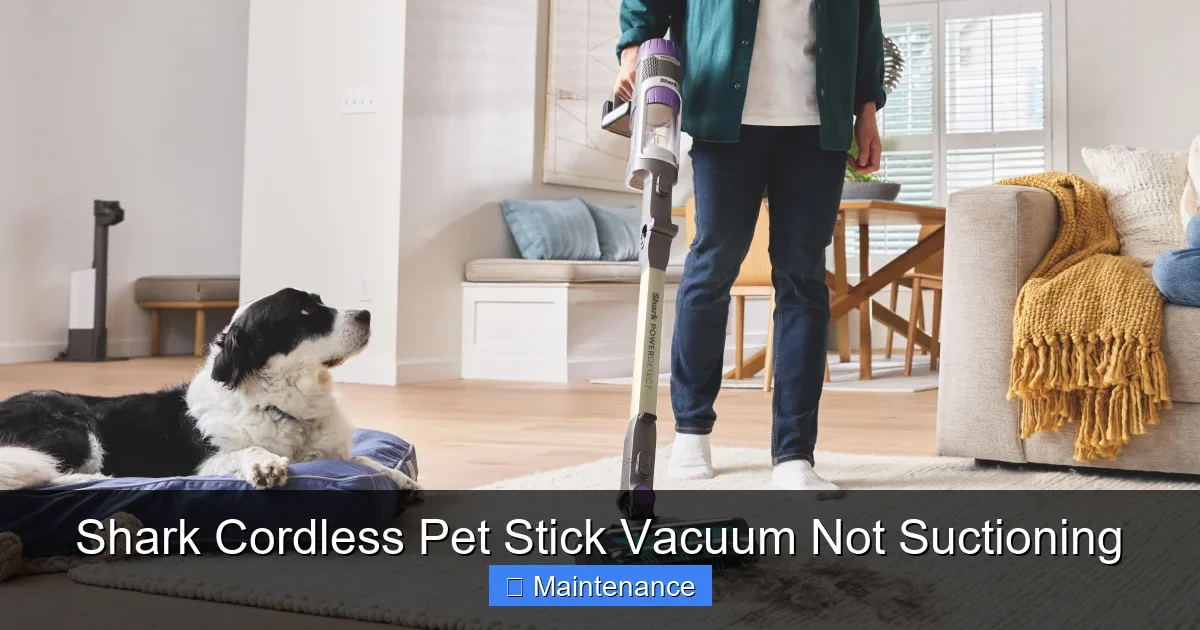
Visual guide about Shark Cordless Pet Stick Vacuum Not Suctioning
Image source: parade.com
Diagnosing a Brush Roll Issue
Turn the vacuum on (make sure it’s on a hard surface or the brush roll won’t engage on some models). Listen. Do you hear the motor straining or whining, but the brush roll isn’t spinning? Or does it spin slowly or erratically? This points directly to the brush roll system.
The “Anti-Hair Wrap” Isn’t Magic
Shark’s self-cleaning technology is great, but it has limits. It prevents hair from wrapping tightly around the *core* of the brush roll, but hair can still:
- Wrap around the bearings at each end, effectively seizing the roll.
- Pack into the ends of the brush roll where the self-cleaning fins can’t reach.
- Jame the brush roll in its housing if debris gets between the roll and the plastic housing.
How to Clean and Inspect the Brush Roll
This is the most common fix for a Shark cordless pet stick vacuum not suctioning on carpets.
- Detach the floor head: Lay the vacuum on its side. There is usually a release button or clip on the underside of the floor head to remove the brush roll assembly.
- Remove the brush roll: Pull it straight out. You’ll likely see a terrifying amount of hair wound around the ends and possibly along the bristles.
- Cut and clean: Use scissors or a seam ripper. Always cut parallel to the brush roll, never across the bristles. Cut any hair wrapped around the bearings and pull it off. Clear debris from the brush roll housing channel with a dry cloth.
- Spin it: Once clean, the brush roll should spin freely and silently by hand. If it still feels gritty or stiff, the bearings are likely damaged. You need to replace the brush roll assembly. They are a consumable part.
- Reinstall correctly: Ensure it’s seated fully and the drive belt (if your model has a separate one) is properly engaged. Some models have a small alignment tab that must click into place.
Step 3: The Hidden Culprits – Clogs and Seals
If the brush roll is clean and spinning, the blockage is likely deeper in the air path.
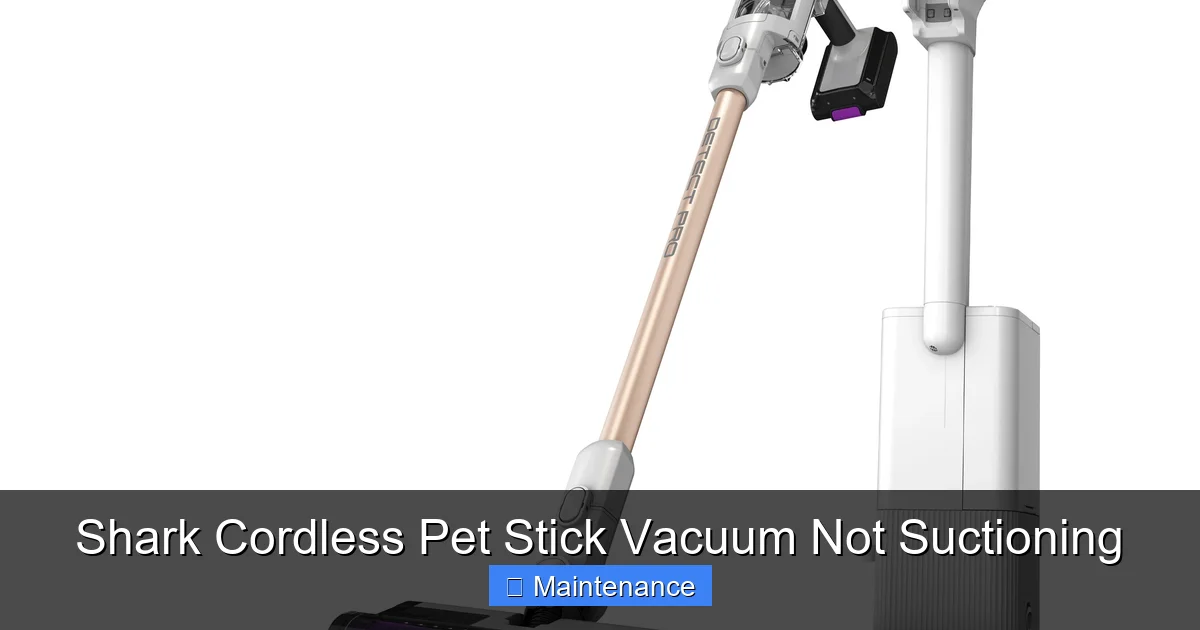
Visual guide about Shark Cordless Pet Stick Vacuum Not Suctioning
Image source: mobileimages.lowes.com
Finding the Invisible Clog
Airflow path in a Shark stick vacuum typically goes: Floor Head Intake → Brush Roll Housing → Wand Connection → Main Body Suction Port → Dustcup → Filters → Motor → Exhaust. A clog can be anywhere.
- The “Wand to Body” Junction: This is a notorious choke point. Detach the wand from the main body. Look into the suction port on the main body. You might see a hair mat blocking it. Use a bent coat hanger (wrapped in tape to avoid scratches) or the included cleaning tool to gently dislodge it.
- Inside the Dustcup Assembly: Remove the dustcup. Look inside the chamber where it connects to the main body. Hair and fine dust can pack into the corners and the inlet port. Use a damp cloth to wipe it out thoroughly.
- The Exhaust Filter Cover: On some models, the post-motor filter is behind a small plastic cover on the back or side of the main body. A severely clogged pre-motor filter can cause debris to back up and clog this area.
Critical Seals and Gaskets
Your vacuum is a sealed system. If a seal is broken, air takes the path of least resistance—from a leak—instead of through the filter and dirt cup. This causes a dramatic drop in suction.
- Dustcup Seal: Remove the dustcup. There is a rubber gasket or foam seal around the opening that mates with the main body. Is it torn, pinched, or full of debris? Clean it gently. If it’s damaged, it must be replaced.
- Filter Seals: Check the seals around the pre-motor and post-motor filters. They should be intact and sit flush in their housings.
Step 4: The Lungs of the Machine – Filter Maintenance
Filters are not optional. They are a mandatory part of the airflow path. A clogged filter is the second most common reason for a Shark cordless pet stick vacuum not suctioning.
Know Your Filters
Most Shark Pet stick vacuums have two:
- Pre-Motor Filter (Foam): Located just after the dustcup. It catches large particles to protect the motor. It should be cleaned after every use and replaced every 3 months.
- Post-Motor Filter (Hepa/Cloth): Located near the exhaust. It cleans the air before it’s released. This should be cleaned monthly (if washable) and replaced every 6-12 months.
How to Clean Filters Properly
This is crucial. Improper cleaning ruins filters.
- Pre-Motor (Foam): Remove it. Rinse under lukewarm water. Gently squeeze—do not wring. Allow to air dry completely for at least 24 hours. Never reinstall a damp filter. It will block airflow and damage the motor.
- Post-Motor (HEPA/Cloth): Check your manual. Some are washable, some are not. If washable, rinse gently, do not use soap or detergent (it can degrade the fibers), and air dry completely for 24+ hours. If it’s a “replace-only” filter, cleaning it won’t help; you need a new one.
Pro Tip: If you’ve been using your vacuum with dirty filters for a while, the motor fan itself might be coated in a fine layer of dust. After cleaning all filters, run the vacuum (without the dustcup) for 30 seconds outside to blow out any loosened debris from the motor housing. Wear a mask!
Step 5: Advanced Troubleshooting and When to Seek Help
You’ve checked clogs, cleaned the brush roll, and washed the filters. Suction is still weak. Now what?
Motor and Internal Issues
This is rare but possible. The motor itself could be failing. Listen to the sound. Is it a high-pitched whine instead of a deep roar? Does it smell like burning electronics? These are bad signs. Also, internal gaskets or the impeller fan could be damaged. These are not user-serviceable parts.
Model-Specific Considerations
Different Shark Pet models have different designs:
- IZ/IZ (Pet Pro): The wand detaches for handheld use. Check the connector at the top of the main body where the wand plugs in—hair can jam there.
- Vertex Series: Often has a larger dustcup and a different brush roll design ( DuoClean). The DuoClean has two rollers; both must be cleaned. Also, check the gap between the two rollers for packed debris.
- Stick V8/V10 (older): These may have a separate drive belt for the brush roll. If the belt is stretched, broken, or slipped off, the brush roll won’t spin. Inspect and replace if needed.
Warranty and Professional Repair
If your vacuum is still under warranty (typically 1-5 years, check your registration), do not attempt major disassembly. Contact Shark Customer Support. They will troubleshoot and may send replacement parts or a refurbished unit. For out-of-warranty units, a certified appliance repair shop can diagnose motor issues. Often, for a 3-4 year old vacuum, the cost of repair may approach the price of a new mid-range model, especially if the battery also needs replacing.
Conclusion: Prevention is the Best Cure
A Shark cordless pet stick vacuum not suctioning is almost always a maintenance issue, not a manufacturing defect. The solution is a consistent, simple routine:
- Empty the dustcup after every single use. Don’t wait for the “full” indicator.
- Check and clean the brush roll weekly. Look for hair wrapped around the bearings. A few minutes with scissors now saves hours of frustration later.
- Clean the pre-motor foam filter after every use. Make it part of your post-vacuuming ritual: empty cup, check brush roll, rinse filter.
- Wash/replace all filters on schedule. Set a calendar reminder.
- Inspect wands and connections monthly for hidden clogs.
By treating your Shark pet vacuum with this level of care, you’ll maintain its powerful suction for years, effectively battling the endless war against pet hair. Remember, a well-maintained tool is a powerful tool. Now go find those clogs!
Frequently Asked Questions
My Shark cordless vacuum has power but no suction at all. What’s the first thing to check?
The very first thing is the dustcup. Remove it and check if it’s completely full and packed down. An overfilled cup blocks all airflow. Next, detach the wand and look straight through it for blockages. These two quick checks solve most complete suction loss issues.
Where are the most common places for clogs to hide in a Shark Pet stick vacuum?
The top three spots are: 1) The junction between the wand and the main body (a perfect trap for long hair), 2) The intake opening on the brush roll housing on the underside of the floor head, and 3) Inside the dustcup itself, especially in the corners where the cup meets the main body.
How often should I clean the filters on my Shark pet vacuum?
The pre-motor foam filter should be rinsed with water after every single use and dried for 24 hours. The post-motor HEPA/cloth filter should be cleaned (according to your manual’s instructions) at least once a month and replaced every 6-12 months. Never operate the vacuum with a wet filter.
My brush roll seems to be spinning, but the vacuum isn’t picking up pet hair from my carpet. Why?
If the brush roll spins but pickup is poor, the bristles are likely worn down and no longer agitating the carpet. Over time (1-2 years with heavy use), the bristles become smooth and ineffective. You need to replace the brush roll assembly. Also, ensure you’re using the correct “Max/Boost” power setting for carpets.
Does the “Anti-Hair Wrap” feature mean I never have to clean the brush roll?
Absolutely not. “Anti-Hair Wrap” prevents hair from tightly winding around the *core* of the brush roll, but it does not prevent hair from jamming the bearings at the ends or packing into the housing. You still must inspect and clean the brush roll weekly to remove hair from the ends and ensure it spins freely.
My battery dies very quickly now. Could that cause suction problems even when charged?
Yes. An old, degraded battery cannot supply the consistent high voltage the motor needs for peak suction. The vacuum may turn on, but the motor will run underpowered, resulting in weak suction. If runtime has dropped dramatically (e.g., by 50% or more), a battery replacement is likely needed to restore full performance.