While the Kohler 7000 Series is a workhorse engine found in many zero-turn mowers and standby generators, it is not without its flaws. Owners frequently report frustrating issues like persistent engine surging, overheating under load, and difficult starts. Many of these problems stem from common, often overlooked maintenance errors or specific component failures within the fuel and ignition systems. This article breaks down the most prevalent complaints, provides clear diagnostic steps, and offers practical solutions to get your equipment running reliably again.
If you own a lawn mower, garden tractor, or standby generator with a Kohler 7000 Series engine, you know the feeling. That moment when the engine, which usually starts with a satisfying roar, begins to sputter, hunt, or refuses to turn over. The Kohler 7000 Series, including models like the KT715, KT17, and Command PRO CH740, is a staple in the outdoor power equipment world. It’s known for its durability and torque. But like any complex machine, it has its Achilles’ heels. Years of field reports, forum discussions, and repair shop logs point to a recurring set of problems that plague these engines. This isn’t about defending or attacking Kohler; it’s about arming you, the owner, with the knowledge to diagnose, understand, and fix these issues. We’re going to cut through the noise and get to the heart of the most common problems with Kohler 7000 Series engines.
Key Takeaways
- Engine Surging is the #1 Complaint: This “hunting” or “sputtering” at idle is most often caused by a clogged or faulty carburetor, a bad fuel pump, or a leaking intake manifold gasket, not always a governor issue.
- Overheating Has Simple Roots: Insufficient oil, a blocked cooling fin system, or a damaged flywheel fan are the primary culprits, not necessarily a failed engine block.
- Hard Starting is Rarely “Bad Gas”: While old fuel contributes, focus first on spark plug condition, ignition coil resistance, and fuel delivery (pump/pressure) before blaming the gasoline.
- Electrical Gremlins are Common: Stator (alternator) and voltage regulator failures cause weak/no spark and battery charging issues, often misdiagnosed as starter or battery problems.
- Preventative Maintenance is Non-Negotiable: Strict adherence to oil changes, air filter cleaning, and fuel system upkeep (stabilizer, filter) prevents the vast majority of these Kohler 7000 Series problems.
- Parts Quality Matters: Aftermarket carburetor and fuel pump kits are a frequent source of recurring issues. OEM or highly reputable brands are recommended for replacements.
📑 Table of Contents
- The Infamous Engine Surging: A Hunting, Sputtering Nightmare
- Overheating: When “Workhorse” Turns into “Hot Mess”
- Hard Starting and No-Start Conditions
- Electrical System Failures: Charging and Spark Woes
- Unusual Noises and Vibration: Knocking, Ticking, and Shaking
- The Human Factor: Installation and Maintenance Errors
The Infamous Engine Surging: A Hunting, Sputtering Nightmare
Ask any Kohler 7000 Series owner what their biggest headache is, and the answer will almost universally be engine surging. This is the unsettling feeling where the engine RPM fluctuates wildly at idle or under light load, as if someone is quickly blipping the throttle. It might smooth out at full throttle, but that rough, inconsistent idle is not only annoying but can indicate a deeper problem that will worsen over time.
Primary Culprit: The Carburetor
The carburetor is the most frequent villain. The 7000 Series uses a Walbro or similar float-type carburetor. Over time, modern ethanol-blended fuels (E10, E15) are corrosive and leave gummy varnish deposits. These clog the tiny passages and jets, especially the idle circuit. The result? An inconsistent fuel-air mixture at low speeds, causing the surging. A classic sign is that the engine runs fine when you gently press the throttle but stumbles and recovers at idle.
- Diagnostic Tip: Remove the air filter and look down the carburetor throat. If you see a gummy, dark coating on the throttle plate or inside the barrel, it’s a clear sign of varnish buildup.
- Solution Path: Start with a thorough carburetor cleaning using a quality aerosol carb cleaner and compressed air. Pay special attention to the idle mixture screw (if adjustable) and the pilot jet. If cleaning doesn’t resolve it, the carburetor’s internal seals and gaskets are likely hardened, requiring a full rebuild kit or replacement. Pro tip: When replacing, avoid the cheapest aftermarket carburetor. Many users report they are poorly machined and cause the very surging they’re meant to fix. Stick with OEM Kohler part numbers or premium brands like Zama.
The Sneaky Intake Manifold Leak
This is a classic misdiagnosis. The engine sucks in extra, unmetered air through a crack or a failed gasket between the carburetor and the cylinder head/intake manifold. This leans out the fuel mixture, but interestingly, it often causes a surging that seems to get worse as the engine warms up (metal expands, opening the leak). It can also cause a higher-than-normal idle speed.
- Diagnostic Tip: With the engine idling, carefully spray a small amount of carburetor cleaner or starter fluid around the base of the carburetor where it mounts to the intake, and along the intake manifold joints. If the engine RPM changes (rises or smooths out), you have found an air leak. Always do this with extreme caution; the engine is hot and the spray is flammable.
- Solution: Replace the intake manifold gasket(s). These are often made of rubber or composite material and degrade with age and heat. It’s a relatively inexpensive and straightforward fix that solves a maddening problem.
Fuel Delivery Failure: The Fuel Pump
The Kohler 7000 Series uses a small, engine-mounted pulse-type fuel pump. It’s driven by the pulsations of the crankcase. If the rubber diaphragm inside cracks or the internal valves stick, fuel pressure drops or becomes erratic. This mimics a clogged carburetor. The engine might run okay at full throttle (where fuel demand is high and steady) but starve for fuel at idle, causing surging and stalling.
- Diagnostic Tip: Disconnect the fuel line from the carburetor inlet and place it in a container. Crank the engine over (do not start). You should see a steady, pulsating stream of fuel. A weak, intermittent, or absent stream points to a bad fuel pump.
- Solution: Replace the fuel pump. Kohler part numbers for these are specific to the engine model. Ensure the pulse line (the small hose connecting the crankcase to the pump) is clear and not cracked.
Overheating: When “Workhorse” Turns into “Hot Mess”
An overheating Kohler 7000 Series can lead to pre-ignition (pinging), severe power loss, and ultimately, catastrophic engine failure like a blown head gasket or seized piston. It’s a critical issue that demands immediate attention.
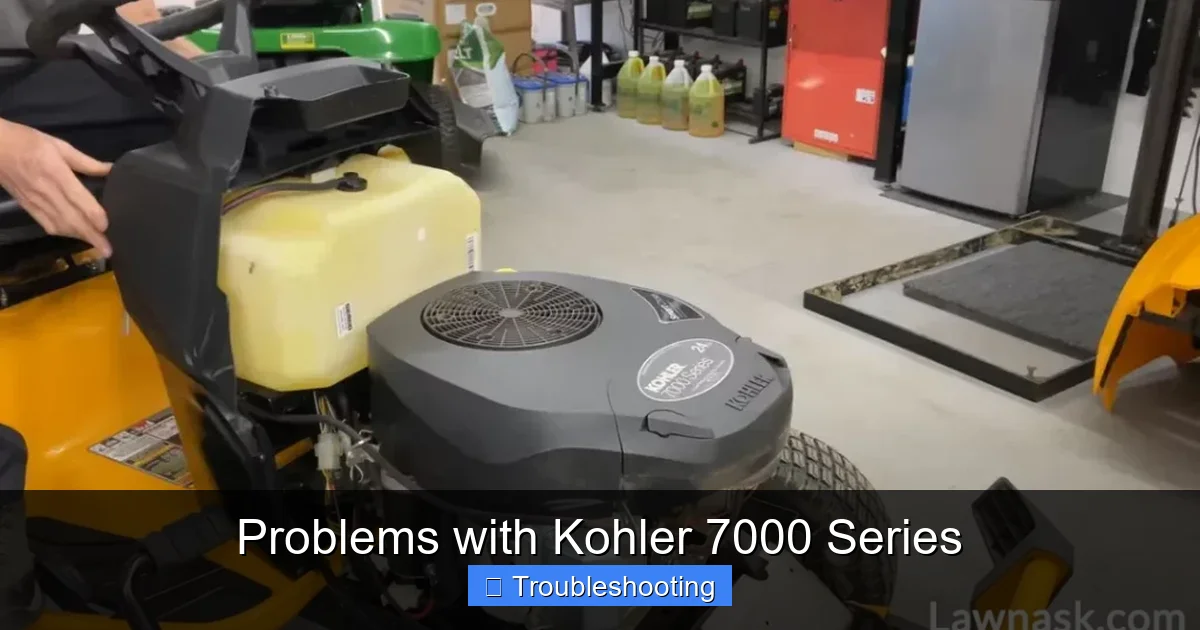
Visual guide about Problems with Kohler 7000 Series
Image source: lawnask.com
Neglected Basic Maintenance
The number one cause of overheating is also the most preventable: insufficient or degraded oil. These engines hold about 1.6-1.8 quarts. Running low by even a quart can cause rapid temperature rise. Equally important is the oil quality. Using old, dirty oil or the wrong viscosity (e.g., 10W-30 in extreme heat instead of SAE 30) reduces its ability to lubricate and cool the internal components.
- Solution: Check the oil level before every use when the engine is cold and on level ground. Change the oil and filter every 50 hours, or at minimum once per season, using Kohler-approved oil. For standby generators running under load for long periods, consider more frequent changes.
Blocked Cooling Fins: The Silent Killer
The engine’s cooling system is passive. The flywheel has a fan that pulls air through a shroud and over the cylinder head and barrel, which are finned like a radiator to dissipate heat. Grass clippings, leaves, dust, and debris pack into these fins, acting like an insulating blanket. This blocks airflow and traps heat.
- Diagnostic & Clean: You must physically inspect this. Use a flashlight. Look at every fin on the cylinder head and barrel. If you can’t see daylight between the fins, they are clogged. Use a soft brush and compressed air (or a leaf blower) to meticulously clean them out. Never use a pressure washer or metal tool, as you can bend the delicate fins.
Damaged or Missing Flywheel Fan
The plastic cooling fan attached to the flywheel can become cracked, broken, or even completely missing (vibrated off). Without it, no air is pulled through the shroud. This is an obvious but sometimes overlooked cause.
- Inspection: Remove the blower housing (the plastic cover over the flywheel). Visually confirm the fan is intact, securely bolted, and not rubbing against the housing.
- Solution: Replace the fan. They are inexpensive and crucial for cooling.
Hard Starting and No-Start Conditions
Few things are as frustrating as a mower or generator that won’t start when you need it. The Kohler 7000 Series can develop stubborn starting issues that range from simple to complex.
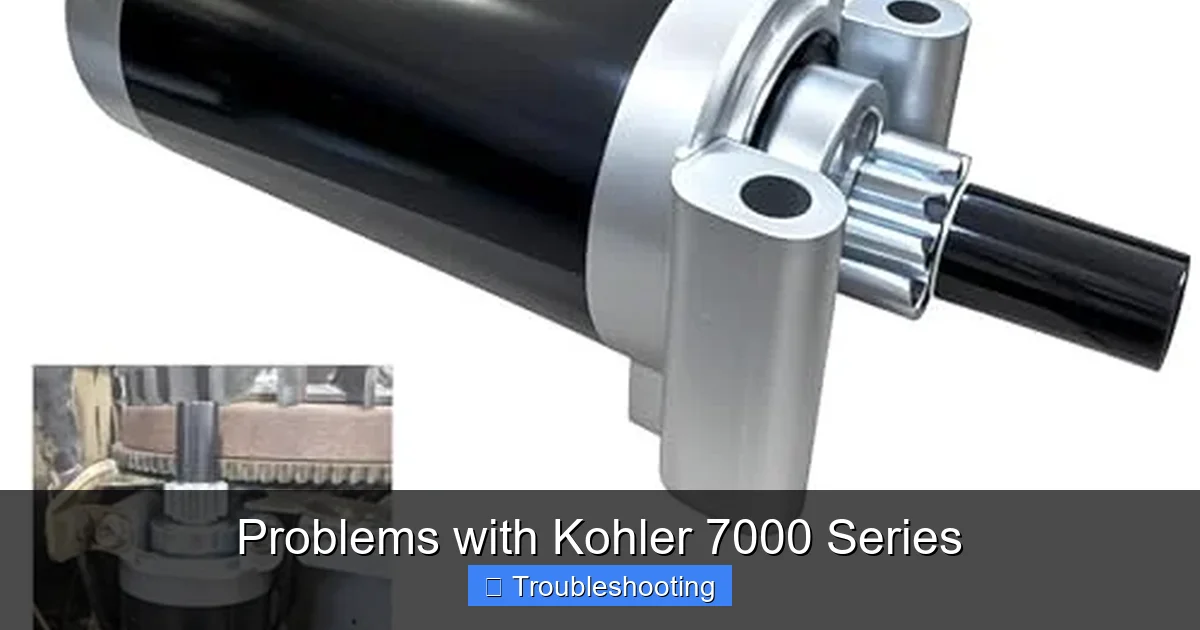
Visual guide about Problems with Kohler 7000 Series
Image source: m.media-amazon.com
Beyond “Bad Gas”: The Spark System
Old, degraded fuel is a common problem, but often the spark itself is weak or absent. The ignition coil (sometimes integrated with the magneto) can fail internally. Its resistance can increase, producing a weak spark that can’t ignite the fuel under compression, especially when the engine is cold.
- Diagnostic: Remove the spark plug, reconnect it to the plug wire, and ground the metal base against the engine block. Crank the engine. You should see a strong, blue, snappy spark. A weak yellow or orange spark indicates an ignition problem. You can also test the coil’s primary and secondary resistance with a multimeter against the service manual specs.
- Solution: Replace the ignition coil. Ensure the spark plug gap is correct (usually .030″) and the plug itself is not fouled or cracked.
Fuel Restriction from the Tank to the Carb
This is a chain of failure points. A clogged in-line fuel filter (if equipped), a kinked fuel line, a blocked fuel tank vent (which creates a vacuum), or a failing fuel pump (as discussed) can all starve the carburetor of fuel. The engine might crank over vigorously but never fire.
- Diagnostic Flow: 1) Check fuel level and vent. 2) Inspect fuel filter (replace if dirty). 3) Check fuel line for kinks/cracks. 4) Perform the fuel pump pulse test mentioned earlier. 5) As a last resort, spray a small amount of starting fluid directly into the carburetor throat. If the engine starts and runs briefly, you have confirmed a fuel delivery problem.
Electrical System Failures: Charging and Spark Woes
The 7000 Series uses a stator (a set of windings on the engine) and a separate voltage regulator/rectifier to charge the battery and power the electrical system. These components are a known failure point, especially in standby generators that cycle frequently or in environments with high vibration.
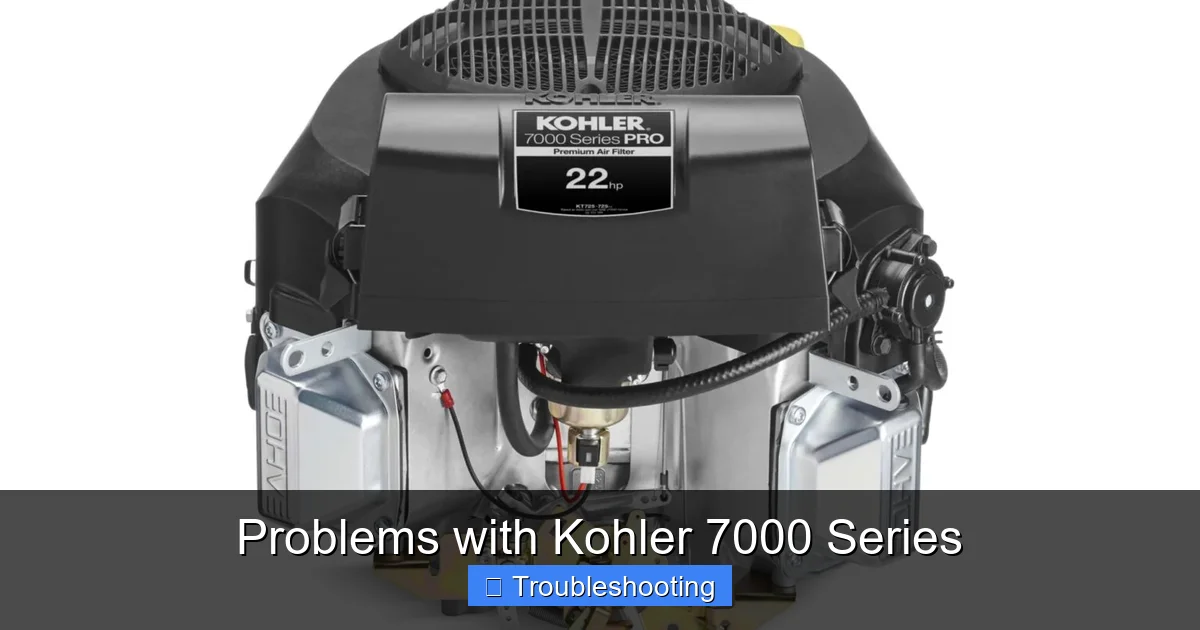
Visual guide about Problems with Kohler 7000 Series
Image source: mowerify.com
Stator Failure
The stator windings can short out or break. Symptoms include a battery that won’t stay charged, dimming headlights on mowers, and eventually, a no-start condition as the battery dies. The engine will crank slowly or not at all.
- Diagnostic: With the engine running, use a multimeter to check AC voltage coming from the stator connector (usually two white wires). You should see 30+ VAC at around 3600 RPM. No voltage or very low voltage means a bad stator. Also, check for resistance (ohms) between the two stator wires; an open circuit (infinite resistance) confirms failure.
- Solution: Replace the stator. This often requires removing the engine shroud and sometimes the flywheel, so consult the specific service manual.
Voltage Regulator/Rectifier Failure
This component converts the stator’s AC current to DC to charge the battery and regulates the voltage. If it fails, it can either stop charging (battery drains) or, less commonly, overcharge and fry the battery and electrical components.
- Diagnosis: With the engine running at full throttle, check DC voltage at the battery terminals. It should be around 14-14.5 volts. If it’s only 12V or less, the regulator isn’t charging. If it’s 15V+, it’s overcharging.
- Solution: Replace the voltage regulator. They are often mounted on the engine frame near the stator connector.
Unusual Noises and Vibration: Knocking, Ticking, and Shaking
Abnormal sounds are your engine’s cry for help. Ignoring them can lead to sudden, expensive failure.
Rod Knock or Main Bearing Knock
A deep, heavy, metallic knocking sound that increases with engine speed and load is the most serious. It indicates severe internal wear—a connecting rod bearing (rod knock) or main crankshaft bearing (main knock) is destroyed. This is caused by chronic low oil, oil starvation, or simply high hours of hard use. There is no repair for this; the engine requires a complete rebuild or replacement.
Valve Ticking / Lifter Noise
A faster, lighter ticking or tapping noise, often heard at the top of the engine, is usually related to the valvetrain. On the 7000 Series, this is often hydraulic lifters that have become air-bound or are failing. It can also be caused by excessive valve lash if the engine has mechanical lifters (less common on later models). Low oil pressure can also cause this noise.
- Diagnostic: Check oil level and pressure. If oil pressure is good, the issue may be lifters. Sometimes, running the engine at high RPM for a short period can re-seat air-filled lifters. Persistent noise requires a mechanic to inspect the valvetrain.
The Human Factor: Installation and Maintenance Errors
Many “engine problems” are actually the result of incorrect installation or poor maintenance practices by the equipment manufacturer or the owner.
Incorrect Spark Plug Gap or Heat Range
Using the wrong spark plug or failing to gap it to the precise specification (.030″ for most 7000 Series) will cause poor combustion, hard starting, and fouling. Using a “hotter” plug than specified can cause pre-ignition and engine damage.
Air Filter Neglect
A clogged air filter starves the engine of oxygen, running it “rich” (too much fuel). This causes black smoke, poor performance, fouled spark plugs, and carbon buildup in the combustion chamber, which leads to overheating. Check and clean the pre-cleaner (foam) every 25 hours and the paper element every 100 hours or annually.
Fuel System Contamination
Using old fuel (>30 days without stabilizer), filling up from dirty gas station cans, or storing equipment with a partially filled tank (allowing condensation) introduces water and debris into the system. This clogs jets and corrodes components. Always use fresh, ethanol-stabilized fuel and drain the carburetor bowl and fuel lines for long-term storage.
Frequently Asked Questions
Why does my Kohler 7000 Series engine surge at idle but run fine at full throttle?
This classic symptom points to a fuel/air mixture problem at low engine speeds. The most common causes are a clogged carburetor idle circuit, a leaking intake manifold gasket allowing extra air in, or a failing fuel pump that can’t maintain steady pressure. Start with a carburetor cleaning and inspection for air leaks.
What is the correct oil for a Kohler 7000 Series engine?
For general use above 32°F (0°C), Kohler recommends a SAE 30 or 10W-30 detergent oil meeting API service class SJ or higher. For standby generators in very cold climates (<32°F), a 5W-20 or 5W-30 synthetic may be used per their specifications. Always check your specific engine's manual for the definitive recommendation and capacity.
My Kohler 7000 Series is overheating quickly. What should I check first?
Check these in order: 1) Engine oil level and condition. 2) External cooling fins on the cylinder head and barrel for grass/debris blockage—clean them thoroughly. 3) Condition of the flywheel cooling fan—is it intact and secure? 4) Ensure the engine is not overloaded (e.g., mower deck set too low in thick grass).
How do I know if my fuel pump or carburetor is bad on my KT715?
Disconnect the fuel line from the carburetor inlet and place it in a clear container. Crank the engine over. You should see a steady, pulsating stream of fuel. If the stream is weak, dribbling, or nonexistent, the fuel pump is faulty. If the stream is strong, the carburetor is the likely culprit and needs cleaning or rebuilding.
Why is my generator’s battery not staying charged?
This is almost always a failure in the charging system. First, check all connections for corrosion. The most common failure points are the stator (the windings inside the engine) or the voltage regulator/rectifier. You’ll need a multimeter to test AC output from the stator and DC voltage at the battery with the engine running to pinpoint the faulty component.
Is engine knocking on my CH740 a sign of imminent failure?
Yes. A deep, metallic knocking sound that changes with engine RPM is a sign of severe internal bearing failure (rod or main bearing). This is caused by oil starvation or extreme wear. Continuing to run the engine in this condition will lead to catastrophic failure, where the connecting rod breaks and exits the engine block. The engine requires a complete rebuild or replacement.