Facing John Deere Lt155 problems can be frustrating, but many common issues are diagnosable and fixable with the right knowledge. This guide dives deep into the most frequently reported engine stumbles, transmission quirks, mower deck headaches, and electrical gremlins specific to the Lt155 model. We provide clear, step-by-step troubleshooting methods, practical maintenance tips to prevent future breakdowns, and crucial advice on when a problem might require a professional’s touch. Understanding these core systems empowers you to keep your tractor running reliably and get the most from your investment.
Key Takeaways
- Engine performance issues like sputtering or loss of power are often linked to fuel system clogs, air filter blockage, or spark plug wear, not always major internal failure.
- Transmission problems, such as slipping or slow movement, frequently stem from low/old hydraulic fluid, a clogged filter, or simple linkage adjustment needs.
- Electrical and starting failures are commonly caused by battery corrosion, a faulty solenoid, or a bad starter motor, which are often more accessible to diagnose than the starter itself.
- Mower deck problems—uneven cuts, vibration, or blade engagement issues—are usually due to deck leveling, worn deck belts, spindle bearings, or dull/imbalanced blades.
- Proactive, seasonal maintenance following the John Deere LT155 service schedule is the single most effective strategy to prevent the vast majority of these common problems.
- Always prioritize safety: disconnect the spark plug before any inspection or repair, and never work under a raised deck without proper support.
📑 Table of Contents
- Understanding Your John Deere Lt155: A Trusty Workhorse with Known Quirks
- H2: Engine & Performance Issues: When Power Falters
- H2: Transmission & Drive System Faults: Stubborn Movement and Slipping
- H2: Electrical & Starting Problems: The Frustration of a Dead Machine
- H2: Mower Deck & Cutting Problems: An Uneven Cut and Vibration
- H2: Steering, Hydraulics & Other Concerns: Handling and Lift Issues
- H2: Proactive Maintenance: Your Best Defense Against John Deere Lt155 Problems
- Conclusion: Knowledge is Power (and a Running Tractor)
Understanding Your John Deere Lt155: A Trusty Workhorse with Known Quirks
Welcome, fellow John Deere enthusiast! If you’re reading this, chances are your trusty LT155 lawn tractor is sending you some distress signals, or you’re simply a proactive owner wanting to stay ahead of the curve. The John Deere LT155, produced for many years, earned a solid reputation as a reliable mid-size rider for suburban lawns and small properties. It’s powered by a sturdy 17.5 HP Kohler engine and features a robust gear-driven transmission. However, like any machine with years of service and countless hours of mowing, specific weak points and wear items emerge. This guide isn’t about listing every possible failure; it’s about the John Deere Lt155 problems you’re statistically most likely to encounter. We’ll move beyond the frustration to give you the “why” and the “how to fix it,” arming you with the knowledge to diagnose, address, and often prevent these issues yourself. Think of this as a direct conversation with a seasoned mechanic who’s seen dozens of LT155s in the shop.
Before we dive into the nitty-gritty, a critical disclaimer: safety is paramount. Always work on a flat, stable surface. Engage the parking brake, remove the key, and disconnect the spark plug wire before reaching into any moving or rotating parts. Your LT155 is a powerful machine; respect it. Now, let’s get into the heart of the matter—the systems that most commonly call for attention.
H2: Engine & Performance Issues: When Power Falters
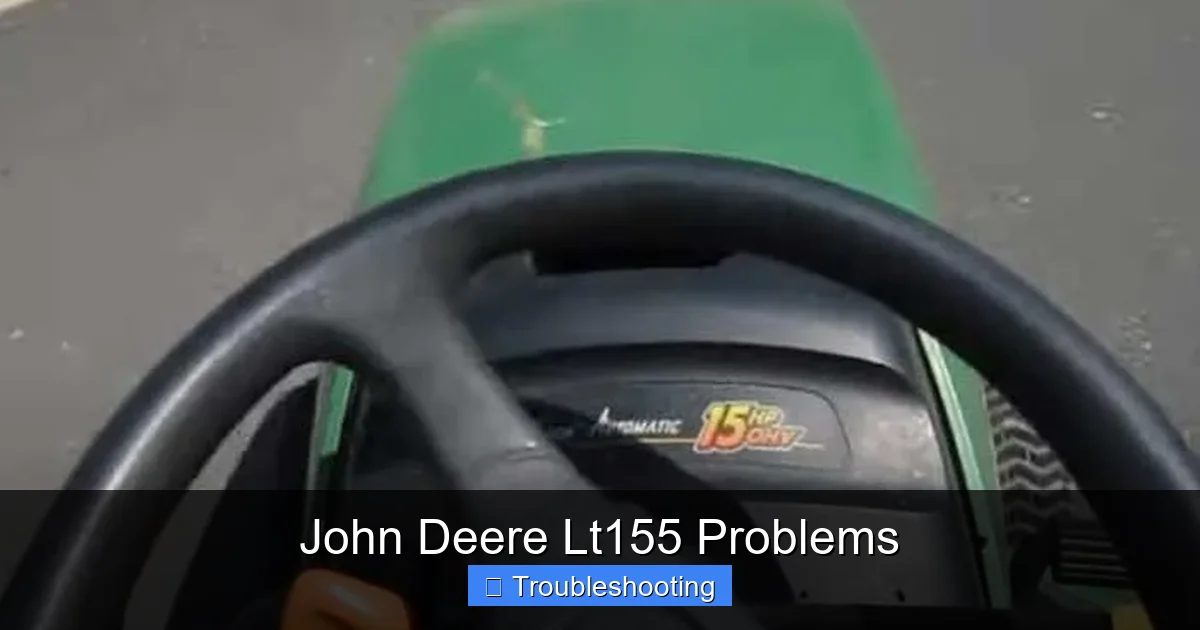
The Kohler engine in the LT155 is generally robust, but age, usage patterns, and maintenance habits can lead to several tell-tale performance problems. The key is to systematic: fuel, air, spark, compression.
Visual guide about John Deere Lt155 Problems
Image source: denresidence.com
Symptom: Engine Runs Rough, Misfires, or Loses Power Under Load
This is one of the most frequent John Deere Lt155 problems. The tractor may idle fine but sputters and dies when you engage the blades or try to go up a hill. The culprit is almost always in the fuel or air delivery system.
- Primary Suspect: Fuel System. Old, stale gasoline (especially with ethanol) is the number one enemy. It varnishes the carburetor jets and creates gummy deposits. A clogged fuel filter (located in the fuel line between the tank and carburetor) will starve the engine. Start by draining old gas and replacing it with fresh, ethanol-free or low-ethanol fuel. Add a fuel stabilizer if the mower sits for more than 30 days. Replace the inline fuel filter—it’s a cheap, easy fix.
- Secondary Suspect: Air Filter. A paper air filter clogged with dust and grass chaff chokes the engine of the air it needs for combustion. Check it every 25 hours of operation. If it’s dirty, replace it. Never try to clean a paper filter; it damages the media.
- Tertiary Suspect: Spark Plug. A fouled (carbon-covered) or worn-out spark plug causes mis-firing. Remove it, check the gap (typically .030″ for many Kohler engines in this era), and inspect the electrode. If it’s worn or damaged, replace it with the correct OEM or equivalent. While you have it out, give the cylinder head a quick shot of compressed air to clean out any loose debris.
Practical Example: You’re mowing and the engine sputters, then dies when you hit a thick patch. You restart it, and it’s fine until you engage the blades again. This classic points directly to a fuel delivery issue under load—a partially clogged carburetor main jet or a weak fuel pump. A carburetor cleaning with aerosol spray (through the air intake with the engine off) can sometimes provide a temporary fix, but a full rebuild or replacement is often the permanent solution on a 20-year-old unit.
Symptom: Engine Won’t Start or Cranks Very Slowly
This is often an electrical issue, but the engine’s health plays a role. A slow crank usually means the starter motor is turning the engine over weakly, pointing to a battery or starter circuit problem. No crank at all with a click sound is a classic starter solenoid or battery failure.
- Battery Check First: Test the battery voltage. A fully charged 12V battery should read ~12.6V. Anything below 12.2V is weak. Clean the terminals with a baking soda/water solution and a wire brush to remove corrosion, which is a massive drain. Check the battery’s water level if it’s not a sealed unit.
- Starter Solenoid: Located on the frame near the battery, this is a common failure point. Listen for a loud click when you turn the key. If you hear a click but the engine doesn’t turn, the solenoid may be bad. You can often bypass it temporarily by connecting a wrench or screwdriver across the two large posts on the solenoid (BAT and STARTER) while the key is in the “on” position. CAUTION: The engine will start immediately; keep hands clear of moving parts. If this works, the solenoid is faulty.
- Starter Motor: If bypassing the solenoid doesn’t work, the starter motor itself may be worn out or its internal brushes are shot. This usually requires removal and replacement or a costly rebuild.
Tip: Always charge a battery with a proper trickle charger, not just a jump start, before deciding it’s bad. A deeply discharged battery can often be revived.
H2: Transmission & Drive System Faults: Stubborn Movement and Slipping
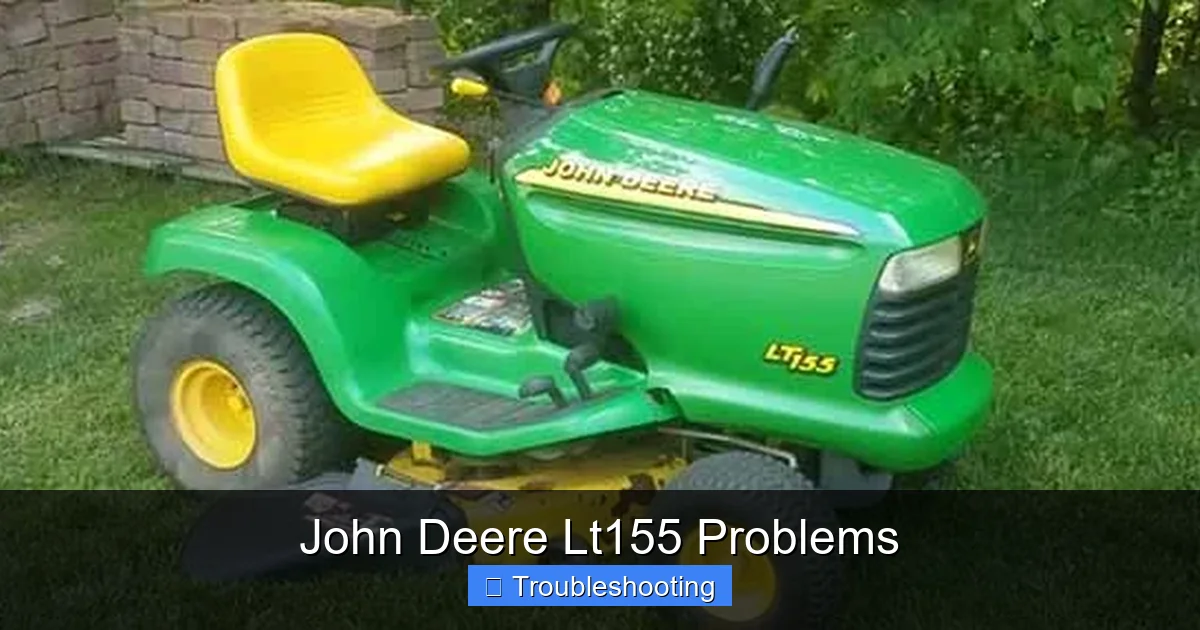
The LT155 uses a gear-driven hydrostatic transmission (often a K46 or similar). While generally durable, these units have specific failure modes that manifest as poor forward/reverse response, slipping, or noise.
Visual guide about John Deere Lt155 Problems
Image source: denresidence.com
Symptom: Tractor Moves Slowly or “Slips” Under Load
You press the forward pedal, and the tractor lurches forward slowly or seems to lose power going uphill. This is a classic hydrostatic transmission issue, but the fix is often simpler than you think.
- Transmission Fluid Level & Condition: This is your FIRST check. The LT155 transmission does NOT use engine oil; it uses specific hydraulic fluid (usually John Deere Low Viscosity HY-Tran or equivalent). With the tractor on level ground, engine warm, and parking brake set, check the dipstick (usually yellow, near the transmission). The fluid should be at the “Full” mark. If it’s low, top it up. If it’s dark, burnt-smelling, or full of metal shavings, it’s contaminated and needs a flush and refill. Low fluid causes cavitation and loss of pressure.
- Clogged Transmission Filter: Many hydrostatic units have an internal suction filter. If this clogs (from old fluid or debris), the pump can’t pull fluid efficiently, causing slip and slow movement. Replacing this filter is a more involved job (often requiring removal of the transmission) but is a common remedy.
- Control Linkage Adjustment: The pedals connect to the transmission via rods and linkages. Over time, these can stretch or become misadjusted, meaning the transmission isn’t getting the full range of motion from your pedal. Consult your manual for the specific adjustment procedure on the transmission control arm. It’s often a simple turnbuckle or nut adjustment.
Practical Example: Your LT155 will back up fine but struggles to go forward. This can indicate a worn drive belt for the forward motion (some models have a single belt for both directions, but check) or a more likely internal issue with the forward stroke of the hydrostatic unit. However, 70% of the time, it’s simply low transmission fluid.
Symptom: Loud Whining, Grinding, or Clunking from Transmission Area
Noise is a serious warning. A constant high-pitched whine that changes with speed can indicate worn pump or motor components. A clunk when shifting from forward to reverse is often normal gear lash, but a loud, violent clunk is not.
- Belt & Pulley Inspection: Before assuming internal transmission death, inspect the drive belt that connects the engine to the transmission. Is it worn, glazed, or loose? A slipping belt can cause squealing and a loss of power transfer. Also, check the pulleys for wobble or excessive play.
- Low Fluid Again: Air entrainment from low fluid causes aeration and whining. Ensure the fluid level is perfect.
- Internal Failure: Persistent grinding or severe whining, especially with metal particles in the fluid, usually means internal gears, bearings, or the pump/motor set are worn. This is a major repair often requiring transmission removal and rebuild or replacement. Get a professional diagnosis at this stage.
H2: Electrical & Starting Problems: The Frustration of a Dead Machine
Beyond the starter/solenoid combo, the LT155’s electrical system has other common pain points, especially as connections corrode and components age.
Visual guide about John Deere Lt155 Problems
Image source: farmsunseed.com
Symptom: Intermittent Starting or “Clicking” Only
The key turns, you hear a single click from the solenoid, but nothing else. The battery is new or fully charged.
- Bad Ground Connection: The engine and frame must have a perfect ground. Check the heavy ground cable from the battery negative terminal to the engine block/frame. Is it tight? Is the attachment point on the engine clean and free of paint/corrosion? A poor ground is a classic culprit.
- Faulty Safety Switch: The LT155 has safety interlocks: the brake must be engaged, and you must be in the seat (if equipped) to start. The seat switch, in particular, is prone to failure due to moisture and wear. You can often test it by locating it (under the seat) and temporarily bypassing it with a jumper wire (unplug the connector and connect the two terminals). Only do this for diagnosis. If it starts, the switch is bad.
- Corroded/Worn Solenoid: Even if it clicks, the internal contacts may be pitted and not conducting full current. Replacing the solenoid is cheaper than the starter.
Symptom: Lights or PTO Blades Don’t Engage
The ignition works, but the mower deck won’t engage, or the headlights are out.
- Blade Engagement (PTO) Switch: This is a separate switch on the dash or control panel. They fail frequently. Test for voltage at the PTO clutch coil when the switch is on (use a test light or multimeter). No voltage means a bad switch, wiring break, or blown fuse (if equipped). Voltage present but no clutch engagement means a bad PTO clutch itself.
- Fuses & Relays: Check any fuse panel (often under the dash or on the firewall) for blown fuses related to the PTO or lighting circuit.
- Wiring Harness: Look for wires that have been rubbed raw by the steering column or other moving parts. A short or break here will kill the circuit.
Tip: Keep a multimeter and a test light in your tool kit. They are invaluable for tracing electrical faults—checking for power at switches and connectors is faster than guessing.
H2: Mower Deck & Cutting Problems: An Uneven Cut and Vibration
The deck is where the rubber meets the road (or grass). Deck issues are some of the most noticeable John Deere Lt155 problems because they directly impact your lawn’s appearance.
Symptom: Uneven Cut, Scalping, or Streaking
The mower leaves stripes, cuts lower on one side, or scalps high spots.
- Deck Leveling: This is the #1 fix. The deck must be level side-to-side and have the correct front-to-rear pitch (usually 1/4″ to 1/2″ lower in the front). Place the tractor on a flat surface. Measure from the blade tips to the ground on both sides. Adjust the deck links (usually with locknuts and clevis pins) until level. Then measure the front and rear blade tips; the front should be slightly lower. Your manual has exact specs.
- Worn or Damaged Blades: Bent, nicked, or unbalanced blades cause vibration and poor cut quality. Always replace blades in pairs. Sharpen them if they’re just dull, but replace if they have significant damage.
- Tire Pressure: Uneven tire pressure on the drive tires can cause the tractor to sit crooked, leading to an uneven cut. Ensure all tires are inflated to the PSI listed in your manual (typically 10-14 PSI).
- Suspension Issues: If the deck is level but you still get a scalping “nose dive” when going over bumps, the deck’s suspension arms or springs may be worn or broken.
Symptom: Excessive Vibration from Deck
A vibration that feels like the whole tractor is going to shake apart is alarming and damaging.
- Unbalanced or Damaged Blades: This is the prime suspect. After sharpening or replacing, blades must be balanced. A blade balancer is a cheap tool that pays for itself. A severely bent blade is unbalanced even if sharpened.
- Worn Deck Spindles/Bearings: Lift the deck. Grab each blade and try to wiggle it up and down and side-to-side. There should be minimal play. Any noticeable clunk or wiggle means the spindle bearings are worn. You’ll need to replace the entire spindle assembly or just the bearings if you’re skilled.
- Belt Issues: A worn, stretched, or glazed deck belt can also cause vibration. Inspect it for cracks, glazing (shiny surface), or fraying. Also, check pulley bearings by spinning them by hand—they should be smooth.
- Loose Deck Hangers: All bolts securing the deck to the tractor frame and the deck’s own components must be tight. A single loose pivot point can cause violent shaking.
Pro Tip: When replacing blades, mark them with a paint pen to note their orientation. Reinstall them exactly as they came off to maintain balance if they were previously balanced.
H2: Steering, Hydraulics & Other Concerns: Handling and Lift Issues
The LT155’s steering and any hydraulic lift system (if equipped with a front loader or certain decks) have their own set of common complaints.
Symptom: Hard or Stiff Steering
Turning the wheel requires significantly more effort than it used to.
- Low Hydraulic Fluid (Steering): The power steering system (if equipped) uses hydraulic fluid from the same reservoir as the transmission. Low fluid will cause hard steering. Check and top up the hydrostatic fluid.
- Air in Steering System: If fluid was low, air may have entered the steering lines. There is often a bleed procedure involving turning the wheel lock-to-lock with the engine running to purge air. Consult your manual.
- Worn Steering Components: The tie rod ends, drag link, and steering shaft bushings wear out. Inspect for play by grabbing the front wheels and trying to turn them left/right with the tractor stationary (engine off). Excessive play indicates worn parts that need replacement.
- Wheel Bearings: Extremely tight or damaged wheel bearings can also cause a heavy steering feel.
Symptom: Hydraulic Lift (if equipped) is Slow or Weak
If your LT155 has a hydraulic lift for a front-end loader or certain mid-mount attachments, a weak or slow cylinder is a problem.
- Low Hydraulic Fluid: Again, check the main reservoir level.
- Worn Cylinder Seals: The lift cylinder itself has internal seals that wear, allowing fluid to bypass. This causes slow, weak lifting. The cylinder will need to be rebuilt or replaced.
- Control Valve or Pump Issue: Less common, but the valve that directs fluid to the cylinder or the pump’s capacity could be at fault.
Note: Not all LT155 models have power steering or hydraulic lift. Many base models have manual steering and a mechanical lift lever for the deck. Identify your specific configuration.
H2: Proactive Maintenance: Your Best Defense Against John Deere Lt155 Problems
You’ve now seen the common failure points. The most powerful tool in your arsenal isn’t a wrench; it’s a rigorous maintenance schedule. Preventing these John Deere Lt155 problems is far easier and cheaper than fixing them.
The Seasonal Maintenance Checklist
- Before Spring (First Mow):
- Change the oil and filter (use the correct SAE weight and API service class).
- Replace the fuel filter.
- Inspect and clean/replace the air filter.
- Check and clean the spark plug; replace if worn.
- Inspect all belts (engine drive, deck) for cracks and wear.
- Sharpen and balance mower blades.
- Level the mower deck.
- Check tire pressure.
- Lubricate all grease fittings (zerk fittings) per the manual—especially deck spindles, pivot points, and steering linkages.
- Check and top up transmission/hydraulic fluid.
- During Season (Every 25-50 Hours):
- Clean the deck underside after each mow in wet, sticky grass conditions to prevent buildup.
- Check air filter daily in dusty conditions; clean/replace as needed.
- Inspect blades for damage after hitting obstacles.
- Check fluid levels (oil, hydraulic) weekly.
- Before Winter Storage:
- Run the engine dry of fuel or add a fuel stabilizer to a full tank and run it for 5 minutes.
- Change the oil at the end of the season, not the beginning.
- Remove the battery, clean terminals, and store it on a trickle charger indoors.
- Clean the entire tractor, especially the deck and undercarriage, to prevent corrosion.
- Store with the deck in the highest position to relieve spring tension.
Remember: A well-maintained LT155 will easily surpass 500 hours and 15+ years. Neglecting these simple steps is what turns minor, inexpensive issues into major, costly repairs. Keep a logbook with hours and services performed. It’s the best investment you can make in your machine’s longevity.
Conclusion: Knowledge is Power (and a Running Tractor)
Dealing with John Deere Lt155 problems doesn’t have to be a journey into the unknown. By understanding the core systems—the fuel/air/spark trio for the engine, the fluid health for the transmission, the clean connections for electricity, and the precise adjustments for the deck—you transform from a frustrated owner into a capable troubleshooter. Start with the simplest, most common causes: fresh fuel, clean filters, proper fluid levels, and tight connections. These resolve the lion’s share of issues. When a problem persists, use the systematic approach outlined here: observe the symptom, isolate the system, check the obvious items first, and then move to more complex components. Always, always put safety first. There is immense satisfaction in diagnosing and fixing your own equipment, and it saves significant money. Your John Deere LT155 is a piece of equipment that, with respect and regular care, will serve you faithfully for years to come. Now, go grab your tools, your manual, and get that tractor humming smoothly across your lawn once again.
Frequently Asked Questions
Why does my LT155 mower deck vibrate so badly?
Severe vibration is almost always due to unbalanced or damaged mower blades, or worn deck spindle bearings. Start by removing and carefully balancing the blades. If vibration persists, check each spindle for side-to-side play by wiggling the blade; any noticeable play means the spindle bearings are shot and need replacement.
My LT155 won’t move forward but reverses fine. What’s wrong?
This is a classic symptom. First, check the transmission fluid level and condition. Low or contaminated fluid is the most common fix. If fluid is fine, the next likely cause is an adjustment issue with the transmission control linkage, which may not be fully engaging the forward range. A clogged transmission filter is a less common but possible internal cause.
How do I know if my starter solenoid is bad on my LT155?
A bad solenoid often makes a single loud click when you turn the key, but the engine doesn’t crank. You can test it by safely bypassing it: with the key in the “on” position, use an insulated wrench to briefly connect the two large posts on the solenoid (the one from the battery and the one going to the starter). If the engine starts, the solenoid is faulty and needs replacement.
What causes an uneven cut on my John Deere LT155?
An uneven cut is rarely a mystery. The primary causes are: 1) an unlevel mower deck (side-to-side or incorrect front-to-rear pitch), 2) uneven tire pressure, 3) dull, bent, or unbalanced blades, or 4) worn deck suspension components that allow the deck to tilt. Always start by leveling the deck on a flat surface.
Should I attempt to rebuild my LT155’s hydrostatic transmission myself?
For most owners, no. Transmission rebuilds require specialized tools, a clean workspace, and detailed knowledge of the internal pump/motor components. Incorrect reassembly leads to immediate failure. Diagnosis (checking fluid, filter, linkages) is DIY-friendly, but for a full rebuild or replacement, seek a qualified small engine or transmission specialist.
For most owners, no. Transmission rebuilds require specialized tools, a clean workspace, and detailed knowledge of the internal pump/motor components. Incorrect reassembly leads to immediate failure. Diagnosis (checking fluid, filter, linkages) is DIY-friendly, but for a full rebuild or replacement, seek a qualified small engine or transmission specialist.
My LT155 battery drains overnight. What should I check?
A parasitic drain is likely. First, ensure the battery terminals are clean and tight. Then, check for any accessories that might stay on (like a light under a seat). The most common culprit is a shorted or worn-out starter solenoid, which can draw power continuously. Disconnect the solenoid’s small control wire overnight; if the battery stays charged, the solenoid is bad. Also, an old battery itself can self-discharge rapidly.