The Husqvarna YTH22V46 is a reliable riding mower, but like any machine, it can develop issues. Common problems typically involve the engine (hard starting, running rough), the cutting deck (uneven cuts, vibration), and the electrical system (battery drain, starter failure). Most issues stem from a lack of regular maintenance—dirty filters, old spark plugs, dull blades, or low tire pressure. This guide provides clear, step-by-step troubleshooting for the most frequent YTH22V46 complaints, helping you diagnose and fix problems safely and effectively. Always prioritize safety: disconnect the spark plug before any inspection or repair.
Key Takeaways
- Preventative Maintenance is Non-Negotiable: Over 70% of “major” YTH22V46 problems are directly caused by skipped annual tune-ups, including dirty air filters, old spark plugs, and improper oil changes.
- Blade and Deck Health Dictates Cut Quality: Dull, unbalanced, or damaged blades are the #1 cause of uneven cutting, scalping, and excessive vibration, which can damage the deck spindles over time.
- Fuel System Issues Are Often Simple: Stale ethanol-blended fuel is the prime culprit for hard starting, sputtering, and engine surging. Using a fuel stabilizer and fresh gas solves most of these problems.
- Electrical Faults Usually Start with the Battery: A weak or corroded battery is the most common reason for a slow-turning starter or a mower that won’t crank. Check connections and charge/replace annually.
- Listen and Feel for Diagnostics: Unusual noises (squealing, grinding) and vibrations are your mower’s language. A high-pitched squeal often means a loose or worn drive belt; a grinding noise points to spindle bearing failure.
- Know Your Limit: While many fixes are DIY-friendly, internal engine failures, transmission rebuilds, and major electrical shorts require a qualified small engine technician to avoid costly mistakes.
- Safety First, Always: Never work on a mower with the spark plug connected. Engage the parking brake, remove the key, and disconnect the battery terminal for any under-deck or drivetrain work.
📑 Table of Contents
- Introduction: Your Trusty Mower Needs a Check-Up
- 1. The Engine Won’t Start or Runs Poorly: Fuel, Air, and Spark
- 2. Cutting Deck & Blade Nightmares: Uneven Cuts and Violent Vibration
- 3. Transmission and Drive System Faults: Won’t Move or Jerky Motion
- 4. Electrical System Gremlins: Batteries, Starters, and Ignition
- 5. Common Maintenance Mistakes That Cause Big Problems
- 6. When to Call a Professional: Recognizing Your Limits
- Conclusion: A Well-Maintained Mower is a Happy Mower
Introduction: Your Trusty Mower Needs a Check-Up
You bought your Husqvarna YTH22V46 for its reputation of durability and a smooth, comfortable cut. It’s been a workhorse, turning your yard into a showcase. But lately, it’s been acting up—maybe it’s harder to start, the cut isn’t as crisp as it used to be, or it’s developed a worrying rattle. Before you panic and call for an expensive service call, take a breath. Many common Husqvarna YTH22V46 problems are not only diagnosable by the average homeowner but are also often fixable with simple tools and a little know-how.
This model, part of Husqvarna’s popular YTH series, is a robust machine. However, it operates in demanding conditions: hot engines, tall grass, dusty environments, and seasonal storage. These factors take a toll. This guide is your comprehensive companion, walking you through the most frequent complaints we see from owners. We’ll break down the symptoms, explain the likely causes in plain language, and give you actionable steps to get your mower back to its prime. Think of it as a conversation with a seasoned mechanic who’s seen it all with this specific model.
1. The Engine Won’t Start or Runs Poorly: Fuel, Air, and Spark
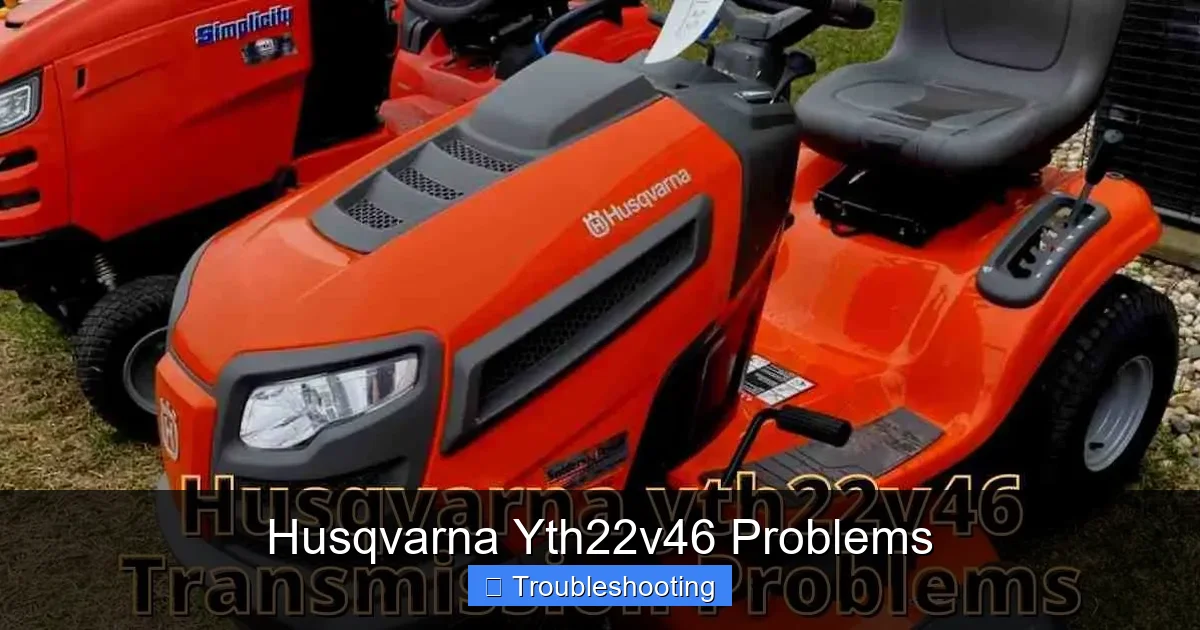
When the heart of your mower—the engine—misbehaves, it’s frustrating. The good news is that the internal combustion engine is a simple system. It needs three things: fuel, air, and spark. Troubleshooting Husqvarna YTH22V46 engine problems is a matter of checking each of these in order.
Visual guide about Husqvarna Yth22v46 Problems
Image source: gardenguider.com
Hard Starting or No Start (Cranks but Won’t Fire)
This is the most frequent complaint. You turn the key, the starter engages, but the engine won’t catch. Here’s your checklist:
- Stale Fuel: This is the #1 culprit. Modern gasoline with ethanol (E10 or E15) degrades quickly, often within 30 days. It forms gums and varnish that clog the tiny ports in the carburetor. Solution: Drain old gas from the tank and carburetor bowl. Always use fresh, non-ethanol fuel if possible, or add a fuel stabilizer to every tank, especially if the mower sits between uses.
- Clogged Air Filter: A dirty air filter chokes the engine of the oxygen it needs. Solution: Remove the filter. If it’s paper, replace it. If it’s foam, wash it with mild soap, let it dry completely, and re-oil it lightly with clean engine oil.
- Faulty Spark Plug: A worn, fouled, or incorrectly gapped plug won’t create a strong spark. Solution: Remove the plug. Inspect the electrode. If it’s worn down, covered in carbon, or the ceramic is cracked, replace it with the correct NGK or Champion plug specified in your manual. Check the gap with a feeler gauge (typically .030”). Reinstall and torque gently.
- Bad Fuel Filter or Pump: Located in the fuel line, a clogged filter restricts flow. Solution: Replace the inline fuel filter annually. If the mower has a pulse fuel pump (common on these models), inspect the rubber diaphragms for cracks.
Engine Runs Rough, Sputters, or Surges
If it starts but idles poorly or dies when you engage the blades, the issue is often still fuel or air-related, but with a few other possibilities:
- Carburetor Issues: Even with good fuel, a dirty carburetor jet or a sticky float can cause a lean (too much air) or rich (too much fuel) mixture. Solution: A carburetor cleaning with aerosol spray can help minor issues. For persistent problems, a rebuild kit or professional cleaning is needed.
- Governor Problem: The governor controls engine speed. A loose or broken governor linkage or spring will cause surging. Solution: Locate the governor spring on the carburetor and engine. Ensure it’s connected at both ends and not stretched or broken.
- Ventilation Issue: The fuel tank cap has a vent. If it’s clogged, it creates a vacuum, stopping fuel flow after a few minutes. Solution: Try running with the cap slightly loosened. If the problem disappears, clean or replace the cap.
2. Cutting Deck & Blade Nightmares: Uneven Cuts and Violent Vibration
A beautiful lawn depends on an even cut. When your Husqvarna YTH22V46 cutting deck starts leaving streaks, scalping low spots, or shaking violently, the problem is almost always mechanical and directly under the deck.

Visual guide about Husqvarna Yth22v46 Problems
Image source: i.ytimg.com
Uneven Cut, Streaks, or Scalping
First, rule out operator error: is your tire pressure correct? Uneven tire pressure changes the deck’s pitch. Check all four tires to 15 PSI (as per manual). Assuming that’s fine:
- Dull or Damaged Blades: This is the prime suspect. Dull blades tear grass instead of slicing it, causing a brown, ragged tip. A bent blade will hit the deck housing, causing a loud clunk and a streak of uncut grass. Solution: Remove blades. Inspect for nicks, bends, or excessive wear (>1/2” from the original cutting edge). Sharpen with a grinder or file, maintaining the original bevel. Balance the blade on a nail or balancer—if one side drops, grind metal from the heavy side. Always replace blades every 1-2 seasons for a perfect cut.
- Deck Not Level (Side-to-Side or Front-to-Back): The deck must be parallel to the ground. Solution: Park on a flat surface. Measure from the blade tip to the ground on both sides (side-to-side) and from the front/rear blade tips to the ground (pitch). Adjust the deck lift linkages according to your owner’s manual until it’s level. A slight front pitch (1/8” to 1/4”) is sometimes recommended for a cleaner cut.
- Worn or Loose Deck Spindles/Bearings: A wobbly blade due to a worn spindle bearing causes a rhythmic cut pattern. Solution: With the deck raised, grab each blade and try to wiggle it side-to-side. Any noticeable play means the spindle bearings are shot and need replacement.
Severe Vibration During Operation
Vibration that travels through the seat and steering wheel is dangerous and damaging. Never ignore it.
- Unbalanced Blades: Even after sharpening, a blade can be unbalanced. Solution: Always balance after sharpening. A dynamic balancer is best.
- Bent Spindle or Deck Shell: A major impact with a root or rock can bend the spindle shaft or the deck’s metal housing. Solution: Visually inspect. A bent spindle must be replaced. A severely bent deck shell may need professional straightening or replacement.
- Loose or Worn Drive Belts/Pulleys: The deck drive belt or PTO belt can become glazed, frayed, or loose. A worn pulley (with a wobbly bearing) causes a distinct thumping vibration. Solution: Inspect all belts for cracks, glazing, or looseness. Replace per manual specs. Spin each pulley by hand—it should turn smoothly with no roughness or side-to-side play.
3. Transmission and Drive System Faults: Won’t Move or Jerky Motion
The YTH22V46 uses a hydrostatic transmission (HST) for smooth, gear-less speed control. Problems here range from simple linkage issues to internal transmission wear.

Visual guide about Husqvarna Yth22v46 Problems
Image source: nfm.com
Mower Won’t Move Forward/Reverse or Is Very Slow
First, ensure the parking brake is fully disengaged (pedal released). Then:
- Low Transmission Fluid: This is critical. The HST uses specific SAE 20W-50 oil. Solution: Check fluid level with the dipstick on the transmission (usually near the filler cap). It must be at the “Full” mark when the mower is on level ground. Top up with the correct oil if low. A persistent low fluid level indicates a leak—inspect seals and hoses.
- Worn Drive Belt: The belt connecting the engine to the transmission pump can slip if worn or loose. Solution: Inspect the primary drive belt. If it’s shiny, glazed, or has cracks, replace it. Check belt tension according to the manual.
- Faulty Motion Control Linkage: The pedals or lever are connected to the transmission’s control valve by rods and clevises. If these become disconnected, misadjusted, or corroded, the transmission won’t get the signal to move. Solution: Trace the linkage from the pedal/lever to the transmission. Ensure all pins are in place, bushings aren’t worn, and the range of motion is full. Adjust per manual.
Jerky Movement, “Creeping,” or Loss of Power Uphill
These symptoms often point to internal transmission wear, but there are external checks:
- Air in the Hydraulic System: If the system was opened (e.g., for a belt change) and not bled properly, air pockets cause jerky operation. Solution: Consult the manual for the specific bleeding procedure for your hydrostatic unit. It often involves cycling the motion control slowly with the engine running.
- Worn Hydrostatic Pump/Motor: After many hours, the internal seals and vanes in the pump and motor wear, reducing efficiency. This is a major repair. Solution: This is beyond DIY for most. A transmission specialist will need to rebuild or replace the unit.
- Overloaded Unit: Trying to mow wet, thick grass or a steep hill (beyond the mower’s 10° max slope spec) can overload the transmission, causing it to slip and overheat. Solution: Mow in drier conditions, cut higher, and take multiple passes on slopes. Never exceed the slope rating.
4. Electrical System Gremlins: Batteries, Starters, and Ignition
Your Husqvarna YTH22V46 electrical system is straightforward but vital. When it fails, you’re not going anywhere.
Slow Cranking or “Click” Sound, No Start
The starter solenoid gives a loud CLICK, but the engine barely turns or doesn’t turn at all.
- Dead or Weak Battery: The most common cause. Batteries last 3-5 years. Solution: Test the battery with a multimeter (should read ~12.6V at rest, >10V while cranking). If low, try a slow charge. If it won’t hold a charge, replace it. Clean white/green corrosion from terminals with a baking soda/water mix and a wire brush.
- Bad Connections: Corroded or loose battery cables or ground straps create high resistance. Solution: Disconnect and clean both positive and negative battery terminals and the cable ends. Ensure the main ground strap from the battery to the frame/engine is tight and corrosion-free.
- Faulty Starter Motor or Solenoid: If the battery and connections are good, the starter itself may be worn out. A solenoid can fail internally. Solution: Bench-test the starter. Have a helper turn the key while you listen—if you hear a click but no crank, the solenoid may be bad. If you hear nothing, the solenoid or ignition switch could be at fault.
Inter lights or PTO Clutch Not Engaging
Lights dim when engaging the blades, or the PTO (Power Take-Off) clutch doesn’t activate.
- Weak Charging System: The engine’s stator (alternator) isn’t recharging the battery. Solution: With the engine running, test voltage at the battery terminals. It should be 13.5-14.5 volts. If it’s below 13V, the stator or voltage regulator may be faulty.
- Worn PTO Clutch: The electromagnetic clutch wears out. It may draw too much current, causing lights to dim, or fail to engage. Solution: Listen for a distinct CLUNK when you pull the PTO lever. If absent, the clutch is likely failed and needs replacement.
- Blown Fuse: Check the main fuse (usually 20-30A) in the fuse box. A short in the wiring can blow it. Solution: Replace with the same amperage fuse. If it blows again immediately, there’s a short that needs diagnosing.
5. Common Maintenance Mistakes That Cause Big Problems
Many Husqvarna YTH22V46 problems are self-inflicted. Here are the top maintenance sins we see:
- Skipping Annual Tune-Ups: This isn’t just about the spark plug. A proper tune-up includes: air filter cleaning/replacement, fuel filter replacement, spark plug check, blade sharpening/balance, deck leveling, tire pressure check, lubrication of all grease fittings (especially deck spindles and steering linkages), and a full oil change with the correct SAE 30 or 10W-30 oil.
- Using Old or Improper Fuel: Never use gas older than 30 days without stabilizer. Never use automotive oil in the fuel (a common myth for 2-strokes, but disastrous in 4-strokes). Never mix oil and gas in a 4-stroke engine.
- Neglecting the Undercarriage: Grass clippings and mud pack under the deck, throwing blades out of balance, causing corrosion, and blocking discharge chutes. Solution: After every few mows, scrape the underside of the deck clean with a putty knife. Spray the clean metal with a silicone-based lubricant (like WD-40 Specialist Silicone) to prevent buildup.
- Ignoring Tire Pressure: Uneven or low tire pressure is the silent killer of cut quality and steering precision. Check pressures monthly with a gauge.
- Improper Storage: Storing with a full tank of ethanol fuel is a recipe for carburetor varnish. Either run the tank dry before storage or add a full dose of fuel stabilizer and run the engine for 5 minutes. Store with the battery on a trickle charger.
6. When to Call a Professional: Recognizing Your Limits
Your safety is paramount. Some Husqvarna YTH22V46 problems require a trained technician. Here’s when to put the tools down and pick up the phone:
- Internal Engine Failure: Symptoms include loud knocking, metal shavings in the oil (check dipstick), or a sudden loss of compression. These require engine rebuild or replacement.
- Transmission Rebuild: As noted, internal HST failure is complex. It involves specialized tools, clean room conditions for internal parts, and precise reassembly.
- Major Electrical Shorts: If fuses blow repeatedly and you can’t find the short, a pro with wiring diagrams and diagnostic tools is needed. Messing with the wiring harness can cause fires.
- Frame or Structural Damage: A bent frame from a rollover or major impact compromises safety and alignment. This needs professional assessment.
- Any Repair You’re Uncomfortable With: If a task involves working under a raised deck (risk of crushing), dealing with high-pressure hydraulic lines, or you simply don’t have the right tools, it’s worth the service call to avoid injury or causing more damage.
A good small engine shop will also have access to OEM (Original Equipment Manufacturer) parts, which are often superior to aftermarket for critical components like spindles, belts, and carburetors.
Conclusion: A Well-Maintained Mower is a Happy Mower
Your Husqvarna YTH22V46 is a significant investment in your home’s curb appeal and your enjoyment of your property. Understanding the most common Husqvarna YTH22V46 problems demystifies its care and empowers you to be your own first line of defense. Remember the golden rule: prevention is infinitely cheaper and easier than repair. A disciplined schedule of seasonal maintenance—cleaning, sharpening, fluid checks, and filter changes—will stave off 90% of the issues that plague other owners.
When a problem does arise, stay calm. Isolate the system (engine, deck, drive, electrical). Start with the simplest, most likely cause (dirty filter, bad spark plug, dull blade, low fluid). Work methodically. And never, under any circumstances, compromise on safety. Disconnect that spark plug. By following the structured troubleshooting approach in this guide, you’ll not only solve today’s problem but also extend the life of your mower for years of reliable, crisp-cutting service. You’ve got this.
Frequently Asked Questions
What type of oil does the Husqvarna YTH22V46 use?
Use a high-quality detergent oil classified as SAE 30 or 10W-30. Do not use multi-viscosity oils in temperatures below 40°F (4°C). Always check the oil level before each use with the dipstick when the engine is cold and on level ground.
How often should I sharpen or replace the mower blades?
Sharpen the blades every 25 hours of mowing time, or at least once per season. Always balance them after sharpening. Replace the blades if they are nicked, bent, or worn more than 1/2 inch from the original cutting edge. Dull blades tear grass and stress the engine and deck.
My mower battery won’t hold a charge. Is it the battery or the charging system?
First, test the battery itself with a multimeter. A resting voltage below 12.4 volts indicates a bad cell. If the battery is good (holds a charge), start the engine and test voltage at the battery terminals. It should be 13.5-14.5 volts. If it’s lower, your stator (alternator) or voltage regulator is likely faulty.
Why does my mower vibrate badly when the blades are engaged?
The most common cause is an unbalanced or damaged blade. Always remove, sharpen, and balance the blades. Next, check for a bent spindle shaft by wiggling the blade side-to-side. Also, inspect all deck pulleys for wobble—a worn pulley bearing is a frequent source of violent vibration.
Can I use regular gasoline with ethanol in my YTH22V46?
You can use gasoline with up to 10% ethanol (E10). However, ethanol attracts moisture and degrades quickly, causing starting and running issues. For best performance and longevity, use fresh, non-oxygenated fuel (ethanol-free) or add a fuel stabilizer to every tank of gas, especially if the mower sits for more than a week.
What should I do if my mower is smoking white or blue smoke from the exhaust?
White smoke (especially on startup) is often normal condensation burning off. Persistent thick white smoke can indicate a blown head gasket (coolant leak). Blue smoke means the engine is burning oil. Check the oil level—overfilling causes this. Also, worn piston rings or valve seals can cause blue smoke, which is an internal engine failure requiring a professional rebuild.