Shark’s self-cleaning brush roll is a revolutionary vacuum cleaner feature designed to solve the universal problem of hair and fiber wrap. It uses a combination of a specialized rubber brush roll and a high-speed ejection port to actively fling debris off the brush and into the vacuum’s dust cup during operation. This means no more stopping to manually cut or peel tangled hair from the roller, resulting in consistent suction power, easier maintenance, and a hassle-free clean, especially for pet owners and homes with long hair.
Key Takeaways
- Active Ejection, Not Passive Prevention: The system doesn’t just resist wrap; it actively removes hair and debris from the brush roll while you vacuum using centrifugal force and a strategic ejection port.
- Specialized Rubber “Fingers”: The brush roll is made of flexible rubber nubs, not bristles, which are excellent at agitating carpet fibers and grip hair without letting it wind tightly.
- High-Speed Rotation is Key: The brush roll spins at very high RPMs, creating enough centrifugal force to fling loosened debris sideways out of the roller head and into the suction path.
- Ejection Port Design: A precisely engineered opening on the side of the roller head allows the ejected material to escape directly into the vacuum’s airflow, bypassing the bearings and motor.
- Maintains Constant Suction: By preventing brush roll clogs, the vacuum maintains its designed airflow and suction power throughout the entire cleaning session, ensuring a more effective clean.
- Drastically Reduces Maintenance: Users experience near-zero manual de-tangling of the brush roll, saving significant time and effort after each use.
- Ideal for Pet & Long-Hair Households: This technology is particularly beneficial for managing large volumes of pet fur, human long hair, and other fibrous materials that traditionally bind up vacuum brushes.
📑 Table of Contents
- The Tangled Truth: Why Traditional Brush Rolls Fail
- Anatomy of the Innovation: Inside the Self-Cleaning Brush Roll
- The Self-Cleaning Cycle: A Step-by-Step Breakdown
- Tangible Benefits: What This Means For You
- Comparing the Competition: How Shark Stands Apart
- Practical Tips for Maximizing Your Self-Cleaning Brush Roll
- Conclusion: A Game-Changing Standard
The Tangled Truth: Why Traditional Brush Rolls Fail
Let’s be honest. One of the most frustrating parts of using an upright or stick vacuum is the post-cleaning ritual: kneeling on the floor, scissors in hand, meticulously cutting, peeling, and yanking wads of hair, carpet fibers, and lint from the brush roll. It’s a messy, time-consuming, and frankly, gross task. This happens because the traditional brush roll design—a cylinder with stiff bristles or a combination of bristles and rubber—is a perfect trap for long, flexible materials. As the roll spins, hair wraps around the bristle bases and gets pulled deep into the core, tightening with every rotation. This “hair wrap” does more than just create a nuisance. It dramatically increases drag on the motor, strains the drive belt (in belt-driven models), and—most critically—chokes the vacuum’s airflow. A clogged brush roll is like a kinked garden hose; the motor may scream, but suction power plummets, leaving deep-down dirt and debris behind. For years, this was an accepted part of vacuum ownership. Then, SharkNinja engineered a solution so elegantly simple, it makes you wonder why no one thought of it sooner: the self-cleaning brush roll.
The Core Problem: Centrifugal Force vs. Tangling Force
To understand the solution, we must first understand the conflict. The brush roll’s job is to agitate carpet fibers, knocking dirt loose. Its rotation is powered by the vacuum’s motor. Two opposing forces are at play. First, the agitating force—the bristles or nubs digging into the carpet. Second, the entangling force—the very act of that rotation pulling flexible strands around the axle. In a standard brush roll, the entangling force almost always wins over time because hair gets under the bristles and binds to the core. Shark’s genius was to introduce a third, dominant force: a controlled ejection force that periodically clears the roller before hair can wrap. They didn’t try to make the brush roll “non-stick”; they made it constantly “self-cleaning.”
Anatomy of the Innovation: Inside the Self-Cleaning Brush Roll
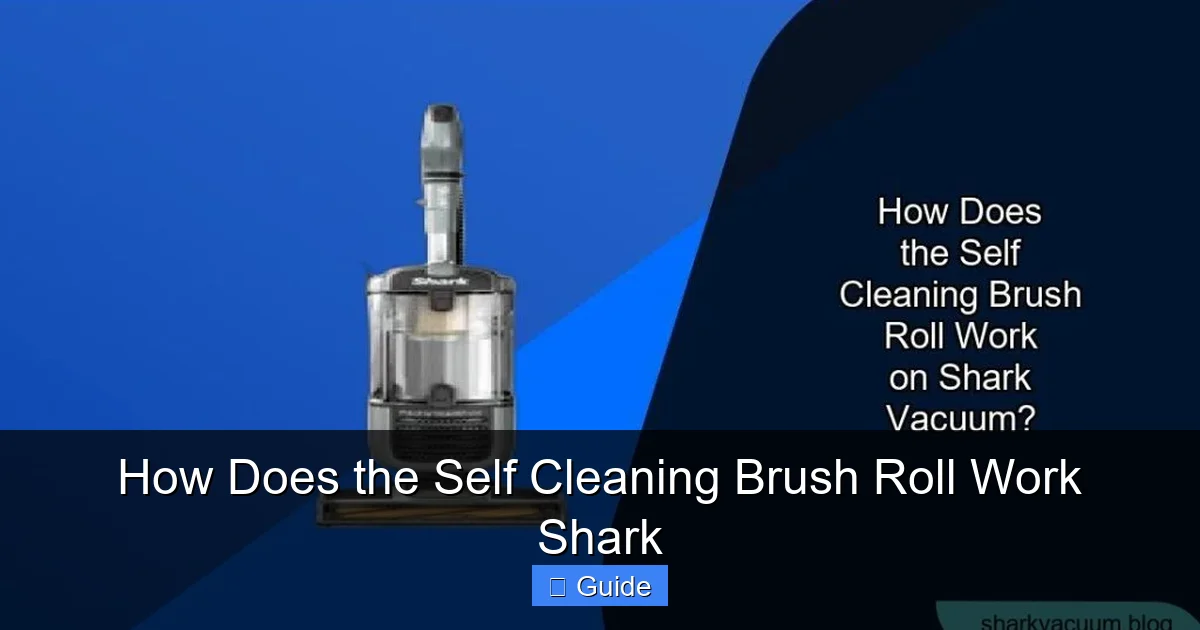
Shark’s self-cleaning technology isn’t a single part but a synchronized system of three key components working in harmony: the specialized brush roll itself, the high-speed drive system, and the critical ejection port. It’s available across many of Shark’s popular lines, including the Vertex, Stratos, and certain Navigator models, often branded as “Anti-Hair Wrap” or “Self-Cleaning Brush Roll.”
Visual guide about How Does the Self Cleaning Brush Roll Work Shark
Image source: sharkvacuum.blog
1. The Rubber “Finger” Brush Roll
Forget what you know about vacuum brushes. The heart of this system is a brush roll made not of nylon bristles, but of soft, flexible rubber. Look closely, and you’ll see it’s covered in dozens of small, fin-like projections often called “fingers” or “nubs.” This rubber construction is fundamental for two reasons. First, rubber has a high coefficient of friction against carpet fibers, meaning it grabs and agitates dirt extremely effectively, often better than stiff bristles on modern plush carpets. Second, and more importantly for our story, rubber is non-porous and smooth. Hair and fibers cannot sink into it or catch on tiny frays as they can with bristles. They lie on the surface. This makes them infinitely easier to dislodge. The flexible nature of the rubber fingers also allows them to bend and release debris under pressure rather than holding onto it.
2. The High-Speed, High-Torque Drive
A standard vacuum might spin its brush roll at a moderate, constant speed. The self-cleaning system demands more. The motor and gearing are tuned to provide not just speed, but significant torque (rotational force). This high-RPM spin—often in the range of several thousand revolutions per minute—is what generates powerful centrifugal force. Think of spinning a wet mop overhead; water flies off. The same principle applies here. As the rubber brush roll spins, any loose material (hair, lint, small fibers) clinging to its surface is subjected to an outward force. However, centrifugal force alone isn’t enough. If the material is wrapped even once around the core, it’s game over. This is where the final, crucial component comes into play.
3. The Precision Ejection Port
This is the masterstroke of engineering. On the side of the brush roll housing—the plastic casing that encloses the roller—there is a precisely sized and positioned opening, often a narrow slot or elongated hole. This is the ejection port. Its location is critical: it’s placed at the exact point in the brush roll’s rotation where the centrifugal force can most effectively fling material outward and sideways, not just around the roller’s circumference. As the rubber nubs, laden with hair and debris, spin past this port, the combination of the brush’s rotation and the port’s geometry creates a “sweet spot.” The debris is ejected from the roller’s surface through the port and directly into the main suction airstream of the vacuum head. From there, it’s carried straight up the hose and into the dust cup or bag. It never gets a chance to wrap around the axle. The port is designed to be large enough for typical hair clumps but small enough to prevent larger carpet debris from accidentally flying out, maintaining cleaning efficiency.
The Self-Cleaning Cycle: A Step-by-Step Breakdown
Now, let’s watch the process in action. Imagine you’re vacuuming a living room rug where your long-haired dog loves to nap.
Visual guide about How Does the Self Cleaning Brush Roll Work Shark
Image source: cdn.shopify.com
- Step 1: Agitation & Collection. As you push the vacuum forward, the rubber fingers dig into the carpet pile. They dislodge embedded dirt, dust, and, crucially, pull loose pet hair and fibers from the deep pile. This material wraps loosely around the rubber nubs. Because the nubs are smooth, the hair doesn’t bind; it just lies there, getting more and more tangled into a loose ball.
- Step 2: Centrifugal Force Build-Up. The high-speed motor spins the brush roll. The loose ball of hair on the nubs experiences increasing outward centrifugal force. It’s being pushed against the outer curve of the nub, away from the brush roll’s core.
- Step 3: The Ejection Moment. As this loaded nub rotates and aligns with the ejection port on the housing, the geometry works in tandem with the spin. The port acts as an exit ramp. The centrifugal force literally flings the clump of hair off the nub, through the port, and into the powerful suction airstream within the vacuum head.
- Step 4: Immediate Capture. The vacuum’s suction is constantly pulling air (and now, the ejected debris) from the head, up the hose, and into the dust cup. The ejected hair clump is caught in this airstream and transported away, never touching the brush roll’s bearings, belt, or motor shaft.
- Step 5: Continuous Loop. The now-clean rubber nub continues spinning, ready to collect new debris. This cycle happens dozens of times per second across all the nubs on the roller. The system is designed to be proactive, clearing debris before it can accumulate into a problematic wrap.
What It’s NOT: Debunking Common Misconceptions
It’s important to understand the limits of this brilliant system. It is not a magic “hair-repellent” coating. The rubber is not slick like Teflon. It works through active ejection, not passive prevention. This means:
- It won’t prevent very fine, dusty fibers (like from some synthetic carpets or clothing) from working their way into the brush roll bearings over a very long period. This is a minor, slow-acting issue for most.
- Extremely long, thick, and wet hair (like from a shower drain) could potentially overwhelm the system if introduced in massive, saturated quantities directly onto a stationary roller. But under normal vacuuming conditions, it handles volumes that would stop a bristle brush instantly.
- It requires the vacuum to be running and the brush roll to be spinning. If you turn the vacuum off while hair is loosely on the brush, it will stay there until you start it again and the ejection cycle resumes.
Tangible Benefits: What This Means For You
The engineering brilliance translates directly into user benefits that transform the vacuuming experience.
Visual guide about How Does the Self Cleaning Brush Roll Work Shark
Image source: dygtyjqp7pi0m.cloudfront.net
Uninterrupted Suction Power
This is the #1 performance benefit. A clogged brush roll is the single biggest cause of suction loss in vacuums. By keeping the roller clear, Shark’s system ensures the airflow path remains open and unobstructed. The motor works efficiently, and the suction you feel at the nozzle remains strong from the start of your cleaning session to the finish. You get consistent deep-cleaning performance on carpets, as the agitating brush can work unimpeded.
The End of the “Snip & Peel” Ritual
For anyone who has ever spent 10 minutes post-vacuuming with a flashlight and scissors, this is life-changing. After using a Shark with this technology, you’ll open the brush roll housing out of habit, expecting to find a hairy mess, and be shocked to find the rubber fingers almost completely clean. There might be a few stray strands, but the massive, core-wrapping clumps are gone. This saves time, eliminates a frustrating chore, and prevents accidental nicks to the brush roll or your fingers.
Ideal for Pet Owners and Long-Haired Families
If you have dogs that shed, cats with long fur, or humans with shoulder-length hair, this is not just a convenience—it’s a necessity. These households generate a constant, high volume of fibrous debris that is the arch-nemesis of traditional vacuums. The self-cleaning system handles this volume effortlessly. You can vacuum entire rooms of pet-hair-covered carpet without the vacuum’s performance degrading or the brush roll seizing up. It turns a weekly battle into a quick, effective task.
Long-Term Appliance Health
Reduced strain on the drive belt (in models that use one) and motor means less wear and tear. The bearings in the brush roll are less likely to get clogged with abrasive debris, which can cause noise and premature failure. Essentially, this feature protects the investment in your vacuum, potentially extending its usable lifespan and maintaining its resale value.
Comparing the Competition: How Shark Stands Apart
Shark isn’t the only brand to address hair wrap, but their approach is distinct. Understanding the differences helps clarify why their solution is so effective.
vs. Standard Bristle Brushes (Most Brands)
This is the baseline competition. Any vacuum with a standard nylon bristle brush roll will eventually suffer from hair wrap. It’s a fundamental design flaw for households with hair. Shark’s rubber finger system is a complete paradigm shift from this outdated design.
vs. “Tangle-Free” or “Anti-Hair Wrap” Brushes (Other Brands)
Many competitors offer “tangle-free” rollers. Often, these are still bristle-based but with a different pattern or a silicone strip. Some use a single, large rubber cylinder instead of fingers. These can be more resistant to wrap than standard bristles, but they are not truly self-cleaning. They rely on the hair being so resistant that it doesn’t wrap in the first place. In practice, with high volumes of pet hair, these designs still accumulate debris and require manual cleaning. Shark’s active ejection is a more aggressive and reliable solution for heavy debris loads.
vs. Turbine/No-Brush Roll Options
Some vacuums, especially certain canisters or “hard floor only” models, forgo a rotating brush roll entirely on carpet (using a turbine head that spins only on thick pile). This eliminates hair wrap but sacrifices deep carpet agitation. For homes with a mix of hard floors and carpets, a self-cleaning brush roll offers the best of both worlds: powerful carpet cleaning without the wrap penalty.
Practical Tips for Maximizing Your Self-Cleaning Brush Roll
While the system is designed to be maintenance-free, a few smart practices will keep it performing flawlessly for years.
Routine, Light Cleaning is Still Wise
Once a month or so, give the brush roll housing a quick look. Use the included cleaning tool or a blunt object to gently scrape any debris that might be caught in the ejection port itself or around the housing’s seal. A can of compressed air is perfect for blowing out any fine dust that might accumulate in the port or around the brush roll bearings. This is a 30-second task that ensures the ejection path remains clear.
Inspect the Rubber Fingers
Over very long periods (1-2 years), the rubber fingers can occasionally wear down or, in rare cases, get a nick from a hard object. Visually inspect them. If a finger is broken off, it won’t significantly impact the self-cleaning function, but you may want to replace the brush roll for optimal agitation. Shark sells replacement brush rolls relatively inexpensively.
Use It as Intended
The system works best when the vacuum is moving at a normal walking pace. Pushing the vacuum extremely slowly gives debris more time to potentially wrap, though the ejection force is still significant. Conversely, moving too fast might not allow the brush enough time to agitate deeply. A steady, moderate pace is ideal.
Know When to Wash the Dust Cup
The ejected hair and debris go straight into the dust cup. If you’re cleaning up a massive amount of pet hair, the cup will fill with a fantastic, compressed “hair log.” This is a sign the system is working perfectly! Just remember to empty the dust cup before it overfills, which could cause a mess when you open it.
Conclusion: A Game-Changing Standard
The self-cleaning brush roll is more than just a feature; it’s a fundamental improvement in vacuum cleaner usability and performance. It attacks the most persistent pain point in floorcare with an elegant, physics-based solution. By replacing the traditional bristle brush with a high-speed rubber finger roller and a strategically placed ejection port, Shark has turned a weekly chore into a non-issue. The technology delivers on its promise: consistent suction, effortless maintenance, and superior cleaning on carpets plagued by hair and fibers. For anyone tired of the “snip-and-peel” routine, this innovation isn’t just a nice-to-have—it’s the reason to choose a Shark. It represents a shift from accepting vacuum limitations to engineering them away, setting a new expectation for what a modern vacuum cleaner should be: powerful, effective, and truly hassle-free.
Frequently Asked Questions
Is the self-cleaning brush roll safe for all floor types?
Yes. The soft rubber fingers are gentle on hard floors like hardwood, tile, and laminate, preventing scratches. They also provide excellent agitation on carpets. Most Shark models with this feature have an automatic brush roll shut-off when the vacuum is upright or on hard floor settings for extra safety and to push debris rather than scatter it.
Will it still pick up small debris like cereal or kitty litter?
Absolutely. The rubber fingers are excellent at sweeping larger debris into the suction path. The self-cleaning ejection is designed for flexible, stringy materials. Solid debris is simply swept along with the airflow into the dust cup, just like with any vacuum.
Does it make the vacuum louder?
The high-speed brush roll motor can generate a distinct, high-pitched whirring sound, which some users notice more than the lower rumble of a standard bristle brush. However, the overall noise level is comparable to other powerful upright vacuums. The benefit of sustained performance far outweighs any minor change in sound profile for most users.
Can I use it on rugs with long, shaggy piles?
Shark recommends using the self-cleaning brush roll on standard carpets and rugs. For very deep, shaggy, or hand-tufted rugs, the aggressive agitation of any brush roll (including this one) can sometimes damage delicate fibers. Shark often provides a separate “soft roller” or recommends turning the brush roll off for such delicate items. Always check your specific model’s manual.
How often do I need to replace the self-cleaning brush roll?
The rubber fingers are durable and designed to last the life of the vacuum under normal use. However, if you frequently vacuum over sharp objects or very abrasive debris, a finger might eventually tear. Inspect it annually. Replacement brush rolls are readily available from Shark and are relatively inexpensive, typically costing between $20 and $40.
Does this technology work with wet/dry vacuums or only dry debris?
The self-cleaning brush roll system is designed and optimized for dry debris only. Using it on wet spills or for wet/dry applications is not recommended and can damage the brush roll, motor, and internal components. Always use the appropriate hard floor tool or squeegee attachment for liquid cleanup.