Cub Cadet steering problems can range from annoying stiffness to dangerous, complete failure. The root cause is often low hydraulic fluid, worn steering components, or tire issues. This guide provides a clear, step-by-step approach to diagnosing and fixing these common problems, emphasizing safety and regular maintenance to prevent costly repairs and ensure a smooth, controlled mowing experience.
There’s a unique kind of frustration that sets in when your trusty Cub Cadet, the machine that’s supposed to make lawn care easier, suddenly starts fighting you. That stiff, unresponsive wheel. That vague, loose feeling in the handlebars. That unsettling clunk when you turn. Cub Cadet steering problems are more than just a nuisance; they’re a safety hazard and a sure sign that something is wrong. Whether you’re tackling a postage-stamp yard or a sprawling estate, reliable steering is non-negotiable. This guide is your comprehensive roadmap to understanding, diagnosing, and fixing those steering issues. We’ll break down the complex systems into simple parts, give you actionable checks you can do in your driveway, and help you decide when it’s time to call in the pros. Let’s get your mower handling like new again.
Key Takeaways
- Low Hydraulic Fluid is Prime Suspect: The #1 cause of stiff or slow steering in hydrostatic models is insufficient or contaminated power steering fluid.
- Wear is Inevitable: Components like tie rods, ball joints, and steering shafts wear out over time, leading to play, looseness, and erratic handling.
- Tires Matter More Than You Think: Incorrect tire pressure or uneven wear directly impacts steering response and can mask other problems.
- Simple Adjustments Can Help: Many “loose” steering issues on older models can be fixed by adjusting the steering gear or linkage preload.
- Safety First: Never ignore steering problems. A complete failure while mowing can cause serious accidents or equipment damage.
- Know Your Limits: Basic fluid checks and adjustments are DIY-friendly, but major hydraulic or frame repairs often require a professional technician.
- Prevention is Cheaper: A seasonal maintenance routine that includes steering and linkage inspection prevents 80% of common steering failures.
📑 Table of Contents
- Understanding Your Cub Cadet’s Steering System: The Basics
- Symptom 1: Stiff, Heavy, or Hard Steering
- Symptom 2: Loose, Sloppy, or Excessive Play in the Steering
- Symptom 3: Steering Pulls to One Side
- Symptom 4: Noises – Clunking, Grinding, Whining
- The Essential Maintenance Routine to Prevent Steering Problems
- When to DIY and When to Call a Professional
Understanding Your Cub Cadet’s Steering System: The Basics
Before we dive into problems, we need a quick lesson in how your mower actually turns. Knowing the two primary systems will immediately help you narrow down the culprit. Most modern Cub Cadet lawn tractors and zero-turn mowers use one of two setups.
The Hydrostatic Steering System (The Most Common)
This is the standard on nearly all Cub Cadet riding mowers and lawn tractors. It’s a power steering system, but don’t confuse it with your car’s. It uses the same hydraulic fluid that powers the transmission. When you turn the steering wheel, a hydraulic valve directs high-pressure fluid to a steering cylinder or motor, which provides the muscle to pivot the front wheels or steer the rear wheels on a zero-turn. It should feel smooth, relatively effortless, and precise. Key components here are the hydraulic reservoir, steering pump/valve, hydraulic lines, and the steering cylinder or wheel motor.
The Mechanical Steering System
This is found on some very basic models, older tractors, and virtually all walk-behind mowers. It’s a direct, physical connection from the steering wheel or handlebars to the wheels via a series of linkages, rods, and gears. There’s no hydraulic assist. The effort required to turn is entirely up to you and the mechanical advantage of the linkage system. Problems here are usually related to wear, bend, or lack of lubrication in those physical parts.
Quick Tip: Open your hood. If you see a small reservoir with a cap labeled “Hydraulic Fluid” or “Steering Fluid” connected to the transmission, you have a hydrostatic system. If you can trace a solid metal rod from the steering wheel down to the front axle, it’s mechanical.
Symptom 1: Stiff, Heavy, or Hard Steering
This is the classic complaint. You’re gripping the wheel, leaning into it, and the mower barely responds. It feels like the steering is locked. This is almost exclusively a hydrostatic system issue, as mechanical systems are naturally heavier but shouldn’t suddenly get worse.
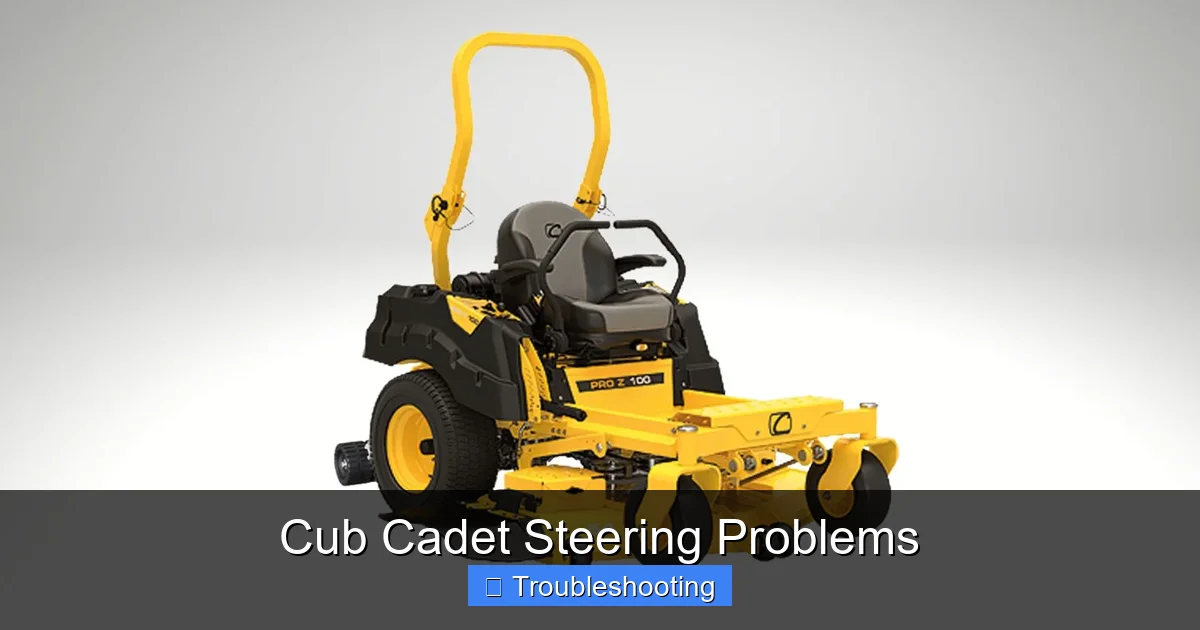
Visual guide about Cub Cadet Steering Problems
Image source: lawnmowerly.com
Root Cause 1: Low or Contaminated Hydraulic Fluid
This is the #1 suspect, responsible for over half of all steering complaints. The hydraulic system needs a specific volume of clean fluid at the correct viscosity to build pressure. If the level is low, the pump can’t generate enough pressure to assist the steering. Fluid can become contaminated with water (from condensation) or metal shavings (from pump wear), which destroys its lubricating and pressure-holding properties.
- Check: Park on level ground, engine off, cool. Locate the hydraulic/steering reservoir (check your manual). Clean the area around the dipstick/fill cap. Remove it, wipe clean, reinsert fully, and pull out. The fluid should be between the “Full” and “Add” marks. It should be clear, amber, and smell slightly sweet. If it’s milky (water), dark black, or has metal particles, it’s contaminated.
- Fix: Top up with the exact hydraulic fluid specified in your owner’s manual (usually Cub Cadet SAE 10W-30 or a specific hydrostatic fluid). If contaminated, a full fluid flush and filter replacement is needed—a more advanced job.
Root Cause 2: Faulty or Worn Steering Pump/Valve
The hydraulic pump, often integrated with the transmission, or the dedicated steering valve can wear out. Internal seals fail, causing internal bypass of fluid and a loss of pressure. You might have perfect fluid level, but the system just can’t build boost.
- Symptom Clue: Steering is stiff in both directions. You might also notice a whining or grinding noise from the transmission/pump area that changes pitch when you turn the wheel.
- Diagnosis: This requires pressure testing with gauges, which is a professional task. Visual inspection might show fluid leaks around the pump or valve body.
- Fix: Rebuilding or replacing the pump/valve assembly. This is a major repair, often the most expensive steering-related fix.
Root Cause 3: Damaged or Binding Steering Cylinder
The hydraulic cylinder is the ram that physically pushes/pulls the wheels to turn. Its internal seals can wear, or the rod can get scored and corroded, causing it to bind. It might also be physically bent from an impact.
- Symptom Clue: Steering is stiff in one direction but normal in the other. You might see fluid leaking from the rod seals.
- Fix: Rebuilding or replacing the steering cylinder. Ensure the mount points are clean and move freely.
Symptom 2: Loose, Sloppy, or Excessive Play in the Steering
You turn the wheel an inch or two before the tires even react. There’s a dead zone. This is dangerous because it makes precise control impossible and can lead to over-correction. This can happen in both hydrostatic and mechanical systems.
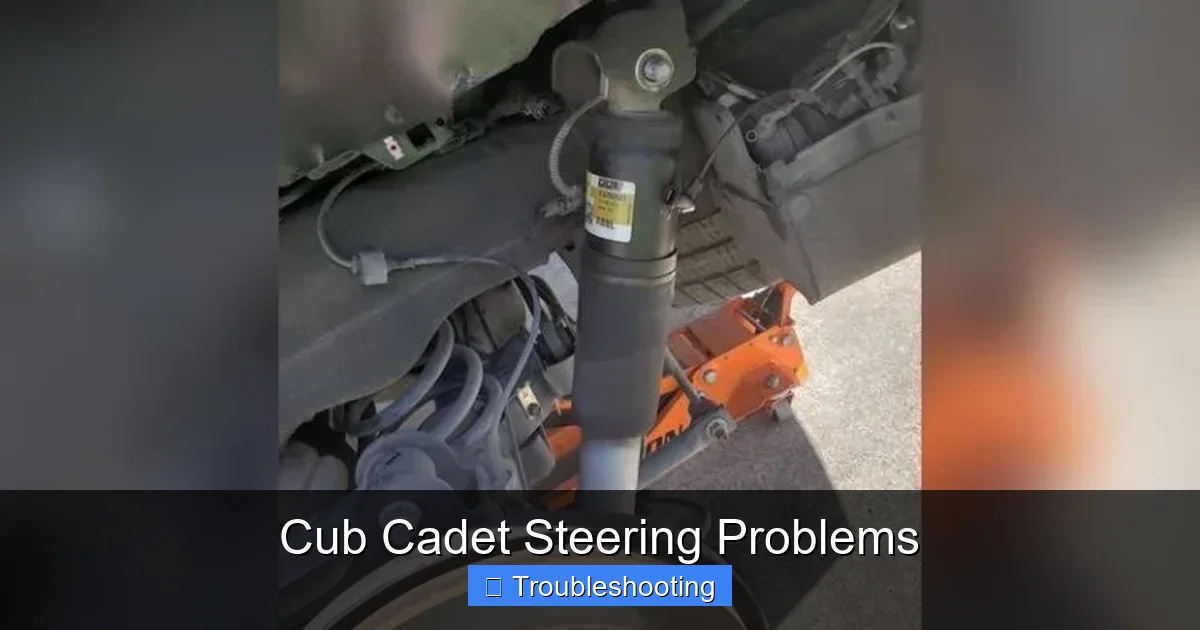
Visual guide about Cub Cadet Steering Problems
Image source: papasroadtrip.com
Root Cause 1: Worn Tie Rod Ends & Ball Joints
These are the pivot points where the steering linkage connects to the steering knuckles and the steering gear. They are ball-and-socket joints that wear out over time, creating gaps. This is the most common cause of play.
- Check: With the mower safely lifted and wheels supported, grab the front tire at the 9 and 3 o’clock positions. Try to wiggle it in and out. Any noticeable clunking or movement indicates worn tie rod ends or ball joints. Also, check for torn rubber boots that protect these joints.
- Fix: Replace the worn tie rod ends or ball joints. It’s a straightforward DIY job with basic tools. Always replace them in pairs (inner and outer) on the same side.
Root Cause 2: Worn Steering Shaft Bushings or U-Joints
The steering shaft that runs from the steering wheel down to the steering gear or pump valve is supported by bushings or connected by universal joints (U-joints). These wear, causing a sloppy connection at the wheel itself.
- Symptom Clue: You feel the play right at the steering wheel before the linkage even moves. The wheel might feel like it’s on a loose post.
- Check: With the front wheels straight and blocked, have an assistant turn the wheel left and right slightly while you watch the steering shaft and its connections for movement before the linkage moves.
- Fix: Replace the worn bushings or U-joints. This often requires dropping the steering column or shaft, which is more involved.
Root Cause 3: Worn Steering Gear (Mechanical Systems)
The gearbox at the base of the steering column has internal gears that mesh. Over years of use, these gears wear down, creating backlash or play.
- Check: Perform the same wheel-wiggle test. If all linkages are tight but play remains, the fault is in the gearbox.
- Fix: The gearbox must be rebuilt or replaced. Adjustment screws on some models can take up minor wear, but significant play means a new gearbox.
Root Cause 4: Loose or Worn Hydrostatic Steering Valve Linkage
On hydrostatic systems, the physical connection between the steering wheel shaft and the hydraulic valve can wear. This is a mechanical linkage that controls the valve. If it’s loose, the valve doesn’t move proportionally to the wheel, causing a vague, unconnected feel.
- Check: Locate the steering valve (usually on the side of the transmission). Follow the rod or lever connected to it back to the steering column. Check all pivot points for wear and the connecting pins or bolts for looseness.
- Fix: Tighten all fasteners. Replace worn bushings or pins. Some models have an adjustment nut to take up slack in this linkage.
Symptom 3: Steering Pulls to One Side
The mower constantly drifts left or right, forcing you to hold the wheel turned to go straight. This is often a tire and alignment issue, but can be steering-related.
Visual guide about Cub Cadet Steering Problems
Image source: lawnmowerly.com
Root Cause 1: Incorrect Tire Pressure
This is the simplest and most common fix. Lower pressure on one side creates more rolling resistance, causing a pull.
- Check: Measure pressure in both front tires with a quality gauge. Compare to the PSI on the tire sidewall or in your manual. They must be identical.
- Fix: Inflate or deflate to match the manufacturer’s specification.
Root Cause 2: Uneven Tire Wear or Damage
One tire might be bald, scalloped, or have a bulge, changing its effective diameter and causing a pull.
- Check: Visually inspect both front tires for wear patterns, damage, and tread depth. Spin them to check for roundness.
- Fix: Replace damaged or severely worn tires. Always replace in pairs (both front tires) to maintain balance.
Root Cause 3: Bent or Misaligned Steering Components
A bent tie rod, spindle, or steering knuckle from hitting a curb or rock will force the wheel out of alignment.
- Check: With the mower level, measure the distance from a fixed point on the frame to the front and back of each tire. Significant differences indicate misalignment. Visually inspect all steering linkage for bends.
- Fix: Replace the bent component. After replacement, a front-end alignment is necessary. This involves adjusting the tie rod lengths so the wheels are parallel and the steering wheel is centered when going straight.
Root Cause 4: Binding in the Steering System
A tie rod end or kingpin that is corroded and won’t pivot freely can cause one wheel to resist turning more than the other, creating a pull.
- Check: With the mower safely lifted, manually turn each front wheel lock-to-lock. Feel for spots of increased resistance or grinding.
- Fix: Replace the binding joint. Lubricate all grease fittings (zerk fittings) on the steering linkage with lithium grease.
Symptom 4: Noises – Clunking, Grinding, Whining
Sounds are your mower’s way of talking to you. Different noises point to different problems.
Clunking or Popping
This is almost always a worn joint.
- Location: Clunk from the front end when turning or going over bumps? Worn tie rod ends or ball joints.
- Location: Clunk from under the seat/footrest area when turning? Worn U-joint on the steering shaft or a loose steering gear mounting.
- Fix: Replace the offending joint. Do not ignore this; a complete failure will leave you with no steering.
Grinding or Rumbling
A constant metallic grinding that may change with engine speed.
- Location: Coming from the transmission/pump area? The bearings inside the hydraulic pump or transmission itself are failing. This is a serious internal failure.
- Location: From a wheel hub? A failed wheel bearing (though this is more a noise when driving straight).
- Fix: For pump/transmission noise, this is a major rebuild or replacement scenario. Stop using the mower and consult a pro.
High-Pitched Whining or Squealing
A noise that increases in pitch when you turn the wheel.
- Cause: Air in the hydraulic system or a failing pump/valve that’s cavitating (sucking air). It can also be a loose or worn serpentine belt driving the pump (if equipped).
- Check: Is the fluid level low? Top it up and bleed the system per your manual’s instructions (usually by turning the wheel lock-to-lock with the engine running). Check belt condition and tension.
- Fix: Bleed air from the system. Replace a worn belt. If the whining persists, the pump or valve is likely faulty.
The Essential Maintenance Routine to Prevent Steering Problems
An ounce of prevention is worth a pound of cure. This 15-minute seasonal check can save you hundreds in repairs.
1. Fluid & Filter (Hydrostatic Systems)
Check the hydraulic fluid level every 25 hours of operation or at least once per mowing season. Use only the specified fluid. Replace the hydraulic filter (if equipped) and fluid every 100-200 hours, or as recommended. Contaminated fluid is the silent killer of steering and transmission components.
2. Lubricate All Grease Fittings
Your mower has several. Find them on the steering linkage (tie rod ends, drag links, steering shaft U-joints), wheel spindles, and pivot points. Use a grease gun with lithium-based grease. Pump until you see fresh grease squeeze out, indicating the old grease and contaminants have been pushed out. Do this at the start and end of every season.
3. Inspect & Tighten Everything
With the mower on level ground, physically inspect every nut, bolt, and clamp holding the steering system together. Pay special attention to:
- The steering wheel nut (it must be tight on the shaft).
- All linkage connection pins and castle nuts (ensure cotter pins are in place).
- The steering gear/pump mounting bolts to the frame.
- Wheel lug nuts.
Vibration and regular use work things loose. A 15-minute walk-around with a wrench can catch a problem before it becomes a failure.
4. Check Tires & Alignment
Maintain correct, equal tire pressure. Periodically check for wear. If you notice the mower pulling or the steering wheel is off-center when going straight, you likely have an alignment issue caused by worn parts or an impact. Correct it immediately.
5. Listen and Feel
Make it a habit to pay attention. Does the steering feel different than it did last week? Is there a new sound? Catching a developing problem early—like a tie rod end starting to clunk—means a cheap, easy fix instead of a catastrophic, expensive one.
When to DIY and When to Call a Professional
Not all problems are created equal. Knowing your skill and tool limits is crucial for safety and cost-effectiveness.
Safe & Recommended DIY Projects
- Checking and topping up hydraulic fluid.
- Bleeding air from the hydraulic steering system.
- Inspecting and lubricating all grease fittings.
- Performing a full visual inspection for wear, damage, and loose bolts.
- Replacing worn tie rod ends, ball joints, and wheel bearings. (You need basic wrenches, a ball joint separator, and a jack/stand).
- Adjusting steering gear preload or linkage slack. (Follow manual specs precisely).
- Replacing tires and performing a basic alignment.
Call a Qualified Technician For:
- Any internal transmission or steering pump/valve work. These require specialized tools, clean-room conditions for internal parts, and expert knowledge.
- Major hydraulic system leaks. Diagnosing the source can be tricky, and repairs often involve system disassembly.
- Frame or axle damage. If a major impact has bent steel, it needs professional straightening or replacement.
- Complex troubleshooting where the fault is not obvious after basic checks. Your time and frustration have value. A pro’s diagnostic fee is often cheaper than buying the wrong part.
- Any repair where you feel unsure about your ability to do it safely and correctly. Steering failure can cause injury. When in doubt, seek help.
Final Word: Your Cub Cadet’s steering is its nervous system. A responsive, precise feel makes mowing enjoyable and safe. By understanding the common Cub Cadet steering problems—stiffness, looseness, pulling, and noise—and following a disciplined maintenance schedule, you can keep that system healthy for years. Start with the simplest checks: fluid level and tire pressure. Then move to the linkages and joints. Most issues are caught and fixed at this level. Reserve the major repairs for the professionals. A well-maintained steering system doesn’t just save money; it gives you peace of mind every time you sit in the seat and turn the key.
Frequently Asked Questions
Why did my Cub Cadet’s steering suddenly get very stiff?
The most likely cause is low hydraulic fluid in the power steering system. Check the level immediately. If the fluid is full, the steering pump or valve may be failing, or the steering cylinder could be binding. Begin with the fluid check as it’s the simplest and most common fix.
How do I check the hydraulic fluid for steering on my Cub Cadet?
Park on level ground, turn off the engine, and let it cool. Locate the hydraulic reservoir (consult your manual). Clean the dipstick area, remove the dipstick, wipe it clean, reinsert it fully, then pull it out again. The fluid should be between the “Full” and “Add” marks and be a clear amber color. Use only the fluid specified in your owner’s manual.
Can bad tires cause steering problems on my Cub Cadet?
Absolutely. Unequal tire pressure is the #1 cause of a pulling sensation. Uneven or severe tire wear can also cause pulling and a vague steering feel. Always maintain identical, correct pressure in both front tires and replace them in pairs when worn.
What does a clunking noise when I turn mean?
A clunk from the front end points directly to worn steering linkage joints—specifically the tie rod ends or ball joints. These are the pivot points that connect the steering system to the wheels. They wear out and develop play, which causes the clunk. Replace them immediately as they can fail completely.
Is it safe to mow with a loose or sloppy steering feel?
No. Loose steering means you have less control and a delayed response. It can lead to over-correcting, scalping the lawn, or even a loss of control. The underlying cause, like worn tie rod ends, can also fail completely without warning, resulting in total steering loss. Stop using the mower and diagnose the issue immediately.
How much does it typically cost to fix Cub Cadet steering problems?
Costs vary wildly. Simple fixes like a fluid top-up ($10) or replacing a tie rod end ($30-$60 per side) are very affordable. Major repairs like a steering pump/valve replacement or transmission work can range from $500 to over $1500, including labor. Early diagnosis through regular maintenance keeps you in the low-cost range.