A non-spinning brush roll on your Shark Rocket Duoclean is almost always caused by a preventable issue, not a major failure. The primary culprits are hair and debris wrap jamming the brush, a tripped thermal fuse, a broken or slipped drive belt, or a simple electrical connection problem. Most fixes are quick, inexpensive, and can be done at home with basic tools. Always unplug the vacuum first and inspect the brush roll housing thoroughly before proceeding.
You’re halfway through vacuuming your living room, and you notice it. That familiar, satisfying whirring sound from your Shark Rocket Duoclean’s brush head is gone. Instead, it’s just gliding over the carpet, pushing dirt around instead of agitating it up. The suction is there, but without the spinning brush roll, your vacuum is essentially just a fancy blower. Frustration sets in. Why is your Shark Rocket Duoclean brush not spinning?
Before you panic and start pricing out new vacuums or calling for an expensive service call, take a deep breath. This is one of the most common issues with all upright and stick vacuums with powered brush rolls, and Shark models are no exception. The vast majority of the time, the problem is not a catastrophic motor failure but a simple, fixable mechanical or electrical snag. With a few basic tools, a little patience, and this guide, you can diagnose and likely repair the issue yourself in under 30 minutes. Safety first: always ensure your Shark Rocket Duoclean is completely unplugged from the wall outlet before performing any inspection or repair.
Key Takeaways
- Hair & Debris Wrap is the #1 Cause: Fibers from carpets, pet hair, and strings wind around the brush roll bearings and axles, creating immense friction that stops rotation and can trigger safety cut-offs.
- The Brush Roll Must Be Removed for Inspection: You cannot diagnose the problem correctly without physically removing the brush roll assembly from the floor head to check for obstructions and assess its spin freely.
- Check the Drive Belt System: A broken, stretched, or slipped belt (the rubber ring connecting the motor shaft to the brush roll) is a frequent mechanical failure point that completely disconnects power.
- Thermal Fuse is a Safety Feature, Not a Fault: If the motor or brush roll overheats due to blockage, a thermal fuse will blow, cutting power to the brush. Replacing this cheap part is often the solution after clearing the jam.
- Electrical Connections Must Be Secure: The brush roll has two metal prongs that must make solid contact with the electrical terminals in the floor head housing. Corrosion, bending, or dirt can break this circuit.
- Motor Failure is Extremely Rare: The brush roll motor is robust. Complete motor failure is the least likely cause; always rule out every mechanical and electrical issue in the brush roll path first.
- Regular Prevention is Key: After every few uses, remove the brush roll and clean out hair and debris from the bearings and end caps. This simple habit prevents 90% of non-spinning issues.
📑 Table of Contents
- 1. The Usual Suspects: A Systematic Approach to Diagnosis
- 2. Cause #1: The Hair Wrap Nightmare (And How to Conquer It)
- 3. Cause #2: The Drive Belt – The Rubber Band of Power
- 4. Cause #3: The Thermal Fuse – The Sacrificial Safety Guard
- 5. Cause #4: Electrical Connection Failures
- 6. Cause #5: Motor Failure (The Rare Beast)
- 7. Cause #6: User Error and Maintenance Mistakes
- Conclusion: Empowerment Through Understanding
1. The Usual Suspects: A Systematic Approach to Diagnosis
Diagnosing a non-spinning brush roll is like being a detective. You need to follow the power and motion path from the wall plug to the brush roll itself. The electrical circuit goes: Wall Outlet → Main Body → Handle → Electrical Cord → Floor Head Housing → Brush Roll Motor. Any break or obstruction in this chain stops the brush. The mechanical power transfer goes: Motor Shaft → Drive Belt → Brush Roll Pulley. A failure here also stops the spin. We will methodically check each potential failure point, starting with the most common and easiest to fix.
1.1. Start With the Obvious: Is It Actually On?
It sounds silly, but always confirm the brush roll switch is engaged. On the Shark Rocket Duoclean, the brush roll is activated by a separate switch, often located on the handle or the main body, distinct from the suction power switch. Ensure it’s turned on. Also, check if your model has a “bare floor” or “brush roll off” mode that might have been accidentally selected. Finally, verify the main suction motor is running. If the main vacuum has no suction either, the problem is upstream (cord, main motor, battery) and not isolated to the brush roll.
1.2. The “Feel” Test: Is the Brush Roll Jammed?
Once the vacuum is unplugged, manually try to spin the brush roll by reaching into the floor head. Can you rotate it freely with your fingers? Or is it stiff, gritty, or completely locked? This is your first major clue. A freely spinning brush roll points to a belt or electrical issue. A stiff or locked brush roll screams obstruction. This is the most frequent cause. The obstruction is rarely a big object like a sock (though that happens); it’s almost always a combination of hair, carpet fibers, and lint that has wound itself tightly around the axles and inside the bearing housings at each end of the brush roll. This creates so much friction that the motor can’t turn it, and a safety mechanism (either a clutch or a thermal fuse) will often disengage to prevent damage.
2. Cause #1: The Hair Wrap Nightmare (And How to Conquer It)
As stated, this is enemy number one. The brush roll is a perfect cylinder for hair and fibers to wrap around. Over time, this wrap builds up, first making the brush harder to spin, then eventually stopping it completely. The debris works its way into the plastic end caps that house the brush roll’s bearings. Once the bearing is clogged with packed hair, the brush might as well be welded in place.
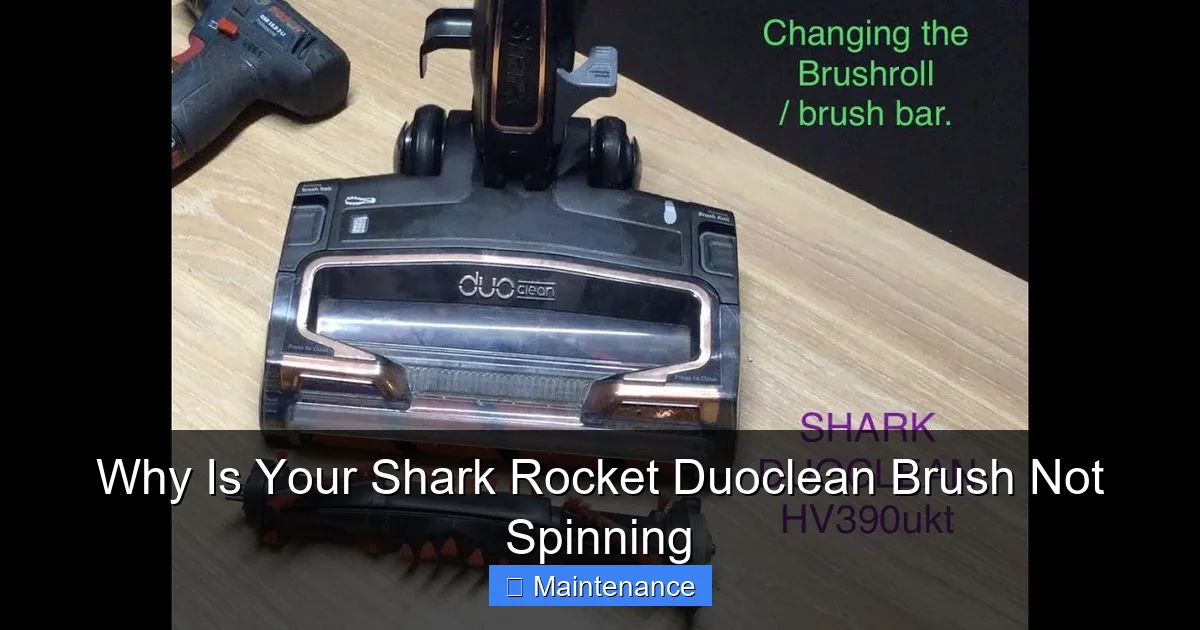
Visual guide about Why Is Your Shark Rocket Duoclean Brush Not Spinning
Image source: i.ytimg.com
2.1. How to Remove and Clean the Brush Roll Properly
This is the most critical skill for a Shark owner. On the Rocket Duoclean, you typically access the brush roll by laying the vacuum on its back and locating the release latches on the bottom of the floor head. There are usually two: one on each side. Press them inward and the entire brush roll housing (the gray or black plastic casing that holds the brush) will pop up and out. Do not just try to pull the brush roll out while it’s still in the housing. You must remove the entire assembly.
Once you have the housing off, place it on a flat surface. You’ll see the brush roll—a long cylinder with bristles and often a rubber stripping on one side (for the Duoclean’s dual brush system). To remove the brush roll from the housing, you often need to slide it sideways or pull it straight out, sometimes after removing a retaining clip or screw. Consult your user manual for the exact method for your specific Rocket Duoclean model (e.g., HV322, HV382, etc.).
Now, the cleaning. You’ll need a seam ripper, a sharp pair of scissors, or just your dedicated fingers. Starting at one end, use the tool to cut and pull away all the hair and carpet fibers wound around the brush roll’s core and especially around the metal axles protruding from each end. Be thorough. Then, look into the two circular openings in the plastic end caps where the axles sit. You will likely see a mat of hair packed into the bearing. Use tweezers, a pencil, or a dedicated brush cleaning tool to dig it all out. The goal is to make both axles and their seating areas perfectly clean so the brush can spin freely. Reassemble and test the spin by hand—it should rotate smoothly with no resistance.
2.2. The Deceptive “Clean” Brush Roll
Sometimes you’ll remove the brush roll and it looks mostly clean. But a single long strand of hair or a thin synthetic fiber can be caught between the brush roll pulley (the rubber wheel at one end) and the plastic housing wall. This creates a tight bind that stops rotation. Always run your fingers around the entire circumference of the brush roll and check the interface points with the housing. Also, check inside the housing itself for any debris that might be jamming the brush roll’s rotation from the outside.
3. Cause #2: The Drive Belt – The Rubber Band of Power
The brush roll doesn’t connect directly to the motor. A small, round rubber belt (the drive belt) loops from a small motor pulley inside the floor head housing to a larger pulley on the brush roll. If this belt is broken, stretched out, melted, or has simply slipped off one of the pulleys, the brush roll will not receive any mechanical power from the motor.
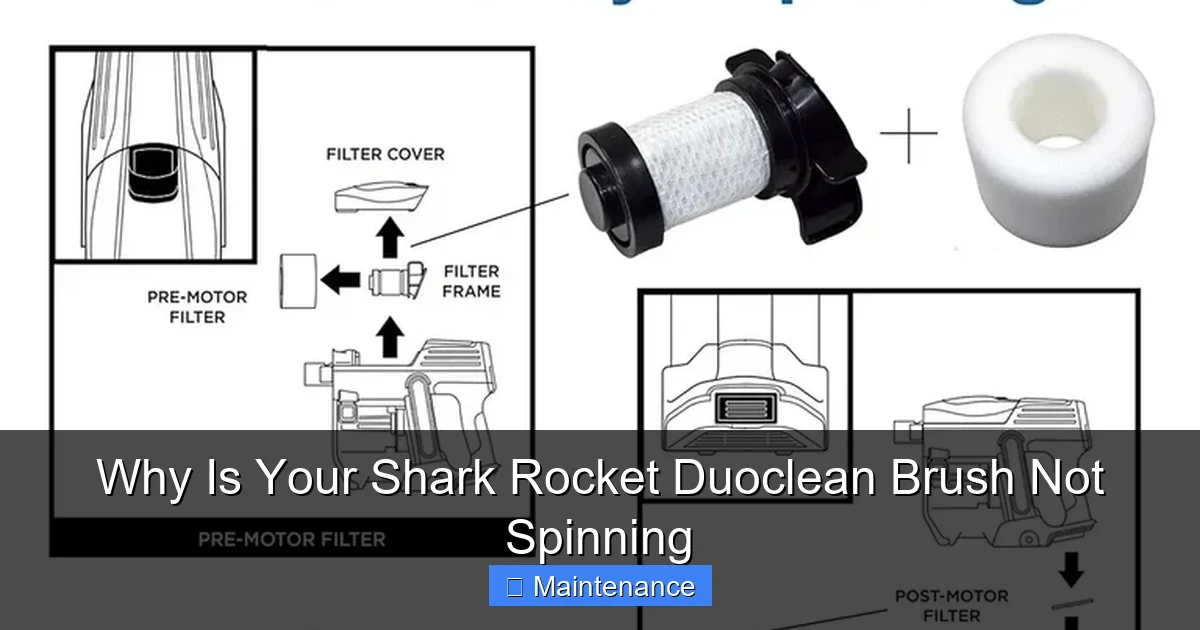
Visual guide about Why Is Your Shark Rocket Duoclean Brush Not Spinning
Image source: i5.walmartimages.com
3.1. Inspecting the Belt
With the brush roll housing removed (as in the previous section), you should be able to see the belt. It’s a black rubber ring, usually about the size of a large rubber band. First, check if it’s still on both pulleys. It’s common for it to slip off the motor pulley and get stuck in the housing. If it’s missing entirely, it has broken and you need a replacement. If it’s present, inspect it carefully. Look for:
- Cracks, Splits, or Fraying: Age and heat cause rubber to degrade.
- Glazing or Shiny Spots: This indicates the belt has been slipping and overheating, melting the rubber surface and reducing friction.
- Stretching: If the belt is loose and sags significantly when placed on the pulleys, it has lost its tension and will slip under load.
Even if it looks okay, if the brush roll was jammed, the belt may have been stressed and stretched. A simple test: try to stretch the belt manually. If you can elongate it easily by more than an inch, it’s too loose.
3.2. Replacing the Drive Belt
Replacing the belt is a simple fix. You need the correct replacement belt. Shark part numbers are specific. The part number is often printed on the old belt itself (e.g., “125-02” or similar). If not, find your exact Rocket Duoclean model number (on a sticker on the vacuum) and search for “Shark [Model Number] brush roll belt.” Genuine Shark belts are recommended for proper fit and durability. To install, simply stretch the new belt over the motor pulley (the smaller one) and then roll the brush roll pulley through the belt loop until the belt seats properly in the groove on both pulleys. Ensure the brush roll spins freely by hand before reinstalling the housing.
4. Cause #3: The Thermal Fuse – The Sacrificial Safety Guard
Shark vacuums, like most modern appliances, have a thermal fuse (or thermal cutout) in the brush roll circuit. Its job is to protect the motor from overheating due to blockage. If the brush roll is jammed, the motor works harder, gets hotter, and the fuse blows, cutting power to the brush roll. This is a symptom, not the root cause. You must clear the jam first, then replace the fuse.
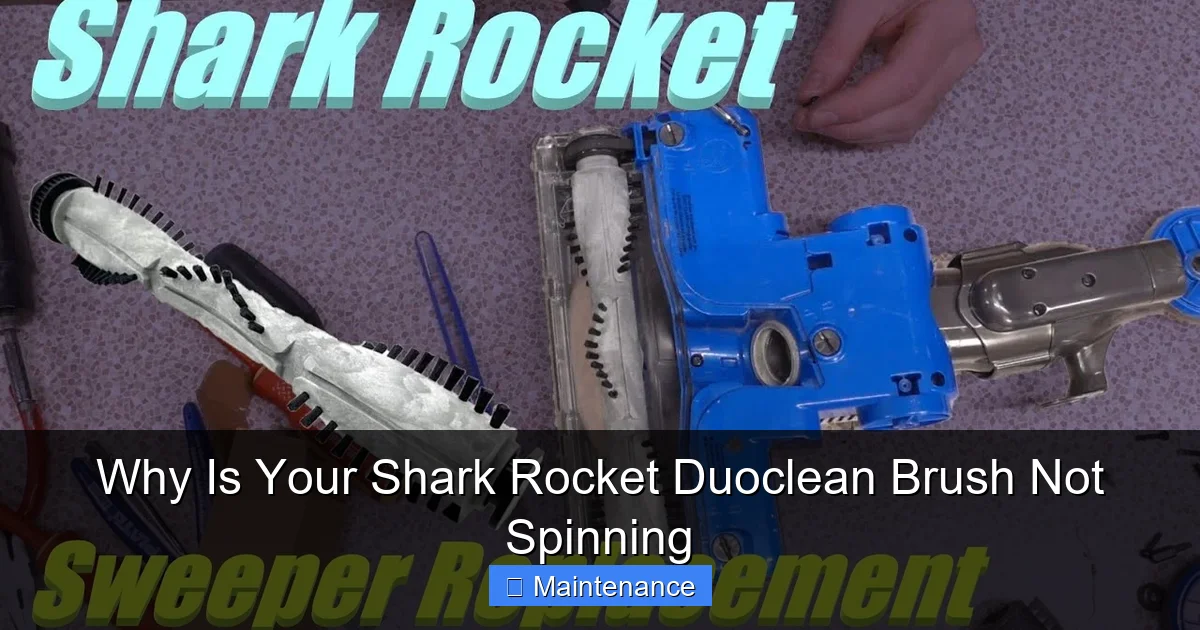
Visual guide about Why Is Your Shark Rocket Duoclean Brush Not Spinning
Image source: i.ytimg.com
4.1. Locating and Testing the Thermal Fuse
The thermal fuse is a small, usually rectangular or cylindrical, white or beige component. It’s located on the circuit board inside the floor head housing, or sometimes in a in-line fuse holder on the wire leading from the housing to the brush roll motor. You’ll need to open the floor head housing. Look for screws holding the plastic shell together. Once open, locate the small component with two wires attached. It may be labeled “TEMP FUSE” or have a temperature rating (e.g., 115°C).
To test it, you need a multimeter set to the continuity setting (the symbol that looks like sound waves). With the vacuum unplugged, disconnect one wire from the fuse (pull the spade connector). Touch one multimeter probe to each of the fuse’s metal terminals. If the meter beeps or shows “0.00” ohms, the fuse is good (closed circuit). If it shows “OL” (open loop) or no beep, the fuse is blown and must be replaced.
4.2. Replacing the Thermal Fuse
Replacement fuses are inexpensive. You must get the correct amperage and temperature rating, which will be printed on the old fuse. Search for “Shark thermal fuse [part number]” or take the old one to an electronics store. Replacement is simply a matter of desoldering the old one (if soldered) or removing the spade connectors and installing the new one in the same orientation. If you are not comfortable with soldering, many fuses are plug-in types. Ensure connections are secure and no stray wires are touching the metal housing before reclosing the floor head.
5. Cause #4: Electrical Connection Failures
The brush roll itself has two thin metal prongs (or contacts) on its end that slide into corresponding slots in the floor head housing. These prongs complete the electrical circuit from the vacuum’s power source to the tiny motor inside the brush roll. If these connections are dirty, bent, corroded, or not making contact, the motor gets no power.
5.1. Inspecting the Contact Points
With the brush roll removed, look closely at the two slots in the floor head housing where the brush roll prongs insert. Use a flashlight. Are they clean? Is there any white, crusty corrosion? Are the metal springs inside the slots (if your model has them) present and pushing outward to make contact? Now, look at the two prongs on the brush roll itself. Are they straight? Are they dirty or tarnished? A common issue is one or both prongs getting bent inward so they no longer reach the terminals inside the slot.
5.2. Cleaning and Repairing Connections
Use a cotton swab dipped in a tiny amount of isopropyl (rubbing) alcohol to clean both the housing slots and the brush roll prongs. Gently bend any bent prongs back to their original position using needle-nose pliers—be careful not to break them. If the spring contacts in the housing are missing or broken, the housing may need to be replaced. After cleaning, reinsert the brush roll and listen/feel for a firm click as the prongs seat fully. A loose fit indicates a problem.
6. Cause #5: Motor Failure (The Rare Beast)
After exhausting all the above—cleaning the brush roll, replacing the belt, verifying the fuse is good, and confirming perfect electrical contact—the brush roll still doesn’t spin. Only then should you suspect the brush roll motor itself. These small motors are generally very reliable. Failure is usually preceded by a burning smell or the motor getting extremely hot.
6.1. Testing the Motor
You can test the motor for continuity. With the brush roll removed and the floor head housing open, locate the two wires that go to the brush roll motor (they will be the ones disconnected from the thermal fuse or coming directly from the terminals). Disconnect them. Set your multimeter to continuity. Touch the probes to the two motor wires (or directly to the motor’s terminals if you can access them). You should get a beep and a low resistance reading (usually under 5 ohms). If you get no continuity (open circuit), the motor windings have burned out and the motor must be replaced. If you get continuity but the motor doesn’t spin when powered (you can sometimes apply 12V DC from a power supply for a test), the internal brushes may be worn out, which also means motor replacement.
6.2. Replacing the Brush Roll Motor
Motor replacement is more involved. The motor is typically screwed into the floor head housing. You must remove all screws holding it in place, carefully desolder or disconnect all wires (labeling them if necessary), and install the new motor in the reverse order. You must purchase the exact replacement motor assembly for your specific Rocket Duoclean model number. For most users, if it comes to this, comparing the cost of a new motor + your time versus the cost of a new vacuum head is a worthwhile calculation.
7. Cause #6: User Error and Maintenance Mistakes
Sometimes, the problem is a simple oversight. Did you reassemble the brush roll incorrectly? For example, did you put the brush roll in backwards? Many Shark brush rolls have a specific orientation—the rubber stripping (for the Duoclean’s “hard floor” mode) must face a certain direction, and the pulley must align with the drive belt. Forcing it in wrong can jam it or misalign the belt. Did you forget to reattach the drive belt after cleaning? Did you not fully click the brush roll housing back into place, causing a misalignment that binds the brush? Double-check your reassembly against the instructions.
Conclusion: Empowerment Through Understanding
Your Shark Rocket Duoclean’s brush roll not spinning is an inconvenience, but it’s rarely a death sentence for your vacuum. By understanding the simple physics at play—a motor turning a belt that turns a brush, with electricity flowing through connections—you can systematically eliminate possibilities. In over 90% of cases, the solution lies in removing the brush roll, meticulously cleaning out all hair and debris from the bearings and axles, and ensuring the drive belt is intact and properly seated. The thermal fuse is a common secondary failure that is easily replaced once the primary jam is cleared. Approach the repair calmly, methodically, and safely (unplugged!). With this guide, you have the knowledge to be your own vacuum repair technician, saving money and the frustration of a half-cleaned home. Remember: a quick 2-minute brush roll clean-out every month is the ultimate preventative medicine for this very problem.
Frequently Asked Questions
Can I use my Shark Rocket Duoclean without the spinning brush roll?
Technically yes, for hard floors only, as suction alone will pick up debris. However, on carpets, the brush roll is essential for deep cleaning as it agitates dirt and lifts it for suction. Using it without a working brush roll on carpet will result in poor cleaning performance.
How often should I clean my brush roll to prevent it from stopping?
For households with pets or high-pile carpet, inspect and clean the brush roll after every 3-4 uses. For average use on low-pile carpet, a thorough cleaning every 2-4 weeks is sufficient. Always check it immediately if you notice a drop in cleaning performance or a change in the vacuum’s sound.
Is a slipping drive belt the same as a broken one?
No. A broken belt is physically snapped and requires replacement. A slipping belt is intact but loose, glazed, or misaligned. It may make a high-pitched squealing noise and the brush will spin slowly or intermittently under load. Slipping is often caused by a stretched belt or a belt that has become glazed from previous overheating due to a jam. Both conditions require belt replacement.
My brush roll spins freely by hand but doesn’t work in the vacuum. What is it?
This points strongly to an electrical issue, not a mechanical jam. The most likely culprits are: 1) A blown thermal fuse (common after a past jam), 2) Poor electrical contact between the brush roll prongs and the housing terminals (corrosion, bending), or 3) A fault in the wiring or switch that controls the brush roll.
Where is the thermal fuse located on a Shark Rocket Duoclean?
It is located inside the floor head housing. You must remove the brush roll housing and then open the plastic shell of the floor head itself, usually by removing several screws. The fuse is a small white or beige component on the small circuit board or in a fuse holder on the wire leading to the brush roll motor.
Can I wash my Shark brush roll with water?
Yes, but with caution. You can rinse the brush roll bristles with water to remove stuck-on debris, but you must ensure it is 100% completely dry before reinstalling it. Any moisture inside the bearings or on the motor prongs can cause corrosion or short circuits. Never submerge the entire brush roll assembly if it contains a motor (most do). Just rinse the bristle cylinder and let it air dry for 24 hours.