Shark replacement pads are the essential, often-overlooked component that determines your steam mop’s true cleaning power and longevity. Using the correct pad—whether microfiber for everyday grime or scrubbing pads for stuck-on messes—ensures optimal steam delivery and surface safety. This guide demystifies pad selection, detailing exact model compatibility, the significant cost savings of third-party options, and critical care routines to maintain hygiene and performance. Ultimately, choosing and maintaining the right pad transforms your Shark steam mop from a modest cleaner into a powerful, chemical-free floor care system.
You bought a Shark steam mop. You read the manual, filled the tank, and triumphantly watched the steam cloud rise. But a few months in, you notice it’s not sparkling like it used to. The floors still feel a bit gritty underfoot. You might be tempted to think the mop is failing. But hold on—before you despair or eye a new appliance, consider the humble, hardworking pad sitting right underneath.
Those Shark replacement pads are not just disposable rags. They are the critical, active interface between your machine’s steam and your floor’s surface. A worn, wrong, or dirty pad is like putting bald, cracked tires on a sports car. The engine (your steam system) can be perfect, but the connection to the ground is compromised. This article is your definitive, no-nonsense guide to understanding, selecting, and caring for Shark replacement pads. We’ll cut through the confusion of model numbers, decode pad materials, and reveal how a simple pad swap can make your trusty Shark feel brand new again.
Key Takeaways
- Perfect Fit is Non-Negotiable: Using an incorrect pad size or attachment style will severely hamper steam distribution, reduce cleaning efficacy, and potentially damage your mop’s pad plate or your floors.
- Pad Material Dictates the Job: Microfiber is for absorbent cleaning, while textured scrubbing pads tackle tough residues. Using the wrong pad for the task leads to frustration and poor results.
- Third-Party Pads Offer Major Savings: Officially branded Shark pads are expensive. High-quality, compatible third-party pads perform identically at a fraction of the cost, offering long-term value.
- Hygiene is Directly Tied to Pad Care: Dirty pads redeposit grime and bacteria. Regular, proper washing after every use is mandatory for sanitary cleaning and to maintain pad absorbency.
- Lifespan is a Key Metric: Monitor pad wear. Thinning, fraying, or loss of texture signals replacement. A worn pad compromises cleaning and can leave lint on floors.
- Compatibility Requires Your Exact Model Number: Shark has numerous steam mop series (S, K, etc.) with different pad sizes and clip systems. Your model number (on the mop’s label) is the only sure way to buy correctly.
- Investing in Pads Extends Your Mop’s Life: Proper pads protect the mop’s heating element and pad plate from debris abrasion and excess moisture, making pad replacement an investment in the mop itself.
📑 Table of Contents
- Why Your Pad Choice Makes or Breaks Your Steam Mop’s Performance
- Decoding the Zoo: Types of Shark Steam Mop Replacement Pads
- The Ultimate Compatibility Guide: Finding Your Exact Shark Model
- Maximizing Efficiency & Savings: The Third-Pad Advantage
- The Unseen Hero: Proper Care & Washing of Your Steam Mop Pads
- Your Complete Buying Checklist & Where to Buy
- Conclusion: The Simple Swap That Revives Your Cleaning Routine
Why Your Pad Choice Makes or Breaks Your Steam Mop’s Performance
It’s easy to overlook the pad. It’s just a rectangle of fabric, right? Wrong. The pad is a precision tool. Its design directly influences three core functions of your steam mop: steam activation, dirt capture, and surface protection.
The Steam Activation Engine
Shark steam mops don’t just emit a blanket of steam. They are designed to push steam *through* the pad and onto the floor. The pad’s weave and thickness act as a distributor. A high-quality, properly fitted microfiber pad will soak up the steam from the mop’s pad plate and release it evenly across the entire cleaning surface. A thin, ill-fitting, or clogged pad creates dry spots and uneven steam coverage, leaving parts of your floor untreated. Think of it like a watering can with a broken rose head—the water (steam) comes out in one weak jet instead of a gentle shower.
The Dirt Capture System
Steam loosens dirt, but the pad grabs it. Microfiber’s genius lies in its split fibers, which create a massive surface area that acts like a magnet for grease, grime, and bacteria. As you push the mop, the pad pulls the loosened debris into its fibers. A smooth, non-textured pad might spread that dirt around. A textured scrubbing pad agitates the surface to lift stubborn particles before trapping them. The wrong pad for your mess means you’re simply pushing dirty water around your floor.
The Guardian of Your Floors
Your beautiful hardwood, laminate, or tile is vulnerable. The pad provides a crucial buffer. A soft, plush microfiber pad is safe for all sealed hard floors. However, a pad with a rough, abrasive backing (often found on cheap, non-compatible pads) can scratch delicate finishes. Furthermore, a pad that doesn’t fit snugly can allow hot steam to escape directly onto a small area, potentially causing moisture damage to wood or vinyl. The right pad ensures gentle, even, and safe contact.
Practical Example: Imagine cleaning a dried-on spill of honey on your kitchen tile. Using only a standard microfiber pad, you’ll struggle. Switch to a Shark scrubbing pad (with its nubbed texture), apply a little more steam and pressure, and the honey will lift effortlessly. Then, go over the area with a clean microfiber pad to wipe away the residue. This two-pad system is a professional technique you can easily adopt at home.
Decoding the Zoo: Types of Shark Steam Mop Replacement Pads
Shark doesn’t make a one-size-fits-all pad. They engineer specific pads for specific mops and tasks. Understanding the landscape is your first step to success. Pads generally fall into two categories: by attachment style and by function/material.
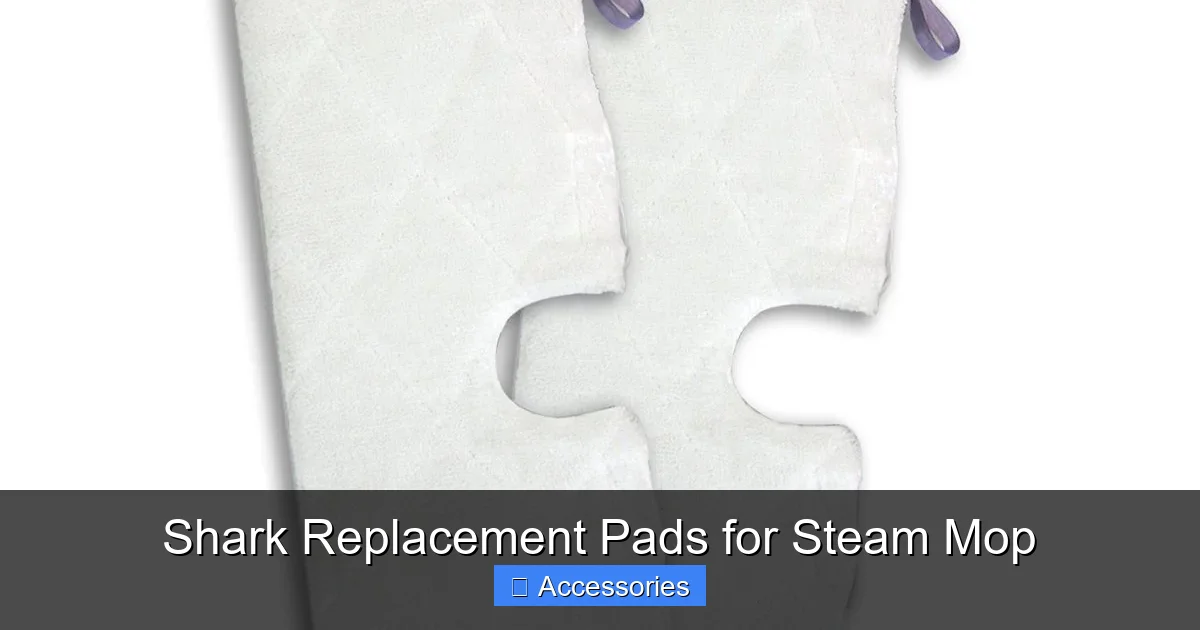
Visual guide about Shark Replacement Pads for Steam Mop
Image source: images-na.ssl-images-amazon.com
By Attachment Style: The Clip vs. The Pocket
This is the most fundamental compatibility issue. Look at your current pad.
- Clip-Style (Most Common): These pads have a rigid plastic clip or frame sewn into the top. You align the pad with the mop’s pad plate and press down until you hear a click. The clip locks onto pegs on the mop. This system is secure and ensures the pad stays perfectly flat. Models like the Shark S3501, S3601, and many in the K series use this.
- Pocket-Style (Elastic Loop): These are simple rectangular pads with an elastic band sewn around the edges. You stretch the elastic band over the corners of the mop’s pad plate. It’s a simpler, often cheaper design but can be less secure on aggressive push-pull motions. Some older Shark models and certain third-party pads use this style.
Pro Tip: Never force a clip-style pad onto a pocket-style mop plate or vice-versa. It won’t fit properly, steam will escape, and you risk breaking the clip mechanism on your mop.
By Function & Material: Matching the Pad to the Mess
Once you know your attachment style, you choose the pad for the job.
- Standard Microfiber Cleaning Pads: Your workhorse. Thick, plush, and highly absorbent. Designed for everyday cleaning on all sealed hard floors—hardwood, laminate, tile, vinyl. They excel at picking up dust, pet hair, light spills, and general grime. They come in various colors, often color-coded for room-specific use (e.g., blue for bathroom, yellow for kitchen).
- Scrubbing Pads (often called “Dual-Action” or “Power Grip”): These feature a textured, nubbed, or honeycomb surface on one side. The texture provides mechanical agitation to break up dried-on mud, food splatters, sticky residues, and soap scum. They are usually paired with a standard microfiber pad for the final wipe-down. Some are designed as a two-sided pad (scrub on one side, wipe on the other).
- Polishing/Finishing Pads: Less common for Shark, but some premium third-party pads offer an ultra-soft, velour-like surface. These are for delicate surfaces like waxed hardwood or sealed stone, where you want to buff and shine without any chance of abrasion.
- Specialty Pads: You might find pads infused with silver ions for antimicrobial properties or pads specifically designed for grout lines. These are niche and often not necessary for the average user.
A complete pad kit often includes one scrubbing pad and two or three standard microfiber pads. This gives you the flexibility to tackle any mess.
The Ultimate Compatibility Guide: Finding Your Exact Shark Model
This is the most critical section. Buying the wrong pad is the #1 reason for returns and frustration. Shark’s model numbering can be cryptic, but it’s the key to everything.
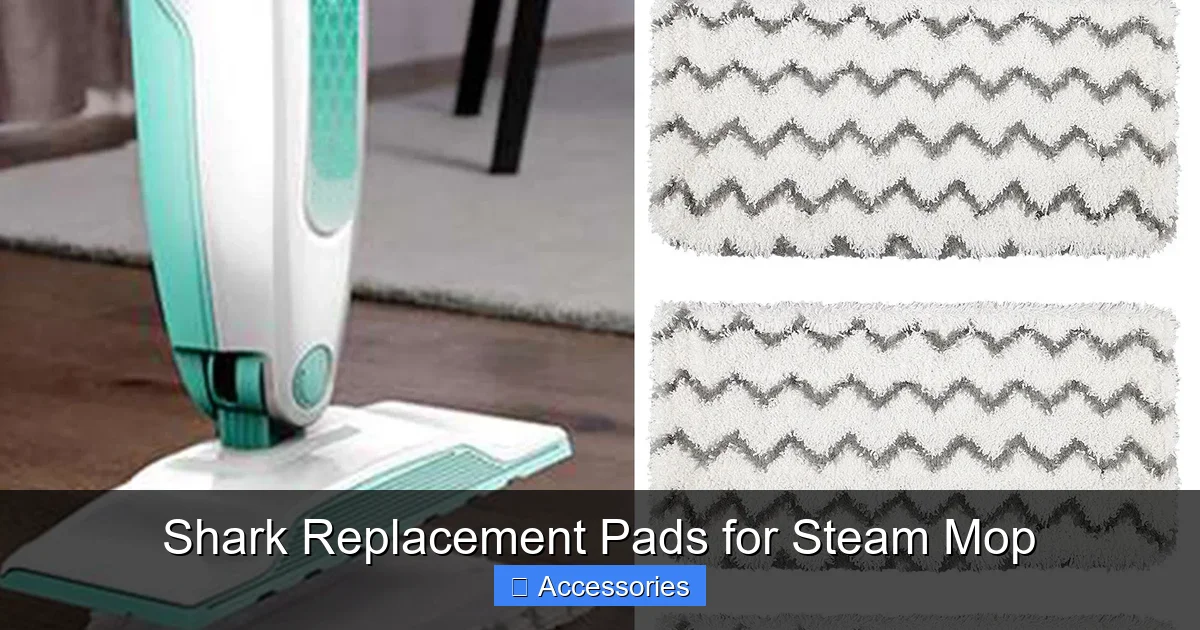
Visual guide about Shark Replacement Pads for Steam Mop
Image source: i5.walmartimages.com
Locating Your Model Number
Your exact model number is a code like “S3501,” “S3601,” “S5502,” “K200,” etc. You must find this label. It’s typically:
- On a sticker on the back or bottom of the mop’s handle/base.
- On the original packaging box.
- Sometimes on the water tank itself.
Write it down. Take a photo. This is your shopping bible.
Common Shark Series and Their Pad Requirements
While Shark introduces new models, series tend to share pad compatibility. Here’s a breakdown of popular families:
- Shark S Series (e.g., S3501, S3601, S5502): This is the classic, best-selling line. They universally use a large, rectangular clip-style pad, typically around 12″ x 8″ or similar. The pad has a prominent plastic clip frame. This is the most common pad type on the market.
- Shark K Series (e.g., K200, K300, K400): These are often the “lightweight” or “compact” models. They frequently use a smaller, square or slightly rectangular pocket-style pad with an elastic band. The pad plate is smaller. Do not assume an S-series pad will fit a K-series mop.
- Shark Professional Series (e.g., S3901, S5502 “Professional”): These may use the same large clip-style pads as the standard S-series, but it’s vital to confirm with your specific model number. Some “Pro” models might have a slightly different clip design.
- Shark Steam & Scrub / Steam & Spray Models: These hybrid models that also have a scrubbing function often have a unique, smaller pad with a specific clip pattern. Their pads are not interchangeable with standard S-series pads.
How to Read a Third-Party Pad Listing
When shopping on Amazon, Walmart, or a cleaning supply site, ignore the marketing fluff. Go straight to the product details and the “Compatible With” or “Fits” list. A reputable seller will list dozens of exact Shark model numbers.
- GOOD Listing: “Fits: Shark S3501, S3601, S5502, S5003, S6901, S7001, S8001, S9001…”
- BAD Listing: “Fits all Shark steam mops!” or “Universal Steam Mop Pad.” These are lies. Avoid.
Cross-reference the listed models with your own. If your model number is not in the list, do not buy. When in doubt, contact the seller directly before purchasing.
Real-World Scenario: Maria has a Shark S3601 from 2018. She searches “Shark steam mop pads” and sees a cheap 5-pack. The listing says “Fits Shark Steam Mops.” She buys it. The pads arrive with elastic pockets. They don’t fit her S3601’s clip plate. They are too small and floppy. She wasted her money. The correct move was to search “Shark S3601 replacement pads” and find the clip-style ones.
Maximizing Efficiency & Savings: The Third-Pad Advantage
Let’s talk money. A 2-pack of official Shark-branded microfiber pads can cost $20-$30. A 5-pack of high-quality, compatible third-party pads from a reputable brand like Bissell, Hoover, or a dedicated cleaning supply company (e.g., Microfiber Wholesale, BestAir) can cost $12-$18. Over a few years, this difference adds up to hundreds of dollars saved.
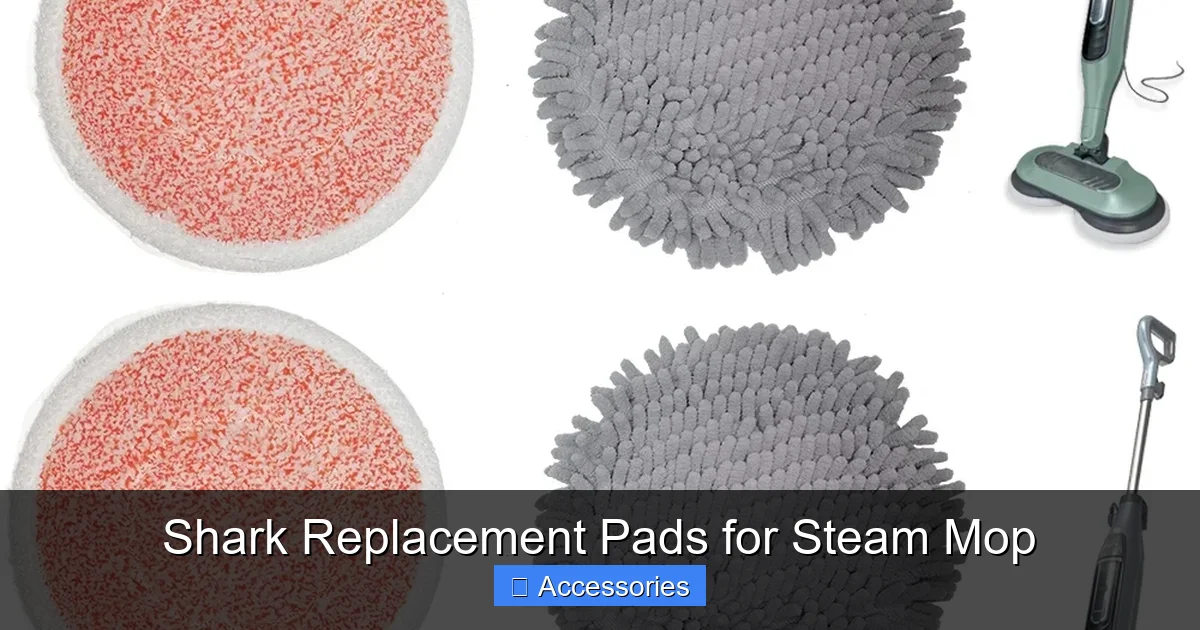
Visual guide about Shark Replacement Pads for Steam Mop
Image source: i5.walmartimages.com
But savings only matter if performance is equal. Here’s how to ensure you’re getting a pad that performs as well as, or better than, the OEM (Original Equipment Manufacturer) version.
What to Look For in a Quality Third-Party Pad
- Thickness & Density: Feel the pad through the packaging (if possible). It should feel substantial, not flimsy. A dense, plush pad holds more steam and more dirt. Compare it to your old, worn-out pad—the new one should feel thicker.
- Stitching and Clip Integrity: If it’s a clip-style pad, inspect the plastic clip. It should be sturdy, not brittle. The stitching where the clip attaches to the fabric must be reinforced and straight. A weak clip will snap off after a few uses.
- Edge Binding: The edges of the pad should be neatly bound or serged. Loose threads will unravel quickly in the wash and in use.
- Material Composition: Look for 80/20 or 70/30 microfiber (polyester/nylon blend). This is the gold standard for absorbency and durability. Avoid pads that feel like cheap felt or terry cloth.
- Brand Reputation & Reviews: Stick to brands known for cleaning textiles. Read reviews specifically mentioning your Shark model. Look for phrases like “fits perfectly on my S3601” or “same as the Shark brand.”
The Environmental & Practical Perks
Beyond cost, third-party pads offer practical advantages. Many sell in larger packs (5, 8, or 10). This means you have a full rotation of clean pads, which is a game-changer for hygiene. You use one, toss it in the hamper, grab another. No waiting for pads to wash and dry before your next clean. Furthermore, many third-party brands offer color-coded sets (e.g., a pack of blue, a pack of yellow), allowing you to assign pads to specific rooms or mess types (pet areas vs. kitchen), reducing cross-contamination.
Key Consideration: The biggest savings come from buying pads in multi-packs. A single official pad is a luxury. A multi-pack of third-party pads is a practical toolkit.
The Unseen Hero: Proper Care & Washing of Your Steam Mop Pads
Here’s a dirty secret (pun intended): a dirty pad is worse than no pad. A pad caked with ground-in dirt, soap scum, and bacteria becomes a breeding ground. It will redeposit filth onto your “clean” floors, spread germs, and lose all absorbency. The steam from your mop will simply push the dirty water around. Proper washing is not optional; it’s mandatory for health and performance.
The Golden Rules of Pad Washing
- Wash After EVERY Use: This is non-negotiable. The moment a pad dries, the dirt and bacteria set into the fibers, making them much harder to remove.
- Use ONLY Hot Water: Hot water (at least 140°F/60°C) is essential to break down oils and kill bacteria. Cold water rinses but does not sanitize.
- Use a Minimal, Fragrance-Free Detergent: Harsh detergents, fabric softeners, and bleach are the enemies of microfiber. Fabric softener coats the fibers, destroying their electrostatic charge and making them useless for picking up dirt. Bleach degrades the fibers. Use a small amount of a plain, free & clear laundry detergent or a dedicated microfiber wash.
- NO Fabric Softener or Dryer Sheets: Repeat this to yourself. Ever.
- Wash Pads Separately or with Other Microfiber: Don’t mix them with cotton towels or clothing. Lint from other fabrics will embed in the microfiber, ruining it. If you must mix, only with other clean microfiber items.
Step-by-Step Washing & Drying Guide
- Pre-Rinse: Immediately after mopping, rinse the pad under cold running water. Squeeze and wring to remove loose dirt and excess water. This prevents dirt from setting.
- Machine Wash: Place pads in the washing machine. Do not overload; they need room to agitate. Use the “Heavy Duty” or “Normal” cycle with hot water. Add 1-2 tablespoons of free & clear detergent.
- Extra Rinse: If your machine has an “Extra Rinse” cycle, use it. This ensures all detergent residue is flushed out, which is critical for maintaining absorbency.
- Dry: Tumble dry on medium or high heat. The heat helps restore the fibers’ loft. Do not use dryer sheets. Alternatively, line drying is acceptable but may leave pads slightly less fluffy.
- Store Dry: Ensure pads are completely dry before storing them in a dry, airtight container or bag. Damp pads will mildew.
Signs Your Washing Routine is Wrong: Pads feel stiff or waxy (detergent/fabric softener buildup). They leave lint on floors (mixed with lint in wash). They don’t seem to absorb water well (fiber coating). They smell musty (not washed hot/dried thoroughly). Correct your process immediately.
Your Complete Buying Checklist & Where to Buy
Armed with your model number and knowledge of pad types, you’re ready to purchase. Use this checklist for every potential buy.
- ✅ Model Match: Is my exact Shark model number (e.g., S3601) listed in the “Fits” section? No exceptions.
- ✅ Attachment Style: Does the photo show a clip frame or an elastic pocket? Does it match my mop?
- ✅ Pad Count & Value: How many pads? What’s the cost per pad? (Aim for $2-$4 per high-quality pad). Is there a scrubbing pad included in the pack?
- ✅ Material Thickness: Do reviews mention “thick,” “plush,” or “absorbent”? Are there complaints about pads being thin or tearing easily?
- ✅ Seller Reputation: Is the seller the pad brand itself (e.g., “Bissell”) or a reputable third-party? Beware of unknown brands with perfect 5-star reviews (often fake). Look for detailed, verified reviews with photos.
- ✅ Return Policy: What is the return window? A good seller offers at least 30 days, in case of a fit issue.
Where to Buy: Pros and Cons
- Official Shark Website/Retailers (Target, Walmart, Best Buy): Pros: Guaranteed compatibility, easy returns. Cons: Highest price, limited variety (usually just their basic white/gray pads).
- Amazon: Pros: Massive selection of third-party pads, competitive pricing, user reviews with photos, easy returns. Cons: Must be vigilant about checking model compatibility lists; some listings are inaccurate.
- Specialized Cleaning/Janitorial Supply Sites (e.g., CleanItSupply, WebstaurantStore): Pros: Often sell industrial-grade microfiber in bulk at excellent prices. Cons: Less user-friendly for casual buyers, may require account creation, shipping can be slower.
- Big-Box Store In-Store (Walmart, Target): Pros: Instant gratification, can sometimes feel the pad. Cons: Very limited stock, almost always the expensive official brand, packaging may not list all compatible models.
Final Buying Advice: For most people, Amazon is the best starting point. Find a highly-rated third-party brand with a clear, extensive compatibility list that includes your model. Buy a 5-pack of standard microfiber pads and, if you have tough messes, a 2-pack of scrubbing pads. This initial investment of $25-$35 will serve you for years.
Conclusion: The Simple Swap That Revives Your Cleaning Routine
Your Shark steam mop is a fantastic tool. It harnesses the power of water and heat to clean without chemicals. But its potential is locked away unless it’s paired with the right pad. This isn’t about buying more stuff; it’s about buying the right thing. That worn, thin, mismatched pad you’re currently using isn’t just a rag—it’s a bottleneck. It’s stealing efficiency, leaving dirt behind, and potentially harming your floors.
Take 30 seconds. Flip your mop over. Find that model number sticker. That’s your key. Invest in a proper set of thick, well-stitched, compatible pads—whether official or a trusted third-party brand. Then, commit to the simple ritual of hot-water washing after every single use. This three-step process—Identify, Acquire, Maintain—will transform your mopping experience. The steam will feel hotter, the floors will be truly cleaner and drier, and you’ll feel the satisfaction of a job genuinely well done. Don’t let the wrong pad undermine your great tool. Give your Shark the partner it deserves, and watch your floors—and your cleaning confidence—shine.
Frequently Asked Questions
Can I wash Shark steam mop pads in the washing machine?
Yes, absolutely. Machine washing with hot water and a minimal amount of free & clear detergent is the recommended method. Never use fabric softener or bleach, as these ruin the microfiber’s absorbency and electrostatic properties.
How long do Shark steam mop pads typically last?
With proper care (washing after every use), a high-quality microfiber pad should last 100-300 mopping sessions, or roughly 6-12 months for regular household use. Replace pads when they become thin, frayed, lose their texture, or no longer seem to pick up dirt effectively.
Will third-party pads fit my older Shark model, like an S3501?
Most likely, yes. Third-party manufacturers have reverse-engineered compatibility for the most popular legacy models like the S3501, S3601, and S5003. You must, however, verify by checking the seller’s detailed compatibility list for your exact model number.
What’s the difference between a standard pad and a scrubbing pad?
A standard microfiber pad is plush and absorbent, ideal for lifting and trapping loose dirt, dust, and spills. A scrubbing pad has a textured, nubbed surface that provides mechanical agitation to break up and lift dried-on, sticky, or caked-on messes before the microfiber can absorb them.
Why does my pad leave lint or streaks on the floor?
This is usually caused by one of three things: 1) The pad is overloaded with dirt from not being washed frequently enough. 2) You used fabric softener or a highly-scented detergent that coated the fibers. 3) The pad is low-quality, shedding fibers, or is simply worn out and needs replacement.
Are reusable pads more environmentally friendly than disposable ones?
Yes, significantly. High-quality reusable microfiber pads can be washed hundreds of times, eliminating the waste and cost of single-use pads. Their long lifespan and chemical-free cleaning (using only water) make them the most sustainable option for steam mopping.