Stihl 4 Mix engines, while innovative, have specific vulnerabilities that lead to common problems like difficult starting, excessive smoke, and sudden power loss. The vast majority of these issues stem from fuel degradation, improper oil use, or neglected maintenance rather than inherent engine failure. This guide breaks down each symptom, explains the precise mechanical cause, and provides actionable, step-by-step troubleshooting and repair advice. Understanding these patterns empowers owners to diagnose and fix problems themselves, saving significant repair costs and extending the life of their equipment. Proactive care with the correct fuels and regular servicing is the ultimate key to preventing most Stihl 4 Mix engine problems.
Key Takeaways
- Fuel is the #1 Culprit: Old, degraded, or improperly mixed fuel (using regular 2-stroke oil or no oil) causes over 70% of starting, smoking, and performance issues.
- Smoke Color is a Diagnostic Tool: Blue/white smoke means burning oil (wrong fuel or internal wear). Black smoke means a rich fuel mixture (carburetor issue). No smoke on a hot engine can indicate a lean condition.
- The Carburetor is a Common Failure Point: Small passages clog easily with stale fuel varnish. Diaphragm carburetors on 4-Mix engines are particularly sensitive and often need thorough cleaning or replacement.
- Air Filter Neglection is a Silent Killer: A clogged air filter chokes the engine of air, causing a rich mixture, poor performance, and can lead to cylinder scoring from abrasive dust.
- Preventative Maintenance is Non-Negotiable: Annual or 50-hour servicing (spark plug, fuel filter, air filter, carburetor check) prevents 90% of major Stihl 4 Mix engine problems.
- Use Only Stihl 4-Stroke Oil: This special ashless oil is formulated for these engines. Using automotive 4-stroke oil or 2-stroke oil will cause rapid carbon buildup and piston seizure.
- Storage Matters: Running the engine dry or using fuel stabilizer before seasonal storage is critical to prevent fuel varnish from clogging the tiny carburetor jets.
📑 Table of Contents
- Understanding the Stihl 4-Mix Engine: A Blessing and a Curse
- Symptom 1: The Dreaded Hard Start or No Start
- Symptom 2: Excessive Smoke (Blue/White) from the Exhaust
- Symptom 3: Loss of Power, Stalling, and “Bogging Down”
- Symptom 4: The Rough, Erratic Idle and “Hunting”
- The Heart of the Matter: Fuel System and Carburetor Deep Dive
- Prevention: The Best Cure for Stihl 4 Mix Engines Problems
- When to Consider Professional Help or Engine Rebuild
Understanding the Stihl 4-Mix Engine: A Blessing and a Curse
Stihl’s 4-Mix engine technology was a groundbreaking attempt to marry the convenience and lower emissions of a 4-stroke engine (no oil-gas mixing, cleaner exhaust) with the lightweight, high-power characteristics of a 2-stroke. It achieves this by using a special Stihl 4-stroke oil that is mixed with gasoline at a precise ratio (typically 1:50) but is burned in a traditional 4-stroke combustion cycle. This creates a unique set of characteristics and, consequently, a unique set of Stihl 4 Mix engines problems.
The core of the issue lies in the fuel itself. Unlike a standard automotive 4-stroke engine that uses a sump for oil, the 4-Mix engine’s entire lubrication comes from the gasoline-oil mixture. This means the quality and consistency of that mixture are absolutely paramount. The engine also uses a sophisticated, sensitive diaphragm carburetor to handle fuel from any angle—a feature that is also its Achilles’ heel. Small particles of varnish from old fuel or debris can quickly clog the micron-sized passages, leading to a cascade of performance issues. Before we dive into specific symptoms, it’s crucial to understand that most Stihl 4 Mix engine problems are not “engine failures” in the traditional sense; they are fuel, air, or spark delivery failures. Fixing the delivery system often restores the engine to perfect condition.
Symptom 1: The Dreaded Hard Start or No Start
This is the most common complaint. The engine may crank over vigorously but refuses to fire, fires and dies immediately, or takes dozens of pulls to start, especially when hot. This is almost always a fuel-related issue, as the engine’s ignition system (magneto/coil) is very reliable.
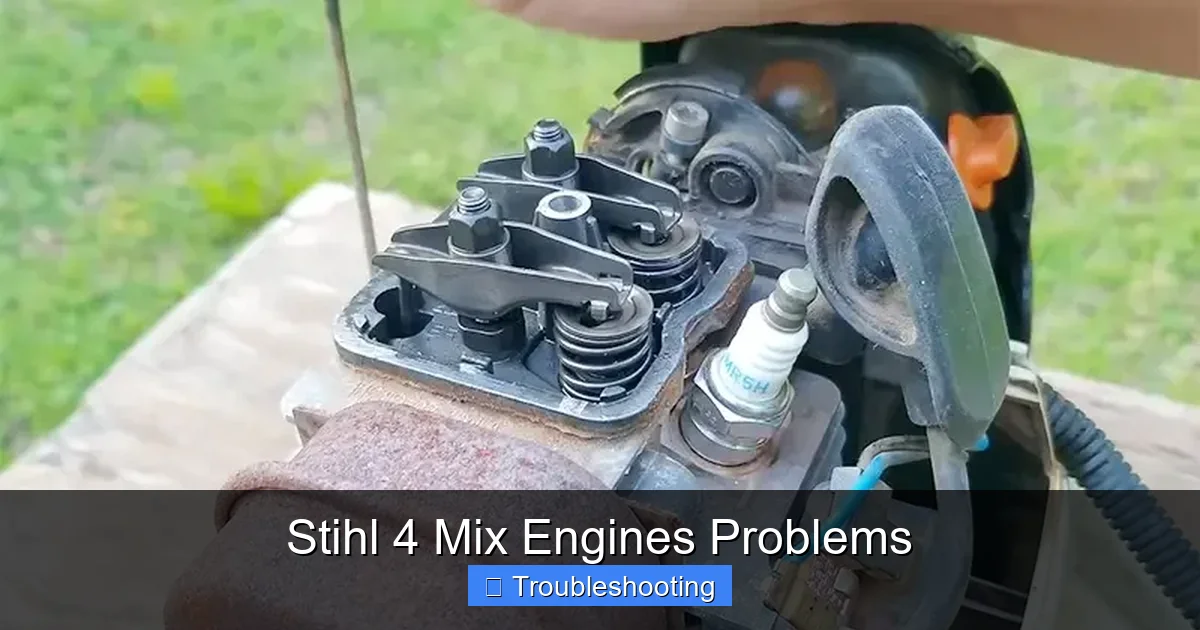
Visual guide about Stihl 4 Mix Engines Problems
Image source: i0.wp.com
The Fuel System Breakdown
When you pull the starter, the carburetor’s diaphragm creates a pulse that draws fuel from the tank through a fuel line, through a tiny fuel filter, and into the carburetor’s pump chamber. From there, it travels through a series of narrow jets and passages before being drawn into the crankcase and then the combustion chamber. If any part of this journey is impeded, you get a weak or non-existent fuel charge.
- Stale Fuel: Gasoline begins to degrade and varnish within 30 days, especially with today’s ethanol blends. This varnish coats the inside of the carburetor’s jets and passages, shrinking their diameter. A passage that should be 0.5mm might effectively become 0.2mm, drastically reducing fuel flow.
- Clogged Fuel Filter: Located inside the gas tank, this small screen traps debris. It’s easy to forget it exists until it’s completely blocked. A quick visual check during a tank emptying is a good habit.
- Blocked Vent in Fuel Cap: The cap must allow air to enter the tank as fuel leaves. If this vent hole is clogged, a vacuum forms in the tank, stopping fuel flow after a few seconds of operation. This causes the engine to run briefly then die—a classic symptom.
- Diaphragm Failure: The rubber diaphragm in the carburetor can become stiff, cracked, or torn from old fuel or age. It can no longer create the necessary suction pulse to draw fuel.
- Incorrect Starting Procedure: These engines have a specific choke and throttle interlock system. Often, the throttle must be in the “fast idle” position for the choke to engage fully. Consult your manual; a procedural error mimics a mechanical problem.
Practical Fix: Start by draining all old fuel. Disconnect the fuel line from the carburetor and see if fuel flows freely from the tank (with cap vent clear). If not, the issue is the filter or tank vent. If fuel flows, the problem is in the carburetor. A thorough cleaning with carburetor spray and compressed air is the first step. If that fails, the carburetor kit (including new diaphragm and gaskets) is an inexpensive and common repair.
Symptom 2: Excessive Smoke (Blue/White) from the Exhaust
Seeing a constant, thick cloud of blue or white smoke, especially at idle, is a clear sign the engine is burning oil. In a properly tuned 4-Mix, there should be minimal visible exhaust smoke. This is a direct result of the fuel-oil mixture not being burned efficiently.

Visual guide about Stihl 4 Mix Engines Problems
Image source: blog.stihl.co.uk
Why Is It Burning Oil?
The oil in the mixture is designed to lubricate the cylinder and piston rings. If too much oil is present, or if the combustion process is incomplete, that oil exits the exhaust as smoke.
- Incorrect Fuel/Oil Ratio: The most frequent cause. Users sometimes mistakenly add too much oil “for extra protection” or use the wrong measuring cup. Stihl’s ratio is 1:50 (2.6 oz of oil per 1 gallon of gasoline). Using a 2-stroke oil cup marked for 40:1 or 32:1 will lead to a grossly over-rich oil mixture.
- Using the Wrong Oil: This cannot be overstated. You must use only Stihl 4-Stroke (SAE 10W-30) or equivalent ashless 4-stroke oil specified for air-cooled engines. Automotive 4-stroke oil contains additives that cause heavy carbon deposits. 2-stroke oil is not designed to burn in a 4-stroke cycle and will cause severe piston ring sticking and smoke. Never use outboard or marine oil.
- Worn Piston Rings or Cylinder: If the engine is high-hours, the piston rings may be worn and not seal properly. Oil from the crankcase (which is bathed in the fuel-oil mix) can seep past the rings into the combustion chamber and burn. This is usually accompanied by a loss of compression and power.
- Rich Idle Mixture: If the carburetor’s idle mixture screw is set too rich (screwed out too far), it can cause a rich condition at idle where fuel isn’t fully vaporized and burned, leading to smoke. This is less common on 4-Mix carbs but possible.
Practical Fix: First, verify you are using the correct Stihl 4-stroke oil and the precise 1:50 ratio with fresh, non-ethanol gasoline if possible. Re-tune the carburetor according to the manual (usually a small adjustment to the low-speed screw). If smoke persists, a compression test is needed. Low compression (< 90 PSI) indicates worn rings/cylinder, which is a major repair.
Symptom 3: Loss of Power, Stalling, and “Bogging Down”
The engine runs but lacks its usual punch. It may stall under load (like when cutting thick grass) or hesitate when the throttle is opened quickly. This points to a lean fuel mixture (too little fuel) or an airflow restriction.

Visual guide about Stihl 4 Mix Engines Problems
Image source: blog.stihl.co.uk
Diagnosing the Lean Condition
A lean condition is dangerous as it causes the engine to run hotter, which can lead to piston seizure. The causes are the opposite of a rich condition but often stem from the same culprit: fuel system obstruction.
- Partially Clogged Main Jet: This is the primary fuel metering jet. Even a small amount of varnish can restrict fuel flow at full throttle, causing a lean condition precisely when you need maximum power. The engine may idle fine but bog under load.
- Air Leak in the Intake System: Check the gasket between the carburetor and engine, and the intake manifold. A crack or loose clamp allows unmetered air to enter, leaning out the mixture. You can sometimes spray a little carburetor cleaner or starter fluid around these joints while the engine idles; if the RPM spikes, you have an air leak.
- Dirty or Damaged Air Filter: A severely clogged filter restricts air intake, but paradoxically, it often causes a rich condition. However, if someone has “fixed” a bog by removing the air filter, that creates an unmetered air situation (lean). Always ensure the correct filter is in place and clean.
- Weak Fuel Pump (Diaphragm): A diaphragm with a tiny pinhole leak may provide enough fuel for idle but cannot supply the volume needed for high-RPM operation.
Practical Fix: The first and most effective step is to remove the carburetor, disassemble it completely, and soak all parts (especially the tiny jets) in a proper carburetor cleaning solution. Use compressed air to blow out every passage. Replace the entire carburetor kit (gaskets, diaphragm, needles). Inspect and clean the air filter. Check for intake leaks with the spray test. If the problem persists after a full carburetor overhaul, consider a clogged exhaust port or spark arrestor screen, which creates backpressure and mimics a lean condition.
Symptom 4: The Rough, Erratic Idle and “Hunting”
The engine’s idle speed fluctuates wildly, dropping low enough to stall and then revving up again. It may sound like it’s “searching” for a stable speed. This is a classic sign of an unstable fuel/air mixture at low throttle settings.
Idle Circuit Specific Issues
The carburetor has a separate, delicate “idle circuit” with its own pilot jet and passage. This is the most common area for varnish buildup because it handles fuel at low flow rates where contaminants settle.
- Clogged Idle (Pilot) Jet: This is the prime suspect. A partially blocked pilot jet causes an inconsistent fuel supply at idle, leading to hunting and stalling. It often looks clean to the naked eye but is obstructed internally.
- Dirty Idle Mixture Screw Seat: The tapered needle of the idle screw seats in a tiny hole. If this seat is dirty or damaged, the screw cannot make a precise seal, making adjustment impossible.
- Air Leak at Idle: A very small air leak might not affect full throttle but can completely disrupt the delicate balance of the idle circuit. The previously mentioned intake leak check is vital here.
- Throttle Shaft Wear: Over time, the throttle valve (butterfly) shaft can wear slightly in its bore, creating a permanent air leak around the shaft that is most noticeable at idle.
Practical Fix: A full carburetor teardown and cleaning is again the solution. Pay special attention to the pilot jet. Remove it, and if possible, use a jet cleaning wire (of the correct size) to gently probe through it. Blow compressed air from both directions. Clean the seat for the idle mixture screw with a fine wire and spray. If the throttle shaft is worn, the only fix is a new or rebuilt carburetor.
The Heart of the Matter: Fuel System and Carburetor Deep Dive
Since we’ve repeatedly identified the carburetor as ground zero for Stihl 4 Mix engines problems, let’s understand it better. These engines almost universally use a Zama or Walbro diaphragm carburetor. It has no float bowl; instead, a flexible rubber diaphragm moves with engine pulses to pump fuel. This system is great for operation at any angle but is highly sensitive to fuel quality.
The Varnish Cycle
Ethanol in gasoline is hygroscopic, meaning it attracts water. This water and the degraded gasoline components leave behind sticky, polymeric residues—varnish. This varnish:
- Clogs the tiny fuel inlet screen inside the carburetor.
- Coats the diaphragm, making it stiff and less responsive.
- Solidifies inside the jets and passages, reducing their diameter.
- Prevents the inlet needle from seating properly, causing a constant drip (rich condition).
The only way to break this cycle is to physically remove the varnish. Chemical additives in “fuel stabilizers” can slow the process but cannot clean an already varnished carburetor.
Step-by-Step Carburetor Cleaning
- Removal: Disconnect the throttle and choke linkages, fuel line, and remove the carburetor from the engine.
- Disassembly: Remove the cover, diaphragm, and all screws. Note the position of any adjustment needles. Carefully remove the main jet and pilot jet. Use a proper screwdriver to avoid stripping the soft aluminum jets.
- Soak: Submerge all metal parts (not the diaphragm or gaskets) in a true carburetor cleaner (like Berryman B-12 Chemtool or equivalent) for at least 30 minutes. Agitate occasionally.
- Blow Out: Use compressed air to blow through every single hole and passage from both directions. You must be able to see air flow freely. Use jet cleaning wires very gently on jets.
- Reassembly: Install new gaskets and the diaphragm kit (cheap insurance). Reassemble in reverse. Reinstall on engine.
- Initial Adjustment: Turn both mixture screws (H and L) in until they gently seat, then back out the recommended amount (usually 1 to 1.5 turns). Start the engine, warm it up, and fine-tune the idle and mixture per the manual.
If after this meticulous process the engine still runs poorly, the carburetor body itself may be cracked or the diaphragm housing warped, requiring a replacement carburetor. They are relatively inexpensive and often come as a complete rebuild kit.
Prevention: The Best Cure for Stihl 4 Mix Engines Problems
The most powerful tool against Stihl 4 Mix engines problems is a rigorous preventative maintenance schedule. These engines demand respect for their fuel system.
The Fuel Protocol
- Use Fresh, Non-Ethanol Gasoline: Buy no more than a 30-day supply. If you must use ethanol-blended fuel (E10), use it within 15 days. Ethanol is the primary cause of phase separation and varnish.
- Use ONLY Stihl 4-Stroke Oil: Keep a dedicated measuring cup. Never guess or use another container. Mix fuel in a dedicated, clean gas can.
- Add Fuel Stabilizer: If you won’t use the fuel within 30 days, add a quality stabilizer like Sta-Bil to every tankful. This is not a cure-all, but it slows degradation.
- Store Properly: For seasonal storage (over 60 days), either run the engine until the tank and carburetor are completely dry, or drain all fuel and store the equipment with an empty tank. This is the single most important storage step.
The Maintenance Schedule
Follow this checklist every 50 hours or at the start of each season:
- Air Filter: Clean the foam pre-cleaner with soapy water. Replace the paper filter element annually or if damaged. A clogged filter is a top cause of poor performance.
- Spark Plug: Check and adjust the gap (usually 0.5mm). Replace annually. A fouled plug (oily, black) indicates a rich mixture or incorrect oil.
- Fuel Filter: Replace the in-tank filter screen annually. It’s cheap and easy.
- Carburetor: Even if running well, spray carburetor cleaner through the idle hole while the engine runs to keep it clean. Annually, consider a preventive carburetor kit replacement if the equipment is heavily used.
- Cooling System: Clean the cylinder fins and fan housing of all grass and debris. Overheating kills engines.
- Spark Arrestor: Clean or replace the muffler’s spark arrestor screen annually. A clogged screen causes backpressure and power loss.
When to Consider Professional Help or Engine Rebuild
Not all problems are simple fixes. If you have addressed fuel, air, spark, and the carburetor with no improvement, deeper mechanical issues may exist.
- Low Compression: This is the ultimate diagnostic. Use a compression tester. Readings below 90 PSI indicate worn piston rings, a scored cylinder, or a blown head gasket. On these small engines, a rebuild or replacement is often more cost-effective than a repair.
- Seized Piston: Caused by running lean (no oil, wrong fuel) or extreme overheating. The piston will not move. This is catastrophic and requires a complete rebuild or engine replacement.
- Broken or Stuck Valves: The 4-Mix uses an overhead valve (OHV) design. A broken valve spring or bent valve from foreign object damage (FOD) is a major repair.
- Crankshaft Seal Leaks: If oil is leaking from the crankshaft seal into the crankcase, it can dilute the fuel mixture and cause smoking. This requires crankcase disassembly.
The decision to rebuild often comes down to the age and value of the equipment. For a 10-year-old trimmer with 300 hours, a new engine may be the best investment. For a 2-year-old blower with 50 hours, a rebuild under warranty (if applicable) is the clear path. Always check for applicable warranties first.
Frequently Asked Questions
Why does my Stihl 4-Mix engine smoke so much, and is it damaging?
Excessive blue/white smoke is almost always caused by burning too much oil in the fuel. This happens from using the wrong oil (2-stroke or automotive oil), an incorrect fuel/oil mix ratio (too much oil), or worn piston rings. Yes, it is damaging; it fouls the spark plug, coats the muffler with carbon, and in the case of worn rings, indicates a major internal failure is coming. Fix the fuel first, then check compression.
My 4-Mix engine is extremely hard to start when hot. What’s wrong?
A hot-start issue is a classic sign of a failing carburetor diaphragm or a weak fuel pump pulse. When the engine is hot, fuel vaporizes more easily, and the fuel system needs to be precise. A diaphragm with a tiny crack or a hardened, stiff diaphragm cannot create enough suction to draw fuel against vapor pressure. Replacing the carburetor kit (which includes a new diaphragm) is the most common fix.
Can I use regular car oil in my Stihl 4-Mix engine?
Absolutely not. You must use only Stihl 4-Stroke oil (SAE 10W-30) or another ashless 4-stroke oil specified for air-cooled engines. Automotive oils contain detergents and additives that cause heavy, abrasive carbon deposits in the combustion chamber and on piston rings, leading to rapid power loss and eventual piston seizure. 2-stroke oil will burn improperly and cause the same issues.
What is the correct gas-to-oil mix for a Stihl 4-Mix engine?
The standard and only correct ratio is 1:50. This means 2.6 fluid ounces (approximately 77 ml) of Stihl 4-Stroke oil per 1 US gallon of fresh, clean gasoline. Always use the measuring cup provided with your equipment or a dedicated, clearly marked container. Never estimate or use a 2-stroke oil cup, as those are for different ratios.
My 4-Mix engine runs great at full throttle but dies at idle. Why?
This is a definitive sign of a clogged or dirty idle (pilot) jet inside the carburetor. The idle circuit is tiny and prone to varnish blockage from stale fuel. The engine gets enough fuel at high throttle (through the main jet) but starves at low throttle. A complete carburetor cleaning, with special attention to probing and blowing out the pilot jet, will resolve this.
Is it better to run my 4-Mix engine dry before storing it for the winter?
Yes, this is the best practice. Run the engine until it consumes all fuel in the tank and carburetor, or drain all fuel from the tank and then run the engine briefly until it stalls. This prevents fuel from sitting in the carburetor’s tiny passages for months, where it turns into varnish and guarantees a hard start in the spring. If you cannot run it dry, add a fuel stabilizer to a full tank, run it for 2 minutes, and then store it—but running dry is superior.