Is your Shark Hydrovac losing suction, making strange noises, or smelling bad? Don’t replace it—troubleshoot first! This guide walks you through the most common Hydrovac issues, from simple filter clogs to complex motor problems. We provide clear, step-by-step solutions you can do at home, saving you money and extending your vacuum’s life. Learn how to diagnose the problem correctly and perform essential maintenance to keep your Shark performing at its peak.
Key Takeaways
- Always start with the basics: Check for a full dust cup, clogged filters, and blocked hose or wand before assuming a major failure.
- Suction loss is usually a clog: 90% of suction issues are caused by blockages in the hose, wand, or brush roll housing, or by extremely dirty filters.
- Strange noises have specific meanings: A high-pitched whine often means a clog; a grinding or rattling noise typically indicates debris in the brush roll or a damaged bearing.
- Bad odors are from wet debris: The Hydrovac’s wet/dry design means leftover wet dirt or hair in the dust cup or filters will sour quickly if not cleaned thoroughly after use.
- Preventive maintenance is key: Cleaning filters after every few uses and doing a deep clean monthly prevents most common problems and maintains suction power.
- The brush roll is a common culprit: Hair and string wrap around the brush roll bearings, causing noise, reduced rotation, and poor cleaning. Regular inspection is crucial.
- Know when to seek help: If you’ve checked all clogs, cleaned all filters, and the motor still doesn’t run or smells burnt, internal component failure is likely and requires professional repair.
📑 Table of Contents
- Introduction: Your Shark Hydrovac Isn’t Broken, It’s Just Confused
- Section 1: The Golden Rule of Troubleshooting – Start with the Simple Stuff
- Section 2: “It’s Lost Its Suction!” – Diagnosing Weak Power
- Section 3: “It’s Making a Horrible Noise!” – Decoding Unnatural Sounds
- Section 4: “It Stinks!” – Solving Wet/Dry Odor Problems
- Section 5: “It’s Not Picking Up on Hard Floors!” – Brush Roll & Settings Issues
- Section 6: Preventive Maintenance – The Cure for 90% of Problems
- Conclusion: You Are Now a Shark Hydrovac Expert
Introduction: Your Shark Hydrovac Isn’t Broken, It’s Just Confused
You bought a Shark Hydrovac for its legendary power and its unique ability to handle both wet spills and dry debris. It’s a workhorse. But then, one day, it just… doesn’t. The suction feels weak. It sounds like it’s fighting something. It might even smell like a science experiment gone wrong. Your first instinct might be panic or frustration, followed by the thought of buying a new vacuum. Breathe. Stop. Push that “buy now” button away.
The truth is, most Shark Hydrovac problems are not fatal. They are almost always symptoms of a simple, fixable issue: a clog, a dirty filter, a tangled brush roll. This machine is designed for durability, but like any tool, it needs a little help to perform its best. This guide is your friendly, step-by-step manual to becoming a Shark Hydrovac troubleshooter. We’ll move from the simplest, most common fixes to more complex diagnostics. Our goal isn’t just to get your vacuum working again; it’s to help you understand it, so you can keep it running powerfully for years to come. Let’s get started.
Section 1: The Golden Rule of Troubleshooting – Start with the Simple Stuff
Before you take apart a single screw, you must perform the “Pre-Flight Check.” This is the most important troubleshooting step you’ll ever learn. It takes five minutes and solves most problems. Never skip it.
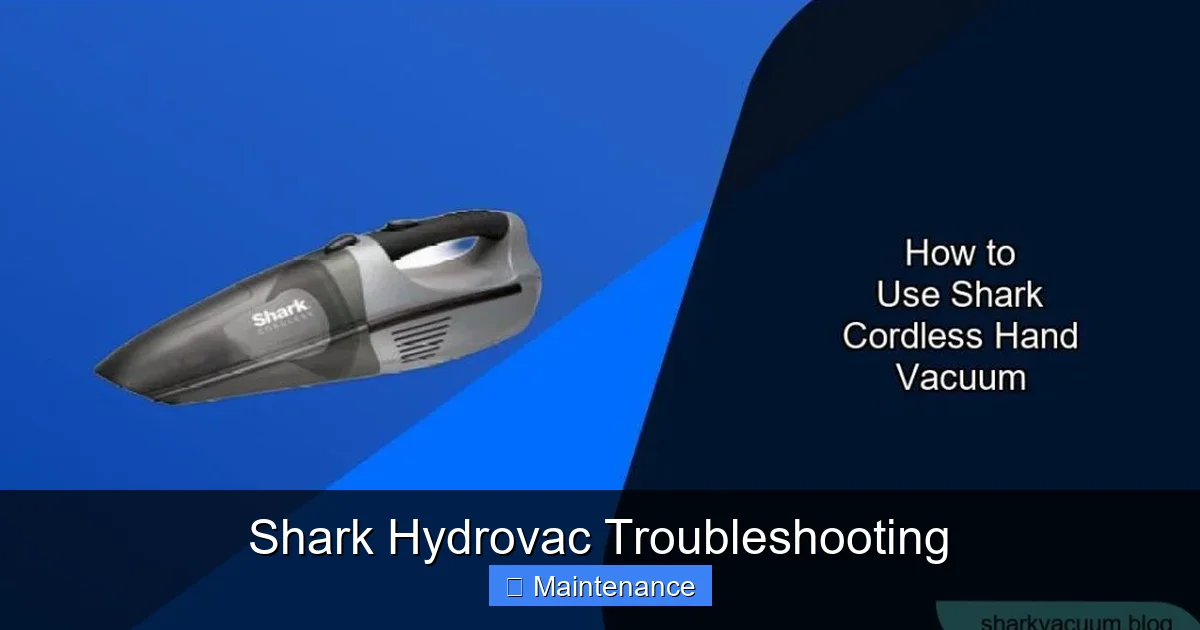
Visual guide about Shark Hydrovac Troubleshooting
Image source: sharkvacuum.blog
Step 1: The Dust Cup is Your First Suspect
This is the #1 cause of “sudden suction loss.” The Hydrovac’s large, easy-empty dust cup is a blessing, but it’s also a trap. If it’s more than ¾ full, airflow is restricted. Always empty it completely before each deep cleaning session. But don’t just dump it out. Look inside. Use a flashlight. Is there a matted “wall” of hair and carpet fibers blocking the intake port at the top? That’s a solid clog. Use a stick or your fingers (carefully) to break it up and remove it. A clean dust cup is non-negotiable for full power.
Step 2: Filters – The Silent Saboteurs
Your Shark Hydrovac has a multi-stage filtration system, typically including a foam pre-motor filter and one or more pleated paper/post-motor filters. These get clogged with fine dust. A dirty filter is like trying to breathe through a straw. Check and clean the foam filter after every 3-4 uses. Rinse it with lukewarm water, squeeze out excess water, and let it air-dry completely for 24 hours before reinserting. The paper filters are not washable; tap them gently over a trash can to dislodge dust. If they are discolored or torn, they must be replaced. A clogged filter is a silent suction killer.
Step 3: The Path of Airflow – Follow the Hose
Airflow is a journey: from the floor, through the brush roll, up the wand/hose, through the filters, and out the exhaust. A blockage anywhere stops the whole system. Disconnect the hose from the vacuum body and the wand. Look through it. Shine a light. You’ll often find socks, hair ties, or large debris jammed in a bend. Use a long, flexible brush (a garden hose brush works) or a straightened wire coat hanger (be gentle) to dislodge it. Do the same for the wand. Then, check the brush roll housing on the vacuum’s head. Remove any hair or string wrapped around the brush roll and its bearings. A clear path equals strong suction.
Section 2: “It’s Lost Its Suction!” – Diagnosing Weak Power
You’ve emptied the cup and checked the obvious hose blockages, but it still feels like it’s just pushing dirt around instead of picking it up. Now we dig deeper. Weak suction can be a symptom of several issues, each with a distinct clue.
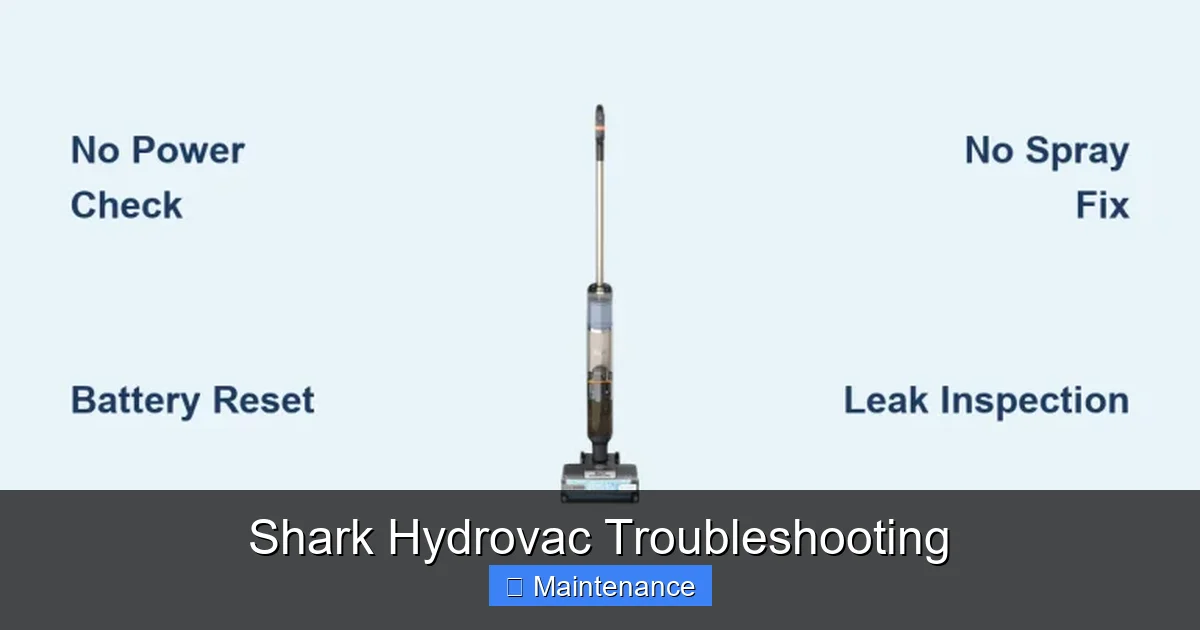
Visual guide about Shark Hydrovac Troubleshooting
Image source: sharkvacuum.blog
The Clog You Can’t See: Inside the Vacuum Body
Sometimes, the blockage isn’t in the hose. It’s inside the vacuum’s main body, right where the hose connects. This area can collect a dense ball of carpet fiber and hair. Unplug the vacuum. Detach the hose completely. Look into the intake opening on the vacuum body. Use a flashlight and a long tool to feel for and remove any obstruction. This is a classic spot for a hidden clog.
Filter Failure: The Wrong or Missing Filter
Using the wrong filter (e.g., a Shark filter for a different model) or installing filters incorrectly (missing a seal, putting them in backward) bypasses the filtration system and chokes suction. Consult your manual’s parts diagram. Ensure every filter is the correct type, is pristine clean or new, and is seated exactly as shown. The foam filter usually goes in first, closest to the motor.
The Exhaust is Blocked
Don’t forget the exit! The air has to go out. Check the exhaust vents on the back or sides of the vacuum body. Are they covered in dust and grime? Use a vacuum attachment or a soft brush to clean them thoroughly. A clogged exhaust creates back pressure, killing suction.
Section 3: “It’s Making a Horrible Noise!” – Decoding Unnatural Sounds
Your Shark Hydrovac has a distinct, powerful motor sound. Any deviation is a message. Learning to interpret these sounds is key to preventing catastrophic damage.
Visual guide about Shark Hydrovac Troubleshooting
Image source: sharkvacuum.blog
The High-Pitched Scream or Whine
This is almost always an airflow problem. The motor is straining because it can’t pull air. You have a severe clog. The sound is the motor “revving” against a closed valve. Immediately turn off the vacuum. Go back to Section 1 and perform the full “Path of Airflow” check with extra vigor. Check the brush roll housing for a packed “pigtail” of hair that’s locked the brush roll solid. This sound is your vacuum’s scream for help—don’t ignore it.
The Grinding, Gritty Rattle
This is a mechanical sound, not an airflow sound. It usually means something hard is in the brush roll. Turn the vacuum over. Manually rotate the brush roll with your fingers. Does it spin freely? Or does it catch, grind, or feel gritty? If it’s not smooth, you have debris (pennies, small toys, gravel) jammed between the brush roll bristles and the housing, or the brush roll bearings are stripped from hair wrap. Remove the brush roll (usually by pressing two tabs) and clean it meticulously. If the bearings feel gritty when you spin the roll by its ends, the brush roll assembly needs replacement.
The Intermittent “Click-Click-Click” or Pulsing
This can be two things. First, it might be the brush roll’s automatic shut-off feature engaging because the brush roll is jammed (see above). Second, on some models, it can indicate a failing motor or a loose electrical connection. If you’ve ruled out a jammed brush roll, this sound points to an internal electrical issue that requires a professional.
Section 4: “It Stinks!” – Solving Wet/Dry Odor Problems
The Hydrovac’s wet/dry capability is its superpower and its kryptonite. Wet debris, especially organic matter like food spills or pet accidents, can sour inside the machine if not handled correctly.
The Source is Always Moisture Left Behind
Odor originates from bacteria and mold growing on damp organic material trapped in the dust cup, filters, or hose. The solution is extreme dryness and sanitation. After using the vacuum for a wet spill, you must: 1) Empty the dust cup immediately. 2) Rinse the dust cup and lid thoroughly with a bleach-water solution (1 tbsp bleach per gallon of water) or a vinegar-water solution. 3) Rinse the foam filter with the same solution, then water. This is critical—the foam holds moisture and smells. 4) Let every single part—dust cup, lid, filters, hose—air-dry completely, preferably in sunlight, for at least 24 hours before reassembling. Never store it damp.
The Permanent “Old Vacuum” Smell
If your vacuum has a general musty smell even when dry, the filters are likely permanently contaminated. Paper filters cannot be washed; once they absorb odor, they hold it. Replace all paper filters. Also, deep-clean the entire vacuum body interior with a disinfectant wipe, focusing on the dust cup cavity and hose connection port. This removes microscopic residue.
Section 5: “It’s Not Picking Up on Hard Floors!” – Brush Roll & Settings Issues
Sometimes the problem isn’t suction, it’s agitation. If your vacuum seems fine on carpet but pushes debris around on hard floors, the brush roll is the issue.
Is the Brush Roll Even Spinning?
Lay the vacuum on its side on a hard floor. Turn it on. Watch the brush roll. Is it spinning? If not, you have a jam (Section 3) or a broken drive belt (on some models). If it is spinning but bristles are splayed and flat, they are worn out and need replacing. Worn bristles don’t agitate dirt effectively.
The Wrong Setting or Attachment
Many Hydrovac models have a brush roll on/off switch. For hard floors, you should turn the brush roll OFF. The spinning bristles can actually scatter debris. Use the bare floor nozzle or a soft dusting brush attachment instead. Also, ensure the suction control is set to “Max” for hard floors.
Wet/Dry Mode Confusion
Some models have a dial or switch for “Dry” vs. “Wet” mode. If you are using it for dry debris but it’s set to “Wet,” the internal diverter valve might be in the wrong position, reducing suction efficiency on dry materials. Double-check your model’s settings.
Section 6: Preventive Maintenance – The Cure for 90% of Problems
The best troubleshooting is the kind you never have to do. A few minutes of monthly care keeps your Shark Hydrovac in peak condition and avoids almost all breakdowns.
Your Monthly Deep-Clean Checklist
- Empty & Wash Dust Cup: Don’t just tap it out. Wash it with soapy water, rinse, and dry completely.
- Clean All Filters: Rinse the foam filter. Tap out the paper filters. Replace any that are damaged or overly discolored (typically every 3-6 months with regular use).
- De-hair the Brush Roll: Use scissors to cut away all wrapped hair and fiber. Check the bearings. Spin the roll by hand to ensure it’s smooth.
- Clear the Hose & Wand: Push a damp cloth through the entire length of the hose to remove dust cakes.
- Clean Exhaust Vents & Wheels:
- Check Attachments: Ensure connectors are clean and fit snugly.
Brush out all vents. Wipe wheels clean of hair that can cause wobbling.
Conclusion: You Are Now a Shark Hydrovac Expert
See? That vacuum isn’t a mysterious black box of frustration. It’s a system. Air flows in, gets filtered, and blows out. Debris gets collected. The brush roll agitates. By understanding this simple journey, you can diagnose any hiccup. Remember the sequence: Empty Cup → Check/ Clean Filters → Clear All Hoses & Brush Roll → Listen & Observe. This methodical approach will solve the vast majority of issues. A well-maintained Shark Hydrovac is a force of nature, capable of handling the toughest messes in your home. Invest a little time in it monthly, and it will return the favor with powerful, reliable cleaning for years. Now go enjoy that restored suction!
Frequently Asked Questions
Why is my Shark Hydrovac suddenly not picking up anything?
The most common cause is a completely full dust cup or a severe clog in the hose, wand, or brush roll housing. Immediately empty the cup and check for blockages along the entire airflow path from floor to exhaust.
How do I clean the foam filter on my Shark Hydrovac?
Remove the foam filter, rinse it under lukewarm water, gently squeeze out excess water (do not wring), and allow it to air-dry completely for at least 24 hours before reinstalling. Never use soap or put it in the dryer.
What does a high-pitched screaming noise mean?
This indicates the motor is starving for air due to a major blockage. Turn off the vacuum immediately and check for clogs in the hose, wand, brush roll housing, and the vacuum’s main intake port.
My vacuum smells like mildew after cleaning a spill. What do I do?
You must disassemble and dry all parts. Empty and thoroughly wash the dust cup with a disinfectant solution. Rinse the foam filter with the same solution. Let every single component—cup, filters, hose—air-dry completely for 24+ hours before reassembling.
Why isn’t the brush roll spinning?
First, check for hair and debris wrap that has jammed it. If it’s clean, the drive belt (on belt-driven models) may be broken, or the motor brush roll drive shaft could be stripped. On some models, a jammed brush roll triggers an automatic shut-off.
How often should I replace the filters?
The washable foam pre-motor filter should be replaced every 6-12 months. The pleated post-motor filters are not washable and should be replaced every 3-6 months with regular use, or immediately if they are torn, discolored, or no longer holding their shape.