Is your trusty Shark pet vacuum suddenly pushing hair around instead of picking it up? This frustrating issue is almost always fixable and usually stems from a simple clog, a full dustbin, a tangled brush roll, or a clogged filter. You don’t need to be a technician—most solutions involve basic inspection and cleaning you can do in minutes. Follow our systematic guide to diagnose and restore your vacuum’s powerful suction.
Hey there, fellow pet parent! Let’s talk about a moment of pure frustration. You’re armed with your powerful Shark vacuum, ready to conquer the tidal wave of golden retriever fur or the stubborn crumbs from your cat’s latest treat adventure. You press the power button, hear the familiar roar, but instead of that satisfying whoosh of debris vanishing, you’re left staring at hairballs that simply laugh in the face of your cleaning efforts. Your Shark pet vacuum is not suctioning. That feeling of deflation is real. But before you panic and start browsing for a new vacuum, take a deep breath. This is one of the most common issues with any vacuum cleaner, and for Shark models specifically designed for pet hair, it’s almost always a fixable problem you can handle yourself. This guide will walk you through every possible cause, from the embarrassingly simple to the slightly more complex, so you can get your Shark back to its powerful, fur-fighting self.
Key Takeaways
- Suction loss is rarely a motor failure: In 90% of cases, the problem is a simple blockage, a full dustbin, or a clogged filter that you can fix yourself in under 10 minutes.
- The brush roll is the most common culprit: Hair and string tightly wrapped around the rotating brush roll is the #1 reason a Shark pet vacuum stops suctioning properly on carpets.
- Filters are critical and need regular maintenance: Washable foam and felt filters must be completely dry before reinsertion, and non-washable HEPA filters must be replaced every 1-2 years.
- Check the entire air pathway: Suction is a system. You must inspect from the brush roll, up through the hose, into the dustbin, and out through the exhaust port for any clogs or leaks.
- Dustbin seals and gaskets matter: A cracked, warped, or missing seal on the dustbin or hose connections will break the vacuum’s airtight seal, causing catastrophic suction loss.
- Prevention is easier than repair: A quick 2-minute post-vacuuming routine of checking the brush roll, emptying the bin, and tapping out filters prevents 95% of future suction problems.
- Know when to seek help: If you’ve checked every seal, cleared every clog, and cleaned every filter with no improvement, the issue may be a worn motor, internal fan, or a faulty switch that requires Shark customer support or a professional.
📑 Table of Contents
- Understanding the Anatomy of Suction: It’s All About Airflow
- First Response Checklist: The 5-Minute Diagnostic
- The Brush Roll: Heart of the Clean (and the Headache)
- Filters: The Unseen Guardians of Airflow
- Hose, Wand, and Attachments: The Hidden Hazards
- Seals, Gaskets, and the Pressure Tight System
- Advanced Troubleshooting and When to Call Shark Support
- Conclusion: Your Shark’s Suction is a System, Not a Magic Trick
Understanding the Anatomy of Suction: It’s All About Airflow
Before we start taking things apart, it helps to understand what “suction” really is. Your Shark vacuum doesn’t suck like a straw; it pushes. The motor inside spins a fan that creates a lower air pressure inside the vacuum’s hose and body. The higher atmospheric pressure outside then pushes air, along with dirt and hair, into the vacuum. This creates a continuous airflow loop. Therefore, “no suction” means this loop is broken somewhere. Your job is to find the break. The pathway is: Brush Roll/Carpet Nozzle → Hose → Wand → Dustbin (through filters) → Exhaust Port → Outside Air. A blockage, a leak, or a filter so clogged it stops airflow will kill suction. We will check every single point on this journey.
The Critical Role of the Dustbin and Its Seals
The dustbin isn’t just a bagless collection cup; it’s a crucial pressure chamber in the airflow system. If it’s not seated correctly or its seals are compromised, air escapes before it can be filtered, and suction vanishes. This is why a seemingly empty bin can still cause problems if its locking mechanism or rubber gaskets are faulty.
Filters: The Lungs of Your Vacuum
Shark vacuums typically have a pre-motor foam filter, a felt filter, and sometimes a post-motor HEPA filter. These clean the air before it’s exhausted. A filter caked with pet dander and fine dust is like trying to breathe through a thick blanket—it restricts airflow dramatically. Washable filters must be bone dry before use; a damp filter is worse than a dirty one.
First Response Checklist: The 5-Minute Diagnostic
When you notice the suction is weak or gone, don’t start ripping things apart. Perform this rapid sequence of checks. You’ll solve the problem 70% of the time right here.
Visual guide about Shark Pet Vacuum Not Suctioning
Image source: sharkvacuum.blog
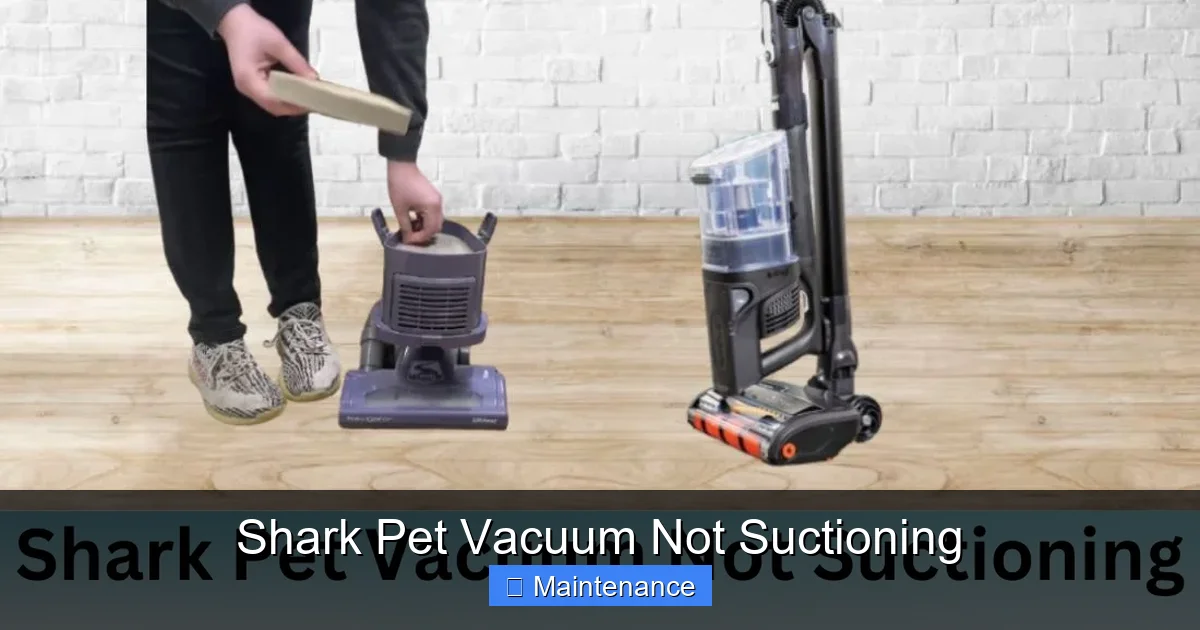
Step 1: The Obvious – Empty the Dustbin and Clean the Filter
This is the first and most frequent fix. Press the empty button and completely empty the dustbin. Don’t just tap it; open the top and clear any debris packed around the inlet port. Then, remove the foam filter (usually accessible from the back or bottom). Tap it firmly over a trash can to dislodge dust. If it’s washable (most Shark foam filters are), rinse it with cold water until the water runs clear. THIS IS VITAL: Let it air-dry for a full 24 hours. Never reinsert a damp filter. Also, inspect the felt filter (if your model has one); if it’s gray and stiff, it needs replacing.
Step 2: Inspect the Brush Roll for Tangles
Flip your Shark over. The rotating brush roll at the front is ground zero for pet hair. Look for a thick, felt-like mat of hair wrapped around the bristles and the end caps. This acts as a physical brake, preventing the brush roll from spinning and dramatically reducing agitation and suction on carpets. Use scissors or a seam ripper to carefully cut and remove all the hair. Rotate the brush roll by hand to ensure it spins freely in both directions.
Step 3: Check for Hose and Wand Clogs
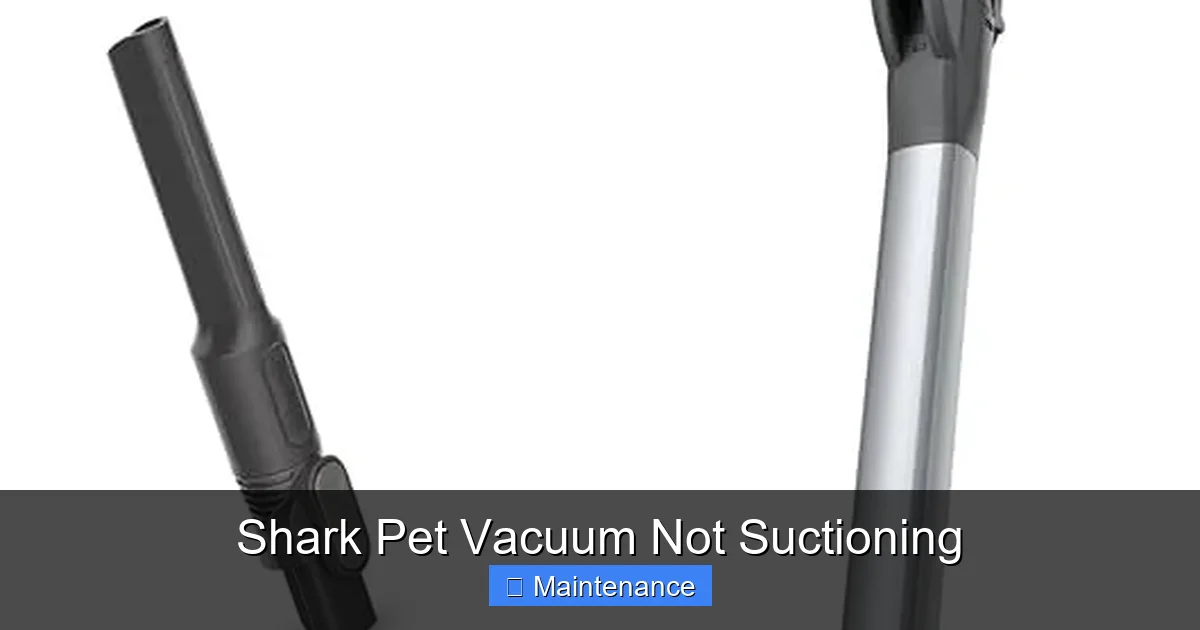
Detach the hose from the vacuum body and the wand. Look through it. You should see clearly from one end to the other. A common clog point is the bend where the hose meets the wand. Use a long, flexible broom handle or a straightened wire coat hanger (wrapped in tape to avoid scratches) to gently push any obstruction through. You can also try sucking the clog out by attaching the hose directly to the exhaust port (the outlet at the back where air blows out) and turning the vacuum on for a few seconds—the reverse airflow can sometimes dislodge it.
Step 4: Examine the Exhaust Port
With the vacuum on, place your hand over the exhaust port on the back. Do you feel a strong blast of air? If the airflow feels weak or non-existent here, the problem is downstream of this point—likely a severely clogged filter or a full dustbin. If the exhaust feels strong, the problem is upstream—a clog in the hose, brush roll, or a leak in the system.
The Brush Roll: Heart of the Clean (and the Headache)
For pet owners, the brush roll is where the magic happens—and where the trouble starts. It agitates carpet fibers, flinging pet hair into the air where the suction can grab it. If it’s not working, suction on carpets will feel pathetic.
Visual guide about Shark Pet Vacuum Not Suctioning
Image source: m.media-amazon.com
Diagnosing a Non-Spinning Brush Roll
After clearing visible hair, test the brush roll. Turn the vacuum on and tilt it so you can see the brush roll from the side. Does it spin? If not, here’s the hierarchy of causes:
- 1. Tangled Hair (Most Likely): Even after a visual clean, hair can bind the bearings inside the end caps. Remove the brush roll entirely (usually by pressing two tabs). Manually rotate each end cap. If it doesn’t spin freely, you need to clean out the hair jam inside. Use a small screwdriver or awl to pick out packed hair from the center axle.
- 2. Broken or Slipping Belt: The brush roll is driven by a rubber belt. If the belt is broken, stretched, or has jumped off the motor pulley, the brush roll won’t spin. You’ll often hear the motor running but no agitation sound. You must remove the bottom plate (usually four screws) to inspect the belt. Replace it if broken or shiny/smooth from wear.
- 3. Motor Coupler or Pulley Failure: Less common, but the plastic piece that connects the motor shaft to the belt can crack. This requires part replacement.
When the Brush Roll Spins but Suction is Still Bad
If the brush roll spins freely but you still have poor suction on hard floors only, that’s actually normal. The brush roll is for carpets. On hard floors, you should use the “hard floor” or “suction only” setting (if your model has one), which turns off the brush roll to avoid scattering debris. The real issue is if suction is poor on carpets with a spinning brush roll. That leads us back to clogs and filters.
Filters: The Unseen Guardians of Airflow
Filters are the vacuum’s lungs. Clogged lungs mean weak performance. Shark’s washable filters are a great feature, but they come with a major responsibility: drying.
Visual guide about Shark Pet Vacuum Not Suctioning
Image source: sharkvacuum.blog
Washable Foam Filter Deep Clean
Don’t just tap it. Submerge it in a sink with warm water and a drop of mild dish soap. Squeeze it repeatedly to force water through the foam matrix. Rinse until absolutely no suds remain. Do not wring it. Gently squeeze out excess water and let it air-dry completely, away from direct heat or sunlight, for at least 24 hours. A damp filter will re-introduce moisture into the motor chamber, potentially causing damage and definitely causing immediate suction loss.
Felt and Non-Washable Filters
The gray felt filter (often found behind the foam filter) traps fine dust. It’s not washable. Tap it firmly. If it looks uniformly gray and dense, it’s time for a new one. A clogged felt filter creates immense resistance. Also, check your model for a post-motor HEPA filter (usually near the exhaust). If your vacuum is older than a year with heavy pet use, this HEPA filter is likely due for replacement.
The “Filter” Inside the Dustbin Itself
Many Shark models have a mesh screen or secondary filter inside the dustbin lid, where the air exits the bin to go to the exhaust. This gets coated in a fine, powdery dust that is easy to miss. Remove the dustbin and take apart the lid. Wash this screen with soapy water, rinse well, and dry completely.
Hose, Wand, and Attachments: The Hidden Hazards
We often forget that the suction has to travel through every wand and attachment. A clog there is just as bad as a clog in the main body.
The #1 Clog Spot: The “Wand-to-Hose” Connection
This is the tightest bend in the system. Pet hair, small toys, and paperclips love to lodge here. Detach the wand from the hose. Shine a flashlight into both ends. Use a bent wire or a specialized clog-removing tool to fish out debris. You can also try the reverse suction trick: attach the hose directly to the exhaust port and blast air backward.
Inspecting Attachments
Check your crevice tool and upholstery brush. Look inside from both ends. A single cat toy or a wad of hair can completely seal the narrow tube. Clean these out.
Hose Cracks and Leaks
Stretch the hose out and inspect it thoroughly, especially along the coil reinforcement. Look for small slits, pinprick holes, or areas where the plastic has worn thin. Even a tiny leak will destroy suction pressure. A leaking hose must be replaced. As a temporary fix in an emergency, you can wrap the hole tightly with strong tape, but it’s not a permanent solution.
Seals, Gaskets, and the Pressure Tight System
Your Shark vacuum is designed to be an airtight system from the nozzle to the exhaust. Any breach in that seal is a suction killer. This is an often-overlooked area.
Dustbin Lid Seal
Open the dustbin. Look at the rim where the lid closes. There should be a continuous, soft rubber or foam gasket. This seal must be clean and intact. Pet hair and dust can get under this gasket, lifting it and creating a leak. Pull the gasket gently; if it’s torn, cracked, or missing pieces, it must be replaced. Clean the channel and the gasket with a damp cloth.
Hose Connection Seals
Where the hose plugs into the vacuum body and into the wand, there are usually small rubber O-rings or flapper valves. These can fall out, get torn, or get coated in debris so they don’t seal. Check these points. A missing O-ring is a common cause of sudden, total suction loss after a bump or drop.
Exhaust Filter Housing Seal
When you removed the HEPA or exhaust filter, you likely had to twist or unclip a housing. Ensure that housing is clicked back together perfectly. Any gap here means filtered air is leaking back into the vacuum body instead of being expelled.
Advanced Troubleshooting and When to Call Shark Support
If you’ve methodically checked every single item above—empty bin, clean/dry filters, clear brush roll, inspect hose for clogs and cracks, and verify all seals are intact—and suction is still weak, the problem is likely internal.
Potential Internal Failures
- Worn or Failed Motor: The motor’s fan blades can become coated in a greasy film (especially in homes with heavy cooking oils) which unbalances it and reduces its ability to move air. This is rare but possible after years of use.
- Broken or Disconnected Internal Hose: Inside the vacuum’s body, a small plastic hose connects the dustbin area to the motor fan. If this hose cracks or comes disconnected (from a hard impact), you have a major leak.
- Faulty Switch or wiring: The motor might not be running at full speed due to an electrical issue.
Accessing Internal Components
This is where comfort with tools is key. You’ll need to remove the outer shell screws (often under the dustbin). This is not for everyone. If your vacuum is under warranty, stop here and contact Shark Customer Support. Opening it yourself may void the warranty. Shark’s support is excellent; they can often diagnose over the phone and send replacement parts if it’s a known issue.
Signs It’s Time for Professional Help
If you hear a strange grinding or whining noise from the motor, or if the vacuum smells like burning plastic, unplug it immediately. These are signs of a failing motor or electrical fault that require professional repair or replacement.
Conclusion: Your Shark’s Suction is a System, Not a Magic Trick
Restoring your Shark pet vacuum’s suction isn’t about luck; it’s about a systematic, Sherlock-Holmes-style investigation of the entire airflow path. You now know that the problem is almost never a dead motor. It’s almost always a clog (brush roll, hose, wand), a full/improperly sealed dustbin, or neglected filters. The power is in your hands. By incorporating a 2-minute post-cleanup routine—empty the bin, check the brush roll for hair, and give the filters a tap—you can prevent 95% of these issues from ever happening. Your Shark is a workhorse built for pet messes. Treat it with this regular, simple maintenance, and it will reward you with years of powerful, debris-gobbling suction. You’ve got this! Now go make that fur fly… into the bin.
Frequently Asked Questions
Why is my Shark vacuum working but not picking up pet hair?
The most common reason is a severely tangled brush roll that prevents it from spinning and agitating carpet fibers. Remove the brush roll and cut away all hair wrapped around it and inside the end caps. Also, ensure you’re using the correct floor setting for carpets.
Can I use water to clean my Shark vacuum filters?
Yes, but only the washable foam and some felt filters. Use cold water and mild soap, rinse thoroughly, and air-dry completely for 24+ hours. Never use a wet filter, as it will block airflow and can damage the motor. Non-washable HEPA filters must be replaced, not washed.
How do I know if my vacuum hose is clogged?
Detach the hose from both ends and look through it. If you can’t see light through it, it’s clogged. You can also try the “reverse blow” method: attach the hose directly to the vacuum’s exhaust port and turn it on for a few seconds to blast the clog out the other end.
My vacuum suction is strong on the hose but weak on the floor. Why?
This points to a problem at the floor nozzle end. First, check for a clog right where the hose meets the floor head. Second, inspect the brush roll for hair tangles that are jamming it. Third, check the seals on the dustbin lid, as a poor seal there will leak suction before it reaches the floor.
Is it worth repairing an old Shark vacuum with suction problems?
Often, yes. Since most issues are cheap fixes (a $10 belt, a $20 filter set, or just cleaning), repair is economical. If the motor itself is faulty after troubleshooting all seals and clogs, compare the repair cost to a new vacuum. Shark models are generally repairable and parts are available.
Why does my Shark vacuum smell like burning when I use it?
Unplug it immediately. A burning smell indicates an electrical fault or a motor that has seized due to overheating (often from clogged filters forcing the motor to work too hard). Do not use it. Contact Shark Customer Support or a professional appliance repair service for diagnosis.