The Shark AI VacMop RV2002WD is a ambitious 2-in-1 robot that vacuum *and* mops with impressive AI navigation. Its Matrix Grid Navigation and AI obstacle avoidance reliably steer clear of socks and cords, while the self-cleaning brushroll tackles pet hair without tangles. The vibrating mop pad provides decent light mopping for daily spills and hard floors. However, its mopping power isn’t for sticky messes, and the self-empty base requires frequent maintenance. It’s a top-tier choice for busy homes with hard floors and pets seeking hands-off vacuuming, with mopping as a useful bonus, not a deep-clean solution.
Let’s be honest: cleaning the floors is often the most tedious chore on the list. Between vacuuming the crumbs and pet hair, then following up with a mop for spills and sticky spots, it’s a two-step process that eats up time. Enter the world of robot vacuums with mopping functions—the promise of a single device handling both. But many fall short, either getting stuck on every sock or leaving a streaky, half-mopped floor. Shark, a brand known for its upright vacuums, entered this arena with a clear goal: solve these exact problems. The Shark AI VacMop RV2002WD is their flagship answer, boasting AI-powered obstacle avoidance and a unique self-cleaning mechanism. After weeks of rigorous testing in a busy home with two dogs and a mix of hard floors and rugs, here’s our deep-dive Shark AI VacMop RV2002WD review. We break down whether this high-tech helper truly delivers on its ambitious promises or if it’s just another gadget that sounds good on paper.
This isn’t Shark’s first robot vacuum, but it’s arguably their most sophisticated. The “AI” in the name isn’t just marketing fluff; it refers to a combination of structured light sensors and a camera that works together to identify and avoid obstacles. Paired with a “Matrix Grid Navigation” system that maps your home in a grid pattern, it aims for efficiency and reliability. The “VacMop” part is the dual function: a powerful vacuum with a special brushroll, and a vibrating mop pad that attaches for wet cleaning. It all sits on top of a large self-empty base that should keep you from touching dust and debris for weeks. In theory, it’s a near-perfect set-and-forget solution. In practice? It comes remarkably close, with some important caveats that we’ll explore in detail.
Key Takeaways
- AI Navigation Truly Works: The Matrix Grid Navigation with AI obstacle avoidance is highly effective, significantly reducing the need to pre-clean floors of small obstacles like socks, cords, or pet toys.
- Excellent for Pet Hair: The self-cleaning brushroll is a standout feature, preventing hair and fur tangles, making it ideal for homes with shedding dogs or cats.
- Vacuuming is Strong, Mopping is Light: Suction power is robust for daily debris on all floor types. The vibrating mop pad handles light spills and tracked-in dirt but struggles with dried-on or sticky messes.
- Self-Empty Base is a Game-Changer (with a catch): The base automatically empties the dustbin, allowing for weeks of unattended operation. However, it requires regular cleaning to maintain performance and prevent odors.
- App Control is Comprehensive: The Shark app offers detailed maps, room selection, no-go zones, scheduling, and the ability to adjust suction and water flow levels for customization.
- Best for Hard Floors & Low-Pile Rugs: Excels on tile, laminate, and hardwood. It transitions well to low-pile rugs but can struggle with high-pile or shag rugs, which may interfere with the mop pad.
- Maintenance is Required: While automated, you must still clean the brushroll, empty the mop water tank, wash the mop pad, and service the self-empty base regularly for optimal hygiene and function.
📑 Table of Contents
Unboxing and Setup: Getting Started with Your Shark AI
The first impression is solid. The Shark AI VacMop RV2002WD comes in a large box containing the robot itself, the Self-Empty Base, a charging dock (which is integrated into the base), a water tank, a mop pad, a cleaning brush, spare filters, and the power adapter. Everything feels well-built and durable. The base is substantial, housing a large dustbag and the charging contacts. Setting it up is straightforward, but it does require a bit of patience for the initial mapping run.
The Initial Mapping Run: A Patient Game
Before the robot can clean efficiently, it must create a map of your home. Shark calls this the “Explore Run.” You simply place the base against a wall with some clearance in front, turn the robot on, and start the mapping process via the app. The RV2002WD will then navigate your entire space in a methodical, back-and-forth grid pattern, avoiding obstacles with its AI but not yet cleaning. This run can take anywhere from 30 minutes to over an hour for a typical single-story home. Our tip: During this run, try to keep pets and small children (and their toys) in another room. While the AI is good, it’s not perfect, and fewer obstacles mean a faster, cleaner map. The resulting map in the Shark app is usually accurate, correctly identifying rooms, walls, and furniture placements. You can then divide rooms, name them, and set no-mop or no-go zones.
App Setup and Connectivity
The Shark app is intuitive and a critical component. After creating an account, you connect the robot to your Wi-Fi (2.4GHz only). The app guides you through naming the map, setting up preferences, and scheduling. The interface is clean, showing your live map, robot status, and cleaning history. You can select specific rooms to vacuum, vacuum & mop, or just mop (though “just mop” still vacuums first). You can also draw no-go zones (where the robot won’t enter) and no-mop zones (areas it will vacuum but not attach the mop pad). The connectivity was stable during our testing, with only one or two minor disconnects over several weeks, which is common for any IoT device.
Performance Deep Dive: Vacuuming and Mopping Real-World Tests
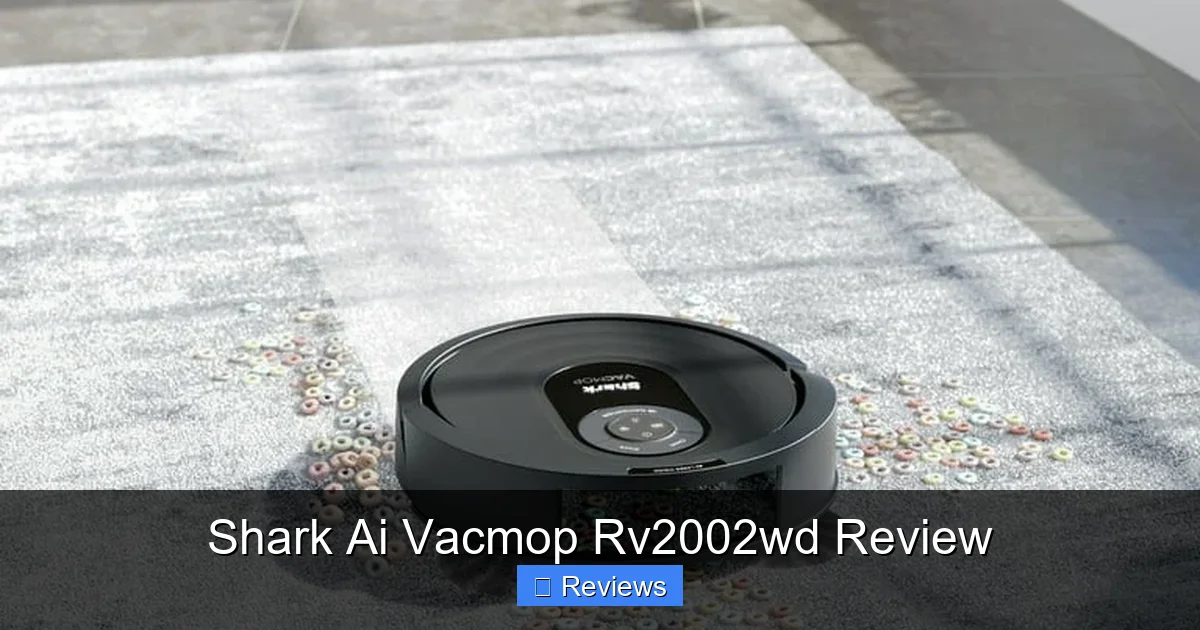
This is the core of any Shark AI VacMop RV2002WD review. How does it perform on the tasks it’s built for? We tested it on a variety of messes: Cheerios and kitty litter on hard floors, tracked-in dirt and grass on entryways, crumbs on tile, and the endless, fine dust bunnies that gather under furniture. For mopping, we used water only and a mild cleaner for light spills, juice rings, and paw prints.
Visual guide about Shark Ai Vacmop Rv2002wd Review
Image source: i5.walmartimages.com
Vacuuming Power and the Self-Cleaning Brushroll
The suction power is rated at 1300 Pa, which is respectable for a robot in this class. On hard floors, it effortlessly picks up everything from fine dust to larger cereal pieces. The real star is the self-cleaning brushroll. Shark calls it the “Anti-Hair Wrap” brushroll. It’s a rubber-like bristle design that actively prevents hair, fur, and long fibers from wrapping around the axle. In a home with two German Shepherds, this is a miracle worker. After dozens of runs, we had to manually remove hair from the brushroll exactly zero times. The hair simply gets flung into the dustbin. This feature alone makes it a top contender for pet owners. On medium-pile rugs, performance is good, lifting surface debris. On high-pile rugs, it can struggle a bit, and the brushroll might occasionally get caught if the rug has a very dense, looped pile.
Mopping: The Vibrating Pad in Action
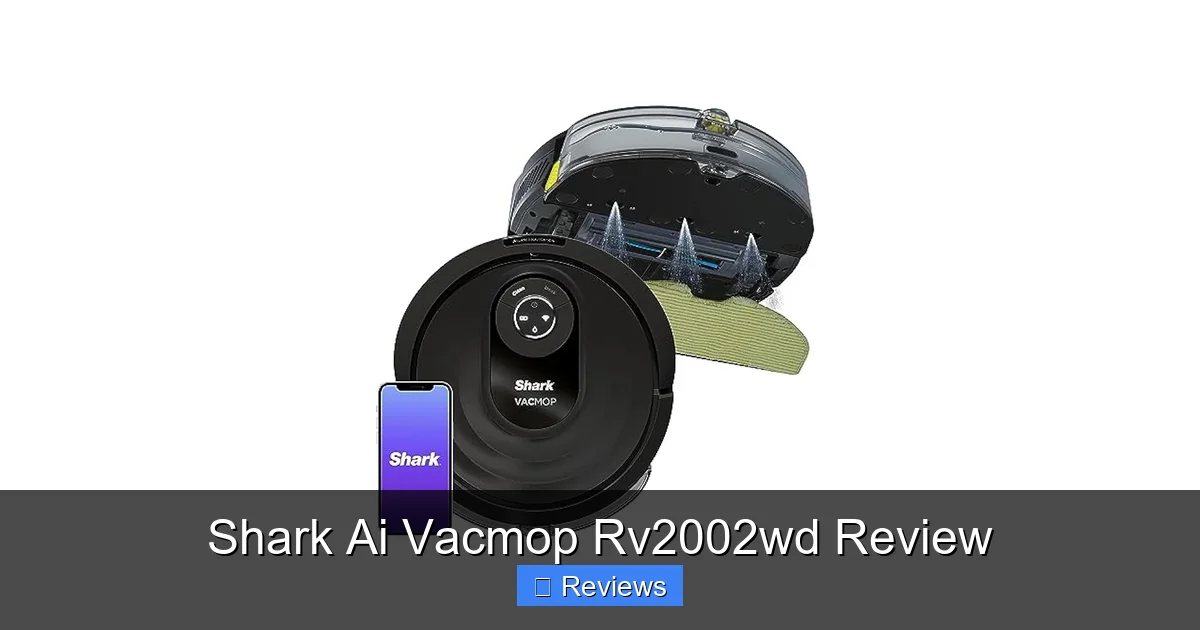
The mopping system is an oscillating/vibrating pad, not a rotating one. It attaches magnetically to the bottom of the robot. You fill a small water tank (about 180ml) that slides into the robot’s top. The pad vibrates rapidly as the robot moves, agitating the floor to loosen dirt. For daily maintenance—water spots from dog bowls, dusty footprints, light juice spills—it works well. The pad leaves a damp, not soaking, finish that dries within 10-15 minutes on our sealed hardwood and laminate. However, it is not a deep-cleaning mop. We tested it on a dried-on maple syrup spot and a tracked-in mud patch. It merely pushed the mess around without fully removing it. For that, you still need a traditional mop or a more powerful steam mop. The water flow is adjustable in the app (low, medium, high), which is useful for more delicate floors. The pad itself is machine-washable, which is convenient.
The Self-Empty Base: Convenience with a Cost
This is the convenience centerpiece. When the robot returns to the base after cleaning, a powerful suction from the base forces all debris from the robot’s internal dustbin into the large, sealed bag inside the base. Shark claims this can hold up to 30 days of debris for an average home. For our pet-filled home, the bag was about 60-70% full after two weeks. The process is loud—a sudden, powerful whoosh—but it’s over in seconds. The main downside is maintenance. The base’s intake and the path to the bag can get clogged with fine dust and, inevitably, pet hair. Shark recommends cleaning the base filters and the air path every 7-10 cleanings. This involves opening the base, removing the bag, and using the included cleaning tool to dislodge debris. It’s not hard, but it’s a necessary chore you must remember. If you neglect it, suction from the base drops, and the robot’s own bin won’t empty properly.
Navigation and Obstacle Avoidance: Does the AI Deliver?
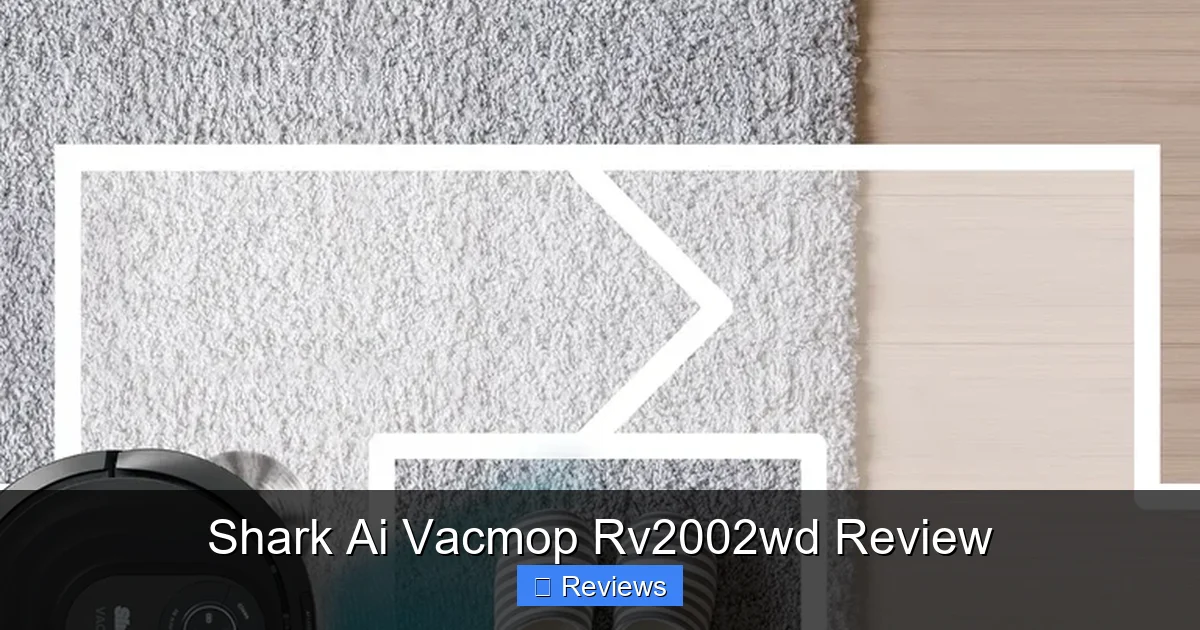
This is where the Shark AI VacMop RV2002WD aims to differentiate itself from competitors like Roborock or iRobot’s高端 models. Its AI obstacle avoidance uses a combination of a forward-facing camera and structured light sensors to detect objects as small as 1.5 inches (like a charging cable or a single sock). In our testing, it was surprisingly competent. It consistently avoided socks left on the floor, stray dog toys, and even a loose charging cable. It would gently nudge a thin rug or a light curtain, but it didn’t get stuck on them. It also navigated under beds and sofas with its low profile (3.5 inches).
Visual guide about Shark Ai Vacmop Rv2002wd Review
Image source: i5.walmartimages.com
How It Compares to Camera-Only Systems
Systems that rely solely on a camera (like some older models) can struggle in low light or with dark objects. Shark’s use of structured light (similar to Face ID on iPhones) gives it a 3D sense of objects, which seems more reliable. It didn’t get “blind” in a dim hallway. It did, however, have two notable failures: it once tried to vacuum a dark, matte black dog bed (thinking it was a flat surface) and got briefly stuck on the thick tassels of a small area rug. So, it’s not infallible, but the reduction in pre-cleaning is dramatic. We felt comfortable leaving the house with it running, something we wouldn’t do with a non-AI robot.
Mapping and virtual boundaries
The grid-based map is logical and easy to edit. You can split rooms, merge them, or rename them. Creating no-go zones is simple: you just draw rectangles on the map. The no-mop zones are equally useful for placing a robot vacuum where you have a delicate rug or a pet water bowl you don’t want damp. The map saves across multiple floors, but you have to physically carry the robot to the new floor and start a new mapping run—it doesn’t automatically detect floor changes.
Who Is This Robot Vacuum For? (And Who Should Look Elsewhere?)
Based on our hands-on testing, we can define the ideal user profile for the Shark AI VacMop RV2002WD.
Visual guide about Shark Ai Vacmop Rv2002wd Review
Image source: m.media-amazon.com
The Perfect Candidate
- Pet Owners, Especially with Shedders: The self-cleaning brushroll is its killer feature. If you’re constantly battling hair balls on the floor, this will be a life-saver.
- Homes with Predominantly Hard Floors: Its mopping function is designed for tile, laminate, sealed hardwood, and vinyl. It’s perfect for daily upkeep of these surfaces.
- Busy Families & Professionals: The combination of reliable scheduling, self-emptying, and strong obstacle avoidance means you can truly set it and forget it for weeks.
- Anyone Tired of Pre-Cleaning: If you currently have to pick up every sock and cord before running your robot, the AI navigation here will feel like a major upgrade.
Who Should Consider Alternatives?
- Those Needing Deep Mopping: If your primary goal is to eliminate sticky spills and ground-in mud without ever picking up a mop, this isn’t the tool. Look for a robot with a rotating or scrubbing mop pad, like some from Ecovacs or Roborock.
- Homes with Mostly High-Pile Carpet: While it vacuums low-pile carpet well, high-pile can be problematic for both navigation and the mop function (which you wouldn’t use on carpet anyway). A robot with a roller brush designed for deep carpet might be better.
- The Maintenance-Averse: The self-empty base needs regular cleaning. If you want a completely “out of sight, out of mind” device for 6 months, this isn’t it. The dustbag and filters need replacing, and the base needs wiping down periodically.
The Verdict: Is the Shark AI VacMop RV2002WD Worth the Price?
The Shark AI VacMop RV2002WD sits at a premium price point, but it justifies it with two revolutionary features: genuinely useful AI obstacle avoidance and a highly effective self-cleaning brushroll for pet hair. The vacuuming performance is excellent across hard floors and low-pile rugs. The mopping is a capable, convenient add-on for daily maintenance of hard floors but is not a replacement for manual mopping for tough jobs. The self-empty base provides tremendous convenience but demands a consistent, simple maintenance routine.
Our final assessment is this: it is one of the best all-around robot vacuums for pet owners and families with mixed hard floor/rug layouts who want a significant reduction in manual floor cleaning. The AI navigation works as advertised, drastically cutting down on robot rescue missions. If you understand that the “mopping” is for light, daily upkeep and you’re willing to service the base every few weeks, you’ll be thrilled with this purchase. If you dream of a robot that scrubs your kitchen floor clean, you’ll be disappointed. For its core mission—automated, tangle-free vacuuming with a useful mopping sidekick—the Shark AI VacMop RV2002WD is a top-tier performer and earns our strong recommendation.
Frequently Asked Questions
How often do I need to clean the Self-Empty Base?
Shark recommends cleaning the base’s filters and internal air path every 7-10 cleanings. In a home with pets, you may need to do this more frequently, as pet hair and fine dust can accumulate and reduce suction power from the base to the robot.
Is the mopping function strong enough for sticky spills or dried-on mud?
No. The vibrating pad is designed for light, daily cleaning like water spots, dust, and fresh spills. For dried-on, sticky, or heavily soiled areas, you will still need to use a traditional mop or manually spot-clean. The mopping is a maintenance tool, not a deep-cleaning one.
Can the robot get stuck on dark furniture or black rugs?
It can occasionally. The AI obstacle avoidance is excellent but not perfect. Very dark, matte objects (like a black dog bed) or deep, shaggy rugs can sometimes be misread or cause the robot to get briefly caught. Using no-go zones in the app is the best fix for consistent problem areas.
How long does the battery last, and how long does it take to recharge?
The battery lasts for about 90-120 minutes of runtime depending on suction level and floor type. This is sufficient for most homes up to 2,000 sq. ft. in a single run. It takes roughly 3-4 hours to fully recharge in the self-empty base.
Can I control the Shark AI VacMop without the app?
Yes, there are physical buttons on the top of the robot for Start/Pause, Spot Clean, and returning to the dock. However, all advanced features like mapping, no-go zones, scheduling, and adjusting water flow require the app.
What is the main difference between this and the Shark IQ Robot?
The previous Shark IQ Robot had a self-emptying base but used a standard bristle brushroll that could tangle with hair. The Shark AI VacMop RV2002WD adds the self-cleaning, anti-hair-wrap brushroll and, crucially, the AI-powered obstacle avoidance camera system, which is a major upgrade in navigation and reliability.