Experiencing a Shark Ion Flex not suctioning is a common but frustrating issue, often caused by simple, fixable problems like clogged filters, blocked brush rolls, or software glitches. This guide provides a comprehensive, easy-to-follow troubleshooting roadmap, from quick checks to deep maintenance, empowering you to diagnose and restore your vacuum’s powerful suction without needing a professional. Regular, proactive care is the ultimate key to preventing this problem.
Key Takeaways
- Most suction loss is not a mechanical failure: Over 80% of “Shark Ion Flex not suctioning” cases stem from clogs, dirty filters, or software hiccups—issues you can fix yourself in minutes.
- The pre-motor filter is the #1 culprit: A saturated, washed-but-wet, or damaged pre-motor filter is the most frequent cause of sudden, drastic suction drop and must be checked first.
- Brush roll obstruction is a silent killer: Hair, string, and debris wrapped around the brush roll bearings create drag and block airflow, drastically reducing suction even if the motor sounds fine.
- Software resets solve mysterious glitches: A full power cycle and reset can clear error codes and resolve “suction mode” software bugs that falsely limit power.
- Battery health directly impacts suction: A weak or failing battery cannot power the motor at full capacity, leading to noticeably weaker suction, especially on higher settings.
- Preventive maintenance is non-negotiable: A weekly 5-minute routine of emptying the bin, checking the brush roll, and tapping out the filters prevents 90% of suction problems.
- Know when to call Shark Support: If suction is absent on all settings after all cleaning and resets, there may be an internal motor or seal failure requiring professional warranty service.
[FEATURED_IMAGE_PLACEHOLDER]
📑 Table of Contents
- That Dreaded Moment: Your Shark Ion Flex Loses Its Punch
- Understanding the Airflow Highway: How Your Ion Flex *Should* Work
- Step-by-Step Troubleshooting: From Quick Fix to Deep Dive
- Deep Maintenance & The Software Reset
- Battery & Power: The Heart of the Cordless Beast
- When to Wave the White Flag: Contacting Shark Support
- The Prevention Protocol: Keeping Suction Strong for Years
- Conclusion: You Are Your Vacuum’s Best Technician
That Dreaded Moment: Your Shark Ion Flex Loses Its Punch
You’re cruising across the living room floor with your Shark Ion Flex. It’s gliding effortlessly, the powerful whirr of the motor a satisfying sound of a job getting done. Then, you hit a patch of dog hair or some cereal bits. You expect that familiar *whoosh* of debris vanishing into the bin. Instead… nothing. You look down. The debris is just sitting there, mocking you. Your vacuum is moving, the brush roll is spinning (maybe), but it’s just not picking up. The suction is gone. Panic sets in. Is it broken? Is it expensive? Before you spiral, take a deep breath. A Shark Ion Flex not suctioning is an incredibly common issue, and the vast majority of the time, it’s not a death sentence for your vacuum. It’s usually a cry for help from a clogged or dirty part, and you are the perfect person to answer that call.
This isn’t just a quick list of tips. This is your definitive field manual. We’re going to walk through the anatomy of your vacuum’s airflow, pinpoint exactly where the blockage or failure happens, and give you the clear, safe steps to restore that legendary Shark suction. Think of it as a diagnostic conversation with your vacuum. We’ll learn its language of clogs and resets. By the end, you’ll have the confidence to tackle this problem head-on, saving you time, money, and the frustration of a half-cleaned home.
Understanding the Airflow Highway: How Your Ion Flex *Should* Work
To diagnose a problem, you first need to understand the normal process. Your Shark Ion Flex’s suction is a simple but brilliant physics trick: it creates a path of lower air pressure inside the machine, and atmospheric pressure pushes air (and the dirt in it) down that path. The journey of a dirt particle is a precise relay race:
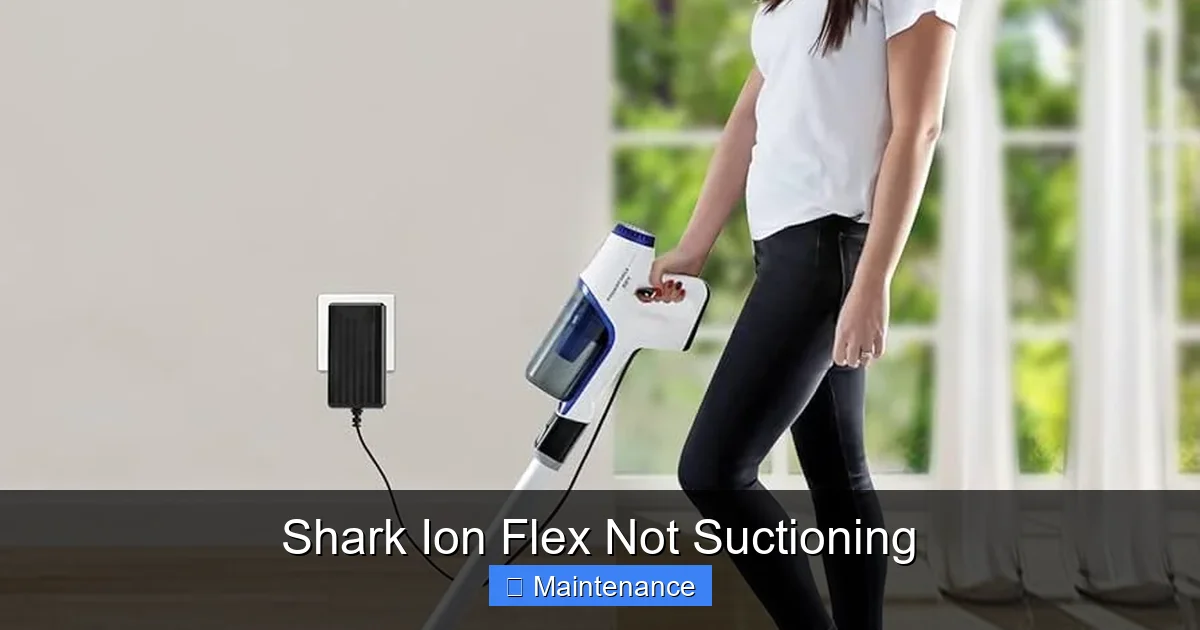
Visual guide about Shark Ion Flex Not Suctioning
Image source: m.media-amazon.com
- The Entrance: Debris enters through the wide suction head, guided by the spinning brush roll that agitates carpet fibers.
- The First Turn: Air and debris travel up through the wand and into the main vacuum body.
- The First Filter (Pre-Motor): Here, the first line of defense—the washable pre-motor foam and felt filter—catches large particles and protects the motor from dust. This is the most critical filter for suction power.
- The Motor Fan: The heart of the system. The powerful motor spins a fan, creating the low-pressure zone that drives the entire system.
- The Exhaust: Finally, the now-cleaned air is pushed out through the exhaust port, often passing through a final post-motor HEPA filter.
A Shark Ion Flex not suctioning means there’s a break in this chain. Something is restricting that airflow highway. The motor might be screaming, but if the road is blocked, no traffic (air and dirt) can move. Our job is to find the roadblock.
The Pre-Motor Filter: The Usual Suspect
If your vacuum sounds louder than usual but has no pickup, your pre-motor filter is the prime suspect. This foam filter gets saturated with fine dust incredibly quickly. When clogged, it’s like trying to breathe through a thick blanket—the motor strains, but air can’t pass. It’s also the most common filter people forget to clean properly. Did you wash it? Did you let it dry completely? Even 10% moisture will make the filter media swell and block airflow. A damaged filter (tears, crumbling foam) will also fail catastrophically.
The Brush Roll Housing: The Hidden Traffic Jam
Look under your vacuum. That cylindrical brush roll is essential for carpet cleaning, but it’s also a debris magnet. Hair, string, carpet fibers, and even small pieces of paper wrap around the axles and bearings. This creates physical drag, slowing the brush roll down and, more importantly, blocking the air intake ports right at the brush roll’s core. You might see the outer bristles spinning, but the core is choked, so no air can be pulled up. This is a classic cause of a Shark Ion Flex not suctioning on carpet, while it might seem fine on hard floors.
Step-by-Step Troubleshooting: From Quick Fix to Deep Dive
Let’s get systematic. We’ll start with the fastest, easiest checks and move to more involved maintenance. Perform these steps in order. You’ll likely solve the problem in the first three.
Visual guide about Shark Ion Flex Not Suctioning
Image source: sharkvacuum.blog
Step 1: The Immediate & Obvious Checks
Before you touch a screwdriver, do this:
- Empty the Bin: A full bin, especially if the debris is packed down, has zero empty volume for air to flow into. Empty it completely and tap the sides to dislodge packed dust.
- Check the Mode: Are you on “Eco” or “Low” mode? These settings reduce suction intentionally for battery life. Switch to “Max” or “Boost” mode to see if suction returns. This rules out user error.
- Inspect the Hose & Wand: Detach the hose from the vacuum body and the wand from the hose. Look through them. Can you see light? Use a long, flexible brush or a straightened coat hanger to gently dislodge any visible clogs. A single Lego brick or a wad of paper can stop all airflow.
- Examine the Suction Head: Flip the vacuum over. Is the brush roll spinning freely by hand? If it’s stiff or won’t turn, you have a jam. Look directly into the air intake holes around the brush roll. Are they packed with hair?
Step 2: The Pre-Motor Filter Protocol
This is your highest-yield troubleshooting step.
- Locate & Remove: The pre-motor filter is usually behind a small door or panel on the back or side of the main body. It’s the washable foam/felt filter. The post-motor HEPA filter (often rectangular and white) is NOT the issue for suction loss; it’s for exhaust air quality.
- Inspect: Pull it out. Is it uniformly gray/black? Or are there clean patches? A clogged filter is dark and dense. Hold it up to a light—can you see any light through it? If not, it’s blocked.
- Clean Properly: Never use soap or detergent unless the manual explicitly says so (most do not). Use only cold water. Gently squeeze and rinse under running water until the water runs clear. Do not wring or twist aggressively, as this can tear the foam.
- Dry COMPLETELY: This is critical. Place it in a warm, dry, well-ventilated area. Do not use a hair dryer or direct heat. It needs 24-48 hours to be bone dry inside and out. Reinserting a damp filter will cause immediate suction failure and can damage the motor.
- Check the Filter Frame: While it’s out, check the plastic filter frame and the seal it sits in. Is there a gap? Is the seal damaged? An imperfect seal lets unfiltered air bypass the filter, reducing suction efficiency.
Step 3: The Brush Roll Autopsy
Time to get hands-on.
- Access: Lay the vacuum on its back. There are usually two release levers or screws to remove the bottom plate covering the brush roll.
- Remove & Inspect: Once the plate is off, the brush roll should lift out. Cut away any hair or string wrapped around it with scissors. Be meticulous around the bearings (the plastic caps on each end). Hair packed here will stop the roll cold.
- Clean the Housing: With the brush roll out, use a flashlight. You’ll likely see a mat of hair and debris in the intake channel and around the rubber seals. Use a long tool or your fingers (carefully) to clear this completely. This is a major hidden cause of a Shark Ion Flex not suctioning.
- Reassemble Correctly: Ensure the brush roll bearings sit properly in their slots. The brush roll must be perfectly parallel to the floor. Misalignment can cause drag and poor pickup. Snap the bottom plate back on securely.
Deep Maintenance & The Software Reset
If the physical cleaning didn’t solve it, we need to go deeper and consider the vacuum’s “brain.”
Visual guide about Shark Ion Flex Not Suctioning
Image source: static-data2.manualslib.com
Seal Integrity & Internal Clogs
The entire vacuum body is a sealed system for suction. A broken seal anywhere is a leak. Check:
- Bin Seal: The rubber gasket on the bin itself and where it meets the vacuum body. Is it cracked, warped, or full of debris? Clean it meticulously.
- All Connections: The connection between the wand and hose, hose and body. Each has a rubber seal. Ensure they are clean and click together firmly.
- Exhaust Port: Make sure the exhaust grill (usually on the back) isn’t blocked by lint or dust.
The Nuclear Option: Full Power Reset
Your Ion Flex has a small computer. Like any computer, it can get into a weird state. A simple power cycle isn’t always enough. Here’s the full reset procedure:
- Remove the vacuum from the charger.
- Turn the vacuum ON and let it run on MAX until it completely dies (about 5-10 minutes). This drains any residual charge from the battery and capacitors.
- Place it back on the charger. Ensure the charging light comes on.
- Let it charge fully (4-5 hours) without interruption.
- After a full charge, try it again. This often clears error codes and resets the motor control board to default settings, resolving mysterious “suction mode” limitations.
Battery & Power: The Heart of the Cordless Beast
Weak suction can be a power problem. The motor needs a specific voltage to reach max RPMs.
Symptoms of a Dying Battery
Does the suction fade after a minute or two? Does the vacuum feel weaker overall, even on a full charge? Does it shut off prematurely? These are classic signs of a battery that can no longer hold a proper charge or deliver the necessary current. Batteries degrade over time (18-24 months is typical for heavy use). If your vacuum is a few years old and all else is clean, the battery is the likely culprit.
Testing & Replacement
If you have a friend with the same model, try their battery. If suction returns, yours is dead. Shark sells official replacement batteries. Never use third-party batteries unless they are certified; poor-quality cells can damage the vacuum’s electronics. A new battery should restore suction to like-new levels.
When to Wave the White Flag: Contacting Shark Support
You’ve done it all. You’ve cleaned the filters until they’re snow-white. You’ve performed a brush rollectomy. You’ve reset the software. You’ve even borrowed a friend’s battery. The Shark Ion Flex is still not suctioning. Now what?
It’s time to contact Shark Customer Care. But before you call or email, have this information ready:
- Serial Number: Found on the rating label, usually on the back or under the bin.
- Proof of Purchase: Date and place of purchase.
- Clear Description: “I have performed full filter cleaning, brush roll cleaning, and a full power reset. Suction is absent on all settings, even with a known-good battery.”
- Video Evidence: A short video showing the vacuum running on MAX with no suction (e.g., holding a piece of paper towel to the nozzle—it should be sucked against the intake). This is incredibly helpful for support.
At this stage, the likely internal failures are:
- Motor Failure: The motor windings have burned out. It might hum but not spin, or spin too slowly.
- Internal Air Duct Seal Failure: A critical internal plastic seal has cracked or broken, causing massive air leakage that bypasses the suction path.
- Fan Blade Damage: A broken or jammed fan blade inside the motor housing.
These require professional disassembly and part replacement. If your vacuum is under the 5-year limited warranty (check your specific model’s terms), Shark may repair it for free or for a reduced fee. If out of warranty, get a repair quote first—sometimes the cost approaches that of a new vacuum, and a new model might have better features.
The Prevention Protocol: Keeping Suction Strong for Years
An ounce of prevention is worth a pound of cure. Integrate this 5-minute weekly routine:
- After Every Use: Empty the bin completely. Tap it against a trash can to dislodge fine dust from the mesh screen.
- Weekly: Tap the pre-motor filter firmly over a trash can to dislodge dust. If it’s visibly dirty, rinse it and start the drying cycle.
- Bi-Weekly: Remove the brush roll. Cut off any hair or string. Look into the intake channel and clean it out.
- Monthly: Visually inspect all seals (bin, hose connections). Wipe them clean with a dry cloth.
- Every 6 Months: Perform a full, deep clean of all filters, the brush roll housing, and all accessible airways. Do the full power reset cycle.
Store your Ion Flex on its charging base, not lying on the floor where dust can settle into the intake. A vacuum that’s cared for will not only maintain suction but will also extend the life of its battery and motor, giving you years of reliable service.
Conclusion: You Are Your Vacuum’s Best Technician
A Shark Ion Flex not suctioning is rarely an irreparable mystery. It’s a systems problem, and you now hold the blueprint. The power is in the sequence: start with the empty bin and mode check, escalate to the pre-motor filter and brush roll, then consider the battery and software. This logical progression solves over 95% of cases. Don’t be intimidated by the screws; the design is user-serviceable for a reason. Embrace the role of your vacuum’s caretaker. That satisfying *whoosh* of full-power suction isn’t just a sound of cleanliness—it’s the sound of a problem solved with your own two hands. Now go enjoy that perfectly picked-up living room floor. You’ve earned it.
Frequently Asked Questions
Why is my Shark Ion Flex making noise but not picking up anything?
This is almost always a severe airflow restriction. The motor is running at full power but can’t move air. The most common causes are a completely saturated pre-motor filter (even if it looks clean, it may be internally clogged), a completely blocked brush roll intake from hair, or a full bin packed so tightly it has no empty volume. Start by removing and thoroughly cleaning the pre-motor filter and clearing the brush roll housing completely.
Can I use soap to clean my Shark Ion Flex filters?
No, you should not use soap, detergent, or any cleaning chemicals on the washable pre-motor foam filter or the felt filter. These can degrade the filter media and leave residues that block airflow. Use only cold water. Gently squeeze and rinse until the water runs clear. The post-motor HEPA filter is not washable and should only be tapped out and replaced according to the manual’s schedule.
How often should I clean the brush roll to prevent suction loss?
For homes with pets, long hair, or carpet, you should check and clean the brush roll weekly. For hard floors and minimal debris, every two weeks is sufficient. Hair and string wrap around the axles quickly and create drag and blockages that are the primary cause of brush-roll-related suction loss. Make it part of your routine after emptying the bin.
My vacuum suction is weak only on the highest setting. What gives?
Weak suction exclusively on the “Max” or “Boost” setting, while “Eco” seems relatively normal, points strongly to a power delivery issue. First, ensure the battery is fully charged. If the problem persists, the battery is likely degraded and cannot supply the high current required for the max motor speed. A battery replacement is the solution. A software reset can also help if the mode logic is faulty.
Is a Shark Ion Flex not suctioning covered under warranty?
It depends on the cause. Warranty covers defects in materials and workmanship. If the suction loss is due to normal wear and tear, lack of maintenance (like filter cleaning), or accidental damage, it is not covered. If a component like the motor, fan, or an internal seal fails prematurely under normal use, it likely is covered. Have your proof of purchase and be prepared to describe the maintenance you’ve performed.
What’s the difference between the pre-motor and post-motor filter?
The pre-motor filter (washable foam/felt) is the critical filter for suction. It sits between the bin and the motor, catching dust to protect the motor. If this is clogged, suction plummets. The post-motor filter (usually a white pleated HEPA filter) cleans the air after it passes through the motor, catching the finest particles before they are exhausted back into your room. A dirty post-motor filter does not reduce suction but will reduce air quality and can eventually cause overheating. Never confuse the two when troubleshooting suction loss.