Is your Shark SC630d steam mob suddenly not producing steam? This is a common issue, often caused by simple problems like an empty water tank, a clogged nozzle, or mineral buildup from hard water. You can usually fix it yourself by checking the basics, thoroughly cleaning the tank and nozzle, and descaling the internal system. Most solutions are quick, inexpensive, and don’t require professional help, saving you from a costly replacement.
You’re all set for a satisfying cleaning session. You’ve filled the tank, plugged in your trusty Shark SC630d steam mop, and pressed the trigger. Instead of the familiar hiss of powerful steam, you get… nothing. Or maybe just a pathetic sputter. That moment of frustration is all too familiar for many owners. A steam mop that doesn’t steam is about as useful as a wet paper towel. But before you resign yourself to a trip to the repair shop or a new purchase, take a deep breath. In the vast majority of cases, a Shark SC630d not making steam is a fixable problem you can handle at home in under an hour with simple tools and common household items. This guide will walk you through every possible cause, from the embarrassingly simple to the more complex, and give you clear, actionable steps to get your Shark back to its powerful, sanitizing best.
The Shark SC630d is a workhorse, but like any tool that heats water under pressure, it’s vulnerable to its environment. The primary enemy? Hard water. The minerals in your tap water, primarily calcium and magnesium, don’t evaporate. They precipitate out inside the tiny water pathways, the heating element, and especially the steam nozzle, forming a stubborn, chalky scale. Think of it like plaque in an artery, gradually blocking the flow. This guide is built on the principle that understanding why something fails is the first step to fixing it. We’ll move from the quickest checks to the most involved cleaning procedures, ensuring you don’t waste time on a complex fix when a simple one will do.
Key Takeaways
- Check the Absolute Basics First: Always verify the water tank is properly seated, filled with cool, clean water to the correct line, and that the unit is plugged into a working outlet.
- Nozzle Clogs are the #1 Culprit: Mineral deposits from hard water are the most frequent reason for a Shark SC630d not making steam. Regular nozzle cleaning with a paperclip and vinegar solution is essential maintenance.
- Descaling is Critical for Hard Water Areas: If you have hard water, a 50/50 white vinegar and water descaling process through the system every 1-2 months will prevent internal scale blockage.
- Air Locks Can Occur After Filling: Simply turning the unit on and off a few times, or holding the steam trigger for 30 seconds while unplugged, can purge air from the heating chamber.
- Safety Cut-Offs May Trigger: If the unit overheats due to a clog or running dry, it will shut down. Unplug it, let it cool completely for 30 minutes, then restart the troubleshooting process.
- Prevention is Easier Than Repair: Using distilled or demineralized water and performing monthly light cleanings will drastically reduce the chance of your Shark SC630d not making steam in the future.
📑 Table of Contents
- Understanding How Your Shark SC630d Creates Steam
- Immediate & Obvious Checks: Rule Out the Simple Stuff First
- Deep Dive: Cleaning the Steam Nozzle (The Most Common Fix)
- Internal System Cleaning: Descaling the Heating Chamber & Pipes
- Other Potential Causes & Advanced Checks
- Preventative Maintenance: Stop the Problem Before It Starts
- When to Contact Shark Support or Consider Replacement
- Conclusion: Patience and Prevention Are Key
Understanding How Your Shark SC630d Creates Steam
Before we dive into fixes, a quick mental model of how your Shark SC630d works will make troubleshooting infinitely clearer. The process is simple in concept but precise in execution:
- Water Reservoir: You fill this with cool water. A valve at the bottom connects to the internal system.
- Pump System: When you press the trigger, a small pump draws water from the tank and pushes it toward the heating chamber.
- Heating Chamber: This is the engine. A powerful heating element superheats the water past its boiling point under pressure.
- Steam Generation: The superheated water flashes into steam instantly as it’s forced out through the nozzle.
- Steam Nozzle: This final aperture controls the steam’s pressure and direction. It’s also the most common point of failure due to its tiny opening.
A failure at any single point—a blocked inlet, a pump that can’t draw water, a scaled heating element, or a clogged nozzle—will result in your Shark SC630d not making steam. Our diagnostic path will help you isolate which link in this chain is broken.
Immediate & Obvious Checks: Rule Out the Simple Stuff First
It’s human nature to jump to the most complex conclusion, but 30% of “not making steam” issues are solved by checking three simple things. Never skip this step.
Visual guide about Shark Sc630d Not Making Steam
Image source: sharkvacuum.blog
1. The Power and Water Basics
This feels insultingly basic, but it happens more often than you’d think.
- Is it plugged in fully? Check the outlet with another device. Sometimes a tripped breaker or a loose plug is the issue.
- Is the power switch on? The Shark SC630d has a distinct power switch on the handle or body. Make sure it’s flipped to “I” or “On.”
- Is the water tank properly seated? Remove the tank and re-seat it firmly. There’s a locking mechanism or alignment that must click into place. If the tank isn’t seated correctly, the internal valve won’t open, and no water can enter the system.
- Is there actually water in the tank? Check the level. The tank must be filled at least to the minimum line. Also, ensure you’re using cool, clean water. Hot water from the tap can cause issues with the pump and heating cycle.
2. The “Prime” Procedure
Air locks are a sneaky cause of a Shark SC630d not making steam, especially after you’ve filled the tank or if the unit has been sitting unused. Air can get trapped in the pump or heating chamber, preventing water from circulating.
- Unplug the mop.
- Remove the water tank.
- Turn the steam trigger on and hold it down. This opens the valve to the nozzle.
- While holding the trigger, slowly pour cool water into the water tank’s opening. Watch for water to immediately drip out of the nozzle. This forces water through the system and pushes air out.
- Reassemble and try again.
If water flows freely during this test, you had an air lock. If not, the blockage is further down the line.
Deep Dive: Cleaning the Steam Nozzle (The Most Common Fix)
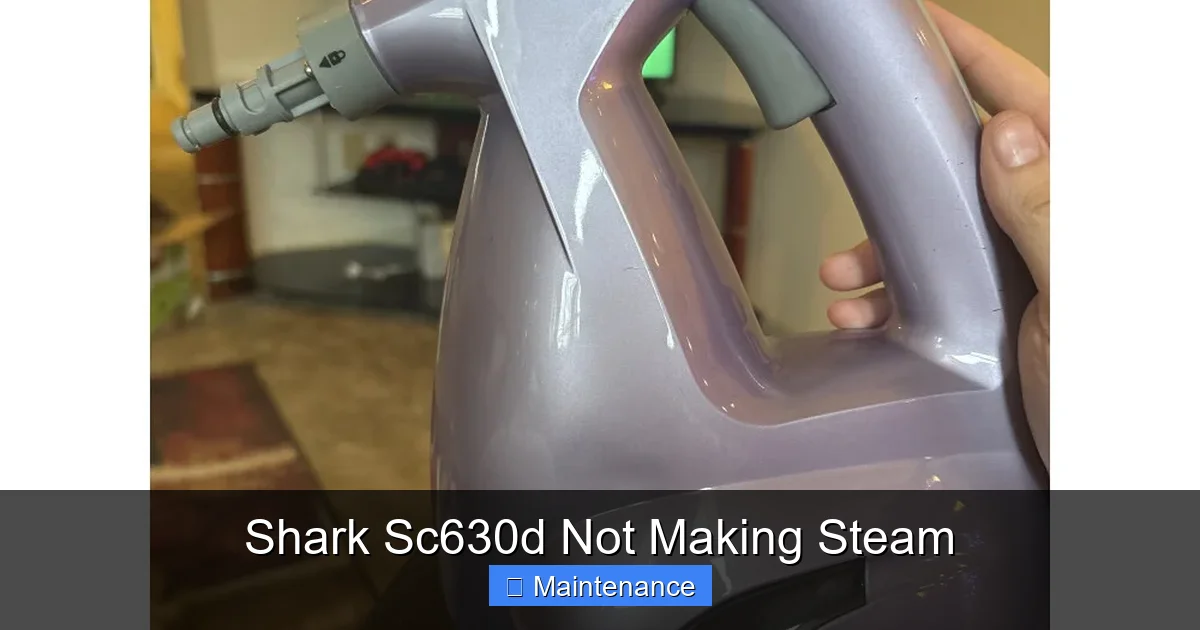
If the basics are correct, your focus must turn to the nozzle. This tiny hole is the exit point for all your steam power, and it’s incredibly susceptible to mineral clogging. A partially or fully blocked nozzle is the single most likely reason for your Shark SC630d not making steam.
Visual guide about Shark Sc630d Not Making Steam
Image source: manua.ls
Tools You’ll Need
- A straightened paperclip or a thin, non-metallic toothpick (metal can scratch the nozzle).
- White distilled vinegar.
- A small bowl or cup.
- A cotton swab.
- Optional: A can of compressed air (for electronics).
The Step-by-Step Nozzle Unclogging Process
Step 1: Access the Nozzle. The SC630d typically has a rectangular or triangular steam head with a row of small holes. Locate the central, larger steam emission hole. This is your target. Some models have a removable nozzle pad; if yours does, gently pry it off with a flathead screwdriver to expose the metal nozzle beneath.
Step 2: Visual Inspection. Shine a flashlight into the nozzle. Can you see all the way through? Often, you’ll see a white, crusty film completely or partially blocking the aperture. This is limescale.
Step 3: Mechanical Clearing. Gently insert the straightened paperclip into the nozzle hole. Do not force it. You should feel slight resistance as it hits the scale. Gently twist and probe. Your goal is to break up the crusty plug, not drill through it. You may feel it give way. Pull the paperclip out and wipe it on a paper towel. You’ll likely see white residue.
Step 4: Chemical Dissolving (Vinegar Soak). This is crucial for dissolving the remaining microscopic scale.
- Mix a 50/50 solution of white vinegar and cool water in a small bowl.
- Using a dropper or the corner of a paper towel, carefully introduce a few drops of the vinegar solution directly into the nozzle hole. You should hear a slight fizzing (carbon dioxide release from the scale reacting with the acid).
- Let it sit for 15-20 minutes. For severe clogs, you can place a vinegar-soaked cotton ball directly against the nozzle and let it sit.
- After soaking, use the paperclip again to gently dislodge any softened debris. Rinse the nozzle by pouring a small amount of plain water through it.
Step 5: Flush and Test. Reassemble the mop (if you removed the pad). Fill the tank with fresh, cool water only (no vinegar). Plug it in, let it heat up for 60 seconds, and press the trigger. You should see a strong, consistent jet of steam. If it’s weak or sputtering, repeat the vinegar soak. If it’s still nothing after two thorough cleanings, the blockage is internal.
Internal System Cleaning: Descaling the Heating Chamber & Pipes
If a clean nozzle doesn’t solve the problem, the scale has built up inside the heating chamber, water lines, or pump. This is a more involved but still very doable process. This is the definitive fix for a Shark SC630d not making steam due to hard water damage.
Visual guide about Shark Sc630d Not Making Steam
Image source: lh3.googleusercontent.com
The Full Descaling Protocol
Important: Perform this in a well-ventilated area. The vinegar smell will be strong. Do not use commercial descaling agents unless they are explicitly labeled as safe for steam cleaners/mops. They can be too harsh and damage seals.
Step 1: Prepare the Solution. Mix a 1:1 solution of white distilled vinegar and cool, clean water. You’ll need enough to fill the Shark SC630d’s tank completely (usually about 300-400ml).
Step 2: Fill and Circulate.
- Ensure the mop is unplugged and cool.
- Remove the water tank and fill it with the vinegar-water solution.
- Re-seat the tank firmly.
- Plug the mop in and turn it on. Let it heat up normally (about 60-90 seconds).
- Now, here’s the key: press and hold the steam trigger continuously for 2-3 minutes. You will likely see weak, bubbly, or discolored steam/vapor coming out. This is the vinegar solution working its way through the system, dissolving scale. It’s normal for it to sputter and look ugly.
Step 3: Soak and Dwell. After holding the trigger for 2-3 minutes, unplug the mop. Let it sit with the solution in the tank and the trigger held down (or the unit in the “steam on” position if it has a lock) for at least 30 minutes, preferably 1 hour. This allows the vinegar to work on the stubborn scale in the heating chamber where it sits.
Step 4: Flush Thoroughly. This is critical. Any remaining vinegar will corrode internal metal parts over time.
- Empty the tank completely.
- Fill the tank with fresh, cool, distilled or filtered water (ideally, to avoid reintroducing minerals).
- Repeat the heating and trigger-holding process for another 2-3 minutes to flush the vinegar out.
- Empty the tank again.
- Repeat this entire flush cycle with fresh water 2-3 times. Smell the steam/vapor coming out. It should smell completely neutral, like plain water. If you still smell vinegar, flush again.
Step 5: Final Test. Fill the tank with fresh water for cleaning. Run the mop normally. You should notice significantly improved steam output and pressure. The first few uses might still have slight vinegar smell or minor sputtering as the last traces clear, but it should quickly normalize.
Other Potential Causes & Advanced Checks
If you’ve meticulously cleaned the nozzle and performed a full descale and your Shark SC630d is still not making steam, consider these less common issues.
Faulty Pump or Pressure Switch
The trigger mechanism activates a pump and/or a pressure switch. If these components fail, the unit thinks it’s not supposed to produce steam.
- Symptom: The unit heats up (you can feel the body get warm/hot), but absolutely no steam comes out, even after descaling.
- Diagnosis: This is harder to confirm without a multimeter. Listen closely when you press the trigger. Do you hear a faint clicking or whirring sound from inside the handle? That’s the pump engaging. No sound could indicate a failed pump or a broken trigger mechanism.
- Action: This typically requires professional repair or part replacement. Check Shark’s official parts website for a pump assembly or trigger assembly for your SC630d model number.
Heating Element Failure
If the heating element burns out, the water never gets hot enough to turn into steam.
- Symptom: The unit may feel only lukewarm, or not warm at all, even after a long heat-up time. No steam is produced.
- Diagnosis: This is a hardware failure. A multimeter test for continuity on the heating element is the only sure way, but if the mop doesn’t get hot, this is a strong possibility.
- Action: Heating element replacement is a major repair. Weigh the cost of the part and labor against the price of a new steam mop, especially for an older model.
Faulty Thermostat or Safety Cut-Off
These safety components can fail in the “off” position, preventing the heating element from ever activating.
- Symptom: Similar to a failed heating element—no heat, no steam.
- Diagnosis: Requires electrical testing. Sometimes, a thermal cut-out can be manually reset (look for a small, recessed reset button on the body), but often they are one-time use and must be replaced.
- Action: Part replacement is necessary.
Preventative Maintenance: Stop the Problem Before It Starts
Once you’ve revived your Shark SC630d, the last thing you want is for it to happen again. The best maintenance strategy is simple and cheap.
The #1 Rule: Use the Right Water
This cannot be stressed enough. Always use distilled or demineralized water in your steam mop. It costs a few dollars a gallon and is available at any grocery store. Tap water, even if filtered, contains dissolved minerals that will inevitably cause scale. Using distilled water eliminates 95% of all steam mop problems. If you must use tap water, be prepared for regular descaling.
Monthly Light Cleaning Routine
Spend 5 minutes after each major cleaning session:
- Unplug and let the mop cool completely.
- Empty any remaining water from the tank. Leave the tank cap off and the mop upright to air-dry completely. This prevents mold and mildew.
- While the mop is still warm (not hot), briefly press the trigger to purge the nozzle of any residual water. This helps prevent minerals from drying in the nozzle.
- Wipe the steam pads and mop head with clean water and let them air-dry separately.
- Every month, even if you use distilled water, do a quick “vinegar rinse”: Fill the tank with a 10% vinegar solution (1 part vinegar, 9 parts water), run it for a minute, then flush with fresh water twice. This keeps scale at bay.
Proper Storage
Store your Shark SC630d upright in a cool, dry place. Do not store it with water in the tank or with a damp pad attached. Ensure it is 100% dry before long-term storage.
When to Contact Shark Support or Consider Replacement
You’ve fought the good fight. You’ve cleaned the nozzle until it shines, you’ve descaled the internal system with vinegar, and you’ve double-checked everything. The Shark SC630d is still not making steam. Now what?
First, contact Shark Customer Support. Have your model number (SC630d) and serial number ready. Explain the troubleshooting steps you’ve already taken (nozzle clean, full descale). They may offer additional model-specific tips or, if your unit is under the limited warranty (typically 1-2 years), they may authorize a repair or replacement. Be prepared to prove purchase.
If the unit is out of warranty, get a quote for repair. Often, the cost of a new heating element, pump, or labor can approach or exceed the cost of a new, entry-level steam mop. For an older SC630d, replacement may be the most economical choice. When shopping for a new steam mop, prioritize models with larger, easier-to-clean nozzles and explicit recommendations for distilled water use.
Conclusion: Patience and Prevention Are Key
A Shark SC630d not making steam is a frustrating but rarely fatal problem. The culprit is almost always mineral scale, and vinegar is your best friend in this fight. Start with the 5-minute nozzle clean—it solves most issues. If that fails, commit to the full 30-minute descaling process. By understanding the simple mechanics of your machine and committing to using distilled water, you can enjoy years of effective, chemical-free cleaning. Remember, your steam mop is a simple machine with one core job: heat water. Keep that water pure, and you’ll keep your Shark performing like new. Don’t give up on it; give it a good clean first.
Frequently Asked Questions
Why is my Shark SC630d making a sputtering noise but no steady steam?
This is a classic sign of a severely clogged nozzle or an air/water mixture in the pump. The pump is trying to push water through a blockage, causing it to sputter. Perform the full nozzle cleaning procedure with a paperclip and vinegar immediately, followed by a complete system descale.
Can I use CLR or a commercial descaler instead of vinegar?
It’s not recommended. Commercial descalers like CLR are much stronger and can degrade the internal seals, gaskets, and plastic components of your Shark SC630d, leading to leaks and permanent damage. White distilled vinegar is a safe, effective, and food-grade acid perfect for this job.
My Shark SC630d heats up but produces zero steam. What’s wrong?
If the body gets hot but no steam comes out, the issue is likely a complete nozzle blockage or a failed pump/trigger mechanism. After confirming the nozzle is completely clear, the problem is probably internal. The pump may not be engaging to push water to the heating chamber, requiring part replacement.
Is it safe to use tap water in my Shark SC630d if I have a water softener?
Yes, a whole-house water softener effectively removes calcium and magnesium, the minerals that cause scale. If your softener is properly maintained, using tap water is generally safe. However, for absolute certainty and to protect your investment, distilled water is still the best practice.
After descaling, my Shark smells like vinegar. How do I get rid of the smell?
You must flush the system more thoroughly. Fill the tank with fresh, cool distilled water and run the steam (with trigger held) until the tank is empty. Repeat this process 3-4 times. The vinegar smell should dissipate completely. The first few uses with just water for cleaning may have a faint smell, but it will vanish.
Can a clogged steam pad cause the mop to not make steam?
No. A clogged or dirty microfiber pad will reduce steam transfer to the floor and can cause streaking, but it does not prevent steam from being generated at the nozzle. The steam is produced before it reaches the pad. Always focus your troubleshooting on the tank, nozzle, and internal lines first.