A Shark Hydrovac roller not spinning is a common but usually fixable issue. The problem almost always stems from a blockage, a worn or broken belt, a tripped thermal fuse, or a seized brush roll motor. You can diagnose and resolve most of these problems yourself with basic tools and about 15-30 minutes of time. Start by unplugging the vacuum, flipping it over, and removing the roller brush to check for hair and debris wrap. If the brush spins freely by hand, the issue is likely the belt or a fuse. This guide walks you through every potential cause and solution in detail.
You’re mid-clean, and you notice it. That distinct, satisfying whirring sound your Shark Hydrovac makes when its rotating brush roll is agitating carpet fibers is… missing. You look down, and the brush roll is just sitting there, motionless, while the vacuum still sucks air. Panic? Frustration? Don’t worry. A Shark Hydrovac roller not spinning is one of the most common issues owners face, and the good news is that in over 90% of cases, it’s a problem you can diagnose and fix yourself in under half an hour with no special skills. This guide will be your complete companion, walking you through every possible cause, from the simple to the complex, with clear, step-by-step instructions.
Key Takeaways
- Blockage is the #1 culprit: Hair, string, and carpet fibers wrapping around the roller brush or in the suction hose/airways will physically stop it from spinning. Always check this first.
- The belt is a frequent failure point: The drive belt can stretch, slip off the motor pulley, or break entirely, disconnecting the motor’s power from the roller brush.
- Thermal fuses protect the motor: If the motor overheats from a severe blockage, a thermal fuse will trip, cutting power to the roller motor. This is a safety feature that often requires a part replacement.
- Brush roll bearings can seize: Over time, debris and lack of lubrication can cause the bearings inside the roller brush to freeze, making the entire roller immovable even if the belt and motor are fine.
- Motor failure is rare: The brush roll motor itself is robust. Complete motor failure is uncommon compared to belt, fuse, or blockage issues. Don’t assume the motor is dead without checking everything else first.
- Preventive maintenance is key: Regularly cleaning the roller brush, checking the belt, and clearing airways will prevent the vast majority of “roller not spinning” problems and extend your Shark Hydrovac’s life.
📑 Table of Contents
- Understanding Your Shark Hydrovac’s Roller System
- Diagnosis: The Systematic “Why” Behind a Non-Spinning Roller
- The Most Common Culprit: Blockages & How to Annihilate Them
- Drive Belt Replacement: A Simple, Cheap Fix
- When the Brush Roll Itself is the Problem
- Advanced Troubleshooting: The Thermal Fuse & Motor
- Preventive Maintenance: Stop the Problem Before It Starts
- When to Call a Professional (Or Consider Replacement)
Understanding Your Shark Hydrovac’s Roller System
Before we start pulling things apart, it helps to understand the basic anatomy of what makes the brush roll spin. This isn’t magic; it’s a simple, elegant mechanical system. Power flows from the wall outlet, through the vacuum’s main body, to a dedicated small electric motor (the brush roll motor). This motor has a small pulley on its shaft. A long, rubber drive belt loops around this motor pulley and around a larger pulley on the brush roll itself. When the motor turns, the belt grips both pulleys and transfers that rotation to the brush roll. The brush roll, a cylinder with bristles, is mounted on bearings that allow it to spin freely within its housing.
The Chain of Power: From Plug to Brush
Think of it as a chain: Plug → Main Switch → Brush Roll Motor → Drive Belt → Brush Roll Pulley → Brush Roll. A break anywhere in that chain stops the spin. Additionally, there’s a safety component called a thermal fuse or overload protector wired into the brush roll motor circuit. Its job is to cut power if the motor gets too hot, usually from a severe blockage that strains the motor. So, your diagnostic path must follow this chain logically.
Diagnosis: The Systematic “Why” Behind a Non-Spinning Roller
Rushing to replace parts is the #1 mistake. You must diagnose. Grab a flashlight, a Phillips head screwdriver, and maybe a small bowl for screws. First and most important rule: ALWAYS unplug your Shark Hydrovac from the wall outlet before inspecting or touching any internal components. Safety is non-negotiable.
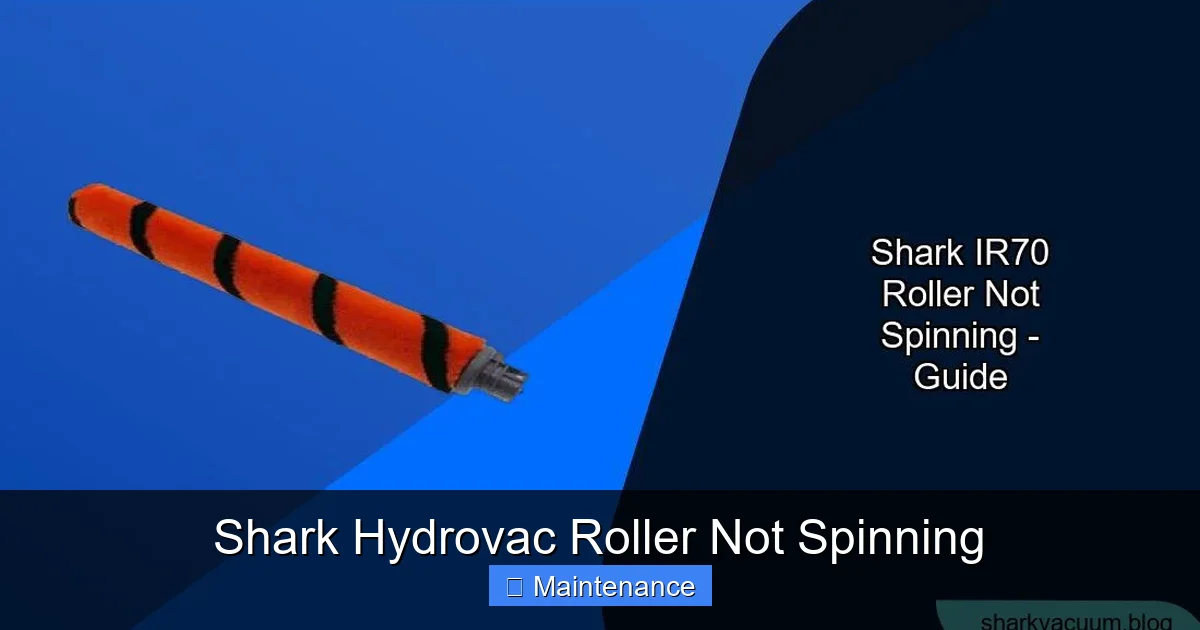
Visual guide about Shark Hydrovac Roller Not Spinning
Image source: sharkvacuum.blog
Step 1: The Visual & Tactile Inspection (The 2-Minute Check)
Flip the vacuum over onto its back so you can see the brush roll housing. Most Shark Hydrovac models have a release latch or a few screws securing the bottom plate. Remove this plate to expose the brush roll and belt. Now, look and feel:
- Look for obvious blockages: Do you see a thick mat of hair, carpet string, or lint wrapped tightly around the ends of the brush roll or packed into the suction intake ports on either side? This is the most common cause.
- Manually spin the brush roll: Use your fingers to try and rotate the brush roll by its ends. Does it spin freely, smoothly, and quietly? Or is it stiff, gritty, or completely locked? This simple test tells you volumes. If it doesn’t spin by hand, the problem is with the brush roll itself (seized bearings) or something physically jamming it. If it spins freely, the brush roll is good, and the problem lies with the belt, motor, or fuse.
Step 2: Investigating the Drive Belt
With the bottom plate off, locate the black rubber belt. It should be looped around the motor pulley (small, near the back) and the brush roll pulley (larger, on the brush roll itself).
- Is the belt there? Sometimes, a broken belt simply falls off and lies in the housing. If it’s missing, it broke and needs replacement.
- Is the belt loose, stretched, or glazed? A belt that’s loose won’t grip the pulleys properly. Stretch it gently; if it elongates significantly and doesn’t spring back, it’s worn out. A shiny, hard, glazed belt has lost its friction and slips.
- Is the belt properly seated? It may have jumped off the motor pulley but still be on the brush roll pulley. This happens with sudden jams.
- Is the belt tangled or caught? Check that it isn’t twisted or pinched under the brush roll.
Step 3: Checking the Brush Roll Motor & Fuse
If the brush roll spins freely and the belt looks intact and seated, the issue is likely electrical. The brush roll motor is usually accessible once you remove the brush roll assembly. You’ll see two wires connected to it. To test the motor, you can carefully reconnect the vacuum (briefly!) while it’s on its back and watch if the motor pulley turns when you turn the vacuum on. Be extremely careful not to touch any moving parts. If the motor pulley doesn’t turn but you hear a faint hum, the motor is likely seized or the thermal fuse has tripped. The fuse is often a small, rectangular component on the motor’s wire harness. Some models require a multimeter to test for continuity, which is a more advanced step.
The Most Common Culprit: Blockages & How to Annihilate Them
Let’s be honest: this is the winner. Hair, string, pet fur, and carpet fibers are the arch-nemesis of vacuum cleaner brushes. They don’t just wrap around the bristles; they work their way into the bearings, into the hose, and into the airway junctions, creating a physical barrier that stops the roller dead.
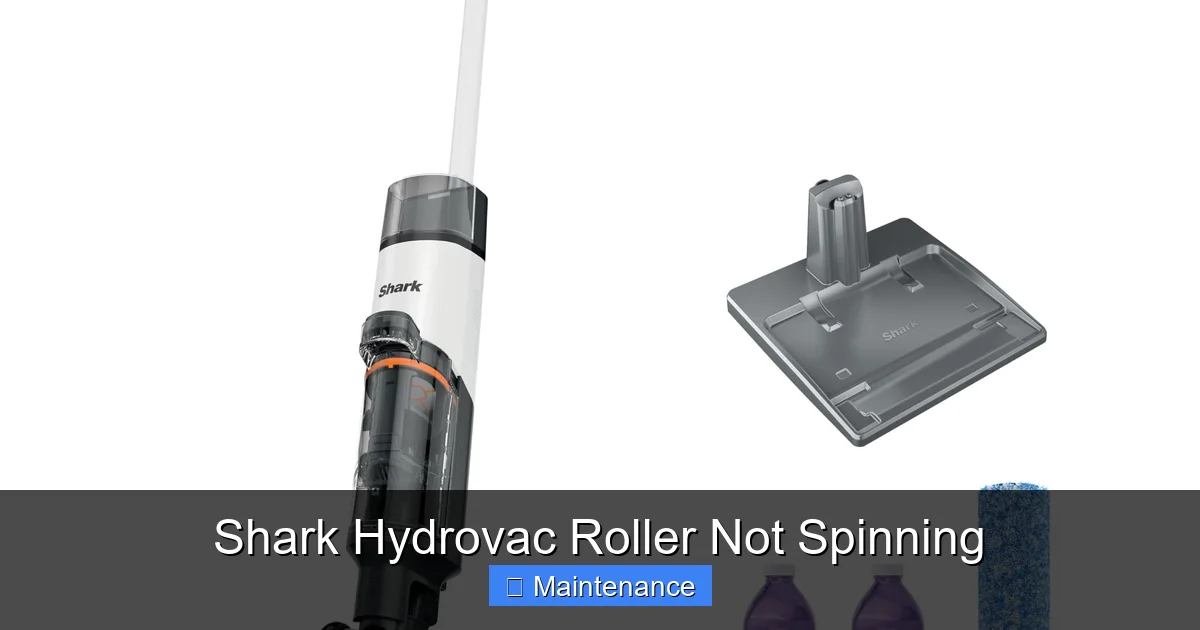
Visual guide about Shark Hydrovac Roller Not Spinning
Image source: m.media-amazon.com
How to Perform a Deep Clean of the Brush Roll
This is the most important maintenance you can do. Every 2-3 uses, especially if you have pets or long-hair carpets, you should do a quick check. For a deep clean:
- Remove the brush roll: With the bottom plate off, slide the brush roll out of its housing. It’s usually held by a belt on one side and a clip or screw on the other.
- Slice and dice: Use a seam ripper, a pair of scissors, or even a strong utility knife. Carefully cut through any mats of hair wrapped around the core. Do not cut the bristles. Work from the center outward.
- Clear the bearings: At each end of the brush roll, you’ll see a plastic cap covering a bearing. Use a flathead screwdriver to gently pry these caps off. Pick out any packed debris from inside the bearing housing. You can use a cotton swab dipped in rubbing alcohol to clean it out.
- Reassemble: Snap the bearing caps back on, ensuring they’re secure. Reinstall the brush roll, making sure it sits level in its slots and the belt is properly aligned on its pulley.
Clearing the Airway: The Hidden Blockage
The blockage might not be on the brush roll at all. It could be in the suction hose that connects the brush housing to the main body, or in the junction where the hose meets the main vacuum canister.
- Detach the hose: Press the release clips and pull the hose off both the brush housing and the main vacuum body.
- Use a coat hanger or long tool: Straighten a wire coat hanger and gently probe through the hose to feel for and dislodge clogs. You can also use the suction itself in reverse (if your model has a blow function) or just blow through it.
- Check the main intake: Look into the opening on the main vacuum body where the hose attaches. Use a flashlight. You might see a ball of lint or a toy blockage right at the entrance.
Drive Belt Replacement: A Simple, Cheap Fix
If your diagnosis points to the belt, don’t panic. Replacing the drive belt on a Shark Hydrovac is one of the easiest repairs you’ll ever do. The part is inexpensive (usually $5-$15) and takes 5 minutes.
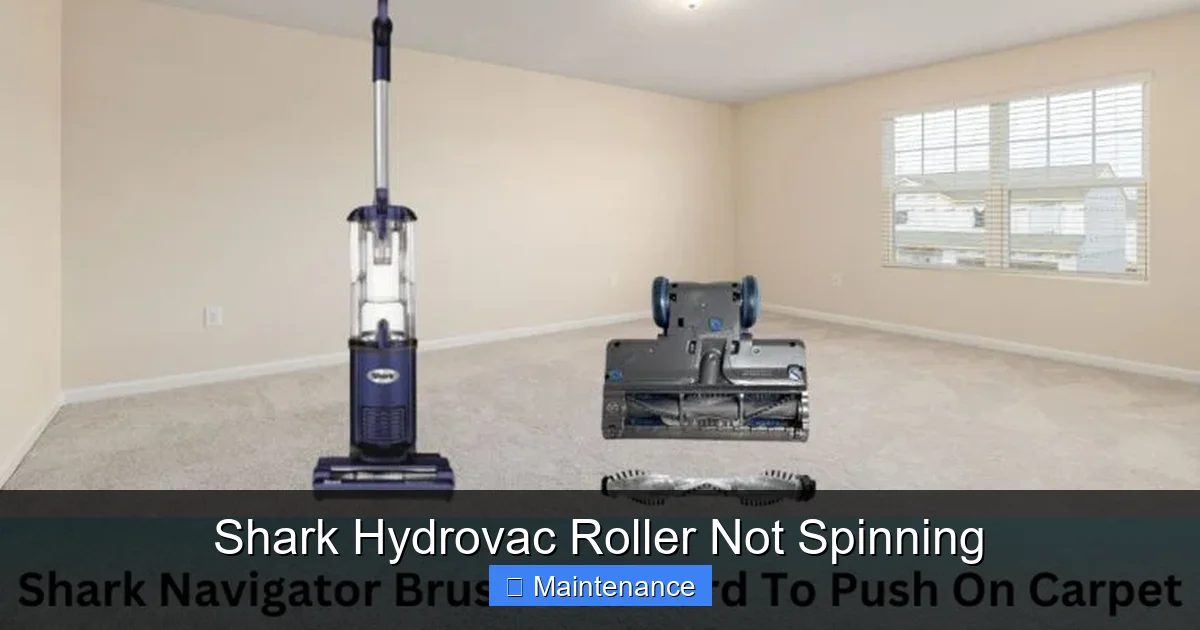
Visual guide about Shark Hydrovac Roller Not Spinning
Image source: sharkvacuum.blog
Identifying the Correct Replacement Belt
You need the exact model number of your Shark Hydrovac. It’s on a sticker on the back or bottom of the vacuum (e.g., SV780, HV322, etc.). Use this number to search for “Shark [Your Model] drive belt” on Amazon, Shark’s website, or an appliance parts store. They are often sold in 2-packs. Do not guess; an incorrect belt will be too long, too short, or the wrong width.
Installation Walkthrough
- Remove the old belt: With the brush roll out, simply stretch the old belt off the motor pulley and then off the brush roll pulley. It’s rubber, so it will stretch.
- Stretch the new belt: Take the new belt. First, hook it onto the brush roll pulley. Then, while holding the brush roll to prevent it from spinning, stretch the belt and loop it onto the smaller motor pulley. It should fit snugly on both.
- Reinstall the brush roll: Place the brush roll back into its housing, ensuring the belt is still on its pulley. The brush roll should spin freely. Reattach the bottom plate.
- Test: Plug the vacuum in, lay it on its side, and turn it on. You should immediately see and hear the brush roll spinning.
When the Brush Roll Itself is the Problem
If your manual spin test in Step 1 revealed a stiff or gritty brush roll, the internal bearings are likely the issue. Over time, debris infiltrates and grinds the bearing balls, or the grease dries out. The entire roller assembly will need to be replaced.
Signs of a Seized Brush Roll
- It’s physically difficult or impossible to turn by hand.
- You hear a grinding or screeching noise from the brush area when the vacuum is on (if the belt is trying to force it).
- You may see smoke or smell a burning odor if the belt is slipping violently against a frozen roller.
Replacing the Brush Roll Assembly
This is just as easy as the belt. Purchase the exact brush roll assembly for your model (it will include the bearings and end caps). To install:
- Remove the old brush roll as described earlier (take off belt, slide out).
- If your new brush roll didn’t come with end caps, transfer the old ones from the old roller to the new one. They just snap on.
- Place the new brush roll in the housing, loop the (new or good old) belt onto its pulley, and then onto the motor pulley.
- Reassemble the bottom plate. Test.
Pro Tip: While you have it out, give the new brush roll a quick wipe-down with a dry cloth to remove any manufacturing residue.
Advanced Troubleshooting: The Thermal Fuse & Motor
If the brush roll spins freely, the belt is new and correct, and the brush roll is new and spins freely, but the roller still doesn’t spin when powered, the fault lies in the electrical system. The two remaining components are the thermal fuse and the brush roll motor itself.
The Thermal Fuse: Your Vacuum’s Safety Net
This is a small, cheap part that sacrifices itself to protect a more expensive motor. If your vacuum was running with a major blockage (like a sock or deep carpet fiber mat), the motor would overheat. The fuse trips, breaking the circuit. It’s designed to be a one-time part. The vacuum will still run in “suction only” mode (if your model has that switch) because that uses a different motor, but the brush roll will be dead.
- Location: It’s typically a small white or black rectangular piece on the wire harness leading to the brush roll motor, often tucked into a clip on the motor housing.
- Diagnosis: You need a multimeter to test it for continuity. Set the meter to the continuity setting (beep symbol). Touch the probes to the two metal pins on the fuse. If it beeps, it’s good. If not, it’s blown and must be replaced.
- Replacement: Simply unplug the old fuse from the harness and plug in the new one. No tools needed. Crucially, you MUST find and clear the original blockage that caused the fuse to blow, or the new fuse will blow immediately.
Brush Roll Motor Failure (The Rare Case)
If the fuse is good, the belt is good, the brush roll is good, and you’re certain power is reaching the motor (you might need a pro for this), then the motor itself has failed. Symptoms include a complete lack of any sound from the brush motor area (no hum, no whir) when activated, or a distinct burning smell from the motor housing. Motor replacement is more involved, requiring soldering or crimping wire connectors. For most users, at this point, comparing the cost of a new motor + labor (if you pay someone) versus the cost of a new Shark Hydrovac is the sensible step. Motors are not cheap, and the labor can be significant.
Preventive Maintenance: Stop the Problem Before It Starts
An ounce of prevention is worth a pound of cure. A few minutes of care every few uses will save you hours of diagnostic work later.
The Weekly 60-Second brush Roll Check
Make it a habit. After you finish vacuuming, unplug it, flip it over, and use your fingers to manually spin the brush roll. Feel for smoothness. Visually inspect for any hair beginning to wrap. If you see it, cut it immediately before it forms a mat. This 60-second habit solves 80% of future problems.
Monthly Deep Clean Ritual
Once a month, or if you have heavy shedding pets, do the full brush roll removal and bearing cleaning described in Section 3. It’s quick and profoundly effective.
Mind Your Floors and Rugs
Be aware of what you’re vacuuming. Very long, loose rugs (like fringe or shag) are notorious for wrapping. Vacuum them with the brush roll OFF if your Shark has that switch, or go over them slowly and check frequently. Be especially vigilant after vacuuming up after pets or crafts projects (glitter, string, yarn).
When to Call a Professional (Or Consider Replacement)
You’ve followed this guide. You’ve checked the blockage, replaced the belt, cleaned the bearings, replaced the brush roll, and tested/replaced the thermal fuse. The roller still doesn’t spin. Now what?
Signs It’s Time for Expert Help
- You’re uncomfortable with electrical testing (multimeter use).
- You’ve replaced all the wear-and-tear parts (belt, brush roll, fuse) and the problem persists.
- You smell a strong, persistent burning electrical odor from the motor housing.
- The vacuum is very old (8+ years) and has a history of other issues.
The Replacement Cost vs. Repair Cost Analysis
A new Shark Hydrovac ranges from $200 for a basic model to $500+ for top-tier. A professional diagnosis fee is often $80-$120, plus parts. A brush roll motor part alone can be $50-$100. If your vacuum is out of warranty and is a 5-year-old mid-range model, spending $200+ on repairs might not make financial sense. A new vacuum comes with a warranty, new technology, and full reliability. For a 1-3 year old premium model under warranty, definitely call Shark Customer Service first—you may get a free replacement part or unit.
Frequently Asked Questions
My Shark Hydrovac’s roller spins for a second then stops. What’s wrong?
This is almost always a classic sign of a severely clogged brush roll or intake hose. The motor starts, but the jam causes an immediate overload that either stalls the motor or trips the thermal protector. Unplug immediately, remove the brush roll, and thoroughly cut away all debris and clear the hose.
Can I use my Shark Hydrovac without the roller brush spinning?
Technically yes, it will still suction hard debris from bare floors. However, you will severely compromise cleaning performance on carpets and rugs, as the rotating brush is what agitates and lifts embedded dirt. More importantly, running it with a jammed brush roll will overheat the motor and blow the thermal fuse, causing a bigger problem.
How often should I clean my Shark Hydrovac’s roller brush?
For homes with pets, long hair, or medium-pile carpets, check and clean it every 2-3 uses. For all others, a thorough monthly cleaning is essential. A quick 30-second manual spin and visual check after every use is the best habit to prevent major clogs.
Is there a Shark Hydrovac model where the roller not spinning is a common design flaw?
No major, documented design flaw exists across the Hydrovac line where rollers universally fail. The issues are overwhelmingly related to normal wear and tear (belts), user-maintenance neglect (blockages), or rare component failure (fuses, motors). All Shark vacuums with roller brushes will face these issues over time.
My vacuum is under warranty. What should I do if the roller stops spinning?
Contact Shark Customer Support immediately. Do not attempt disassembly, as opening the unit may void the warranty. They will guide you through basic troubleshooting and, if needed, arrange for a warranty repair or replacement. Have your model and serial number ready.
The brush roll spins but the vacuum has no suction. Are these related?
Usually not. A non-spinning roller is a mechanical/electrical issue with the brush system. A loss of suction is typically due to a clog in the main hose, a full dust cup, a dirty filter, or a leak in the seals. However, a massive blockage that stops the roller can also kill suction, so always check the roller area first when you have both symptoms.