A Shark Ion brush roll not turning is a common issue usually caused by blockages, battery problems, or wear and tear. Most fixes are simple and can be done at home with basic tools. Start by unplugging the vacuum, inspecting for hair and debris, and cleaning the brush roll thoroughly. If cleaning doesn’t work, check the battery connection or consider a brush roll replacement. Regular maintenance is key to preventing this frustrating problem.
Key Takeaways
- Blockages are the #1 culprit: Hair, string, and carpet fibers wrap around the brush roll and its bearings, stopping it cold. A thorough cleaning solves this 80% of the time.
- Always power down first: Never inspect or clean the brush roll with the vacuum powered on or plugged in. This is a critical safety step to avoid injury or damage.
- Battery issues mimic brush roll failure: In cordless Shark Ions, a weak or poorly connected battery can cause the brush roll to stop even if the motor is fine. Reseat the battery first.
- Wear and tear is inevitable: The brush roll’s bristles and internal bearings wear out over time. If it’s damaged or excessively worn, replacement is the only fix.
- Simple tools are all you need: A Phillips screwdriver, a flashlight, scissors, and a damp cloth are your primary allies for diagnosis and repair.
- Prevention is easier than repair: A 60-second brush roll check and clean after every few uses prevents the majority of “not turning” problems.
- Know when to call it: If you’ve cleaned it, checked the battery, and the motor makes a humming sound but the brush roll doesn’t turn, the internal clutch or motor may be faulty.
📑 Table of Contents
- That Frustrating Silence: When Your Shark Ion’s Brush Roll Stops Spinning
- The Usual Suspects: Why Your Brush Roll Has Called It Quits
- Your Troubleshooting Toolkit: Gather These Before You Start
- Step-by-Step Surgery: Diagnosing and Fixing Your Non-Spinning Brush Roll
- Proactive Maintenance: Keeping Your Brush Roll (and Your Sanity) Intact
- When the Fix Isn’t Simple: Recognizing Serious Problems
- Conclusion: Your Vacuum’s Comeback Story
That Frustrating Silence: When Your Shark Ion’s Brush Roll Stops Spinning
You’re in the zone, vacuuming your living room, when you notice it. The distinct, satisfying whir of your Shark Ion vacuum’s brush roll has vanished. You look down, and the roller is just… sitting there. That powerful agitating action that pulls deep-down dirt from your carpet is gone, replaced by a silent, ineffective pass. It’s one of the most common—and oddly specific—problems Shark Ion owners face. But don’t panic and reach for the phone to call a repair service just yet. In the vast majority of cases, a Shark Ion brush roll not turning isn’t a sign of a dead vacuum. It’s a symptom, and a very diagnosable one at that. This guide will walk you through everything you need to know, from the simplest clog to the more complex internal issues, so you can get your vacuum’s power back.
First, let’s understand what we’re dealing with. The brush roll (that cylindrical bar with bristles) is the workhorse of your Shark Ion on carpeted surfaces. It’s driven by a small motor, often through a belt or a direct-drive clutch mechanism. Its job is to agitate carpet fibers, knocking loose dirt and pet hair so the suction can lift it away. When it stops turning, your vacuum essentially becomes a high-powered carpet sweeper—still useful on hard floors, but severely hampered on rugs and carpets. The reasons for this failure are surprisingly consistent across most Shark Ion models, whether you have the older Rotator series or the newer Vertex series. Let’s break down the likely suspects.
The Usual Suspects: Why Your Brush Roll Has Called It Quits
Before you start taking things apart, it helps to know what you’re looking for. The cause of a stationary brush roll is almost always one of a few key issues. Identifying the most probable one first saves you time and effort.
Visual guide about Shark Ion Brush Roll Not Turning
Image source: guide-images.cdn.ifixit.com
The Overwhelming #1 Cause: The Great Hair Wrap
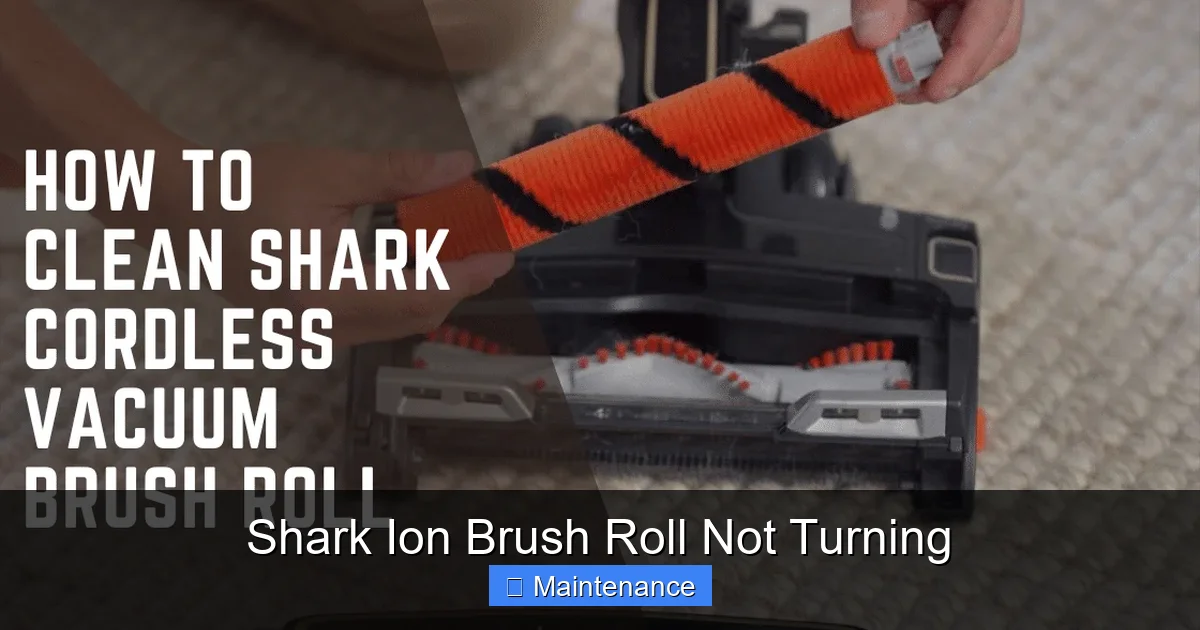
If you have pets, long hair, or even just a lot of synthetic carpet fibers, this is your prime suspect. Hair and fibers don’t just get sucked into the dustcup; they actively seek out the brush roll bearings and the axle on each end. They wrap tightly, creating a thick, felt-like band that binds the brush roll solid. This is the number one reason for a Shark Ion brush roll not turning. It’s so common that Shark designs their brush rolls to be easily removable for this exact reason. You might not see the wrap at first glance; it can be packed tightly against the ends, hidden under the end caps.
The Cordless Conundrum: Battery and Connection Woes
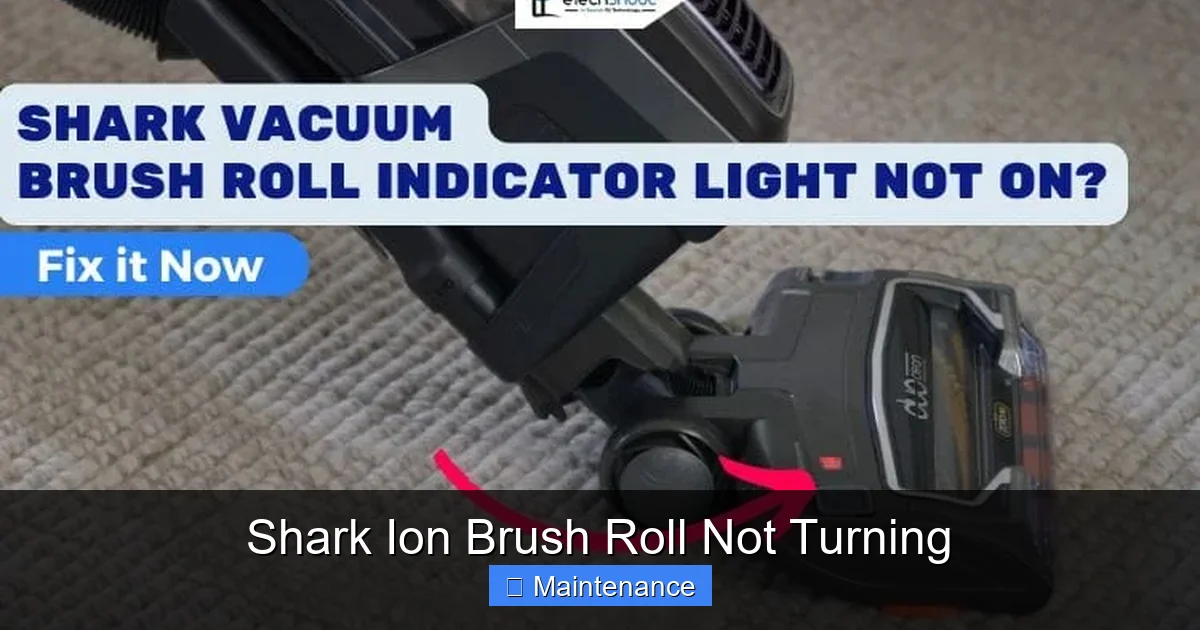
For cordless Shark Ions (like the IZ400, IZ300, or various Pet Pro models), the problem might not be the brush roll at all. The brush roll motor draws a significant amount of power. If the battery is old, not fully charged, or—most commonly—if the battery connection is dirty or loose, the vacuum’s electronics will often shut down the brush roll function to conserve power for the main suction motor. You’ll get suction, but no rotation. Always rule this out first on cordless models.
Wear, Tear, and the Inevitable: Component Failure
Like any mechanical part, the brush roll assembly has a lifespan. The plastic bristles can become brittle and break off. More critically, the bearings inside the end caps can seize up due to dirt ingress or simply wear out. The belt (if your model uses one) can stretch, slip, or break. The clutch mechanism that engages/disengages the brush roll on some models can wear out. If the brush roll spins freely and easily when removed by hand, but the motor hums without turning it, these internal components are the likely culprits.
Your Troubleshooting Toolkit: Gather These Before You Start
You don’t need a garage full of tools. A small, dedicated kit will make this process smooth and frustration-free. Having everything ready prevents you from abandoning the project halfway through.
Visual guide about Shark Ion Brush Roll Not Turning
Image source: cleanersadvisor.com
- A Phillips-head screwdriver: This is the most critical tool. Most Shark brush roll covers are secured with one or two Phillips screws. Ensure yours is the right size to avoid stripping the screw heads.
- A bright flashlight or headlamp: You are going to be looking into dark, narrow cavities. A good light source is non-negotiable for spotting hidden clogs.
- A pair of sharp scissors or wire cutters: For cutting through dense, wrapped hair and string. Needle-nose pliers are also incredibly helpful for pulling out stubborn debris.
- A clean, damp microfiber cloth: For wiping down the brush roll, its bearings, and the housing after you’ve removed the gunk.
- An old toothbrush or small cleaning brush: Perfect for scrubbing out the small crevices around the bearings and inside the brush roll housing.
- Optional but helpful: A can of compressed air to blow out fine dust from the motor housing and belt area (use short bursts from a distance).
Step-by-Step Surgery: Diagnosing and Fixing Your Non-Spinning Brush Roll
Now, let’s get our hands dirty. Follow this methodical process. It’s designed to start with the fastest, easiest fix and move toward more involved steps. You’ll likely solve the problem in the first 15 minutes.
Visual guide about Shark Ion Brush Roll Not Turning
Image source: etechshout.com
Step 1: The Pre-Flight Check and Safety First
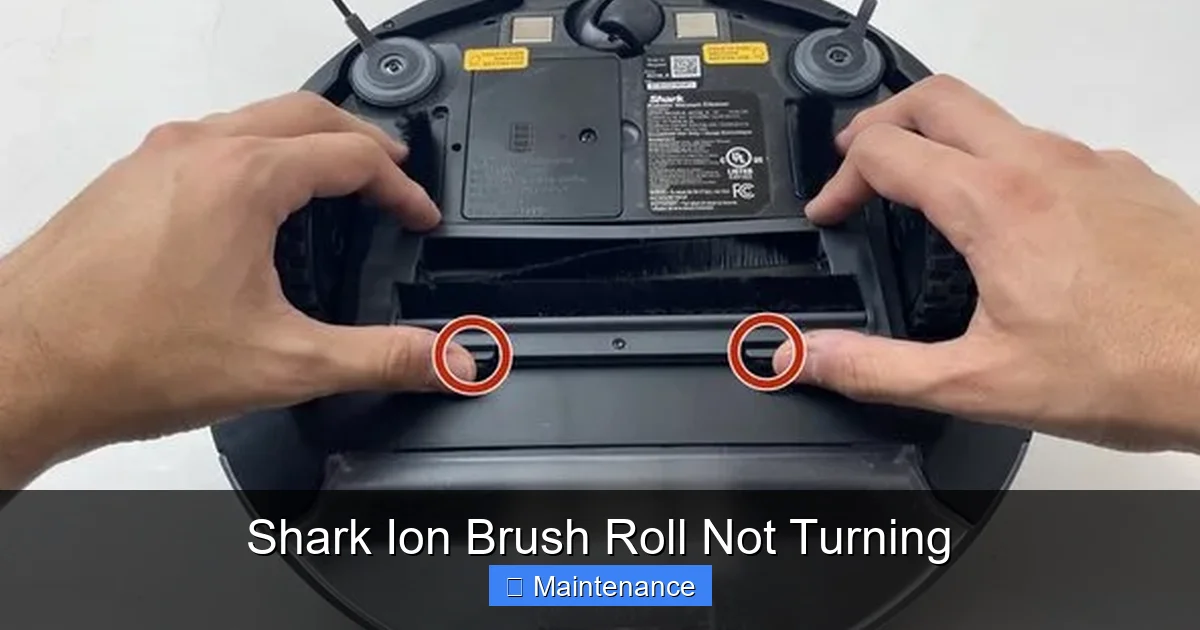
This is the most important step. Unplug your Shark Ion from the wall if it’s a corded model. For cordless models, remove the battery. Do not skip this. The brush roll motor can sometimes engage unexpectedly. Also, flip the vacuum over. On the underside, locate the brush roll cover. It’s usually a rectangular or oval plate near the front of the nozzle. It’s held on by screws. Using your Phillips screwdriver, remove these screws and set them aside safely. Gently lift the cover off. You now have a clear view of the brush roll.
Step 2: The Visual Inspection & Manual Spin Test
With the cover off, use your flashlight. Look closely at both ends of the brush roll where it sits in the plastic housing. Do you see thick mats of hair, string, or carpet fiber? Look at the bristles themselves—are they matted together? Now, try to rotate the brush roll by hand. Does it spin freely, or is it stiff, gritty, or completely locked? This test tells you a lot. If it spins freely, the problem is likely electrical (battery, switch, motor). If it’s stiff or locked, the problem is physical—jamming or seized bearings.
Step 3: The Great De-hairing Operation
If your spin test revealed resistance, it’s cleaning time. This is the most common fix for a Shark Ion brush roll not turning. Start by cutting any visible hair or string wrapped around the core of the brush roll. Use your scissors to slice through it lengthwise, then pull the chunks out with your fingers or pliers. Pay special attention to the bearing caps on each end. This is where hair insidiously packs in. Use your scissors and pliers to pick and cut away at this debris. Be thorough. Hair can compress into a hard band that feels like plastic. Once all visible debris is removed, try spinning the brush roll by hand again. It should now move smoothly. If it’s still stiff, the debris is likely packed inside the bearing itself.
Step 4: Deep Cleaning the Bearings and Housing
For a truly stuck brush roll, you need to remove it entirely. On most Shark Ions, you can now simply lift the brush roll straight up and out of the housing. Note its orientation so you can reinstall it correctly. Once removed, take it to a well-lit area. You’ll see plastic end caps. These end caps contain the bearings. Try to spin the brush roll core within the end caps. If it’s still gritty, the bearings are contaminated. Do not lubricate these bearings with oil or grease—it will attract more dust. The proper fix is cleaning. Use your damp cloth and toothbrush to scrub the inside of the end caps and the exposed axle on the brush roll core. Work the brush roll back and forth to dislodge any packed-in grit. Clean the empty housing in the vacuum where the brush roll sits—there’s often a groove for the belt (if applicable) and more debris collects there. Wipe everything completely dry.
Step 5: Reassembly and The Moment of Truth
Ensure everything is dry. Place the clean brush roll back into the housing, matching the orientation it came out in. It should seat flush and spin freely. Reattach the brush roll cover with your screws, but don’t overtighten. For cordless models, reinsert the battery firmly, ensuring the contacts are clean and connected. Plug in a corded model or turn on the power. Engage the brush roll (usually a separate switch or it engages automatically on carpet mode). Listen. You should hear the familiar whirring sound and see the brush roll spin. If it does, success! Run it on a scrap piece of carpet to ensure it’s agitating properly.
Proactive Maintenance: Keeping Your Brush Roll (and Your Sanity) Intact
An ounce of prevention is worth a pound of cure. A few minutes of regular care will dramatically reduce the chance of your Shark Ion brush roll not turning.
The 60-Second Post-Use Wipe-Down
After every 2-3 uses, especially if you have pets, flip the vacuum and do a quick visual check. Use your fingers or the scissors to remove any hair immediately wrapped around the bristles. Don’t let it build up. This 60-second habit is the single most effective maintenance task you can perform.
The Monthly Deep Clean
Once a month, or if you notice a drop in performance, perform the full removal and deep clean described in Step 4. Even if it’s not locked, you’ll be amazed at the fine dust and micro-debris that packs into the bearing area. This keeps the brush roll spinning with minimal resistance, which is better for your vacuum’s motor and battery life.
Battery Care for Cordless Models
For cordless Shark Ions, battery health is directly tied to brush roll performance. Avoid letting the battery completely die before recharging. Store the vacuum with the battery removed if it won’t be used for a few weeks. Keep the battery contacts clean with a dry cloth. A weak battery will often cut power to the brush roll while leaving the suction motor running.
Inspect and Replace When Needed
Brush rolls are consumable parts. Inspect the bristles every few months. Are they frayed, missing, or matted permanently? Are the end caps cracked? If the brush roll is physically damaged or the bearings are genuinely seized even after a deep clean, it’s time for a replacement. Shark sells official replacement brush rolls for each model. Using a worn-out brush roll not only reduces cleaning but can also put extra strain on the motor.
When the Fix Isn’t Simple: Recognizing Serious Problems
You’ve followed all the steps. The brush roll is clean, spins freely by hand, the battery is fully charged and connected, but it still won’t turn when you power on the vacuum. Now what? This points to a failure in the drive system.
The Tell-Tale Hum
Turn the vacuum on and listen closely near the brush roll area. Do you hear a faint, high-pitched humming or buzzing sound, but no rotation? This is the brush roll motor trying to turn a load it can’t. This typically means the motor itself is burnt out, the internal clutch (a designed weak point that slips under heavy load) is broken, or the belt (if your model has one connecting the motor to the brush roll) is broken or slipped off its pulleys. Diagnosing and fixing these issues requires disassembling the vacuum’s nozzle assembly, which is more complex and risks damaging other components if you’re not experienced.
Electrical and Switch Failures
If there is no sound at all from the brush roll motor—complete silence—the issue could be a faulty brush roll on/off switch, a broken wire in the hose or handle, or a problem with the main PCB (circuit board). These are less common but possible. Testing these requires a multimeter and knowledge of the vacuum’s wiring diagram.
The Warranty and Professional Repair Crossroads
If your Shark Ion is still under the manufacturer’s warranty (typically 3-5 years for the motor, 1-2 years for the full vacuum), contact Shark Customer Support first. Do not attempt major disassembly, as it may void the warranty. They can provide official parts, troubleshooting, or authorize a repair. If the warranty has expired, you face a choice: pay for a professional appliance repair service (get an estimate first—sometimes the cost approaches that of a new mid-range vacuum) or invest in an official replacement brush roll/motor assembly if the problem is isolated to that part. For older vacuums, replacement is often the more economical choice.
Conclusion: Your Vacuum’s Comeback Story
A Shark Ion brush roll not turning feels like a major setback, but it’s almost always a solvable puzzle. The journey from frustration to fix is straightforward: prioritize safety by unplugging, start with the simplest and most common solution (the hair wrap), and methodically work through the possibilities—from debris to battery to wear. You have the tools, and now you have the knowledge. By embracing regular, simple maintenance, you’re not just fixing a problem; you’re investing in the long life and peak performance of one of your hardest-working home tools. So next time that tell-tale silence hits, you can smile, grab your screwdriver, and know exactly what to do. Your clean carpets are waiting.
Frequently Asked Questions
My brush roll spins freely when I remove it, but won’t turn when installed. What’s wrong?
If the brush roll spins freely by hand but doesn’t engage in the vacuum, the issue is likely a broken or slipped drive belt (on belt-driven models) or a faulty clutch mechanism. The motor might be humming, indicating it’s trying to turn a load it can’t connect to. This typically requires disassembly of the nozzle to inspect the belt or clutch assembly.
I cleaned all the hair, but my cordless Shark Ion’s brush roll still doesn’t turn. What next?
On cordless models, after cleaning, the next step is the battery. Completely remove the battery, check the contacts for dirt or corrosion, and clean them with a dry cloth. Reinsert the battery firmly until it clicks. Try a different, fully-charged battery if possible. A weak battery will often cut power to the brush roll motor to save energy for suction.
Is it safe to use lubricant like WD-40 on my brush roll bearings?
No, it is not recommended. Petroleum-based lubricants will attract and trap dust and hair, turning the bearing into a grinding paste that fails faster. The proper fix for a gritty bearing is a thorough cleaning with a dry cloth and toothbrush. If cleaning doesn’t help, the end cap bearing should be replaced as part of a new brush roll assembly.
How often should I be cleaning my Shark Ion’s brush roll?
For best performance, do a quick visual check and hair removal after every 2-3 uses. Perform a full removal and deep cleaning of the brush roll and its bearings at least once a month, or more frequently if you have pets or a high-shedding carpet. This prevents the buildup that causes jams and bearing wear.
Can I use my Shark Ion without the brush roll installed?
Yes, you can operate most Shark Ion vacuums without the brush roll installed, and it’s perfectly safe. This turns it into a pure suction tool, which is ideal for cleaning hard floors, stairs, and above-floor surfaces. You will lose all agitation on carpets, so it’s not a permanent solution for carpeted areas.
My brush roll is turning, but very slowly and weakly. Why?
A slow-turning brush roll usually indicates excessive resistance. This is most often caused by packed-in debris within the bearings that you couldn’t see or remove during a surface clean. It can also be a sign of a failing motor that has lost power. A full removal and bearing cleaning is the first step. If that fails, the motor may need replacement.