When your Shark handheld vacuum’s brush stops spinning, it’s usually due to a simple blockage, a broken drive belt, or a faulty turbine assembly. You can often diagnose and fix the issue yourself with basic tools and careful inspection, starting with a thorough clean-out of hair and debris. Always unplug the vacuum first and proceed methodically. If the motor or internal wiring is damaged, professional repair or replacement may be more cost-effective.
You’re mid-cleanup, tackling crumbs on the kitchen floor or pet hair on the sofa. You press the trigger, hear the familiar whir of your Shark handheld vacuum, but something’s off. The suction feels strong, but the rotating brush bar—the very heart of its deep-cleaning power—is stubbornly still. That satisfying agitating action that lifts dirt from carpet piles and corners is gone. The frustration is real. Before you resign yourself to a costly repair or a new vacuum, take a deep breath. The most common reasons a Shark handheld vacuum brush is not spinning are often surprisingly simple to diagnose and fix yourself. This guide will walk you through every potential cause, from the quick 2-minute fix to more involved repairs, empowering you to get your trusty cleaning tool back in action.
We’ll break it down logically. First, we’ll explore the core mechanical system that makes the brush spin. Then, we’ll move to a systematic troubleshooting checklist you can follow with just a few basic tools. From there, we’ll dive deep into the most common culprits: clogged brush rolls, failed turbines, broken belts, and worn-out motors. We’ll cover electrical issues and finish with a robust prevention plan. By the end, you’ll know exactly why your Shark handheld vacuum brush isn’t spinning and have a clear path to a solution, saving you time, money, and hassle.
Key Takeaways
- Hair and debris wrap is the #1 cause: A tangled mass of hair, string, and carpet fibers around the brush roll is the most frequent reason for a non-spinning brush. A meticulous clean-out solves most problems.
- The turbine drives the brush: The small fan-like turbine, powered by suction, transfers rotation to the brush roll via a belt or direct drive. A stripped or broken turbine gear is a common failure point.
- Check the drive belt: Many Shark handheld models use a small rubber belt. This belt can stretch, slip off, or break, completely disconnecting motor power from the brush roll.
- Motor failure is rare but possible: The separate brush roll motor can burn out. If the vacuum has suction but the brush never spins (even when clean), a faulty motor or its wiring is likely.
- Always unplug first: Safety is paramount. Always disconnect the vacuum from power before attempting any inspection or repair to avoid injury or damage.
- Use Shark’s resources: Your model’s manual and Shark’s official support site are invaluable for part numbers, diagrams, and model-specific troubleshooting steps.
- Preventative maintenance is key: Cleaning the brush roll after every few uses and checking for obstructions can prevent 90% of “brush not spinning” issues and extend your vacuum’s life.
📑 Table of Contents
- Understanding the System: How a Shark Handheld Vacuum’s Brush Spins
- Immediate Troubleshooting: The Systematic Checklist
- The Turbine Assembly: Heart of the Brush Roll
- The Brush Roll and Motor: Internal Powerhouses
- Electrical and Switch Problems
- Prevention and Long-Term Care: Keep It Spinning
- Conclusion: Empowerment Through Understanding
Understanding the System: How a Shark Handheld Vacuum’s Brush Spins
To effectively troubleshoot, you need to understand what makes the brush roll turn. It’s not as simple as the main suction motor spinning it directly. In most Shark handheld vacuums (like the popular Pet Pro, Vertex, or AX models), a separate, dedicated system powers the brush roll. This system typically consists of three key components working in harmony: the turbine, the drive belt (or direct drive coupling), and the brush roll itself.
The Turbine: The Transfer of Power
When you turn on your Shark handheld, the main suction motor creates airflow. A portion of this powerful airstream is diverted to spin a small plastic fan known as the turbine (sometimes called a power head turbine or brush roll turbine). This turbine has a small gear on its shaft. As the turbine spins, its gear meshes with another gear on the brush roll shaft (or on a separate drive pulley), transferring rotational force. Think of it as a middleman, converting the linear force of suction into the rotational power needed for agitation.
The Drive Belt or Direct Drive
In many older and some current Shark handheld models, a thin, rubber-like drive belt (often a small O-ring or serpentine belt) loops around the turbine’s drive gear and the brush roll’s pulley. This belt physically connects the two. If this belt is missing, broken, or slipped off, the turbine can spin freely while the brush roll remains dead. Newer models, like some in the Vertex series, may use a direct drive system where the turbine gear engages directly with the brush roll gear without a belt. The failure modes for these are slightly different (stripped gears vs. broken belt), but the principle is the same: power isn’t getting from the turbine to the brush.
The Brush Roll Itself
The brush roll is the long cylinder with bristles (or a rubber strip in some models) that rotates. It’s supported by bearings or bushings on each end. If hair, string, or carpet fibers wind tightly around the axle or jam between the bristles, it creates immense resistance. The turbine might try to turn it, but the jam can be so severe it stops the brush roll cold and can even strip the gears in the turbine or damage the belt. A physically jammed brush roll is the most frequent problem you’ll encounter.
Understanding this chain—Suction Airflow → Turbine → (Belt/Direct Drive) → Brush Roll—is your map for troubleshooting. If the brush isn’t spinning, the break in the chain is somewhere in here. Our job is to find it.
Immediate Troubleshooting: The Systematic Checklist
Before you grab a screwdriver, follow this ordered, safety-first checklist. Many issues are resolved in the first two steps. Always, always unplug your vacuum or remove the battery (if cordless) before touching any internal parts.
Visual guide about Shark Handheld Vacuum Brush Not Spinning
Image source: cdn-fastly.upgradedhome.com
Step 1: The Visual and Tactile Inspection
Flip your Shark handheld over. Look directly at the brush roll housing. Do you see any obvious large clumps of hair, string, or carpet fiber wrapped around the brush roll or stuck in the end caps? Use a bright light. Often, you can see the problem immediately. Next, try to rotate the brush roll by hand. Gently try to spin it with your fingers. Does it turn freely with a slight resistance? Or is it locked solid? If it’s locked, you have a severe jam. If it spins freely, the issue is likely a disconnected drive (belt off, broken turbine gear) or an electrical fault. This simple test tells you volumes.
Step 2: The Deep Clean-Out (Solving 70% of Problems)
If the brush roll was jammed or even just sluggish, a thorough cleaning is your first and most powerful repair. You’ll need a pair of scissors and maybe a seam ripper or a dedicated hair-cleaning tool.
- Remove the brush roll: Most Shark handhelds have a release lever or button on the underside of the nozzle. Press it and slide the entire brush roll assembly out. Some models require you to remove a couple of screws holding the bottom plate. Consult your manual if unsure.
- Cut and remove debris: Lay the brush roll on a flat surface. You’ll likely see a “cocoon” of hair wound tightly around the axle and bristles. Carefully use scissors to cut through the hair lengthwise along the brush roll. Do not pull; you’ll just compact it tighter. Once cut, you can usually peel the mass off in pieces. Use the seam ripper to get hair trapped in the bearings at each end.
- Clear the housing: With the brush roll out, look into the empty housing. Check the turbine area (it’s the plastic piece with gears at one end of the housing) and the entire channel for any lodged debris. A bent wire coat hanger or compressed air can help dislodge small bits.
- Lubricate bearings (optional): If the brush roll still feels gritty after cleaning, a tiny drop of lightweight machine oil on each bearing (the plastic caps at the ends) can help. Wipe away excess.
- Reassemble and test: Snap or screw the brush roll back in, ensuring it seats properly. Plug in the vacuum and test. In a stunning number of cases, the brush will spin freely again. If not, move to the next steps.
Step 3: Check the Drive Belt
If the clean brush roll spins freely by hand but doesn’t spin when powered, the connection is broken. If your model uses a belt, this is the prime suspect.
- Locate the belt: With the brush roll removed, you should see a small rubber belt looped around the turbine gear and the brush roll pulley. It’s easy to miss as it can fall into the housing.
- Inspect: Is the belt present? Is it stretched, shiny, cracked, or broken? Does it sit properly on both gears? A slipped belt will just sit on one gear. A broken belt will be in pieces.
- Replace if necessary: Belts are cheap and easy to replace. Note the part number (often printed on the old belt or in the manual) and order a replacement from Shark or an authorized parts dealer. Installation is simply stretching the new belt over both gears. Ensure it’s seated in the groove of each pulley.
The Turbine Assembly: Heart of the Brush Roll
If the belt is intact and properly seated, or if your model has a direct drive, the turbine itself is the next likely failure point. This small component takes a beating from suction force and debris.
Visual guide about Shark Handheld Vacuum Brush Not Spinning
Image source: howtofixit.net
Diagnosing a Failed Turbine
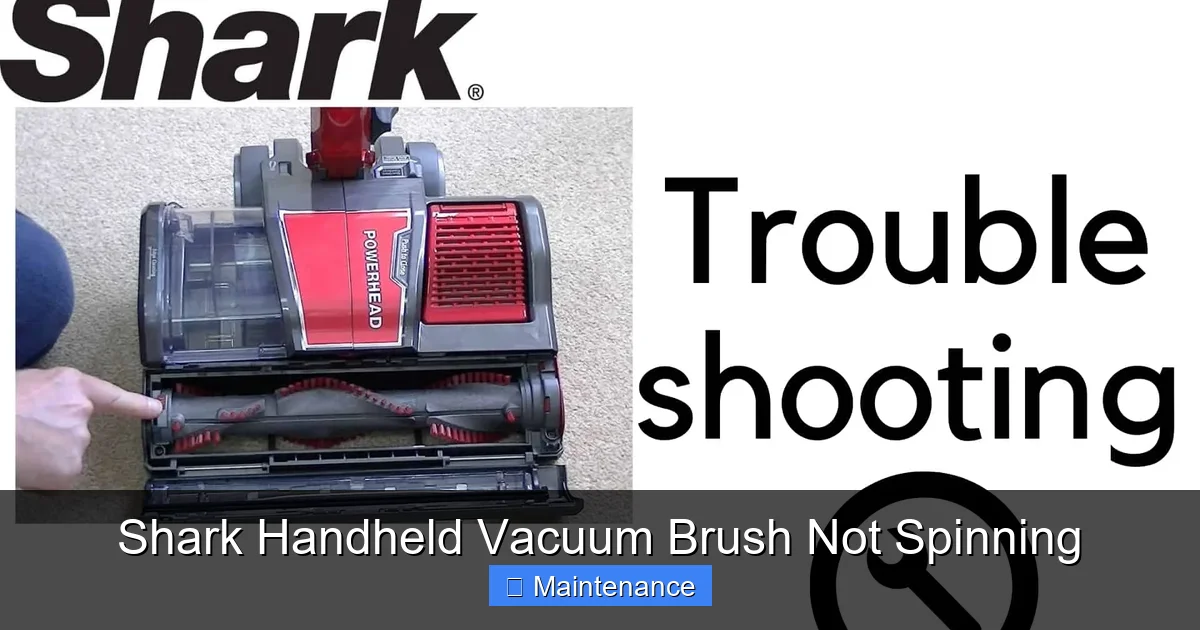
With the brush roll removed, look at the turbine. It’s the plastic unit with fan blades on one side and a small gear on the other. Try to spin the turbine gear by hand. It should turn smoothly. Now, block the turbine’s air intake (the hole where the suction hose connects) with your finger and blow gently into the exhaust port (or vice versa, depending on design). The turbine should spin freely from the air pressure. If it’s gritty, stuck, or the gear is stripped (looks chewed up), it has failed.
Common Turbine Failures and Fixes
- Stripped Gear: This is the most common turbine failure. The plastic gear teeth wear down or break from stress, especially if the brush roll was jammed repeatedly. The turbine will spin, but it won’t turn the brush roll gear. The fix is to replace the entire turbine assembly. This is a very common and inexpensive part.
- Seized Bearings: Dirt and dust can get into the turbine’s internal bearings, causing it to lock up. Sometimes you can clean it out, but often replacement is easier and more reliable.
- Cracked Housing: A drop or impact can crack the plastic turbine housing, causing air leaks that reduce turbine speed or stopping it entirely. Replace the assembly.
Replacement Tip: The turbine is usually held in by 2-4 screws. Note which way the air ports face. Take a photo before disassembly. Install the new one exactly as the old one was oriented.
The Brush Roll and Motor: Internal Powerhouses
If the turbine spins fine and the drive connection is good, the problem lies deeper: with the brush roll itself or the dedicated motor that drives the turbine/brush system.
Visual guide about Shark Handheld Vacuum Brush Not Spinning
Image source: howtofixit.net
Worn or Faulty Brush Roll Bearings
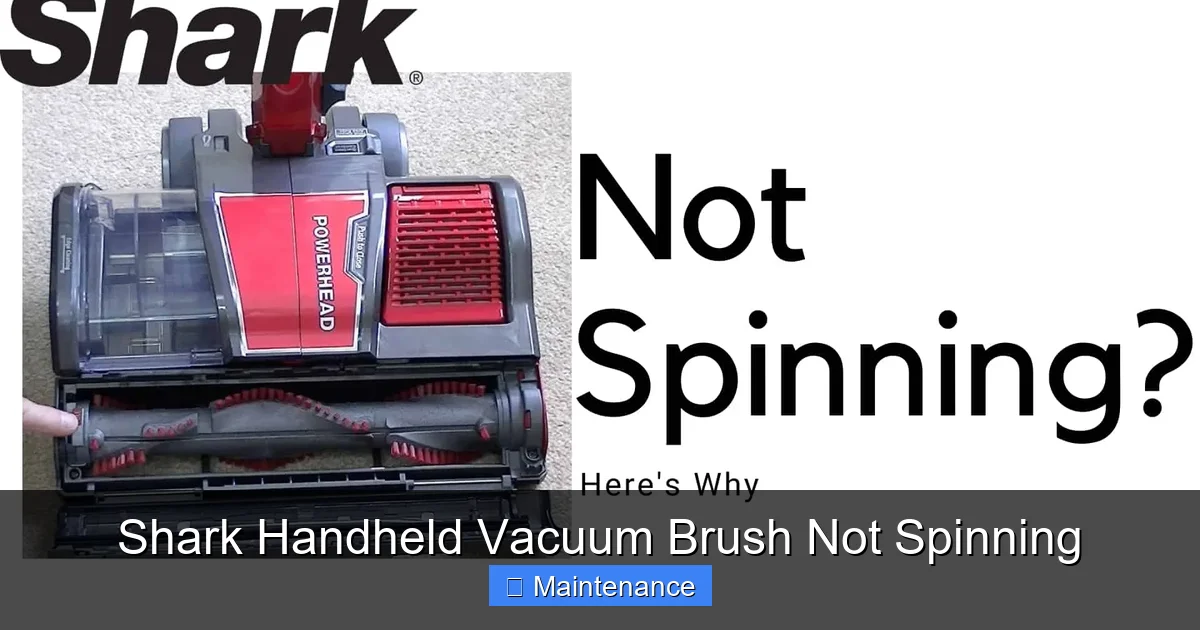
Even if clean, the brush roll’s own bearings can wear out. This creates so much drag that the turbine can’t overcome it. Spin the brush roll by hand. Listen for grinding or feel for gritty resistance. If it doesn’t spin smoothly, the brush roll assembly needs replacement. This is less common than a jam but still occurs on heavily used vacuums.
Dedicated Brush Roll Motor Failure
This is a less frequent but more serious issue. Shark handhelds have a small, separate motor (often called the power head motor or brush motor) that specifically drives the turbine. If this motor burns out, the turbine gets no power and won’t spin at all, even with clean airflow.
- Symptom: You have strong main suction (the main motor works), but the turbine does not spin when the brush roll switch is engaged. You might hear a faint click from a relay.
- Diagnosis: You’ll need a multimeter to test for continuity on the motor’s terminals. This is an intermediate repair. If you’re not comfortable, it’s a sign to seek professional help.
- Replacement: Motor replacement is more involved, requiring soldering or careful connector work. Given the cost of a new handheld, weigh the repair cost against replacement. Shark parts for motors can be pricey.
Electrical and Switch Problems
Power isn’t getting to the brush roll system. This can be a simple switch issue or a wiring fault.
The Brush Roll On/Off Switch
Your Shark handheld has a dedicated switch (often a button on the handle) to engage the brush roll. These switches are mechanical and can fail. If pressing the button doesn’t produce a click or the brush never activates even when everything else is clean and functional, the switch may be dead. Testing with a multimeter for continuity when pressed is the definitive check. Replacing the switch is usually straightforward but requires opening the handle housing.
Wiring Harness and Connectors
Vibrations during use can loosen connectors or fray wires, especially at hinge points (on models with pivoting handles). A loose or broken wire between the main body and the brush roll/nozzle assembly will kill power. Inspect the wiring loom carefully for any cuts, pinches, or disconnected plugs. Re-seating connectors can sometimes solve the issue.
Cordless Model Specifics: Battery and Circuitry
For battery-powered Shark handhelds (like the IZ series), the issue might be battery-related. A weak or faulty battery may provide enough power for the main suction motor but not the higher current draw of the brush roll motor. Try a fully charged spare battery. Also, check the battery contacts for dirt or corrosion. Internal circuit board faults are possible but less common.
Prevention and Long-Term Care: Keep It Spinning
An ounce of prevention is worth a pound of repair. Integrating these habits into your cleaning routine will keep your Shark’s brush roll spinning smoothly for years.
Clean After Every Few Uses
Don’t wait for a complete jam. After 2-3 uses, especially on pet hair or carpets, remove the brush roll and do a quick 60-second clean-out. Cut away any hair beginning to wrap and wipe the housing. This prevents compacted mats from forming and over-stressing the turbine gears.
Proper Storage
Never store your vacuum with the brush roll engaged or under heavy pressure. Store it with the brush roll in the “off” position. Avoid winding the cord tightly around the unit if it’s a corded model, as this can stress internal connections.
Use the Right Tools on the Right Surfaces
Your Shark handheld is powerful. Using it on very thick, shaggy rugs can cause excessive hair wrap and strain on the brush system. For delicate rugs or hard floors, many models allow you to turn the brush roll off—use that setting. This reduces wear and tear.
Regular Full Inspection
Every 6 months, do a more thorough inspection. Remove the brush roll, check the belt (if applicable) for wear, spin the turbine by hand, and look for any dust buildup inside the housing. A quick blast of compressed air can keep things clean.
Know When to Seek Professional Help
If you’ve completed the full clean-out, checked/replaced the belt, and inspected the turbine only to find the turbine gear is stripped or the motor is dead, it’s time to evaluate. Get a quote from an authorized Shark service center. Often, for an older handheld, the cost of a motor or turbine plus labor may approach the price of a new current-model vacuum. For newer units under warranty, contact Shark immediately—do not attempt disassembly, as it may void the warranty.
Conclusion: Empowerment Through Understanding
A Shark handheld vacuum brush not spinning is a common but almost always fixable problem. The journey from frustration to function begins with understanding the simple mechanical chain that creates agitation. In most cases, the culprit is a visible, tangible enemy: a tangled nest of hair and fiber. By adopting a disciplined, safety-first approach—unplugging, inspecting, and performing that deep clean-out—you empower yourself to solve the issue in minutes. For persistent problems, methodically checking the drive belt, the turbine gears, and the brush roll bearings will lead you to the root cause. Remember, your Shark is built to be serviced. Parts like belts, turbines, and brush rolls are designed for user replacement. By combining this knowledge with a commitment to regular, simple maintenance, you can ensure your handheld vacuum remains a powerful, reliable tool in your cleaning arsenal for the long haul, turning that frustrating stillness back into satisfying, dirt-lifting rotation.
Frequently Asked Questions
Why does my Shark handheld vacuum have suction but the brush doesn’t spin?
This indicates the main suction motor is working, but the separate brush roll system is not. The most common cause is a jammed brush roll from hair wrap. Other causes include a broken/slipped drive belt, a failed turbine with stripped gears, or a faulty brush roll motor or its switch.
How do I unjam my Shark handheld vacuum brush roll?
First, unplug the vacuum. Remove the brush roll assembly using the release lever. Use scissors to cut hair lengthwise along the brush roll and peel it off. Clean debris from the housing and turbine area. Remove any hair from the bearing caps. Reinstall and test.
Is it worth fixing a Shark handheld vacuum with a broken turbine?
Often, yes. A replacement turbine is a relatively inexpensive part (typically $15-$30) and is a user-serviceable repair. If the vacuum is otherwise in good condition and newer, replacing the turbine is far more economical than buying a new vacuum.
What tools do I need to fix my Shark handheld vacuum?
For most common fixes (cleaning, belt replacement), you only need scissors, a seam riper or small pick, and maybe a Phillips-head screwdriver to remove the bottom plate. For diagnosing motors or switches, you’d need a multimeter and possibly soldering skills.
Can a clogged filter cause the brush roll to stop spinning?
Indirectly, yes. A severely clogged filter reduces overall suction power. Since the turbine is powered by suction airflow, drastically reduced suction can cause the turbine to spin too slowly or not at all, making the brush appear dead. Always clean filters regularly as part of maintenance.
When should I just buy a new Shark handheld instead of repairing it?
Consider replacement if the vacuum is very old (5+ years), if the main suction motor fails, if the brush roll motor is burned out and the part cost is high, or if the plastic housing is cracked. For a $50-$100 part repair on a $150-$200 vacuum, repair is usually smart. For a $80 motor on a $100 older unit, replacement may be better.