Is your Shark NV800 vacuum’s brush bar suddenly stopped spinning? This is a very common issue, usually caused by a broken belt, clogged brush roll, or a tripped thermal fuse. You can often fix it yourself in under 30 minutes with basic tools. This guide provides a complete, safe, step-by-step diagnostic process from the simplest clog check to advanced motor inspection. We’ll help you identify the exact problem and apply the correct permanent fix, saving you from costly service calls.
You’re in the middle of cleaning, and you notice it. The satisfying whir of your Shark Navigator Lift-Away NV800 vacuum cleaner is missing its familiar counterpart—the aggressive scrubbing sound of the brush roll. You look down, and the brush bar on the floor head is completely still. That sinking feeling is real. But before you panic, call customer service, or start shopping for a new vacuum, take a deep breath. A Shark Vacuum NV800 brush not spinning is one of the most common and most fixable problems with this otherwise legendary machine. In fact, with the right guidance, you can diagnose and repair the issue yourself in less time than it takes to schedule a service call. This comprehensive guide will walk you through every possible cause, from the incredibly simple to the more complex, with clear, safe, step-by-step instructions.
The brush roll (or “roller brush”) is the hardworking heart of your vacuum’s carpet-cleaning ability. It agitates carpet fibers to loosen and lift embedded dirt, dust, and allergens. When it stops spinning, your vacuum degrades from a deep-cleaning machine to a simple suction tool, struggling on anything but hard floors. The causes are mechanical and finite. Our goal here is to systematically eliminate each possibility until we find the culprit. We’ll start with the absolute basics and move toward more involved repairs. Remember: safety first. Always unplug your vacuum from the wall outlet before touching any internal components.
Key Takeaways
- The #1 cause is debris clogging: Hair, string, and carpet fibers wrap around the brush roll bearings, jamming it. Always check and clean this first.
- The drive belt is a frequent failure point: It stretches, slips off, or breaks. A visual inspection after removing the brush roll is mandatory.
- Thermal fuses protect the motor: If the brush motor overheats from a jam, a fuse blows and cuts power. It’s a safety feature, not always a motor failure.
- Disconnect power before ANY inspection: This is the single most important safety rule to prevent injury or damage.
- Lubrication is not standard: Shark brush rolls are sealed. If bearings are noisy or stiff, the entire brush roll assembly needs replacement.
- Use genuine Shark parts: Aftermarket belts and brushes often cause premature failure and can damage other components.
- Preventative maintenance is key: Cleaning the brush roll monthly and checking the belt prevents 90% of “not spinning” failures.
📑 Table of Contents
- Understanding the Brush Roll Drive System in Your Shark NV800
- Diagnostic Step 1: The Fast & Free Checks
- Diagnostic Step 2: Accessing and Inspecting the Brush Roll Assembly
- The Most Common Fixes: Cleaning, Belt Replacement, and Tensioner Repair
- When the Problem Isn’t Mechanical: Electrical Issues
- Reassembly, Testing, and Final Verification
- Preventative Maintenance: Keeping Your NV800’s Brush Spinning
- Conclusion: You’ve Got This
Understanding the Brush Roll Drive System in Your Shark NV800
Before we start taking things apart, it’s crucial to understand how the brush roll is powered. This knowledge will make diagnosis infinitely easier. In your Shark NV800, the brush roll is not powered by a separate motor in the floor head. Instead, a single motor in the main vacuum body drives both the suction fan and the brush roll via a clever system of belts and pulleys.
The Two-Belt System Explained
Your NV800 uses a two-belt system:
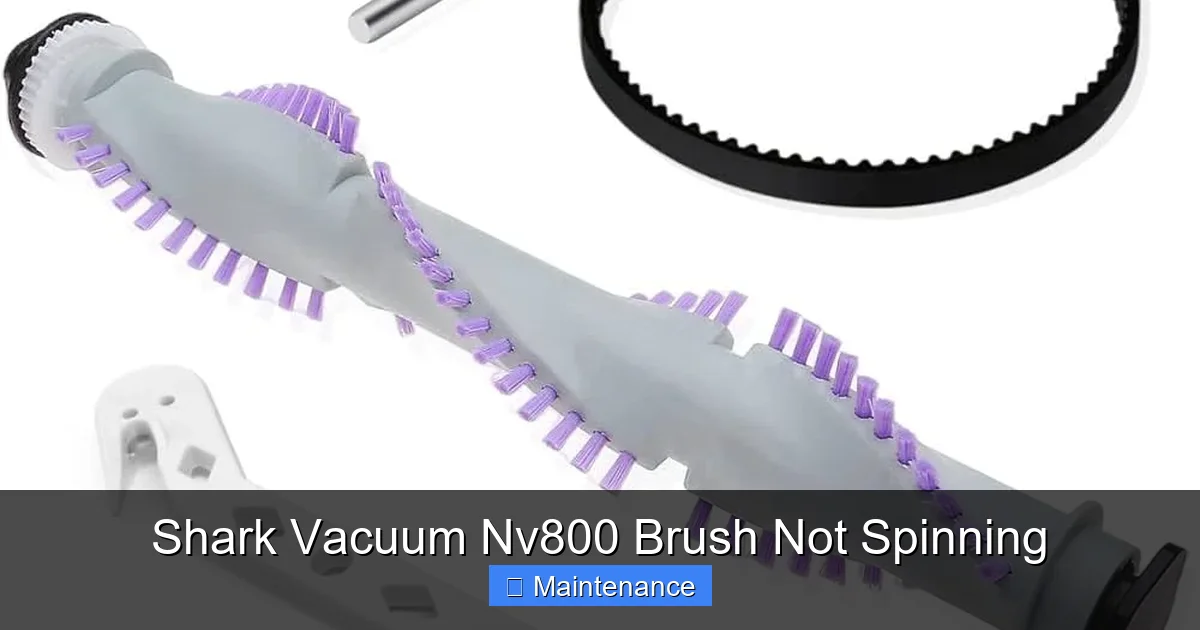
- The Drive Belt (Power Belt): This is a small, often black, rubber belt that connects the motor shaft (in the main canister) to a small drive pulley on the brush roll shaft. This belt is responsible for actually turning the brush roll. If this belt is broken, stretched, or slipped off, the brush roll will not spin. This is the most common mechanical failure.
- The Belt Tensioner (or “Lifter”): This is not a power belt. It’s a mechanical arm with a small idler pulley that maintains tension on the drive belt. When you press the “Brush Roll On/Off” button, this tensioner moves to disengage the belt from the motor pulley (turning the brush off) or engages it (turning the brush on). A broken or misaligned tensioner can also prevent the brush from spinning.
Understanding this separation is key. If the brush roll spins freely by hand when removed, the problem is likely the drive belt or tensioner. If it’s jammed, the problem is the brush roll itself or debris.
Diagnostic Step 1: The Fast & Free Checks
Before you lay a single tool down, perform these three rapid, zero-disassembly checks. They solve a huge percentage of “brush not spinning” complaints.
Visual guide about Shark Vacuum Nv800 Brush Not Spinning
Image source: m.media-amazon.com
1. Check the Brush Roll On/Off Switch
Locate the “Brush Roll” button on the top of the handheld unit or on the power head itself (depending on your specific NV800 model variant). Press it firmly. You should hear and feel a distinct click. Listen closely: you should also hear a faint mechanical *clunk* from the floor head as the tensioner engages. If you don’t hear the click, the switch may be faulty. If you hear the click but not the *clunk*, the tensioner mechanism may be broken or obstructed. Try turning the vacuum on and off a few times while listening at the floor head.
2. Is the Brush Roll Jammed? The Hand Test
Ensure the vacuum is UNPLUGGED. Flip the vacuum over and locate the clear plastic window on the bottom of the floor head. Look through it. Can you see the brush roll? Is it covered in a mat of hair and carpet fibers? Now, try to turn the brush roll by hand. You should be able to rotate it with moderate resistance. If you cannot turn it at all, or it turns with extreme difficulty and a grinding noise, it is severely jammed. This is almost always due to debris wound tightly around the brush roll bearings (the plastic end caps). We will address this in the cleaning section.
3. Listen for Motor Humming
Plug the vacuum in, turn it on in carpet mode, and place your ear near the main vacuum body (the canister). Do you hear a faint, steady hum? If yes, the main suction motor is running. Now, listen carefully at the floor head. Do you hear a higher-pitched whirring sound, or a straining motor noise, but the brush isn’t moving? This indicates the motor is trying to turn the brush roll but is being mechanically blocked (a jam) or the belt is slipping. If you hear nothing from the floor head area but the main motor hums, it points strongly to a broken drive belt or a disconnected tensioner.
Diagnostic Step 2: Accessing and Inspecting the Brush Roll Assembly
If the fast checks didn’t solve it, it’s time for a closer look. This process is identical for most Shark NV800 models.
Visual guide about Shark Vacuum Nv800 Brush Not Spinning
Image source: sharkvacuum.blog
How to Remove the Brush Roll
1. Unplug the vacuum. This cannot be stressed enough.
2. Lay the vacuum flat on its side or turn it upside down for better access.
3. Locate the four screws securing the bottom plastic plate of the floor head. They are usually silver Phillips-head screws. Two are near the front wheel, and two are near the back, close to where the brush roll exits.
4. Using a Phillips screwdriver, remove all four screws. Keep them in a safe place.
5. Gently lift off the plastic bottom plate. The brush roll assembly will now be exposed.
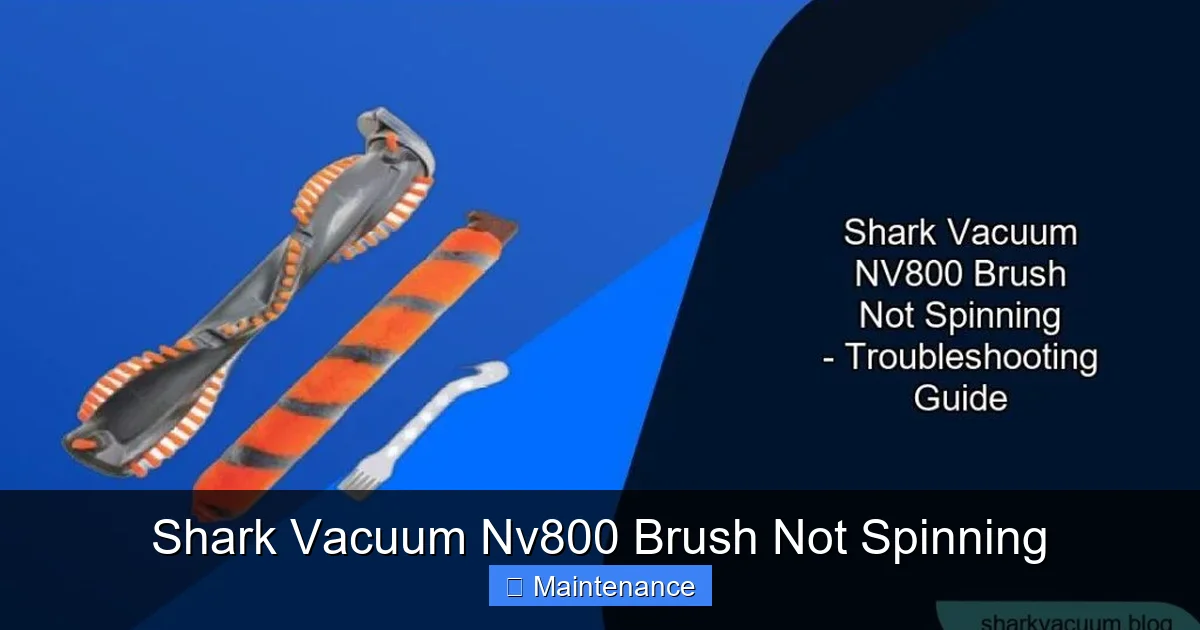
6. The brush roll itself is held in place by two plastic clips or by simply sitting in a groove. Gently pull the brush roll straight out. You may need to wiggle it slightly. Note the orientation—which side faces the front of the vacuum—so you reinstall it correctly.
What to Look For During Inspection
With the brush roll out, you have a clear view of the entire drive system. Here is your inspection checklist:
- The Drive Belt: It’s the small rubber loop running from a small metal pulley (attached to the brush roll) to a larger pulley on the motor shaft (you may need to peer into the opening where the brush roll was). Is it there? Is it intact, or does it have a visible break, fraying, or a glazed/smooth surface that indicates it’s stretched beyond usefulness? A good belt is flexible but firm and has a distinct tread-like pattern.
- The Brush Roll: Examine the plastic roller and the bristles. Are the bristles heavily matted with debris? Are the plastic end caps (bearings) clean? Look for any plastic cracks on the ends. Check the metal axle—is it bent? Try to spin each end cap by hand. They should rotate smoothly and quietly. Any grinding, clicking, or stiffness means the sealed bearings inside are shot, and the whole brush roll needs replacing.
- Pulleys and Tensioner: Look at the motor pulley (inside the vacuum body) and the small pulley on the brush roll. Are they clean? Is there any plastic debris or rubber dust from a worn belt stuck on them? Now, find the tensioner arm. It’s a pivoting plastic piece with a small wheel (idler pulley) on the end. Move it back and forth by hand. It should move freely and spring back into position. Is it broken, or is the small pulley on its end cracked or wobbly?
- Debris Clearance: Look up into the channel where the brush roll sat. Is it packed with hair, carpet fibers, or small objects like pennies or rubber bands? This debris can jam the brush roll or even interfere with the tensioner arm.
The Most Common Fixes: Cleaning, Belt Replacement, and Tensioner Repair
Based on your inspection, here’s how to execute the most probable repairs.
Visual guide about Shark Vacuum Nv800 Brush Not Spinning
Image source: sharkvacuum.blog
Fix 1: Deep Cleaning a Jammed Brush Roll
This is the #1 solution. Even if the brush roll spins by hand, it needs cleaning.
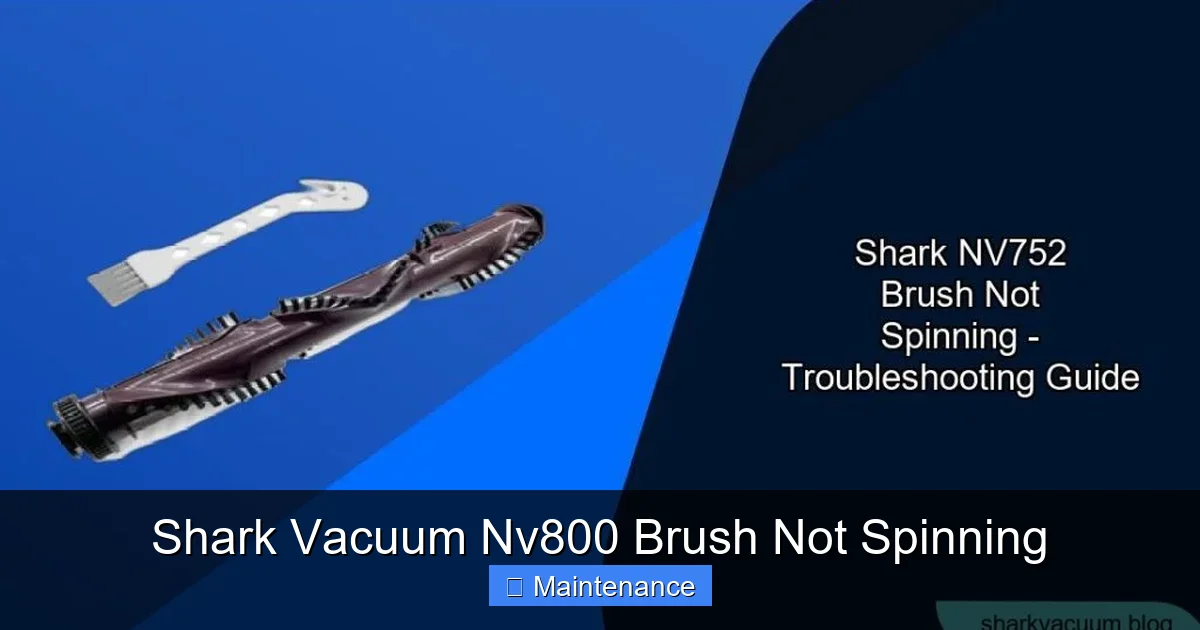
- Take the brush roll to a well-lit area. Use a seam ripper, a dedicated brush roll cleaning tool, or even just sturdy scissors.
- Carefully cut and pry away all hair, string, and carpet fibers wrapped around the bristles and, most importantly, the plastic bearing caps at each end. Pay special attention to the area where the bristles meet the cap—this is where fibers cinch down and cause the jam.
- Use a dry cloth to wipe debris from the metal axle and the plastic body.
- Check the clearance holes on the brush roll ends. These small holes allow air to escape. If clogged with dust, clean them with a cotton swab.
- Spin the roll by hand. It should now rotate smoothly and silently. Reinstall it and test.
Fix 2: Replacing the Drive Belt
If the belt is broken, missing, or glazed/smooth, it must be replaced. Use only a genuine Shark belt (part number typically begins with 1X or similar, check your manual). Generic belts are often the wrong thickness or material and will slip or break quickly.
- With the brush roll removed, you can easily see the old belt. Stretch it and slip it off the motor pulley inside the vacuum body, then off the small pulley on the brush roll.
- Take the old belt to a hardware store or order the exact Shark replacement part online.
- To install the new belt, first loop it around the small pulley on the brush roll. Then, stretch it and fit it onto the motor pulley. It requires a firm stretch. Ensure it is seated fully on both pulleys and is not twisted.
- Reinstall the brush roll. The belt should now be engaged but not overly tight. Reattach the bottom plate, plug in, and test.
Fix 3: Addressing a Faulty Tensioner
If the brush roll spins freely by hand and the new belt is correctly installed but the brush still doesn’t spin, the tensioner is likely the issue.
- Stuck Tensioner: Often, a buildup of dust and debris inside the pivot point jams the arm. With the brush roll and bottom plate off, locate the tensioner arm. Move it vigorously back and forth. Use a cotton swab dipped in a tiny bit of isopropyl alcohol to clean around the pivot point. Work it until it moves freely.
- Broken Tensioner: If the plastic arm is cracked, the idler pulley wheel is missing, or the spring is broken, the entire tensioner assembly must be replaced. This is a more involved repair. You will need to source the exact Shark NV800 tensioner assembly part. It usually clips or screws into the floor head housing. Replacement requires careful disassembly of the floor head. If you are not comfortable with this, this is the point to consider professional service.
When the Problem Isn’t Mechanical: Electrical Issues
If you’ve verified the brush roll spins freely, the belt is new and properly installed, and the tensioner moves correctly, but you still get no brush action, the fault lies in the electrical system.
The Thermal Fuse: Your Vacuum’s Safety Net
Shark vacuums have a thermal fuse (a small, often white or black ceramic component) in the electrical circuit to the brush motor. If the brush roll jams and the motor is forced to work too hard, it overheat and the fuse blows, cutting power to the brush motor to prevent a fire. This is a replaceable part. It is usually located in a small plastic clip on the motor wiring harness inside the main canister body, near where the floor head hose connects. You will need to open the main body (consult your manual for screw locations). Visually inspect the fuse; a blown one often has a broken filament or a charred appearance. You can test it for continuity with a multimeter. If bad, replace it with the exact Shark part. Important: If the fuse blows again shortly after replacement, you have not found the root mechanical jam that caused the initial overheating.
Faulty Brush Motor or Wiring
Rarely, the brush motor itself burns out. This is more likely in older vacuums or after a prolonged, severe jam. Diagnosis requires electrical testing (continuity check) of the motor windings, which is beyond most DIYers. Similarly, the wiring from the main body to the floor head can become frayed or broken where it flexes at the hose connection. Inspect this wire carefully for any cuts or kinks. If the motor or internal wiring is faulty, Shark customer service or an authorized repair center is your best path.
Reassembly, Testing, and Final Verification
After your repair—whether it was a clean, belt change, or tensioner fix—reassembly is critical.
- Ensure the brush roll is fully seated in its grooves and spins freely before attaching the bottom plate.
- Double-check that the drive belt is properly looped over both pulleys (motor and brush roll).
- Carefully align and reattach all four bottom plate screws. Do not overtighten and crack the plastic.
- Plug the vacuum in. Before turning it on, lift the vacuum so the brush roll is off the ground. Turn the vacuum on and press the “Brush Roll” button. Listen—you should hear the tensioner engage with a solid *clunk*. Then, look at the brush roll. It should start spinning immediately and steadily. If it doesn’t, unplug it and recheck your work.
- Once it spins freely in the air, place it on a carpet and test its cleaning ability. The brush should be rotating aggressively.
Preventative Maintenance: Keeping Your NV800’s Brush Spinning
The best repair is the one you never need. A few minutes of monthly maintenance will keep your brush roll system healthy for years.
Your Monthly Checklist
- Clean the Brush Roll: Even if it seems clean, remove it monthly and use scissors or a seam ripper to cut away any hair or fibers wound at the ends. This is the single most effective maintenance task.
- Inspect the Belt: While the brush roll is out, check the belt for glazing, cracks, or thinning. A belt typically lasts 1-2 years with normal use. Replace it proactively if it looks worn.
- Clear Debris Channels: Use a vacuum crevice tool or a long, flexible brush to clean out the debris channels in the floor head housing and around the tensioner.
- Check the Tensioner: Ensure it moves smoothly. A drop of dry lubricant like silicone spray on the pivot point can help, but be careful not to get it on the belt.
- Monitor Performance: If you notice a drop in carpet cleaning performance or a burning smell, stop immediately and check the brush roll for a jam.
Conclusion: You’ve Got This
A Shark Vacuum NV800 brush not spinning is a frustrating but almost always repairable problem. By following this structured diagnostic approach—starting with the simple switch and jam checks, moving to belt and tensioner inspection, and finally considering electrical faults—you can pinpoint the issue with confidence. The vast majority of repairs involve nothing more than a thorough cleaning or a $15-$25 belt replacement. Remember the golden rules: always unplug first, use genuine Shark parts, and keep up with monthly maintenance. With a little patience and the right guidance, you can restore your NV800 to its full, deep-cleaning glory and extend the life of this powerful machine for years to come. Don’t write it off just yet—your fix is likely just a screwdriver and a clean-up away.
Frequently Asked Questions
Will a Shark warranty cover a broken brush roll belt?
Typically, no. Belts and brush rolls are considered consumable wear-and-tear items, similar to an appliance’s light bulb. They are not covered under the standard limited warranty. However, if the belt broke due to a manufacturing defect within the warranty period, contact Shark support with your proof of purchase and serial number.
How much does a new Shark NV800 brush roll assembly cost?
A genuine Shark NV800 brush roll assembly (part number often 1X) typically costs between $25 and $40 from authorized retailers or directly from Shark. Aftermarket versions may be cheaper but are not recommended due to poor fit and premature failure.
Can I lubricate the brush roll bearings to make them spin easier?
No. The bearings in a Shark brush roll are sealed for life and are not designed to be user-serviceable. Attempting to lubricate them will trap dirt and dust, making the problem worse. If the bearings are stiff or noisy, the entire brush roll must be replaced.
My brush roll spins freely when I remove it, but not when installed. The new belt is on correctly. What gives?
This almost always points to a faulty or obstructed brush roll tensioner. The tensioner arm may be broken, its pivot point is jammed with debris, or the small idler pulley wheel is damaged. You need to inspect and likely replace the tensioner assembly.
Is it safe to run the vacuum with the brush roll removed to test suction?
Yes, it is completely safe to run the Shark NV800 without the brush roll attached to test if the main suction motor is working. The vacuum is designed to operate this way for hard floor cleaning. However, do not run it for extended periods with the brush roll off, as the airflow path is slightly altered.
What’s the #1 mistake people make when fixing this?
The most common mistake is not thoroughly cleaning the debris from the brush roll bearings and the housing before reinstalling. Even with a new belt, a single strand of hair caught in a bearing will jam the roll again. Always perform a meticulous, hands-on cleaning of the entire assembly before reassembly.