A non-spinning brush roll on your Shark Nv202 is almost always a fixable issue, not a failed vacuum. The most common culprits are hair and debris wrap jamming the brush, a worn or broken belt, or a simple blockage. By systematically checking these areas—starting with a complete unplug and visual inspection—you can diagnose and resolve the problem in under 30 minutes with basic tools. Regular preventative maintenance is the ultimate key to avoiding this frustrating interruption altogether.
You’re in the middle of cleaning your living room, the Shark Nv202 is humming along, and then you notice it. The vacuum is still running, but that crucial brush roll—the spinning agitator designed to kick up deep-down carpet dirt—has gone silent. It’s not turning. That familiar feeling of frustration sets in. Before you panic and assume the worst, or resign yourself to an expensive repair bill, take a deep breath. A Shark Nv202 vacuum brush not turning is one of the most common—and most solvable—issues with any upright or stick vacuum. In this complete guide, we’ll walk through every possible cause, from the embarrassingly simple to the slightly more complex, and give you the confidence to fix it yourself. Think of this as your friendly, step-by-step manual to getting your trusty Shark back to its spinning, cleaning self.
The brush roll, sometimes called a roller brush or agitator, is the heart of your vacuum’s carpet cleaning power. When it stops, your vacuum essentially becomes a weak suction-only tool on carpets, missing all the embedded grit and pet hair. The system is mechanically simple: the motor drives a small rubber belt, which turns the brush roll. Interruptions in this chain—a jam, a broken link (the belt), or a lack of power—cause the symptom you’re seeing. The good news is that the chain is accessible and designed for user maintenance. Your Shark Nv202 was built with the expectation that you’ll occasionally need to clear it out. Let’s get started.
Key Takeaways
- Always unplug the vacuum first: Safety is the absolute first step to prevent accidental startup and injury.
- Hair and debris wrap is the #1 cause: Fibers from carpets, rugs, and pet hair wind tightly around the brush roll bearings, stopping it cold.
- The belt is a frequent failure point: This small rubber band can stretch, slip off, or break, disconnecting motor power from the brush roll.
- Check for simple blockages: Objects lodged in the brush roll housing or suction path can jam the brush or reduce airflow, mimicking a motor issue.
- Regular maintenance prevents 90% of issues: A 5-minute clean of the brush roll after every few uses stops problems before they start.
- Most fixes require no special tools: A screwdriver, scissors, and a microfiber cloth are typically all you need for a full diagnosis and repair.
- Know your warranty and limits: If the vacuum is under warranty or you’re uncomfortable with internal components, Shark customer service is your next best call.
📑 Table of Contents
- Understanding the Problem: What “Not Turning” Really Means
- Common Causes of a Shark Nv202 Brush Not Turning
- Step-by-Step Troubleshooting Guide: From Simple to Complex
- Essential Maintenance to Keep Your Brush Roll Spinning
- When to Seek Professional Help or Consider Replacement
- Final Thoughts: Empowerment Through Understanding
Understanding the Problem: What “Not Turning” Really Means
Before we dive into tools and screws, it’s critical to understand exactly what’s happening (or not happening). “The brush isn’t turning” can manifest in a few ways, and the nuance points you toward the solution. Is it completely dead and won’t budge at all? Does it spin slowly or with resistance? Does it make a weird noise? These are all clues.
Symptom: The Brush Roll Is Solidly Jammed
If you try to spin the brush roll by hand (with the vacuum unplugged!) and it doesn’t move at all, or moves only a tiny bit with great resistance, you have a physical jam. This is the most frequent scenario. The obstruction is usually a combination of hair, string, carpet fibers, and small debris like paper or plastic bits that have wound themselves around the axle and between the bristles. Over time, this material compacts and acts like a clamp, stopping the brush roll’s rotation entirely. The motor may still run, but it can’t overcome the jam, so the belt might slip or the motor could even stall, triggering a safety cut-off.
Symptom: The Brush Roll Spins Freely but Not When Powered
This is a different, and often more confusing, problem. If you can freely rotate the brush roll by hand with no resistance, but it doesn’t move when you turn the vacuum on, the power transfer is broken. The two primary suspects here are the drive belt and the brush roll motor itself. The belt could be broken, stretched so much it slips, or has completely jumped off its pulleys. Less commonly, the small motor that spins the brush roll (separate from the main suction motor) could have failed. We’ll check the belt first, as it’s by far the more common issue.
Symptom: Intermittent Spinning or Strange Noises
If the brush roll spins for a few seconds, stops, starts again, or makes a grinding/squealing noise, you’re likely dealing with a belt that is on its last legs. A worn, glazed, or cracked belt can temporarily grip, then slip. A grinding noise could indicate a bearing in the brush roll housing is worn out, or that debris has worked its way deeper into the mechanism. These symptoms mean parts are wearing and need attention soon to prevent a complete failure.
Common Causes of a Shark Nv202 Brush Not Turning
Let’s categorize the usual suspects. Knowing what to look for streamlines your troubleshooting.
Visual guide about Shark Nv202 Vacuum Brush Not Turning
Image source: sharkvacuum.blog
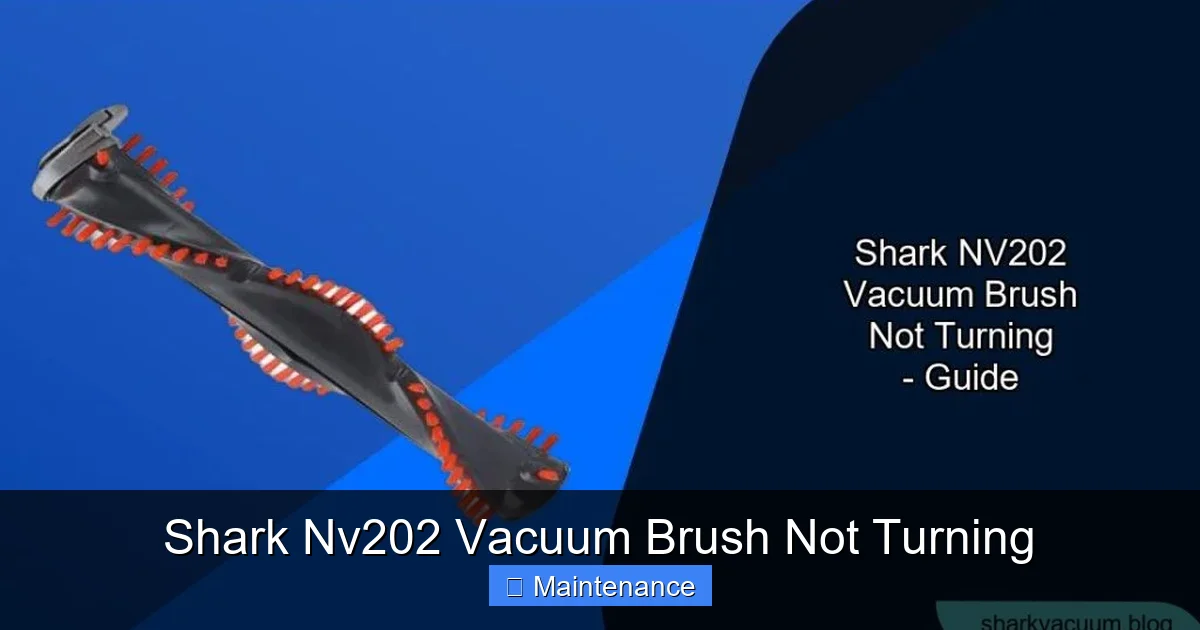
1. The Ultimate Culprit: Hair, Fiber, and Debris Wrap
This isn’t just a minor annoyance; it’s the leading cause of brush roll failure across all vacuum brands. Long human hair, pet fur, synthetic carpet fibers, and even thin cords from headphones or holiday lights act like a tourniquet. They don’t just get tangled in the bristles; they wrap around the metal axle that the brush roll spins on and work their way into the bearings on each end. Once there, they create immense friction. The brush roll can no longer spin freely, the belt strains, and the system grinds to a halt. You’ll often see a thick, felt-like mat of material if you pull the brush roll out.
2. The Drive Belt: The Inconspicuous Weak Link
The drive belt is a simple, inexpensive rubber band, but it’s under constant stress. It can stretch over time, lose its elasticity (a process called “glazing” where it gets smooth and shiny), develop cracks, or even snap entirely. It can also jump off its track if the brush roll gets jammed suddenly. A stretched or glazed belt will slip on the motor pulley and the brush roll pulley, resulting in the motor running loudly but the brush not moving. A broken belt is obvious—you’ll find a piece of rubber in the housing. Checking the belt’s condition is a mandatory step in any diagnosis.
3. Brush Roll Bearing Failure
The brush roll spins on two small bearings (or bushings), one on each end, housed in the plastic base. These bearings can wear out, become rusted (if used on wet surfaces), or get clogged with debris. When they seize, the brush roll cannot spin. You might hear a grinding or screeching noise before it locks completely. Sometimes, cleaning out the debris can free a stuck bearing, but a severely worn one means replacing the entire brush roll assembly, as the bearings are not typically serviceable separately.
4. Motor Issues (Less Common)
The separate brush roll motor is a small, robust component, but it can fail. Failure is usually preceded by a burning smell, intermittent operation, or a complete lack of any sound from the brush area when powered on (the main suction motor will still run). Before blaming the motor, you must 100% rule out the belt and a jam. Motor failure is rare and often means a professional repair or replacing the brush roll motor module.
5. Simple Blockages in the Airpath
While less directly related to the brush roll’s mechanical spin, a severe clog somewhere in the vacuum’s air path—like in the hose, wand, or main body—can reduce airflow so drastically that it affects the brush roll’s performance. Some Shark models have a safety feature where if airflow is too low, it will disengage the brush roll to prevent motor overheating. Ensure your entire vacuum is clear of blockages.
Step-by-Step Troubleshooting Guide: From Simple to Complex
Gather your tools: a Phillips-head screwdriver, a seam ripper or small, sharp scissors, a microfiber cloth, and a good flashlight. Most importantly, unplug your Shark Nv202 from the wall outlet. This is non-negotiable for safety.
Visual guide about Shark Nv202 Vacuum Brush Not Turning
Image source: sharkvacuum.blog
Step 1: Access the Brush Roll Housing
Lay your Shark Nv202 flat on its back. Locate the red release button on the top of the brush roll housing (the rectangular plate at the front of the vacuum where the brush sticks out). Press it and pull the housing straight down and off. On some models, you may need to remove a few screws first. Set the housing aside. You now have direct visual and physical access to the brush roll and belt.
Step 2: The Manual Spin Test & Visual Jam Inspection
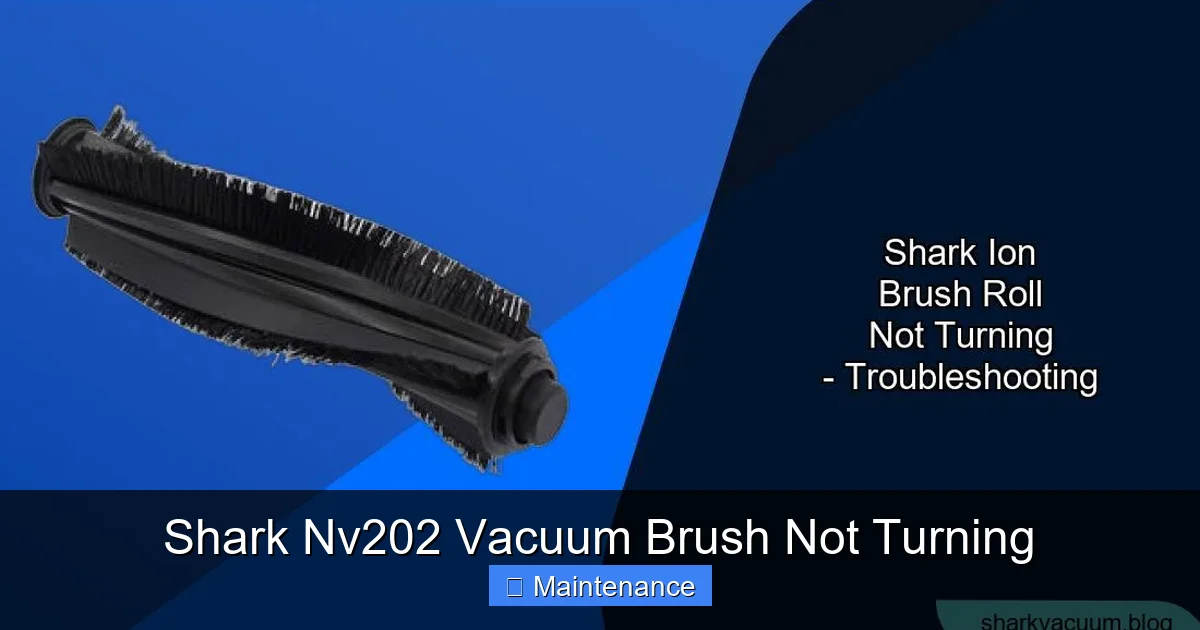
With the housing off, try to spin the brush roll by hand. Note the resistance. Now, look closely at the bristles and the metal axle. You will almost certainly see a mass of hair, carpet fibers, and debris. This is your problem. Use your scissors or seam ripper to carefully cut and pull away as much of this material as possible. Pay special attention to the ends where the axle meets the bearings. Pull the debris out from between the bristles and off the axle. Clean the entire length of the brush roll until it spins freely and easily by hand. Wipe it down with a dry microfiber cloth.
Step 3: Inspect and Replace the Drive Belt
Once the brush roll spins freely, locate the rubber belt. It’s a loop that runs from a small pulley on the brush roll to a larger pulley on the motor (inside the housing you just removed). Stretch the belt gently. Does it feel loose and sloppy? Is it cracked, frayed, or glazed (shiny and hard)? If yes to any, it needs replacement. To remove it, simply stretch it off the pulleys. Take the old belt to a hardware store or order a replacement (Shark part number is model-specific, but a generic “Shark vacuum belt” for your model series will work). Install the new belt by stretching it over both pulleys, ensuring it sits squarely in the grooves. It should have firm tension.
Step 4: Check the Brush Roll Bearings and Housing
With the brush roll out, inspect the two plastic bearing housings on either end of the brush roll axle. Are they cracked? Is there a pile of gritty debris inside? Use a cotton swab or cloth to clean out any gunk. Spin the brush roll again by holding the axle ends—it should be silky smooth. If it’s gritty or has play (wobble), the bearings are worn. At this point, it’s more cost-effective to replace the entire brush roll assembly, which comes with new bearings pre-installed.
Step 5: Reassemble and Test
Place the cleaned (or new) brush roll back into the housing, threading the new belt over its pulley. Snap the housing back onto the vacuum body until it clicks. Plug the vacuum in and turn it on. The brush roll should now be spinning vigorously. Lay it on a carpet to test. If it still doesn’t spin, double-check that the belt is on correctly and isn’t twisted. If the motor runs but the brush doesn’t, and the belt is new and properly installed, the brush roll motor may be faulty.
Essential Maintenance to Keep Your Brush Roll Spinning
Prevention is infinitely easier than repair. A few minutes of care after every few uses will save you from this headache.
Visual guide about Shark Nv202 Vacuum Brush Not Turning
Image source: i.ytimg.com
Make a Habit of the “Post-Vacuum Flip”
After you finish vacuuming, before you wind the cord and put it away, flip the Shark over. Look at the brush roll. If you see hair wrapped around it, take 60 seconds to cut it off with scissors right then. Don’t let it accumulate. This 2-minute habit is the single most effective thing you can do. It prevents the hair from migrating to the bearings and causing a jam.
Monthly Deep Clean of the Brush Roll
Once a month, or more often if you have pets, do a full removal and cleaning as described in the troubleshooting steps. Take the brush roll out, wash it with mild soap and water to remove oily grime (dry it thoroughly for 24 hours before reusing), and clean out the housing. This removes the fine dust and grit that acts as an abrasive on bearings.
Inspect and Replace Belts Proactively
Belts have a lifespan. If you’ve had your Shark for a year or more and vacuum frequently, consider keeping a spare belt on hand. Every 6-12 months, inspect the belt for signs of wear. Replacing a $5 belt is cheaper than any other repair. When you replace it, wipe the pulleys with a dry cloth to ensure no dust is preventing proper grip.
Use the Right Settings and Avoid Hazardous Debris
On area rugs with long fringe or shag carpets, use the “hard floor” setting if your Nv202 has one, which often disengages the brush roll. Never vacuum up string, ribbon, plastic bags, or large amounts of long hair without first checking the brush. These items are the #1 cause of catastrophic jams. Be mindful of what you’re sucking up.
When to Seek Professional Help or Consider Replacement
You’ve followed all the steps. The brush roll spins freely by hand, the belt is new and correctly installed, the housing is clean, but the brush still won’t turn when powered. Now what?
Diagnosing a Faulty Brush Roll Motor
The brush roll motor is a separate component from the main suction motor. Diagnosing it requires some electrical knowledge or a multimeter to test for continuity. If you’re not comfortable with this, it’s time to call a pro. A Shark authorized service center can test and replace the motor module. However, consider the age and cost of your Nv202. If the vacuum is older, the cost of a motor replacement plus labor might approach the price of a new mid-range Shark model.
Warranty Considerations
Check your Shark warranty status. If your vacuum is still under the limited warranty (typically 5-7 years for the motor, 1-2 years for other parts), a faulty motor might be covered. However, warranty often does not cover damage from user error, neglect, or vacuuming non-debris items (like hair wrap, which is considered maintenance). Have your model number and proof of purchase ready.
The Cost-Benefit Analysis: Repair vs. Replace
A new brush roll assembly costs between $25 and $40. A drive belt is $5-$10. A brush roll motor module can be $50-$100 plus labor. Ask yourself: how old is the vacuum? Is it otherwise in good shape? Are there other failing components (loss of suction, cracked hoses)? For a 5-year-old Nv202 with a single motor issue, repair makes sense. For an 8-year-old unit with multiple problems, investing in a newer, more efficient model might be smarter. Sharks are known for durability, so a motor fix can buy you many more years of service.
Final Thoughts: Empowerment Through Understanding
That Shark Nv202 vacuum brush not turning is not a death sentence for your appliance. It’s a communication. Your vacuum is telling you it needs a little attention. The vast majority of these issues stem from a simple, preventable buildup of debris. By arming yourself with the knowledge of how the brush roll system works—the interplay of the brush, the belt, the bearings, and the motor—you transform from a frustrated user into a capable problem-solver. You’ve now learned to perform a critical piece of maintenance that the manufacturer expects you to do. The sense of accomplishment from hearing that brush roll spin back to life after a 15-minute cleanup is genuinely satisfying. Bookmark this guide, keep a spare belt on hand, and make that post-vacuum flip a habit. Your Shark Nv202 will thank you with years of powerful, deep-cleaning performance. Now, go unplug it, flip it over, and see what’s waiting for you in that brush roll housing.
Frequently Asked Questions
Can I use my Shark Nv202 without the brush roll on hard floors?
Yes, absolutely. The brush roll is primarily for agitating carpet fibers. On hard floors, you can use the vacuum with the brush roll off (some models have a “hard floor” setting that disengages it) or simply remove the brush roll housing entirely. This is often more effective on hard surfaces as it prevents scattering debris.
How often should I clean my Shark Nv202 brush roll?
For optimal performance, you should visually inspect and manually remove any wrapped hair or debris after every 2-3 uses. A full removal, deep cleaning, and belt inspection should be done monthly for pet owners or in high-debris environments, and every 3-6 months for typical household use.
My brush roll spins freely but the vacuum still isn’t cleaning carpets well. What gives?
If the brush roll spins but cleaning performance is poor, the issue is likely elsewhere. First, check the suction power—a clogged filter, full dust cup, or blocked hose will drastically reduce cleaning ability. Second, ensure the brush roll bristles themselves aren’t worn down, broken, or matted. Worn bristles cannot agitate carpet pile effectively.
Is replacing the drive belt something I can do, or do I need a pro?
Replacing the drive belt is one of the easiest DIY repairs for the Shark Nv202. It requires no special tools beyond a screwdriver to remove the brush roll housing. The belt simply stretches over two pulleys. Detailed instructions are in the troubleshooting section above. It’s a perfect first-time repair.
Why does my brush roll smell like burning rubber?
A burning rubber smell is a classic sign of a slipping or overheating drive belt. The belt is rubbing against a pulley without gripping, generating intense friction and heat. This means the belt is likely worn, glazed, or the wrong size. Stop using the vacuum immediately and replace the belt, as a slipping belt can melt and cause a jam or damage the motor pulley.
Will Shark send me a replacement part under warranty if my brush roll jams?
Warranty coverage typically applies to defects in materials or workmanship. A brush roll jam caused by normal wear and tear, hair wrap, or user neglect (vacuuming inappropriate items) is considered maintenance and is not covered under the standard limited warranty. However, if the brush roll or its bearings fail prematurely without debris cause, you should contact Shark customer service with your proof of purchase to discuss your specific case.