Is your Shark Duoclean Powered Lift Away vacuum refusing to turn its brush roll or produce suction? This is a common but frustrating issue, usually stemming from clogs, a jammed brush roll, or a tripped thermal fuse. The good news is that many causes are simple to diagnose and fix yourself with basic troubleshooting, saving you from costly service calls.
You’re ready to clean, you press the power button on your trusty Shark Duoclean Powered Lift Away, you hear the motor hum, but the brush roll on the floor head isn’t spinning. Or maybe there’s no sound at all and no suction. That sinking feeling is all too familiar. Before you panic and assume the worst—a broken motor or a trip to the expensive repair shop—take a deep breath. The phrase “Shark Duoclean Powered Lift Away not turning” is one of the most common search queries for this model, and for good reason. It’s a problem with a surprisingly high rate of DIY solutions. This machine is a workhorse designed for heavy-duty cleaning, and like any tool, it occasionally needs a bit of TLC to get back in fighting shape. This guide will walk you through every possible reason, from the dead-simple to the more complex, in plain language. We’ll turn you into your vacuum’s own diagnostician.
The genius of the Duoclean Powered Lift Away is its dual brush roll system and the ability to detach the canister for portable cleaning. That complexity, while fantastic for versatility, also means there are a few more points where a hiccup can occur. The “not turning” symptom can manifest in two primary ways: the brush roll itself is physically jammed and won’t rotate, or the entire vacuum appears dead with no motor sound or suction. We’ll tackle both scenarios systematically. Remember the golden rule: always unplug the vacuum or remove the battery (for cordless versions) before inspecting or attempting any repairs. Safety is paramount.
Key Takeaways
- Most Common Culprit: A jammed or obstructed brush roll is the #1 reason for a Shark Duoclean Powered Lift Away not turning. Hair, string, and debris wrap around the bristles and bearings, stopping it cold.
- Check the Basics First: Always verify the vacuum is on, the brush roll switch is engaged (if applicable), and the battery is fully charged for cordless models before deeper investigation.
- Clogs Are Everywhere: Blockages in the hose, wand, or air pathway can trigger a safety shut-off, making the vacuum appear dead. Inspect the entire air path from floor to exhaust.
- Thermal Fuse Protection: Overheating from a severe clog or a strained motor will trip an internal thermal fuse, cutting power. This is a safety feature that often requires a reset or part replacement.
- Simple Fixes First: Many issues are resolved by thoroughly cleaning the brush roll housing, removing all wrapped debris, and checking for obstructions in the suction path—no tools required.
- Know When to Seek Help: If cleaning and basic checks don’t restore function, the problem may be a faulty motor, switch, or internal wiring, requiring professional repair or part replacement under warranty.
📑 Table of Contents
- Diagnosing the “Not Turning” Symptom: Is It the Brush Roll or the Whole Unit?
- Primary Suspect #1: The Jammed Brush Roll & Housing
- Primary Suspect #2: The Hidden Clog – Your Entire Air Path
- Primary Suspect #3: The Tripped Thermal Fuse
- Primary Suspect #4: Power Issues (Corded vs. Cordless)
- When to Call in the Pros: Motor & Internal Wiring
- Preventive Maintenance: Your Best Defense
- Conclusion: Empowerment Through Diagnosis
Diagnosing the “Not Turning” Symptom: Is It the Brush Roll or the Whole Unit?
Your first diagnostic step is to determine exactly what is and isn’t working. This narrows down the problem area dramatically. Turn the vacuum on in an upright position. Listen carefully. Do you hear the main suction motor running? Place your hand over the exhaust vent. Do you feel a strong stream of air? Now, look at the brush roll on the floor head. Is it completely stationary, or is it trying to turn but stalling? Is it making a straining or grinding noise?
The Brush Roll Is Physically Jammed (Motor Hums, Suction Works)
If the vacuum motor is running loudly and you feel strong suction at the exhaust, but the brush roll on the floor head is not spinning, the problem is isolated to the brush roll system itself. The motor that drives the brush roll (a separate, smaller motor) is likely fine, but something is mechanically preventing the brush roll from turning. This is the most frequent issue and almost always caused by debris.
The Entire Vacuum Appears Dead (No Sound, No Suction)
If you press the power button and nothing happens—no lights, no motor sound, no vibration—the issue is with the main power circuit. This could be an electrical problem (faulty switch, cord, battery) or a safety feature like a thermal fuse that has tripped due to a previous overload or clog. We’ll explore this path in a later section.
Primary Suspect #1: The Jammed Brush Roll & Housing
Let’s address the most common culprit head-on. Over time, human hair, pet fur, carpet fibers, string, and even small bits of debris like carpet tassels wrap themselves around the brush roll’s bearings and axles. This creates immense resistance. The brush roll motor is powerful but not infinitely strong; it will stall and shut off to protect itself if the load is too high. In many Shark models, this also triggers a thermal cut-out, making the whole vacuum seem dead until it cools down, which confuses the diagnosis.
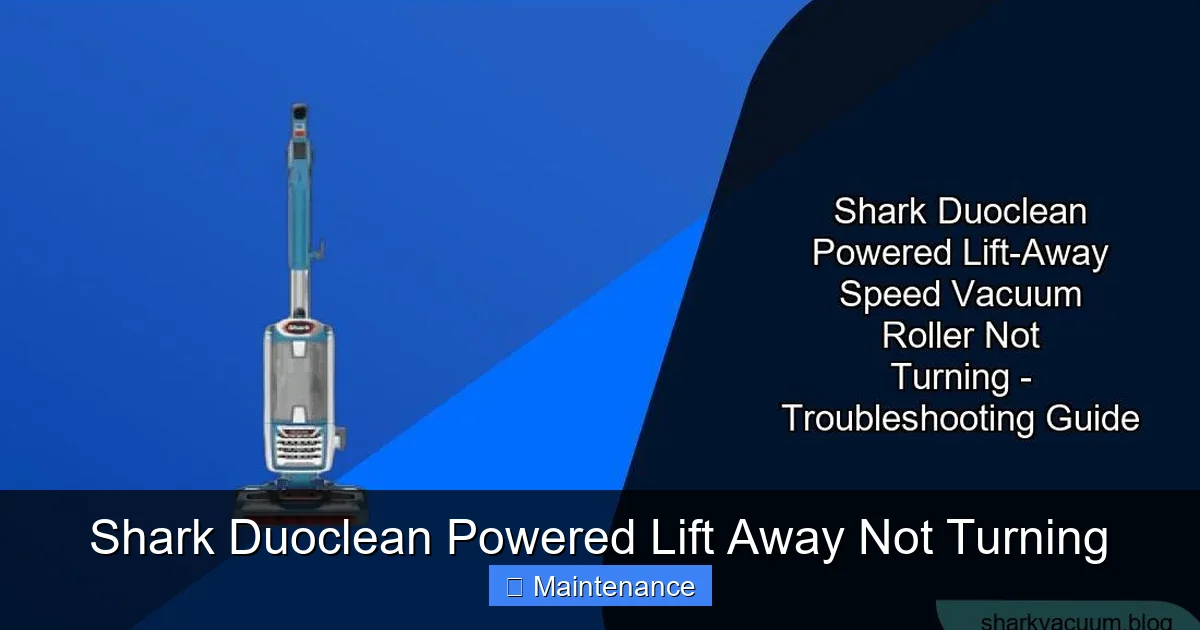
Visual guide about Shark Duoclean Powered Lift Away Not Turning
Image source: sharkvacuum.blog
Step-by-Step Brush Roll Extraction & Cleaning
Gather your tools: a pair of scissors, a seam ripper or a dedicated brush roll cleaning tool, a Phillips head screwdriver, and a bright light. Here is the methodical process:
- 1. Access the Brush Roll: Lay the vacuum on its side. On the Duoclean Powered Lift Away floor head, you’ll find either a release lever or a few screws securing the bottom plate. Release the lever or remove the screws and set the plate aside.
- 2. Remove the Brush Roll: The brush roll assembly will now be visible. It is typically held in place by two rubber belts (one for each brush roll) and two plastic end caps. Gently slide the brush roll out of its housing. Be careful not to lose the belts. If your model has a single belt driving both rolls, note its routing.
- 3. The Great De-Wrapping: This is the critical, often messy, step. Use the seam ripper or the tip of your scissors to carefully slice through any wrapped hair or string. Do not just pull, as this will compact the debris tighter. Cut it lengthwise along the brush roll. Remove all debris from the bristles, the plastic core, and especially the bearings at each end. Spin each bearing by hand—it should rotate smoothly and freely. If it’s gritty or seized, the bearing is damaged and the brush roll assembly may need replacing.
- 4. Clean the Housing: With the brush roll out, use a flashlight to inspect the hollow channel it sits in. You’ll often find more debris, small toys, or pennies lodged here. Use a long, thin tool like a coat hanger or a vacuum crevice tool attachment to dislodge and remove any hidden obstructions.
- 5. Reassembly: Slide the clean, freely spinning brush roll back into the housing. Ensure the belts are properly seated on the motor pulley and the brush roll axle. Reattach the bottom plate securely. Plug the vacuum in and test it on a hard floor. The brush roll should spin immediately and smoothly.
Why You Must Check Both Brush Rolls
The “Duoclean” name refers to the two brush rolls: a front roller with stiff bristles for agitating carpet, and a rear roller with softer, felt-like strips for polishing hard floors and picking up fine debris. It is imperative you inspect and clean both. A hair wrap on the rear, felt-covered roller can be even more insidious because debris gets trapped in the felt material. Completely remove both rolls for a thorough cleaning. A partially jammed rear roller can put enough drag on the system to stop both.
Primary Suspect #2: The Hidden Clog – Your Entire Air Path
A Shark vacuum’s power comes from unimpeded airflow. Anything that blocks this flow—from the floor to the exhaust—causes the motor to labor, heat up, and eventually trigger safety cut-offs. A severe clog can make the vacuum behave as if it’s “not turning” because the motor is instantly overloaded or the thermal fuse has blown. You must become an airflow detective.
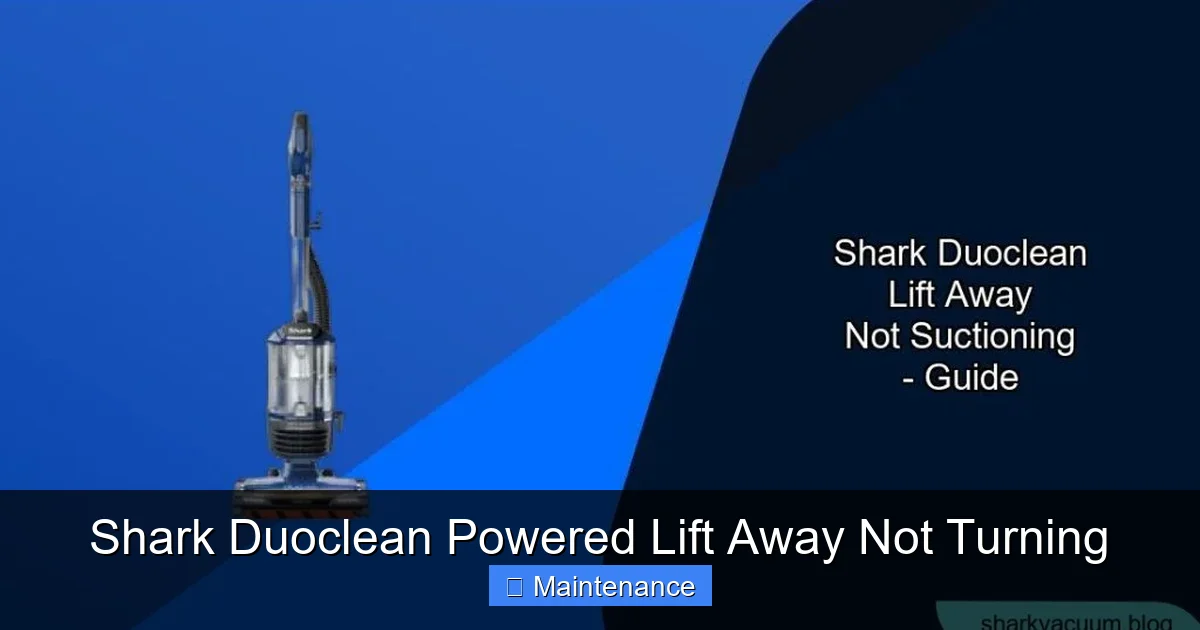
Visual guide about Shark Duoclean Powered Lift Away Not Turning
Image source: sharkvacuum.blog
The Systematic Clog Hunt: From Floor to Exhaust
Follow this path meticulously. Disconnect the vacuum from the main body as needed.
- 1. The Floor Head & Wand: With the brush roll removed (as above), look directly into the intake hole on the floor head. Use a flashlight. Can you see all the way through? Use a bent coat hanger to feel for obstructions. Next, detach the wand from the hose. Look through the wand. Is it clear?
- 2. The Hose: This is a prime clog location, especially if you’ve vacuumed up wet messes or small debris. Detach the hose from both the canister and the wand. Visually inspect the interior. Shine a light through one end. Use a long, flexible brush (a coat hanger with a rag tied to the end works) to scrub inside. Pay special attention to the corrugated sections where debris catches.
- 3. The Cyclone Chamber & Filters: Open the dust cup. Look at the inner cyclone cone and the intake port at the bottom. Fine dust and gummy debris can coat these surfaces, restricting airflow. Clean the cyclone with a damp cloth. Remove the pre-motor foam and felt filters. If they are saturated with dirt and dust, they are choking the system. Washable foam filters should be rinsed with cold water, squeezed dry, and air-dried for 24+ hours. Non-washable filters must be replaced. A clogged filter is a silent killer of suction and motor health.
- 4> The Exhaust Filter & Port: Finally, locate the exhaust filter (usually on the back or top of the canister). A clogged exhaust filter is the last line of defense and will strangle performance. Clean or replace it according to your manual’s instructions. Also, ensure the exhaust vent grill is not covered by furniture or curtains.
Primary Suspect #3: The Tripped Thermal Fuse
Your Shark Duoclean has built-in thermal protection. If the motor overheats—often due to the clogs we just discussed—a thermal fuse will open the circuit, cutting all power. This is a safety feature to prevent fire. The vacuum will feel warm and will not turn on again until the fuse cools down (which can take an hour) or if the fuse itself has been damaged by the overheating event and needs replacement.
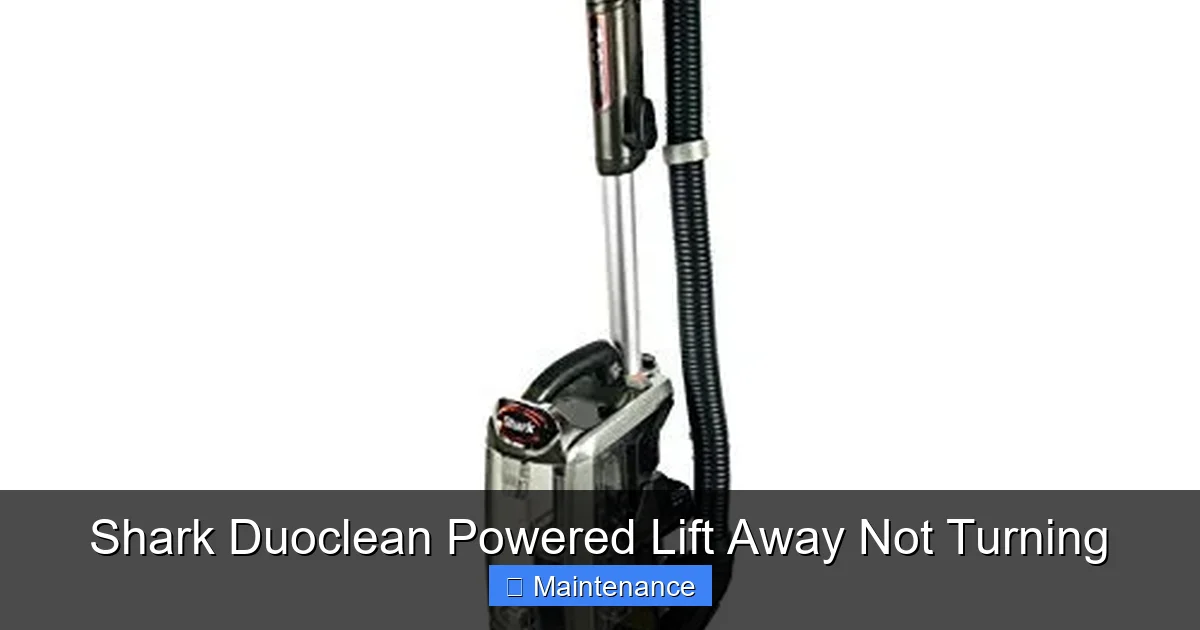
Visual guide about Shark Duoclean Powered Lift Away Not Turning
Image source: m.media-amazon.com
Locating and Resetting/Replacing the Fuse
The location varies by model year. Common places are: inside the handle near the power switch, inside the battery compartment (for cordless), or on the main PCB (printed circuit board) inside the canister. Consult your user manual for the exact location and part number (often a small, cylindrical, red component).
- The “Reset”: Some fuses are thermal-reset types. If your vacuum has been sitting unplugged and cold for several hours and still won’t turn on, the fuse is likely permanently open and needs replacing.
- Replacement: You can order the exact thermal fuse part from Shark or an authorized parts dealer. Replacing it usually involves removing a few screws to access the board and desoldering/soldering the component. If you are not comfortable with this, a local appliance repair shop can do it quickly.
- Critical Link: Remember: replacing a blown thermal fuse without fixing the underlying clog or obstruction will cause the new fuse to blow immediately. The fuse is a symptom, not the root cause. Always perform a full airflow inspection (Section 3) before and after fuse replacement.
Primary Suspect #4: Power Issues (Corded vs. Cordless)
If your diagnostic test showed the entire unit is dead, we must check the power source.
Corded Models: Cord, Switch, and Outlet
- Power Cord: Inspect the entire length of the cord for cuts, abrasions, or kinks, especially near the plug and where it enters the vacuum. A broken internal wire will cause a total failure. Try wiggling the cord near the plug while the vacuum is on (be careful). If it flickers on, the cord is damaged.
- Wall Outlet: Plug another known-good device into the same outlet. Rule out a tripped breaker or GFCI outlet.
- On/Off Switch: The switch is a common failure point. It can wear out or get clogged with debris. Listen for a faint click when pressing it. If it feels mushy or doesn’t click, it may need replacement. This often requires disassembling the handle/handle assembly.
Cordless Models: Battery Health & Charging
The Powered Lift Away cordless version relies entirely on its lithium-ion battery pack.
- Battery Connection: Remove the battery. Clean the metal contacts on both the battery and the vacuum with a dry cloth. Reinsert it firmly until it clicks.
- Charging: Ensure the charger is plugged into a working outlet. The charging light on the battery/charger should illuminate. Let it charge for the full cycle (usually 3-4 hours) before testing.
- Battery Death: Lithium batteries degrade. If the battery no longer holds a charge (drains in seconds/minutes) or won’t charge at all, it has reached the end of its life (typically 2-3 years). You will need a replacement battery specific to your Duoclean model number.
When to Call in the Pros: Motor & Internal Wiring
If you have completed the exhaustive brush roll cleaning, verified a completely clear air path from floor to exhaust, cleaned all filters, checked/replaced the thermal fuse, and verified power is reaching the vacuum (use a multimeter if you’re skilled), but the brush roll motor or main suction motor still does not run, the fault lies deeper.
The brush roll motor itself can burn out. The motor brushes can wear down, or the armature can short. The main suction motor is a more complex component. Diagnosing and replacing these requires advanced electrical and mechanical skill, specialized tools, and often involves soldering. At this stage, the cost of professional repair may approach the cost of a new vacuum, especially for an older model. Always check your warranty first. If the vacuum is under warranty, contact Shark Customer Support immediately. Do not attempt internal motor repairs yourself, as this will void the warranty.
Preventive Maintenance: Your Best Defense
An ounce of prevention is worth a pound of cure. Incorporate these habits to keep your Shark Duoclean Powered Lift Away turning reliably for years.
- Brush Roll Hygiene: After every few uses, especially if you have pets or long hair, flip the vacuum over and visually inspect the brush roll. Use a cleaning tool to remove any visible wrapping before it becomes a solid mat.
- Filter Care: Follow the manual’s filter cleaning schedule. Washable foam filters should be air-dried completely (24+ hours) before reinsertion. Never operate the vacuum with wet or missing filters.
- Empty the Dust Cup Frequently: Don’t wait until the “full” line. Emptying it when it’s half full maintains optimal suction and reduces strain on the system.
- Mind What You Vacuum: Avoid picking up large, hard objects (coins, LEGO, gravel), which can damage the brush roll, bearings, and internal impellers. Be cautious with very fine, dusty debris (drywall dust, flour) as it can quickly clog filters; sweep it up first.
- Store Properly: Coil the cord loosely (don’t kink it). Store the vacuum upright in a dry place. If storing long-term, remove the battery from cordless models and store it separately at a partial charge in a cool, dry place.
Conclusion: Empowerment Through Diagnosis
Your Shark Duoclean Powered Lift Away is a sophisticated machine, but its most common ailments are beautifully simple. The overwhelming majority of “not turning” complaints boil down to two things: a hair-wrapped brush roll or a clogged air path. By arming yourself with a screwdriver, some scissors, and a methodical approach, you can solve 90% of these problems in under 30 minutes. You save money, you reduce waste, and you gain a deeper understanding of your tool. Start with the brush roll—it’s the most likely suspect. Work your way through the air path. Check the simple electrical connections. Only when all these are confirmed perfect should you suspect a failed fuse, switch, or motor. This logical, step-by-step troubleshooting transforms a moment of frustration into a satisfying victory of DIY repair. Your vacuum’s power is in your hands—literally. Now go turn it on and enjoy that clean feeling again.
Frequently Asked Questions
Why does my Shark Duoclean brush roll spin for a second then stop?
This is a classic sign of a severely jammed brush roll or a clogged air path. The motor tries to start, hits the resistance, and immediately shuts off via a thermal protection circuit. Turn off and unplug the vacuum, then remove the brush roll and clean all debris from it and its housing. Also, check the hose and filters for clogs.
Can I replace the thermal fuse myself?
Yes, if you are comfortable with basic electronics and soldering. You must first identify the correct fuse part number from your manual or Shark’s website. However, if your vacuum is under warranty, opening it may void coverage. Contact Shark support first. If the fuse blows again immediately after replacement, you have not fixed the underlying clog or overload causing the overheating.
Is a non-spinning brush roll always the brush roll’s fault?
No. While a jammed brush roll is the most common cause, a broken or slipping drive belt, a failed brush roll motor, or even a faulty brush roll on/off switch (on some models) can also prevent it from turning. Always check the belt’s condition and tension after removing the brush roll.
My cordless Shark Duoclean won’t turn on at all. Is the battery dead?
It’s a strong possibility. First, ensure the battery is fully seated and the charger light indicates charging. If it charges but the vacuum still won’t run, the battery may be at the end of its life (2-3 years typical). If it doesn’t charge at all, the issue could be the charger, the battery contacts, or the vacuum’s internal power circuit. Try a known-good battery if possible to diagnose.
How often should I deep clean my Shark Duoclean’s brush roll and filters?
For optimal performance, remove and clean the brush roll of hair and debris every 2-3 uses if you have pets or long hair. Wash the pre-motor foam filter monthly (or per manual instructions). Replace all filters (pre-motor and exhaust) every 3-6 months, depending on usage. A full air path inspection and brush roll deep clean is recommended every 3 months.
What if I’ve done all the cleaning and it still doesn’t work?
If you have meticulously cleaned the brush roll, cleared all clogs from the hose/wand/cyclone, washed/dried filters, and checked power connections, the failure is likely internal. This points to a faulty motor (brush roll or suction), a broken switch, damaged wiring, or a failed PCB. At this stage, weighing the cost of professional repair against the value of the vacuum is sensible. For units under warranty, contact Shark for an authorized repair.