Is your Shark vacuum running but not picking up dirt into the canister? This is a very common issue, often caused by simple clogs or maintenance oversights. The good news is that in most cases, you can diagnose and fix the problem yourself with basic tools and a little know-how. This guide walks you through every possible reason, from a blocked hose to a worn seal, providing clear, step-by-step solutions to get your Shark vacuum’s suction and collection back to full power.
Key Takeaways
- Blockages are the #1 culprit: Clogs in the hose, wand, or brush head are the most frequent reason dirt doesn’t reach the canister.
- Dirty filters kill suction: A clogged pre-motor or post-motor filter drastically reduces airflow, preventing dirt from being carried into the canister.
- Assembly and seals matter: An improperly seated canister, a missing gasket, or a detached hose connection breaks the vacuum’s airtight seal and suction path.
- The brush roll is critical: A tangled or worn brush roll won’t agitate carpet dirt effectively, so less dirt is even offered to the suction system.
- Emptying technique is key: Not clicking the canister release fully or missing the “tap” to dislodge compacted dirt can leave your canister seemingly empty after a pass.
- Motor issues are rare but possible: A failing motor or broken fan belt (on some models) will cause a complete loss of suction, which must be addressed last.
- Prevention is easier than cure: Regular filter cleaning, post-use canister emptying, and visual inspections prevent 90% of these problems.
📑 Table of Contents
- Introduction: The Frustration of a “Silent” Shark Vacuum
- Understanding the Path: How Your Shark Vacuum is *Supposed* to Work
- Most Common Causes: Why Dirt is Taking a Detour
- Step-by-Step Diagnosis: Finding the Exact Bottleneck
- Advanced Troubleshooting: When the Basics Aren’t Enough
- Preventive Maintenance: Keeping Your Shark in Top Form
- When to Seek Professional Help: Recognizing Your Limits
- Conclusion: Restoring Your Shark’s Power
Introduction: The Frustration of a “Silent” Shark Vacuum
You hear the familiar, powerful roar of your Shark vacuum. You push it across the carpet, watching the brush roll spin vigorously. Yet, when you finish and go to empty the dust cup, it’s barely got anything in it. The floor still looks dirty. This paradox—a vacuum that sounds like it’s working but isn’t collecting dirt—is one of the most common and frustrating issues Shark owners face. It feels like your vacuum is just pushing dirt around instead of capturing it.
Before you panic and assume the worst—a broken motor or a costly repair—take a breath. In the overwhelming majority of cases, the reason your Shark vacuum dirt is not going into the canister is due to a simple, fixable problem. It’s usually a blockage, a dirty filter, or a small piece of assembly gone awry. This comprehensive guide is designed to be your step-by-step troubleshooting companion. We’ll start with the most likely and easiest fixes and progressively move to more complex possibilities. By the end, you’ll have the knowledge and confidence to diagnose and solve the issue yourself, saving you time, money, and the aggravation of a poorly cleaning vacuum.
Understanding the Path: How Your Shark Vacuum is *Supposed* to Work
To troubleshoot effectively, you need to understand the journey dirt is supposed to take. Think of your Shark vacuum as a sealed, high-pressure tube. The process is a chain of events: Agitation → Suction → Airflow → Collection → Exhaust. If any link in that chain breaks, the system fails, and dirt doesn’t end up in the canister.
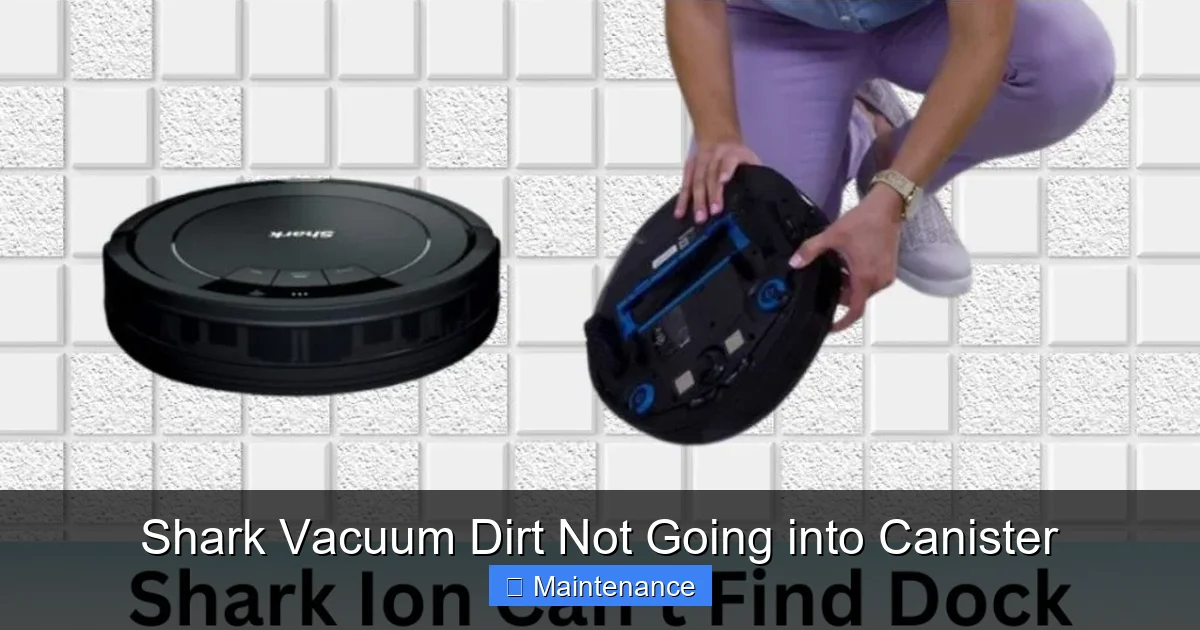
Visual guide about Shark Vacuum Dirt Not Going into Canister
Image source: sharkvacuum.blog
The Agitation Phase: The First Step
On carpet, the motorized brush roll (or “brush bar”) whips bristles through the fibers, knocking loose dirt, hair, and debris. This is the “offering” stage. If the brush roll is tangled with hair or the bristles are worn down, it can’t effectively loosen dirt, so there’s less for the suction to grab. This is a critical but often overlooked part of the problem.
The Suction & Airflow Phase: The Engine of the System
The vacuum’s motor spins a fan, creating negative pressure (suction) inside the hose and wand. This suction pulls the agitated dirt from the floor, through the brush head, up the hose, and into the canister. This entire path must be completely airtight. Any leak—from a crack in the hose to a gasket that isn’t sealing—allows air to rush in from the outside, dramatically reducing the suction force at the floor.
The Collection Phase: Where It All Should End Up
The dirty air, carrying the dirt, enters the canister. The air passes through the mesh filter on the canister’s lid (the “pre-motor” or “foam” filter) and out the top. The heavier dirt and debris falls into the bottom of the canister due to gravity and the change in air velocity. If the canister is not properly seated, or if the internal filter is missing or damaged, dirt can bypass the collection chamber entirely.
Understanding this flow helps you pinpoint where the breakdown is occurring. Is there no agitation? Is there suction at the wand but not at the floor? Is the canister filling with dust but not larger debris? These questions guide your diagnosis.
Most Common Causes: Why Dirt is Taking a Detour
Let’s dive into the specific, high-probability issues that cause a Shark vacuum dirt not going into canister situation. These are listed in order of likelihood and ease of check.
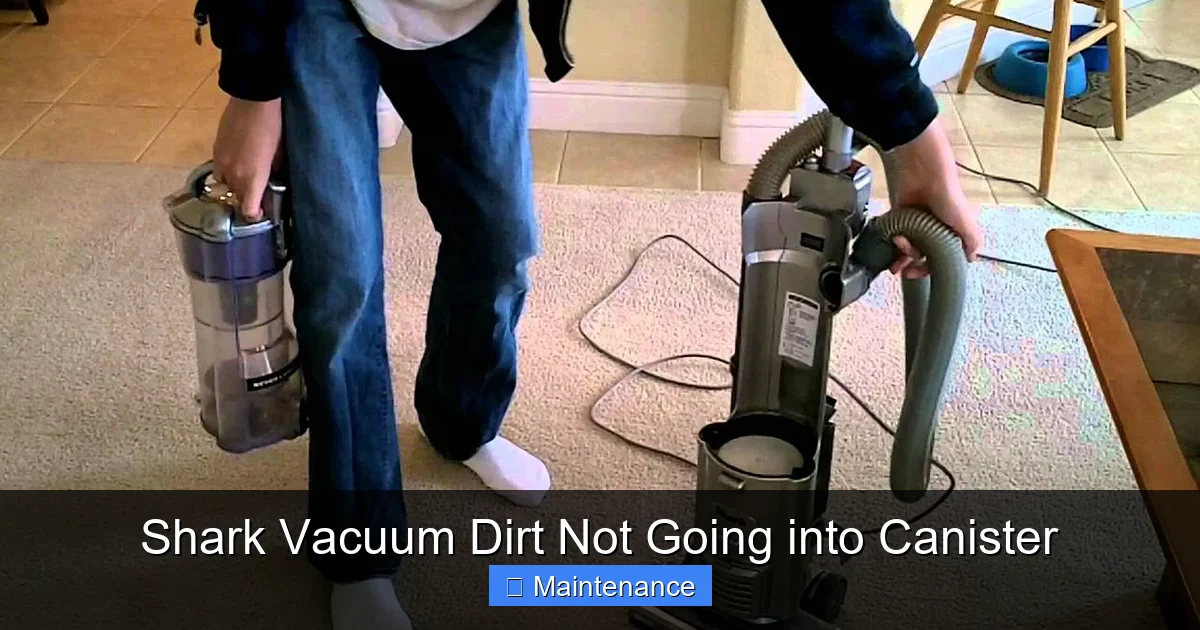
Visual guide about Shark Vacuum Dirt Not Going into Canister
Image source: i.ytimg.com
1. The Obvious Culprit: A Complete Clog
This is the #1 cause. A clog is a physical obstruction in the air path. Common clog locations:
- The Brush Head: Hair, string, carpet fibers, and large debris wrap around the brush roll and jam into the intake holes at the back of the brush head housing. This is the most frequent clog point, especially in homes with pets or long hair.
- The Hose/Wand Connection: The junction where the wand connects to the hose or the hose connects to the canister is a tight bend. Dirt can compact here.
- Inside the Hose: A long, narrow object (like a pen cap or a child’s toy piece) can travel up the hose and lodge inside.
- The Canister Inlet: The opening at the bottom of the canister where the hose plugs in can get clogged with compacted dust bunnies or hair.
How to Check: Detach the hose from the canister. Look through both ends. Use a long, flexible tool (like a coat hanger straightened and bent into a hook, or a specialized clog-removal tool) to gently probe and dislodge any debris. For the brush head, remove it (usually a release lever) and inspect the intake holes and around the brush roll. Scrape away any wrapped hair with a seam ripper or scissors (always unplug first!).
2. The Silent Killer: Clogged or Missing Filters
Shark vacuums typically have at least two filters: a foam or felt “pre-motor” filter that protects the motor from dust, and a pleated “post-motor” or exhaust filter. If these filters are saturated with fine dust and not cleaned regularly (every 1-3 months, depending on use), they act like a brick wall in the air path.
The Effect: The motor can still spin and make noise, but it cannot pull air through the clogged filters. You might feel weak suction at the wand tip, but it’s not powerful enough to lift and carry dirt into the canister. The dirt just sits on the carpet.
How to Check & Fix: Locate your filters (consult the manual—pre-motor is often under the canister lid, post-motor is on the back or side). Remove them. If they are dark gray or black and stiff with dust, they need cleaning. Most Shark foam filters are washable with cold water and mild soap. Let them dry completely (at least 24 hours) before reinserting. Pleated filters are often not washable and need replacement every 6-12 months. Never operate the vacuum without the filters installed—this will destroy the motor.
3. The Air Leak: Broken Seals and Gaskets
Your vacuum’s suction power depends on a sealed system. Shark models use rubber gaskets or seals at critical joints:
- The gasket on the bottom of the canister lid that seals to the canister body.
- The rubber seal around the hose connection port on the canister.
- The seal where the wand connects to the hose.
If any of these are torn, pinched, missing, or just dirty with a layer of dust, air will leak in. This “short-circuits” the suction. The motor works hard, but the pressure differential is lost at the leak point, so weak or no suction reaches the floor.
How to Check: Visually inspect all seals. Run your finger along them; they should be pliable and intact. Clean them with a damp cloth to remove any debris that might be preventing a tight seal. Ensure the canister lid clicks firmly into place. You should hear/feel a solid “click.”
4. The Assembly Error: Improperly Seated Canister or Attachments
This sounds too simple, but it happens often. If the canister isn’t clicked all the way into its housing on the vacuum body, or if the hose isn’t fully inserted into the canister port, the path is broken. Similarly, a wand that isn’t locked into the brush head or hose will leak air.
How to Check: Go through your entire vacuum assembly. Press and wiggle the canister. You should not feel any movement. Listen for a faint whistling sound when the vacuum is running—that’s often an air leak at a connection. Re-seat every single connection firmly.
5. The Brush Roll Problem: No Agitation, No Offer
If the brush roll isn’t spinning (or is spinning very slowly due to being jammed), it’s not lifting dirt from the carpet. On hard floors, a brush roll that’s too aggressive can sometimes fling light debris sideways instead of up the suction hose. Check that the brush roll is turning freely by hand (unplugged!). Remove any hair wraps. On some Shark models, there’s a “brush roll on/off” switch—ensure it’s on for carpets.
6. The Overfilled Canister: A Counterintuitive Problem
It seems logical that a full canister would cause a problem, but many Shark models have an internal mechanism that can become clogged if the canister is packed to the brim with fine dust and hair. The air can’t flow through the dust cake, so suction drops off dramatically before the canister is technically “full.” The solution is to empty the canister more frequently and give it a good tap to loosen compacted debris from the mesh filter inside.
Step-by-Step Diagnosis: Finding the Exact Bottleneck
Now, let’s turn diagnosis into a systematic process. Follow these steps in order. You’ll likely find the problem in the first few.
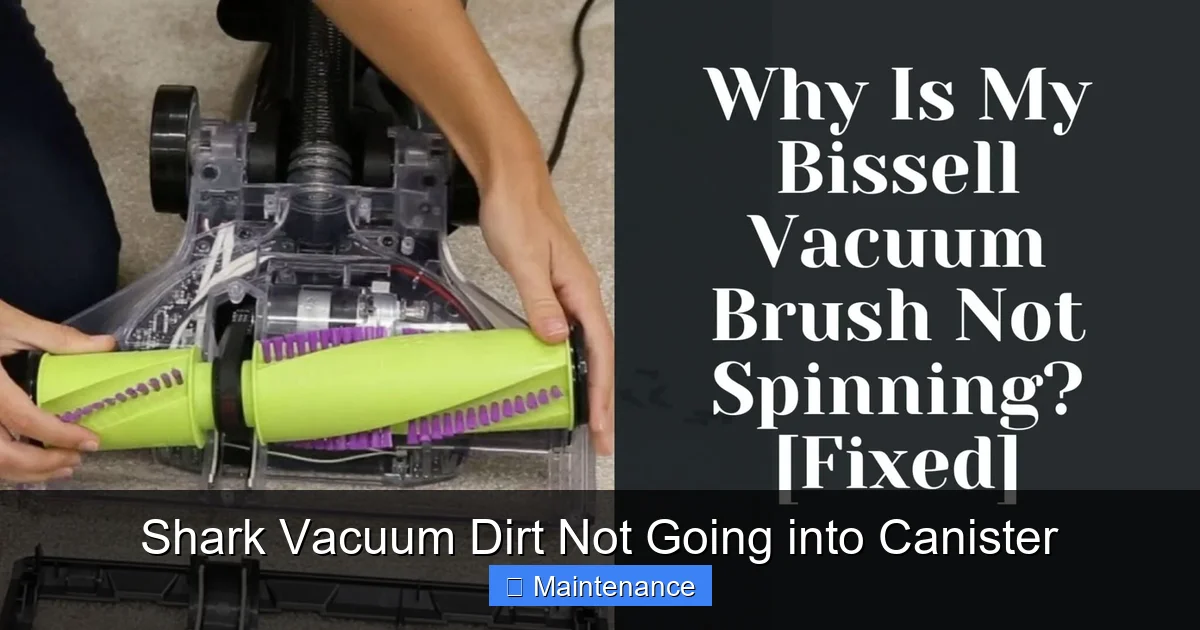
Visual guide about Shark Vacuum Dirt Not Going into Canister
Image source: vacuupedia.net
Step 1: The Floor Test (Is There Any Suction At All?)
Place the bare vacuum head (no hose, no wand) on a clean, smooth floor like tile or hardwood. Turn it on. Do you feel strong suction pulling a piece of paper or tissue toward the head? If YES, suction is generated at the source. The problem is likely a clog in the hose/wand path or a canister/assembly issue. If NO, the problem is at the source: brush head clog, brush roll jam, or a major leak at the main housing.
Step 2: The Hose Isolation Test
Remove the hose completely from the vacuum body. Place your hand over the hose’s end that normally connects to the canister. Turn the vacuum on. Do you feel strong suction pulling your hand against the hose opening? If YES, the motor and internal paths are clear. The clog is somewhere in the hose itself or in the canister inlet. If NO, the problem is in the vacuum body (filters, internal clog, motor).
Step 3: The Canister & Filter Inspection
With the hose removed, look into the canister inlet port on the vacuum body. Can you see through it to the other side? Use a flashlight. If it’s blocked, you have an internal clog. Also, completely remove the canister. Check the gasket on the vacuum body and on the canister lid. Clean them. Open the canister lid and inspect the pre-motor filter inside it. Is it black and solid? Clean or replace it.
Step 4: The “Blow” Test (Advanced)
CAUTION: This is for when other checks fail. With the vacuum unplugged and reassembled, disconnect the hose from the canister. Take a strong breath and blow hard into the hose end (the end that would connect to the canister). If you feel air resistance and can’t blow easily, the clog is in the hose. If you blow easily and air comes out the other end (the brush head side), the hose is clear, and the clog is in the vacuum body/canister inlet.
Advanced Troubleshooting: When the Basics Aren’t Enough
If you’ve cleared all visible clogs, cleaned all filters, and checked all seals, but the problem persists, consider these less common issues.
Worn or Damaged Brush Roll Bearings/Belt
On some Shark models (especially older ones or certain Navigators), the brush roll is driven by a rubber belt. If this belt is stretched, cracked, or broken, the brush roll won’t spin. Even on direct-drive models, the brush roll spins on bearings. If these bearings are gunked up with hair or are worn out, the brush roll will be stiff or not spin at all when the vacuum is on. This prevents agitation. Manually spin the brush roll. It should rotate smoothly and freely in both directions. Any grinding, tight spots, or resistance means it needs cleaning or replacement.
The “Lost Suction” After Filter Cleaning
You washed the foam filter perfectly and let it dry for 24 hours, but suction is still weak. Did you reinstall it correctly? Most Shark foam filters have a specific orientation—a tab or a shape that must align with the canister lid. If installed backward or crooked, it blocks airflow. Also, did you remember the other filter? Many users only clean the foam filter but forget the pleated post-motor filter, which can also be clogged.
Hidden Clogs in the Vacuum Body
Sometimes, dirt compacts deep inside the vacuum’s internal airways, beyond the reach of simple hose probes. This often happens after sucking up a large amount of fine, dry debris like woodworking dust or flour. You may need to partially disassemble the vacuum body (consult your manual for guides) to access and clear these internal passages. A long, flexible vacuum extension brush can sometimes reach these areas.
Motor or Fan Failure (The Last Resort)
If you have zero suction at the hose test in Step 2, and you’ve verified filters are clean and installed, the motor itself may be failing. The fan blades attached to the motor shaft could be broken or severely worn. This is rare but possible, especially in older vacuums or after a major impact (like dropping the vacuum). This typically requires a professional repair or motor replacement.
Preventive Maintenance: Keeping Your Shark in Top Form
An ounce of prevention is worth a pound of cure. Following these simple habits will prevent 95% of “no dirt in canister” problems.
After Every Use: The 60-Second Routine
- Empty the Canister: Don’t wait until it’s full. Tap it firmly over a trash can to dislodge compacted dust from the mesh filter. Wipe the rim and seals with a dry cloth.
- Check the Brush Head: Flip the vacuum over. Use a seam ripper or your fingers (carefully) to remove any hair or fibers wrapped around the brush roll. This prevents clogs at the source and maintains agitation.
- Inspect the Hose/Wand: Give it a quick visual once-over for any dents or cracks that could cause air leaks.
Monthly Deep Clean
- Wash the Foam Filter: Remove it, rinse with cold water until water runs clear, squeeze out excess, and air-dry completely for 24+ hours.
- Check the Post-Motor Filter: Tap it out over a trash can. If it’s washable (check manual), do so. If not, consider replacement if it looks dirty.
- Clear Brush Roll Housing: Remove the brush roll (usually a release lever). Clean out the housing underneath where dirt collects. Remove any debris from the intake holes.
Seasonal or Heavy-Use Check
Every 3-6 months, or if you have pets/allergies:
- Do a full hose and wand inspection using a coat hanger or cleaning brush.
- Inspect all gaskets and seals for cracks or hardening. Replace if necessary (Shark sells replacement seal kits).
- If your model has a belt, inspect it for wear and replace according to the manual’s schedule.
By making these habits routine, you ensure your Shark vacuum maintains powerful, consistent suction and reliably deposits all that dirt into the canister where it belongs.
When to Seek Professional Help: Recognizing Your Limits
You’ve been through this guide. You’ve cleared clogs, cleaned filters, checked seals, and inspected the brush roll. The vacuum motor still runs, but there is absolutely no suction at the hose or floor. Or, you hear a grinding, burning smell. At this point, it’s time to stop DIY and call for help.
Signs it’s time for a pro:
- Complete, persistent loss of suction after all basic troubleshooting.
- Unusual noises (grinding, screeching) from the motor housing.
- Burning smell during operation (could be motor or belt burning).
- Visible damage to the main vacuum body, hose, or electrical cord.
- You are uncomfortable performing any of the disassembly steps in your manual.
Contact Shark Customer Support first. If your vacuum is under warranty, they may ship you parts or guide you to an authorized service center. For out-of-warranty repairs, a reputable small appliance repair shop can diagnose motor or internal fan issues. Often, the cost of a professional diagnostic fee is worth the peace of mind and ensures the correct part is fixed.
Conclusion: Restoring Your Shark’s Power
A Shark vacuum dirt not going into canister is almost always a solvable puzzle. The key is methodical, logical troubleshooting. Start with the most common issues: a clogged brush head and dirty filters. These two fixes alone resolve the vast majority of cases. Then, move on to checking seals, assembly, and the brush roll’s function. Remember, your vacuum is a system. Suction is a result of a perfect seal and a clear path from floor to canister. By understanding that path and routinely maintaining it, you keep your Shark performing like new for years. Don’t let a simple clog or a dirty filter rob you of a clean home. Grab your screwdriver, your coat hanger, and your cleaning supplies, and get your Shark vacuum back to doing its primary job: capturing dirt and putting it where it belongs—in the canister.
Frequently Asked Questions
Why is my Shark vacuum running but not picking up dirt?
This is almost always caused by a severe loss of suction. The primary reasons are a complete clog in the hose/brush head, dirty/clogged filters that block airflow, or a major air leak from a broken seal or improperly assembled canister. Start by checking for blockages and cleaning all filters.
How do I know if my Shark vacuum filter is clogged?
A clogged filter will look dark gray or black and feel stiff with packed dust. You can test by removing the filter and running the vacuum briefly. If suction improves dramatically at the hose tip, the filter was the problem. Foam filters should be washed; pleated filters often need replacement when dirty.
Can a full canister cause loss of suction?
Yes. While the canister has a “full” line, fine dust can cake onto the internal mesh filter inside the canister, blocking airflow even before the debris chamber is technically full. Emptying and firmly tapping the canister to dislodge this dust cake often restores suction.
What is the best way to unclog a Shark vacuum hose?
First, detach the hose from both ends. Look through it to locate the clog. Use a long, flexible tool like a straightened coat hanger with a small hook on the end, or a specialized vacuum clog remover. Gently push and twist to break up and pull out the debris. For stubborn clogs, you can try carefully using a garden hose with low water pressure from the opposite end.
My Shark vacuum suction is weak on carpet but strong on hard floor. Why?
This usually points to an issue with the brush roll or its housing. On carpet, the vacuum relies on the brush roll to agitate dirt. If the brush roll is tangled with hair, stiff with debris, or the bearings are worn, it won’t spin properly, so less dirt is lifted. Clean the brush roll thoroughly and ensure it spins freely by hand.
Is it normal for a Shark vacuum to lose suction over time?
Yes, gradual loss of suction is normal and is usually due to filter loading and minor debris buildup. This is why regular maintenance—emptying the canister after each use and washing the foam filter monthly—is critical. If suction drops suddenly and severely, it indicates a specific clog or failure that needs investigation.