Is your Shark vacuum suddenly fighting you on carpet? A brush roll that’s hard to push is a common but frustrating issue, usually signaling a maintenance problem. The primary culprits are almost always debris clogs, worn bristles, or incorrect height settings. This guide provides a step-by-step diagnostic and repair process, from simple cleaning to part replacement, to restore your vacuum’s effortless glide and deep-cleaning power.
You’re cruising across your living room, your Shark vacuum humming along, and then—WHAM. You hit the carpet and it feels like you’re trying to push a refrigerator through quicksand. That familiar, effortless glide is gone, replaced by a heavy, dragging resistance that makes cleaning a workout. If your Shark brush roll is hard to push on carpet, you’re not alone. This is one of the most common performance issues with upright and canister vacuums, and it’s almost always fixable. The good news? The solution is rarely a major internal failure. It’s typically a straightforward maintenance issue you can diagnose and often fix yourself in under 30 minutes with a few basic tools. Let’s roll up our sleeves and get your Shark moving smoothly again.
Key Takeaways
- Debris Clogs Are The #1 Cause: Hair, string, and carpet fibers wrap around the brush roll bearings and axles, creating immense drag and making the vacuum physically difficult to push.
- Worn or Damaged Bristles Cause Drag: Hardened, melted, or missing bristles cannot rotate freely and can actually dig into the carpet pile, creating resistance.
- Incorrect Height Setting Is Critical: Setting the vacuum too low for your carpet type forces the brush roll and housing to press too firmly into the pile, increasing push resistance dramatically.
- Always Unplug Before Inspecting: Safety is paramount. Never attempt to inspect or clean the brush roll with the vacuum powered on or plugged in.
- Regular Prevention Is Easier Than Repair: A quick 60-second brush roll check and clean after every few uses prevents the severe clogs that cause major push problems.
- Worn Bearings Create a Grinding Feel: If you hear a grinding or roaring noise along with the hardness to push, the brush roll bearings are likely shot and need replacement.
- Check the Drive Belt: A stretched, glazed, or broken drive belt (on belt-driven models) can cause the brush roll to drag or not spin at all, creating resistance.
📑 Table of Contents
Understanding the “Push Resistance” Problem
First, let’s clarify what we mean. “Hard to push” isn’t just about a heavy vacuum. A Shark Navigator or Rotator has a specific weight, and you get used to it. The problem is a new or worsening resistance that occurs specifically when the brush roll is engaged and contacting carpet. You might notice:
- It glides easily on hard floors but becomes a dead weight on carpet.
- The handle requires significant downward and forward force to move.
- The vacuum seems to “grab” or “stick” in random spots on the carpet.
- You hear the motor straining (a change in pitch) when you push on carpet.
- The brush roll may still spin, but with great difficulty.
This resistance is the direct result of something physically preventing the brush roll assembly from rotating freely against the carpet pile. Your vacuum’s motor is trying to spin the brush roll, but something is creating friction so strong it fights back against your pushing motion. Our job is to find and eliminate that friction point.
The Role of the Brush Roll in Carpet Cleaning
To diagnose the problem, you need to understand what the brush roll does. Its bristles agitate the carpet fibers, lifting embedded dirt and pet hair so the suction can capture it. For this to work efficiently, the brush roll must spin at hundreds of RPMs with minimal resistance. It’s a finely balanced system. The brush roll is mounted on bearings in a housing that sits just a hair’s width above the carpet (the “height setting”). Any imbalance—from clogged bearings to bent bristles—turns this efficient agitator into a brake.
Primary Culprit: The Debris Clog
By a wide margin, the leading cause of a Shark brush roll becoming hard to push is a catastrophic clog around the brush roll’s core components: the bearings and the drive axle. This isn’t just a few hairs on the bristles. This is a dense, felt-like mat of fibers, human hair, pet fur, and carpet lint that has wound itself tightly around the metal rod the brush roll spins on, and packed into the bearing housings at each end.
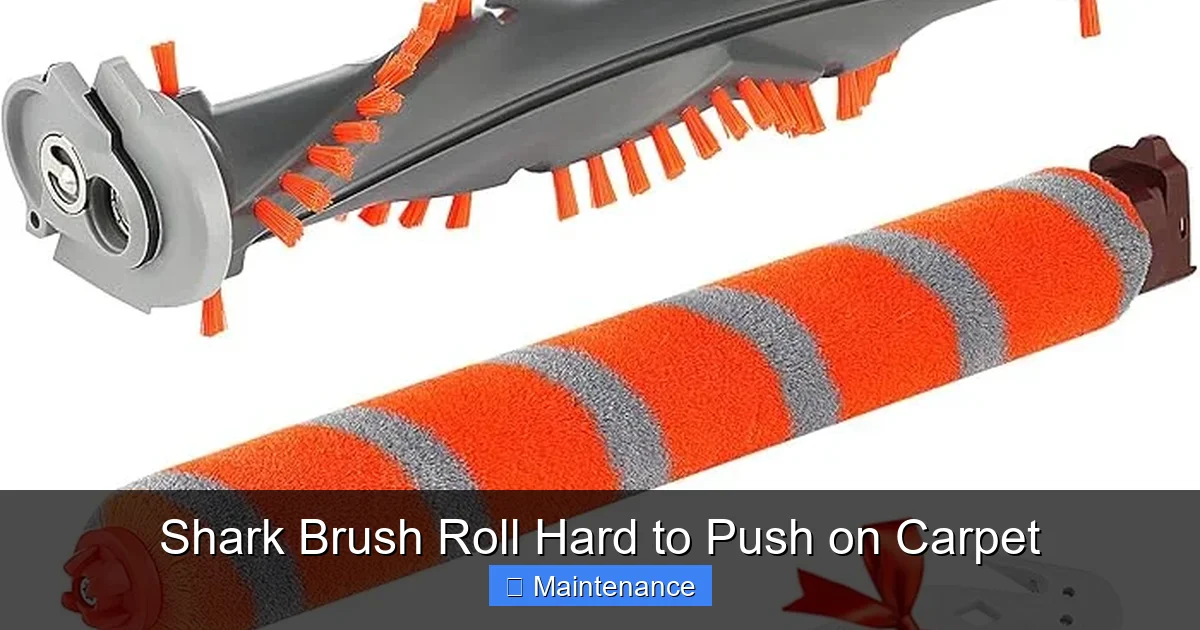
Visual guide about Shark Brush Roll Hard to Push on Carpet
Image source: images-na.ssl-images-amazon.com
How Clogs Form and Multiply
Every time you vacuum, loose fibers and hairs get caught in the rotating bristles. Some wrap around the bristles themselves, but many get flung outward by centrifugal force, wrapping around the spinning metal axle. Over time, this material compacts. It acts like a strap, binding the brush roll to its housing. The friction skyrockets. The motor works harder, the belt (if present) slips or strains, and you feel the resistance when you push. This clog also prevents the brush roll from reaching its optimal speed, drastically reducing cleaning performance long before you even notice the push problem.
How to Diagnose and Clear a Severe Clog
This is your first and most important check. Always unplug the vacuum.
- Access the Brush Roll: Lay the vacuum on its back. Locate the release levers or screws for the bottom plate (the “foot”) and remove it. This gives you full access to the brush roll.
- Visual Inspection: Look at the ends of the brush roll where it meets the plastic housing. Do you see a dense, dark mat of material? Can you see the metal axle? If it’s completely hidden, you have a major clog.
- The Spin Test: Try to rotate the brush roll by hand. Does it spin freely with a smooth whir? Or does it resist, feel gritty, or only turn a few inches before stopping? Any resistance here is your problem.
- The Clearing Process: You’ll need sharp scissors or a utility knife and maybe a small flat-head screwdriver. Carefully cut through the mass of debris all the way around the brush roll. Don’t just pull; you’ll damage bristles. Once cut, you should be able to peel or pick away large chunks. Pay special attention to the bearing caps at each end. Use the screwdriver to gently pry packed material out of the small holes where the axle enters the housing. The goal is to see clean metal and have the roll spin freely.
- Clean the Housing: With the brush roll removed (if your model allows), clean out the entire bottom housing. Debris loves to hide in corners and around the belt path (if applicable).
Reassemble, plug in, and test on carpet. In 80% of “hard to push” cases, this is the sole solution. If the brush roll now spins freely by hand and the vacuum pushes easily, you’ve solved it.
Secondary Causes: Wear, Damage, and Adjustment
If the clog is cleared but the problem persists, or if the clog wasn’t severe, we move to the next level of diagnosis.
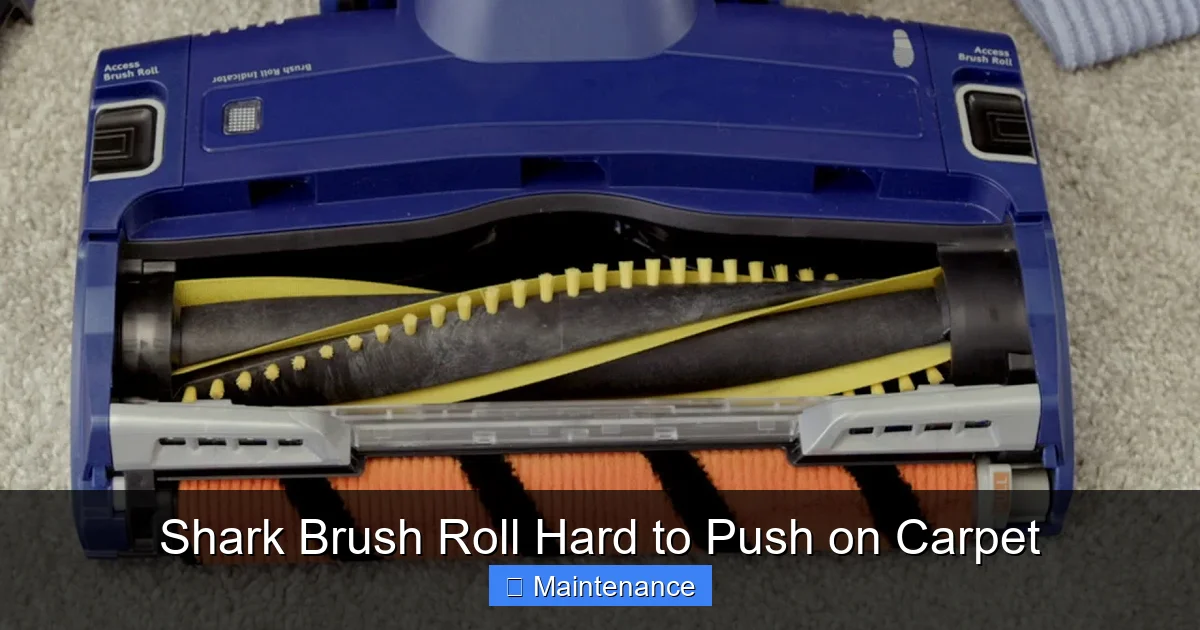
Visual guide about Shark Brush Roll Hard to Push on Carpet
Image source: i.ytimg.com
Worn, Melted, or Missing Bristles
The plastic bristles on your Shark’s brush roll are designed to be stiff but flexible. Over time, especially with frequent use on high-pile carpets, they can become:
- Hardened and Brittle: From heat and age, losing their flexibility.
- Melted or Deformed: From contact with hot vacuumed materials or friction heat from a clog.
- Broken Off: Leaving gaps and sharp plastic edges.
Damaged bristles don’t just reduce cleaning; they can dig into carpet instead of agitating it, creating drag. They can also become uneven, causing the brush roll to “hop” or bind. Inspect the entire length of the bristles. They should be uniform, flexible, and stand mostly perpendicular to the roller. If more than 30-40% are damaged or missing, the brush roll needs replacement. It’s an inexpensive and easy part to swap.
Worn or Seized Bearings
The brush roll spins on two small ball bearings, one at each end. These can wear out or seize due to lack of lubrication, dirt ingress, or simply age. Symptoms include:
- A gritty, grinding, or roaring noise when the brush roll spins.
- The brush roll spins freely in one direction but binds in the other.
- Excessive heat at the bearing housings after use.
If cleaning didn’t help and you suspect bearings, you’ll need to replace them. On most Sharks, the bearings are press-fit into the plastic end caps. You can often buy just the bearings, but it’s usually more efficient to buy the entire brush roll assembly, which comes with new bearings pre-installed.
Incorrect Height Setting
Shark vacuums have a height adjustment dial or lever. This raises or lowers the entire brush roll housing relative to the carpet. Setting it too low for your carpet type is a classic cause of push resistance. If the housing is pressed deep into a thick, plush carpet, the bristles are flattened and the housing itself drags. The motor struggles to spin the densely packed brush roll against this resistance, and you feel it as a heavy push.
Solution: Experiment! Start with the highest setting (for thin carpet/rugs) and work down. The correct setting is the highest one where you still see a visible line of cleaning on the carpet after a pass. The vacuum should feel noticeably lighter to push. If your carpet is very thick (like a shag or plush), you may need to accept that a brush roll vacuum will always have some resistance on it; the goal is the minimum necessary.
Drive Belt Issues (On Belt-Driven Models)
Not all Sharks use a belt (many have a direct-drive motor), but if yours does (like some older canisters or certain uprights), a worn belt is a suspect.
- A Stretched Belt: Loses tension, slips on the motor and brush roll pulleys, causing the brush roll to lag or not spin at full speed, creating drag.
- A Glazed or Worn Belt: Becomes shiny and hard, slipping more easily.
- A Broken Belt: Obvious, but sometimes it just slips off.
Check: With the bottom plate off, locate the rubber belt. Is it tight? Does it have good tread? Is it properly seated on both pulleys? Replace it if it’s over 2 years old or shows any signs of wear. A new belt is cheap insurance.
Step-by-Step Diagnostic and Repair Guide
Let’s put it all together into a logical workflow. Grab your screwdriver and a bright light.
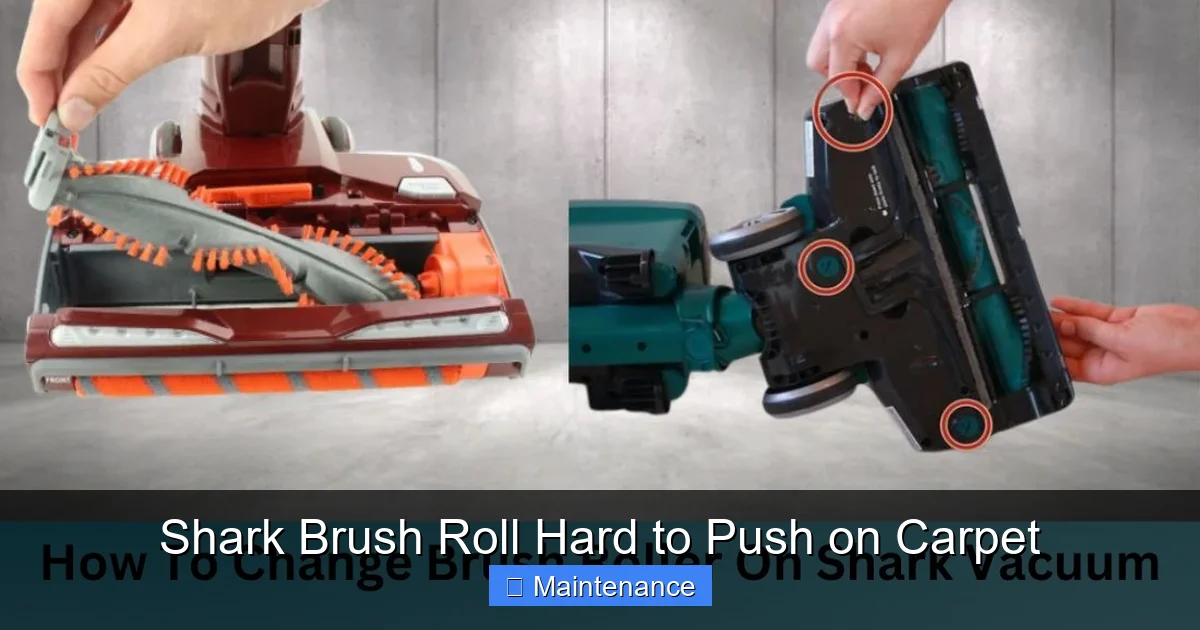
Visual guide about Shark Brush Roll Hard to Push on Carpet
Image source: sharkvacuum.blog
Phase 1: The Deep Clean & Inspection
- Unplug. This cannot be stressed enough.
- Remove the bottom plate. This is your window to the problem.
- Remove the brush roll. Most Sharks have clips or a couple of screws. Take it out. This is the only way to truly inspect it and the housing.
- Perform the “Free Spin” test. Hold the brush roll by the ends and spin it. Listen and feel. It should be silent and smooth. Any noise or gritty feel means bad bearings or a clog you missed.
- De-clog aggressively. Even if it looks okay, use a seam riger or a dedicated “vacuum brush roll cleaning tool” to scrape along the entire length of the metal axle on both sides. You’ll be shocked at the debris that comes out.
- Inspect the brush roll. Check bristle integrity. Check the plastic for cracks. Check the end caps where the bearings sit.
- Clean the housing. Vacuum out all debris. Check the belt (if present) for wear. Wipe down the housing interior.
Phase 2: Reassembly and Adjustment
- Reinstall the brush roll. Ensure it’s seated properly and spins freely by hand before putting the plate back.
- Reattach the bottom plate securely. A misaligned plate can cause drag.
- Set the height dial to the highest setting. This is your “test” setting.
- Plug in and test on a known, medium-pile carpet. Push it with one hand. Does it feel light? Does the brush roll spin vigorously? If YES, gradually lower the setting one click at a time until you find the sweet spot between cleaning and ease of push.
- If it’s still hard to push on the highest setting, you have a mechanical fault: either the bearings in the new/cleaned brush roll are bad, or there’s an issue with the motor/pulley system (belt tightness, motor bearing). At this point, parts replacement is needed.
Preventive Maintenance: Stop It Before It Starts
The best fix is the one you never need. A clogged brush roll is 100% preventable with a quick routine.
The 60-Second Post-Vacuum Check
After every 2-3 vacuuming sessions, especially if you have pets or long hair:
- Unplug the vacuum.
- Lay it on its back.
- Manually rotate the brush roll a few times with your fingers. Feel for smoothness.
- Use scissors to snip any visible hair or fibers wrapped around the bristles before they can work their way to the core.
- Give the bottom housing a quick once-over with the crevice tool attachment.
This 60-second habit stops the debris from ever forming a binding clog.
Monthly Deep Clean
Once a month, perform the full removal and cleaning process described above, even if you don’t have a problem. It’s like changing your oil—proactive care.
Know Your Carpet
If you have ultra-thick, high-pile, or shag carpet, understand that a brush roll vacuum will require more effort and maintenance. Consider using a simpler suction-only tool (like a crevice tool or a hard floor head) for daily cleaning on those areas, and reserve the brush roll for occasional deep cleans. This extends the life of your brush roll and prevents constant clogging.
When to Seek Professional Help or Replace Parts
You’ve cleared every clog. The brush roll is new. The height is set correctly. The belt is new. It’s still hard to push. Now we look beyond the brush roll assembly.
Motor or Gearbox Issues
The brush roll is driven by the vacuum’s motor or a separate gearbox. Internal bearings or gears in these components can wear out, creating resistance that feels like it’s coming from the brush roll. Diagnosis requires more advanced tools. If your vacuum is older (5+ years) and has had a hard life, this is a possibility.
Worn or Damaged Wheels/Casters
Sometimes, the problem isn’t the brush roll at all. Check the main wheels or caster wheel on the front. Are they spinning freely? Are they caked with old, hardened debris that acts like a brake? A seized wheel can make the entire unit feel like it’s glued to the floor. Clean wheels thoroughly and check their axles for damage.
The Cost-Benefit Analysis
For Sharks within the last 5-7 years, a new brush roll ($20-$40) or belt ($10) is almost always the cost-effective fix. For older models with suspected motor/gearbox failure, the repair cost might approach 50% of a new vacuum’s price. At that point, investing in a new, more efficient model might be the better long-term choice. Shark’s customer service can often help diagnose if you provide your model number and symptoms.
Conclusion: Restoring the Glide
That feeling of a Shark vacuum that glides effortlessly across carpet, leaving a trail of freshly cleaned fibers behind it, is the gold standard. When that glide turns into a struggle, it’s your vacuum sending a clear maintenance message. In the vast majority of cases, “Shark brush roll hard to push on carpet” translates directly to “brush roll bearings are clogged with debris.” By making a simple, regular habit of accessing, inspecting, and cleaning that brush roll and its housing, you prevent the one problem that causes 90% of the push resistance. You protect your investment, maintain peak cleaning performance, and keep your vacuum feeling light and powerful. Don’t fight your vacuum—maintain it. A clean brush roll isn’t just about easy pushing; it’s the heart of your vacuum’s ability to pull deep-down dirt from your carpets. Give it that attention, and it will give you years of reliable, effortless service.
Frequently Asked Questions
Will a clogged brush roll damage my Shark vacuum’s motor?
Yes, potentially. A severely clogged brush roll creates immense drag on the motor, causing it to overheat and work harder than designed. This can shorten motor life and trip thermal protectors. Clearing clogs promptly protects your motor.
My brush roll spins fine by hand, but the vacuum is still hard to push. What gives?
This points away from a brush roll issue and toward other factors: an incorrect height setting (too low), a seized wheel/caster, a stretched drive belt (if applicable), or potentially a problem in the motor/gearbox. Re-check the height setting first.
How often should I really be cleaning my Shark’s brush roll?
For homes with pets, long hair, or lots of carpet, a quick 60-second debris check after every 2-3 uses is ideal. A full removal and deep clean should be done at least once a month, or immediately if you notice any decrease in pushability or cleaning power.
Can I use lubricant on the brush roll bearings to make it spin easier?
No. Never apply oil or grease to vacuum brush roll bearings. These are sealed bearings designed to operate without lubrication. Adding lubricant will attract more dust and debris, creating a worse clog. The solution is a clean bearing, not a lubricated one.
Is a “self-cleaning” brush roll feature on newer Sharks really effective?
Self-cleaning features (like Shark’s “Anti-Hair Wrap”) use a combing mechanism to deflect hair from the core. They are helpful but not infallible, especially with thick, wet debris or massive amounts of hair. They significantly reduce clogs but do not eliminate the need for periodic manual inspection and cleaning.
My Shark is under warranty. Can I get a new brush roll for free?
Warranties cover defects in materials and workmanship, not normal wear and tear. A brush roll worn from use or clogged from debris is considered a consumable part, not a warranty defect. However, if the brush roll has a manufacturing flaw (e.g., a bearing that seized immediately), contact Shark customer service with your model number and proof of purchase for a possible replacement.